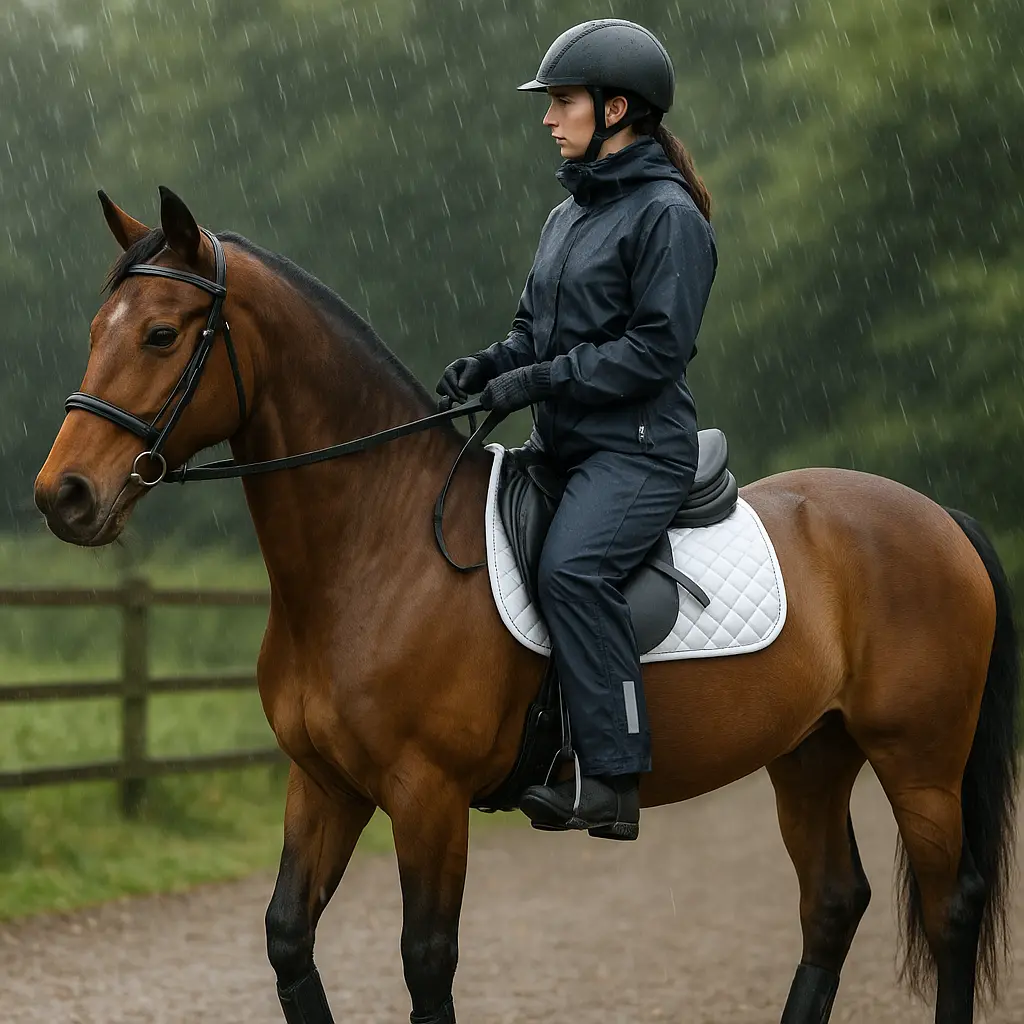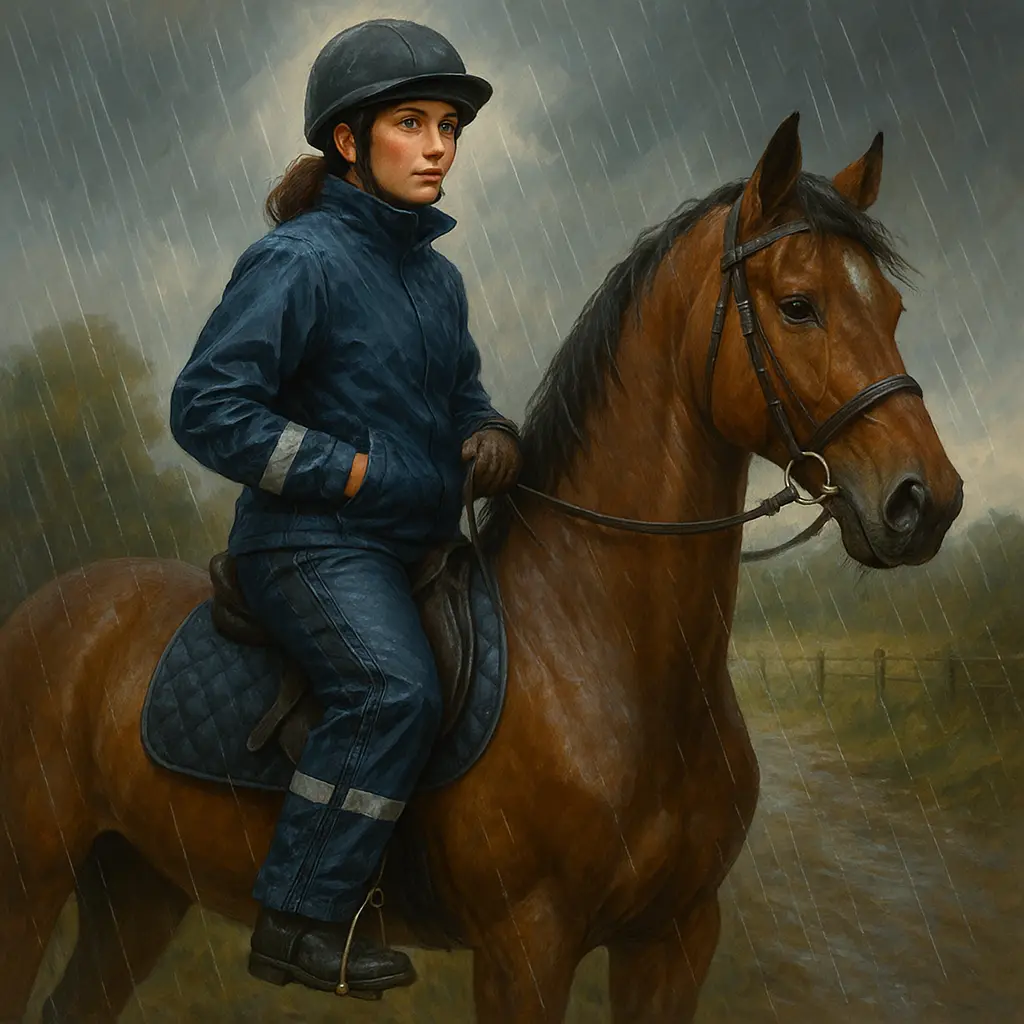
Rain rarely waits for a gap between lessons, hacks and show prep — and once your legs are soaked, the whole day feels longer. The right waterproof overtrousers keep you dry, secure in the saddle and comfortable through yard jobs, schoolings and collecting rings across the UK’s wettest months.
Key takeaway: For UK riders, the best waterproof overtrousers combine a high waterproof rating, breathable fabric with taped seams, riding-specific grip, and easy-on features like full-length leg zips — with shorter-leg options for petite riders and 3/4 styles for quick removal at competitions.
What makes great waterproof riding overtrousers?
The best waterproof riding overtrousers for UK conditions use breathable fabrics with taped, reinforced seams, plus riding-specific grip and secure foot straps to stay in place. Look for full-length zips or adjustable cuffs so you can pull them over boots without dismounting.
Purpose-built riding designs outperform generic waterproofs in the saddle. Key features to prioritise include:
- Breathable, waterproof fabrics with taped seams to block wind-driven rain while letting moisture escape during schooling or yard work.
- Riding grip — silicone seats, knee patches or Clarino panels — to maintain stability on wet saddles and during transitions in the arena. As Online For Equine notes, riding trousers commonly add grips for saddle security.
- Removable or integrated foot straps to stop trousers riding up as you post or shorten stirrups.
- Full-length or 3/4 options: full-length shields boots for yard and hacking; 3/4 is a competition favourite for quick removal while mounted and keeping breeches pristine in collecting rings.
- Fit adjusters — elasticated waists, touch-tape or Velcro cuffs, and lower-leg zips — so you get a neat, tailored silhouette over breeches and long boots.
- Practical extras: deep zipped pockets for your phone and keys, and reflective panels for roadwork in low light.
Pro tip: If you ride daily or instruct, choose a model with a higher waterproof rating (hydrostatic head). As Online For Equine advises, “the higher the rating, the drier you will remain!”
Shorter riders: overtrousers that actually fit
Shorter riders should choose overtrousers with shorter leg lengths, adjustable hems/zips, and secure foot straps to prevent bunching over long boots. Shires Aubrion’s unisex pull-on style is a standout for petite riders thanks to its leg length and tailored lower-leg zips.
If you’re 5'4" and under or have a shorter inseam, extra fabric around the ankle can bunch, twist or flap — irritating at best and potentially unsafe if it snags your spur or stirrup. The Shires Aubrion design (taped seams, reinforced hems and elasticated waistband) earned praise in UK testing for its sleek fit over jodhpurs and suitability for shorter legs paired with long boots:
“The leg length makes them ideal for shorter riders... The zips on the lower legs gave a great, tailored fit and made the trousers easy to put on and take off.”
— Horse & Rider Magazine tester review of Shires Aubrion waterproof trousers
Quick tip: Try them over the breeches you ride in most. An elasticated waist should feel secure without digging in, and removable foot straps should sit under your boot instep without pulling the leg up when you shorten your stirrups.
At Just Horse Riders, we often suggest petite riders pair shorter-leg overtrousers with supportive long riding boots to create a sealed, mud-proof system for autumn/winter yard life.
Full-length vs 3/4 length: which should you choose?
Full-length overtrousers protect your legs and boots for yard work and hacking, while 3/4 length chaps are best for competition warm-ups and quick removal while mounted. Many UK competition riders favour 3/4 styles to keep breeches clean in collecting rings, then whip them off before entering the arena.
If you hack year-round, full-length trousers with adjustable hems and ankle closures offer better splash and wind protection, and they layer neatly over thermals in winter. For British Eventing, dressage, or showing days, 3/4 length waterproof chaps cover the knee/thigh (where most spray hits) but leave the boot and lower calf free for a fast, fuss-free exit before your round.
Planning a busy show season? Keep your smart ringwear pristine by pairing 3/4 overtrousers with your best show breeches from our women’s competition clothing collection.
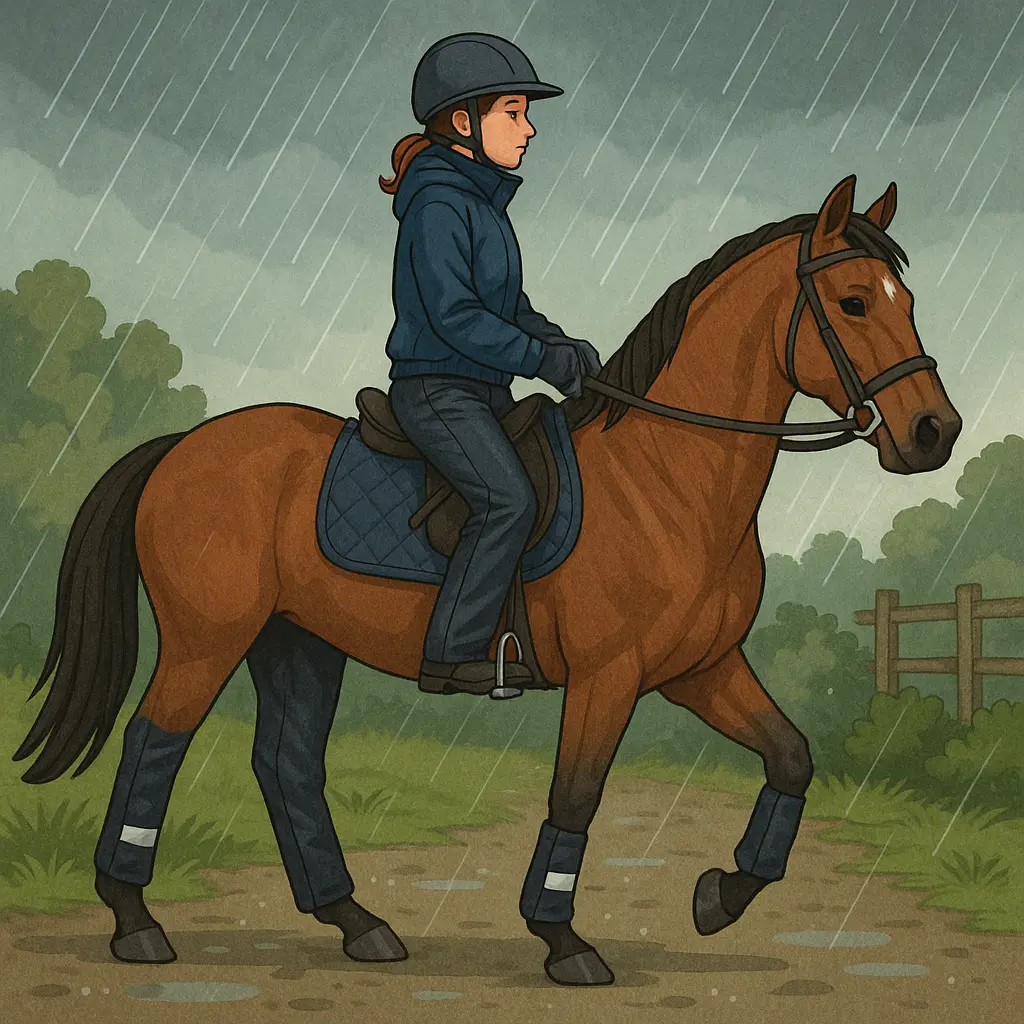
Stay dry, not sweaty: breathability matters
Choose breathable waterproofs with taped seams and, in colder months, a light lining to balance rain protection with temperature regulation. In the UK’s on-off rain and wind, this stops you overheating during chores or getting chilled on slower hacks.
Breathability is essential because riding is active: you’re mounting, adjusting tack, opening gates and schooling — even in rain. Without it, condensation builds inside the garment and you end up damp from sweat rather than the weather. Look for:
- Breathable membranes or air-permeable fabrics that manage moisture on the move.
- Taped seams and reinforced stitching so wind-driven rain can’t sneak in at stress points.
- Light, smooth linings that glide over breeches and trap a thin layer of warm air in winter.
- Zip vents or two-way side zips to dump heat quickly if the sun appears mid-hack.
In independent UK tests, riders reported staying dry in heavy downpours with designs featuring taped seams and smart lower-leg adjusters — and staying comfortable during moderate exertion. If you’re pairing wet-weather gear for both you and your horse, explore our turnout rugs to keep your horse dry while you stay storm-ready on the ground and in the saddle.
Tried-and-tested picks: Shires, Pikeur, Hy
Independent UK tests highlight Shires Aubrion, Pikeur Regen Chaps and Hy Equestrian as strong waterproof options with different strengths. Each brings a slightly different feature set depending on whether you ride daily, show regularly, or need high-visibility yard functionality.
Shires Aubrion waterproof trousers: unisex pull-on, elasticated waist, reinforced hems and taped seams for a tidy fit over jodhpurs. Particularly good for shorter riders with long boots thanks to leg length and tailored zips.
“The leg length makes them ideal for shorter riders... The zips on the lower legs gave a great, tailored fit and made the trousers easy to put on and take off.”
— Horse & Rider Magazine tester review
Pikeur Regen Chaps: fully waterproof stretch overtrousers with full-length side zips and poppers, designed to pull over breeches and keep them clean for shows. They’re easy on/off and keep you dry in moderate rain, though priced higher for occasional competition use.
“They were useful for slipping over breeches to keep them clean at shows, and kept me dry during moderate rain. The full-length zip on each side made them easy to pull on and take off.”
— Horse & Rider Magazine tester review of Pikeur Regen Chaps
Hy Equestrian pull-on overtrousers: reflective panels on the lower legs, touch-tape ankle cuffs and deep zipped pockets. The wider leg suits taller riders and doubles up brilliantly for yard work in warmer wet weather.
For more from these and similar brands, explore our curated Shires range alongside other rider favourites at Just Horse Riders.
Quote to note for pros and anyone out all day in the rain:
“For the professional rider, we would always recommend you check out the waterproof rating of your waterproof garment, the higher the rating, the drier you will remain!”
Fit, layering, and what to wear underneath
Test overtrousers over your usual breeches, check the waist and cuffs for a snug but flexible fit, and use foot straps to stop the legs creeping up in the saddle. Pair with long boots for weather sealing and a tidy line from knee to heel.
Layering checklist for UK riders:
- Base: well-fitted breeches or jodhpurs with minimal bulk. Start with our range of women’s jodhpurs & breeches for show and schooling cuts that sit smoothly under waterproofs.
- Overtrousers: adjust the elasticated waist so they sit comfortably without sliding; zip or Velcro cuffs should close neatly over your boot.
- Foot straps: engage the straps for canterwork, pole sessions or jump days; remove for yard-only jobs to avoid mud build-up.
- Boots: long leather or synthetic boots block run-off and keep your calf warm; shop supportive options in our horse riding boots collection.
Pro tip: If you struggle with ankle bulk as a shorter rider, prioritise models with lower-leg zips and tapered cuffs — they give the sleekest silhouette over long boots and reduce flap in crosswinds.
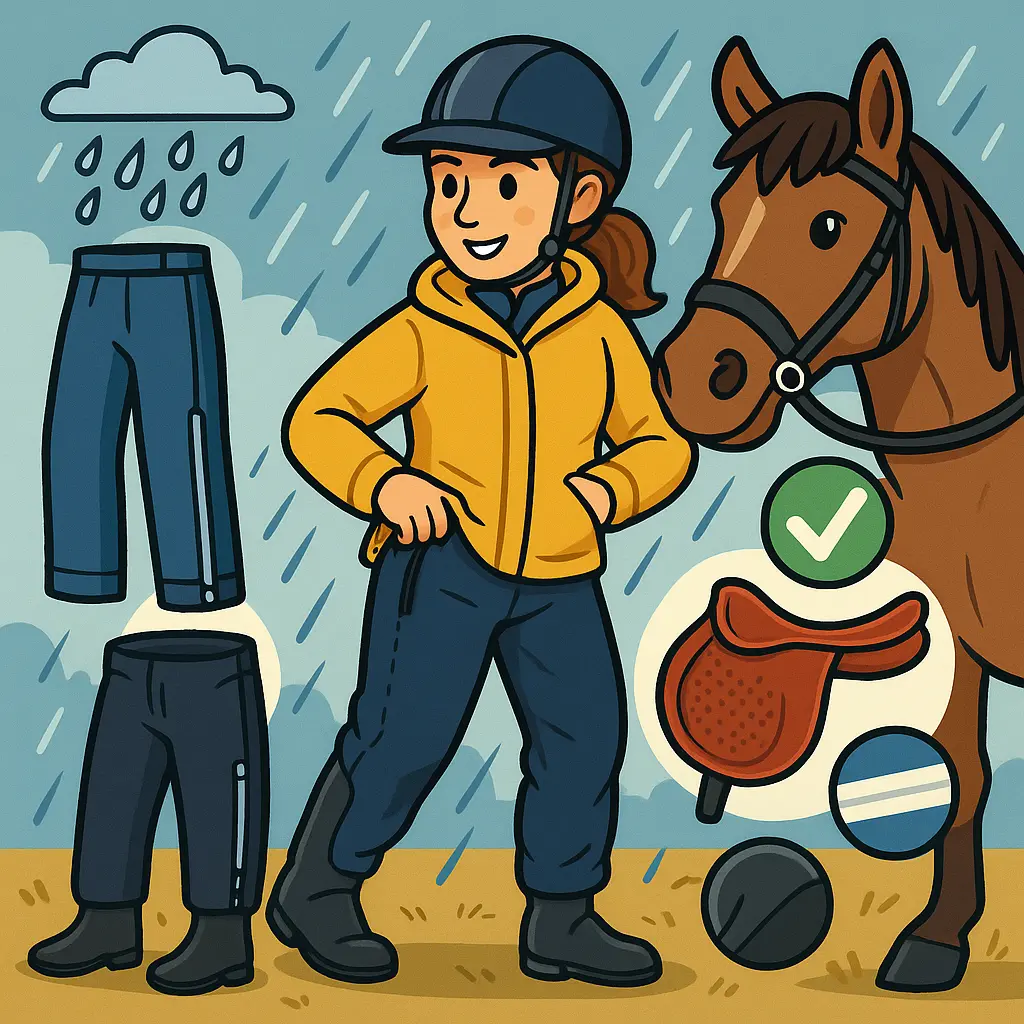
Be seen and ride safer in the wet
Choose overtrousers with reflective details and pair them with hi-vis gear for safer low-visibility hacks. Wet weather, early sunsets and hedgerow spray reduce driver visibility; reflective panels and bright accents make a measurable difference.
Add a hi-vis waistcoat or jacket, and check helmet reflectivity or attach reflective bands. Our curated rider hi-vis and riding helmets selections help you build a head-to-toe visibility plan that works on lanes and bridleways alike. For competition days, 3/4 length designs remain a popular choice in British collecting rings so you can warm up dry and remove them swiftly before entering under British Eventing time pressures.
Care, durability and getting value
To maximise lifespan, brush off mud after each ride, allow overtrousers to air-dry away from direct heat, and store fully dry with zips fastened. Reinforced hems and taped seams are your durability markers; they’re worth the investment if you ride or teach through the wettest months.
What to inspect when buying:
- Seams: taped inside and double-stitched at stress points (crotch, knees, hems).
- Hardware: smooth, full-length side zips and robust poppers that won’t corrode in constant drizzle.
- Grips: silicone or Clarino panels for saddle stability; avoid yard-only designs (no grip) if you plan to ride in them.
- Fit adjusters: elasticated waistbands and reliable Velcro/touch-tape at the ankles for a secure, tailored fit.
If you’re brand-loyal or looking to match kit across your wardrobe, browse performance staples from names like Shires in our dedicated Shires brand collection at Just Horse Riders.
Conclusion
Pick waterproof overtrousers the way you choose a saddle pad: for the job at hand. Full-length for yard and hacking, 3/4 for show warm-ups; breathable fabrics with taped seams; riding grip and foot straps for security; and leg lengths that truly suit your height and boots. At Just Horse Riders, we recommend trying them over your regular breeches and boots to confirm the fit — then embracing the next downpour with confidence.
FAQs
Are waterproof overtrousers suitable for short riders?
Yes. Models with shorter leg lengths, tapered lower legs and ankle zips give a clean, safe fit over long boots without bunching. In testing, Shires Aubrion’s pull-on trousers earned praise for shorter riders thanks to their leg length and tailored zips, delivering a sleek finish over jodhpurs and boots (Horse & Rider Magazine).
How do I keep overtrousers from riding up when I’m in the saddle?
Choose designs with silicone seats or knee patches for saddle grip and use removable foot straps to anchor the leg. An elasticated waistband and adjustable cuffs help prevent twist and creep, especially if you’re riding transitions or jumping where movement is more dynamic (Online For Equine).
What’s the difference between full-length and 3/4 length overtrousers?
Full-length overtrousers cover boot to waistband for maximum weather and mud protection on hacks and yard jobs. 3/4 length styles (often called chaps) protect the thigh and knee but leave boots clear, making them ideal for competition warm-ups and quick removal while mounted — a common sight in British collecting rings.
Do my waterproof overtrousers need to be breathable in UK weather?
Absolutely. Breathable fabrics with taped seams stop rain getting in while letting heat and moisture escape during active riding or yard work. Riders in UK tests reported staying dry in heavy downpours while avoiding the clammy feel that comes with non-breathable layers, especially during moderate exertion.
Can I wear the same waterproof trousers for riding and yard work?
Yes — if they include riding grip (silicone or Clarino) and secure foot straps for the saddle. Yard-only waterproofs without grips are fine for mucking out but can be slippy when you ride. For all-round use, prioritise riding-specific features, plus practical touches like deep zipped pockets and reinforced hems.
What waterproof rating should I look for?
Check the hydrostatic head rating — the higher the number, the longer the garment resists water under pressure. As Online For Equine advises, professional riders should prioritise higher ratings to stay dry through persistent UK rain. Pair that with taped seams and breathable construction for all-day comfort.
Any visibility advice for rainy hacks?
Combine overtrousers with reflective panels and dedicated hi-vis clothing for maximum impact in low light. Add a hi-vis waistcoat or jacket and ensure your helmet has reflective elements. Build your kit from our rider hi-vis and riding helmets collections, and consider reflective details on your lower legs for driver eye-lines.