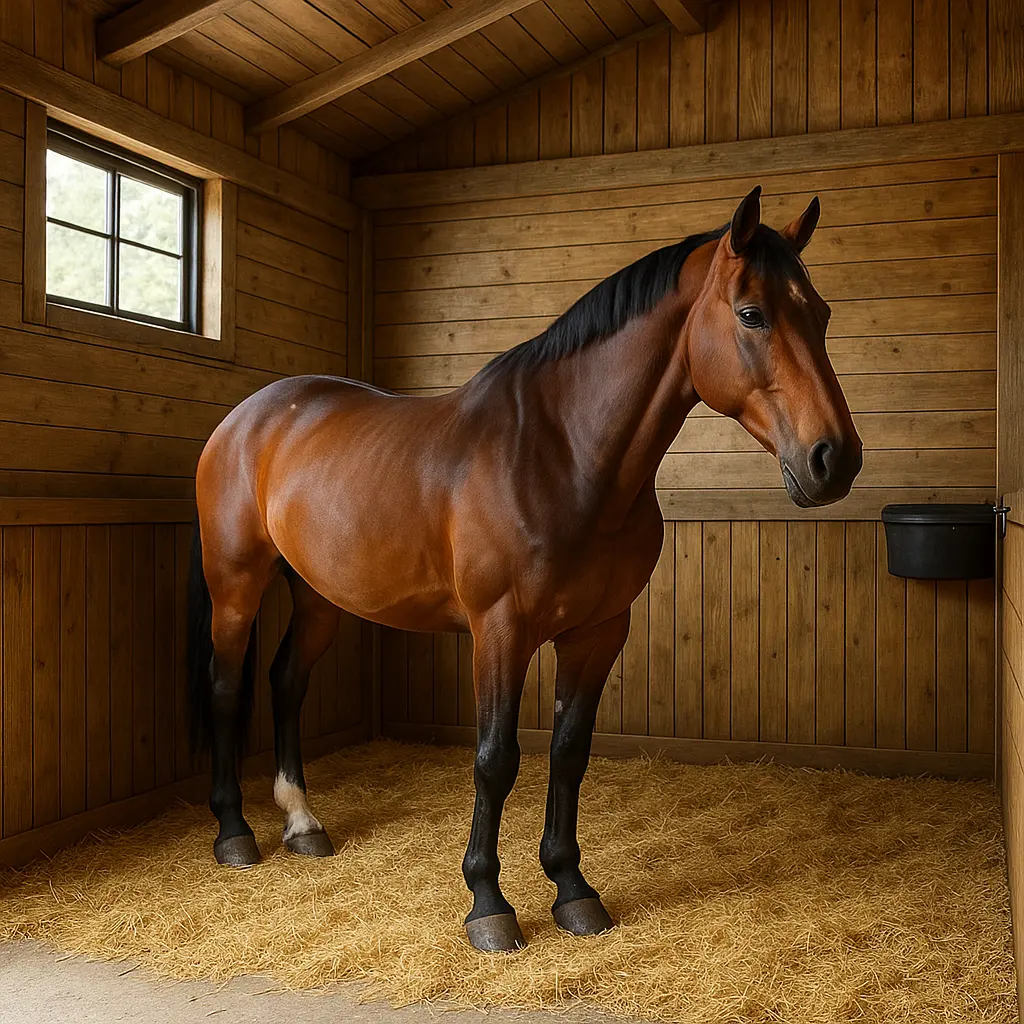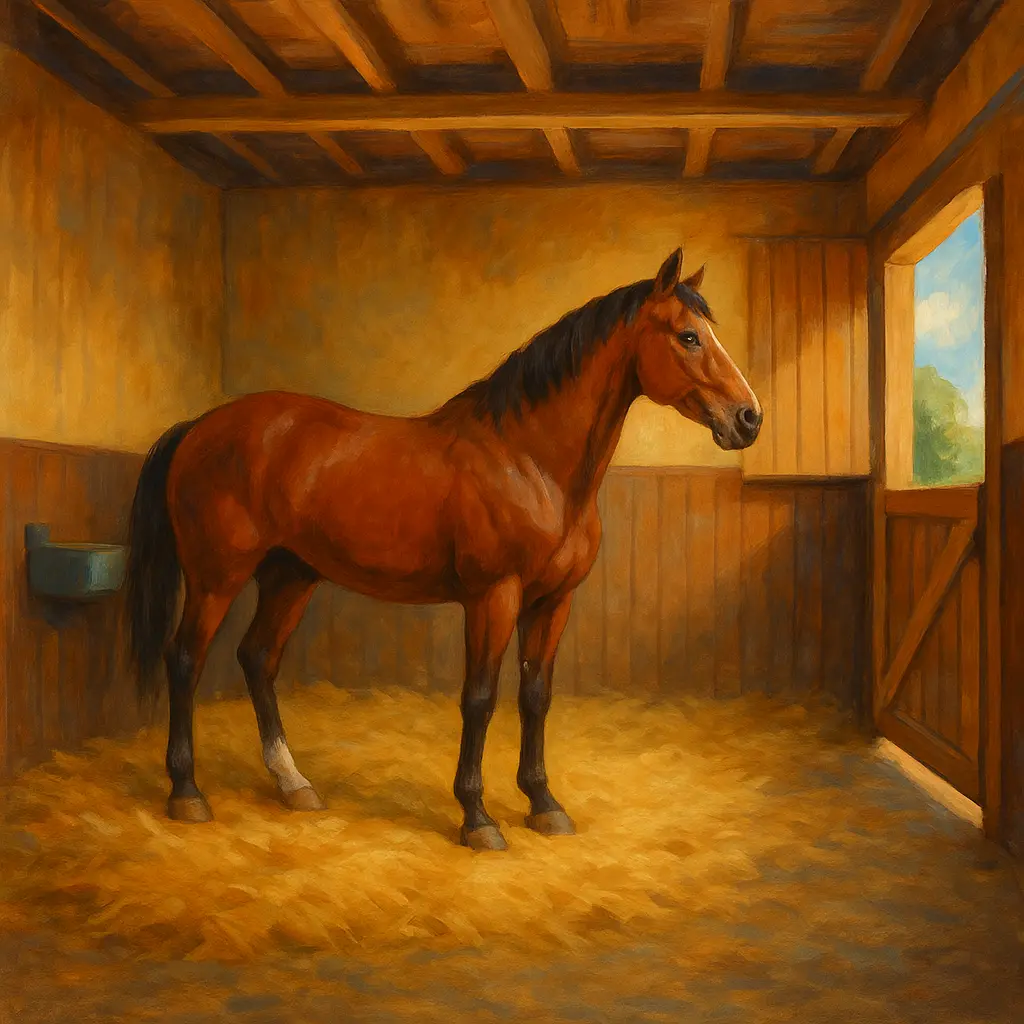
Your 16.2hh horse doesn’t just need “a box and a door.” The size, height and layout of their stable directly affect soundness, behaviour, and even legal compliance in the UK. If you’re wondering whether a 9x10ft box will do, the short answer is no — and here’s exactly what to do instead.
Key takeaway: A 16.2hh horse needs a minimum 12ft x 12ft (3.65m x 3.65m) stable, with 12ft x 14ft (3.65m x 4.25m) preferred for bigger builds; a 9x10ft box falls well below UK welfare guidance.
What size stable does a 16.2hh horse need?
A 16.2hh horse needs a minimum 12ft x 12ft (3.65m x 3.65m) stable, with 12ft x 14ft (3.65m x 4.25m) preferred for larger or heavier types over 17hh.
These dimensions are aligned with British Horse Society (BHS) guidance, endorsed by Blue Cross and long recognised across UK welfare and livery standards. They allow your horse to turn, lie down, stand up, and raise the head fully without risk of injury or stress. By comparison, a 9x10ft space (approximately 2.74m x 3.05m) significantly restricts even the basics of movement — especially for a substantial 16.2hh frame.
“Large horses (17hh+): 3.65m x 4.25m (12ft x 14ft); Horses: 3.65m x 3.65m (12ft x 12ft) minimum.” — BHS guidelines, endorsed by Blue Cross (Blue Cross)
Beyond size, think about daily reality: head tossing, rolling, turning to the door, or stepping aside when you enter. A 12x12ft footprint is the recognised minimum that gives enough room for those normal behaviours without the risk of your horse catching hips or poll on hard surfaces.
At Just Horse Riders, we recommend choosing the larger option if your horse has a long back, broad chest, or you plan more time stabled in winter. Bigger boxes are kinder, easier to muck out, and safer for both horse and handler.
Is a 9x10ft box ever acceptable for a 16.2hh?
No — a 9x10ft box is below the BHS 12x12ft minimum and risks breaching UK welfare expectations; at most, it could be a stopgap overnight if your horse has daily turnout and you’re actively upgrading.
UK guidance is clear that stables must allow a horse to lie down, stand with the head fully raised, turn, and walk forward comfortably. The BHS states:
“As a minimum, stables must be big enough to allow your horse to turn around and lie down and get up comfortably. All passageways should provide sufficient room to enable horses to be led safely past others.” — British Horse Society
Practically, a too-small box creates obvious red flags: your horse can’t turn without scraping, lies down awkwardly or rarely, paces or weaves, displaces large banks of bedding, or resents handling at the door. These are more than “niggles” — they’re welfare indicators you must act on under the Animal Welfare Act 2006 and commonly referenced yard policies.
If you’re stuck with a small box temporarily, prioritise turnout and consider an open shelter instead of overnight stabling (more on that below). Fit wall-mounted feeders to free floor space, lay non-slip mats, and build deep, high bedding banks to cushion hips — but treat these as interim measures while you secure a compliant box.
Quick tip: If your winter set-up is currently a small box plus limited turnout, swapping to a correctly sized field shelter and a good rug will usually be kinder and healthier through wet UK months than persisting with cramped stabling.
What stable height and ventilation does your horse need?
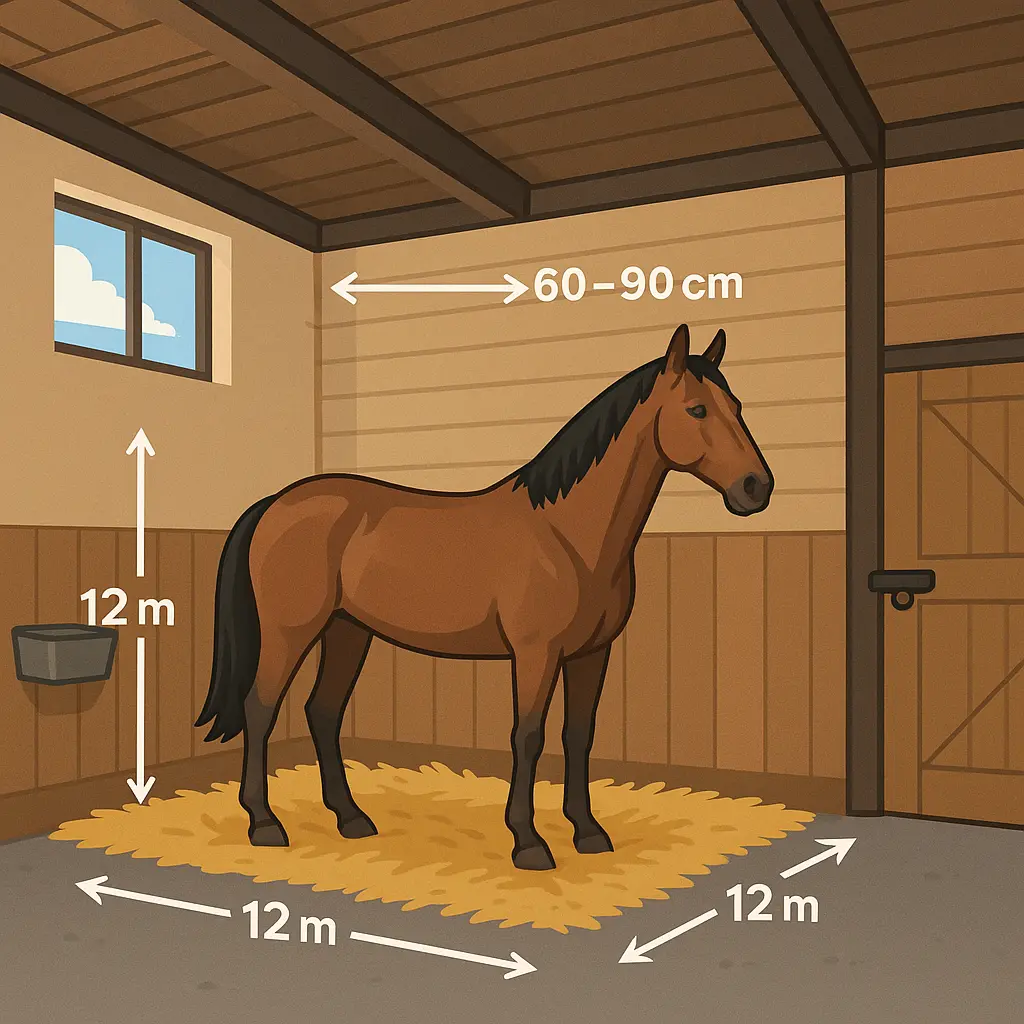
Stable height should be 9–11ft (2.7–3.3m) with at least 60–90cm (around 3ft) clearance above your horse’s ears when standing normally, ensuring good air flow and reducing injury risk.
This headroom protects the poll and ears during normal posturing and startle moments, and the air gap is essential in Britain’s damp climate. Adequate eaves and ridge ventilation prevent stale, humid air — a major contributor to mouldy bedding and respiratory irritation. Note that deep shavings and rubber mats “raise” your floor level; if you bank bedding high (a sensible safety step), effective wall height reduces further. Plan for that when checking clearances.
“In stables, each horse must have enough room to lie down in a normal resting posture, stand with the head fully raised, walk forward and turn around with ease.” — UK Government (DEFRA) licensing guidance (gov.uk)
Good ventilation is also your first defence against winter coughs from dusty bedding. Use dust-extracted bedding where possible, and make sure the top door or grille provides fresh air without creating a direct draught onto the horse’s back.
Field shelter or stable for UK winters?
For many horses in the UK, a correctly sized open shelter — minimum 4.5m x 3.6m for a single large horse — is better than a cramped stable during wet winters.
Open shelters encourage natural movement, reduce stress, and support respiratory health thanks to constant airflow. They’re particularly valuable if your only alternative is an undersized box. For shared shelters, provide at least two 2.1m-wide openings so a subordinate horse can escape a dominant one without risk of trapping or trampling. That simple design change dramatically reduces bullying and injury in winter herds.
Because UK winters are typically 0–10°C with persistent rain and mud, plan drainage carefully and stabilise the ground at the entrance. Lay down hardcore, grids or rubber matting to prevent a quagmire and to protect tendons. Clean shelters daily; larger footprints make mucking out faster and safer. If your horse lives out, choose an appropriate rug weight and check daily for rubs and fit — especially shoulders and withers.
For weather protection that doesn’t compromise movement, kit out with robust rugs designed for British rain. Explore our proven winter turnout rugs, including reliable favourites from Weatherbeeta and Shires, both popular with UK owners for wet, windy conditions.
Design details that protect welfare and make daily care easier
Provide safe passageways, outward-opening doors, rounded fixtures, and a floor drainage fall of at least 1:80 to keep stables safe and hygienic.
Small design details make a big difference in daily use and in meeting the spirit of UK guidance:
- Passageways: Wide enough for a horse and handler to pass safely, even with another horse tied outside a box. This is specifically noted by the BHS as a minimum standard for safe leading.
- Doors and fixtures: Outward-opening stable doors; no sharp edges or protrusions; tie rings set at sensible heights. Wall-mount feeders and salt licks to free valuable floor space in borderline boxes.
- Drainage: A gradient of at least 1:80 prevents pooling. Wastewater must not flow into adjacent stables under any circumstances.
- Ventilation: 60–90cm above the ears with good eaves/ridge vents. Avoid “sealed” stables; fresh air is non-negotiable for health.
- Lighting and electrics: Bright enough for daily checks and mucking out, with horse-safe cables and fittings well out of reach.
To keep coats and skin healthy in close-quarters winter routines, a quick daily brush and foot check are invaluable. Our range of practical grooming tools makes it easy to whip through muddy legs and manes, even on dark evenings.
When you must go bigger: long-term stabling, foaling and shared spaces
Long-term housing, foaling, and group barns all require larger spaces — foaling boxes should be at least 14ft x 14ft (4.25m x 4.25m), and communal barns need at least double a single horse’s loose box area per horse.
Short overnight stabling with good turnout is one thing; full or majority stabling is another. If your 16.2hh will be in for prolonged periods (winter, injury, box rest), a bigger footprint isn’t a luxury — it’s essential. Restricted movement increases stocking up, stiffness and stress, and makes safe rolling and getting up more difficult. For shared barns, doubling the space per horse drastically reduces bullying and accidental kicks as horses manoeuvre.
Foaling boxes have their own minimums: at least 14ft x 14ft ensures the mare can lie, roll and stand safely, and you can assist if needed. Even if your mare is “only” 16.1hh–16.2hh, stick to the larger standard — it’s about foaling dynamics, not just wither height.
Field shelters shared by two or more horses also need intelligent design: two wide openings, no dead ends, and enough area that a lower-ranking horse can eat or rest without constant displacement. In winter, this arrangement is often calmer and kinder than rotating in and out of small stables.
Practical upgrades and a quick kit checklist
Upgrade to a 12x12ft or larger box; while arranging that, use rubber mats, deep bedding banks and wall-mounted feeders to maximise safety and space efficiency.
Here’s a straightforward plan if you’re moving away from an undersized box:
- Measure accurately: Confirm internal dimensions, door widths, headroom, and aisle space. Aim for 12x12ft minimum for your 16.2hh, with 9–11ft ceiling height and 60–90cm ear clearance.
- Prioritise turnout or open shelter: If your only stable option is 9x10ft, choose a properly sized field shelter instead, particularly in wet UK winters.
- Add mats and banks: Non-slip matting reduces splash-back and injury; deep, high banks protect hips and help prevent cast horses, but remember they reduce usable floor area if the base box is already small.
- Mount essentials: Fit hay and feed on the wall and use corner drinkers to free floor space. Keep fixtures smooth with no projections.
- Plan drainage: Ensure a 1:80 fall, no pooling, and no run-off between boxes. Keep entrances well-drained with stone or grids.
- Rug strategically: Choose a rug that matches weather and clip level to enable movement without cold stress. See our cosy stable rugs for in-box warmth and our reliable turnout rugs for wet, windy days.
- Daily routines: Quick groom, pick out feet, and refresh water and forage. If your horse is stressy on box rest, targeted supplements from trusted brands like NAF can help support gut comfort and general well-being.
- Stay visible: Winter means dark leads to and from the field. Wear hi-vis rider wear so yard mates, drivers and field sharers can spot you quickly.
- Shop smart: If you’re equipping a new shelter or upgrading winter kit, our hand-picked ranges from Weatherbeeta and Shires perform brilliantly in UK weather — and our seasonal offers in the Secret Tack Room often include staples at great prices.
Pro tip: If you’re planning a new build, allow for future needs. A 12x14ft box now will cover a growing youngster, a big warmblood, or a mare and foal later — and it’s easier and cheaper to build the extra space at the start.
FAQs
Is a 9x10ft stable legal for a 16.2hh horse in the UK?
No. It’s below the BHS minimum of 12x12ft (3.65m x 3.65m) for horses and risks welfare breaches. UK guidance requires space to lie down, stand with the head fully raised, walk forward and turn comfortably. See the BHS stable safety guidance and DEFRA’s licensing notes on gov.uk.
Can I use a small stable short-term in winter?
Possibly overnight if your horse has daily turnout and you’re actively arranging an upgrade — but this is a stopgap, not a solution. Where the choice is a cramped box or a well-drained open shelter plus an appropriate rug, the shelter usually wins for welfare, especially in the UK’s damp winters.
What roof height should my stable have?
A 9–11ft (2.7–3.3m) ceiling with a minimum of 60–90cm (about 3ft) clearance above your horse’s ears. Make sure ventilation is effective and consider how mats and deep bedding reduce effective height.
How do I know my stable is too small for my horse?
Tell-tales include difficulty turning without brushing walls, reluctance or inability to lie down comfortably, heavy bedding displacement, pacing or weaving, and stress around the door. If in doubt, measure — a 16.2hh needs at least 12x12ft.
Is an open shelter better than a stable in winter?
Often, yes. A correctly sized field shelter supports movement, mental well-being and respiratory health. For a single large horse, aim for at least 4.5m x 3.6m, with two 2.1m-wide openings if shared to reduce bullying.
What drainage slope should a stable have?
A fall of at least 1:80 to avoid pooling, with no wastewater running into adjacent stables. Good drainage is essential for hygiene and hoof health, particularly in the wet UK season.
Can I “make do” with a small box by fitting mats and banks?
Mats, deep banks and wall-mounted fixtures improve safety in any stable, but they don’t fix an undersized footprint. Use them as interim measures only and prioritise moving to a 12x12ft or larger box for a 16.2hh.
At Just Horse Riders, we’re here to help you choose the right set-up for your horse and your yard. If you’re moving towards more shelter-based living this winter, kit up with dependable turnout rugs, add a warm layer from our stable rugs when needed, keep a tidy routine with the right grooming tools, and support overall condition with proven supplements. For friendly advice and fast UK delivery, our team is just a message away.