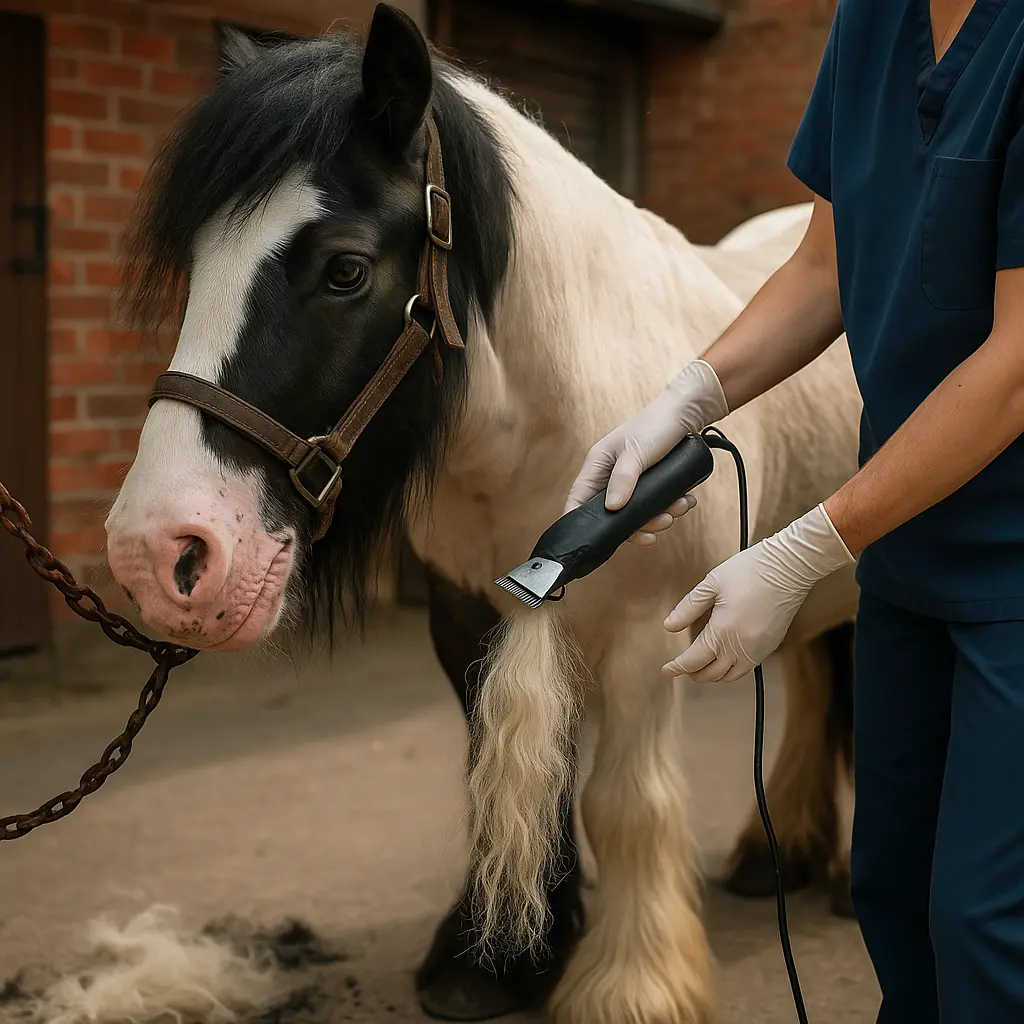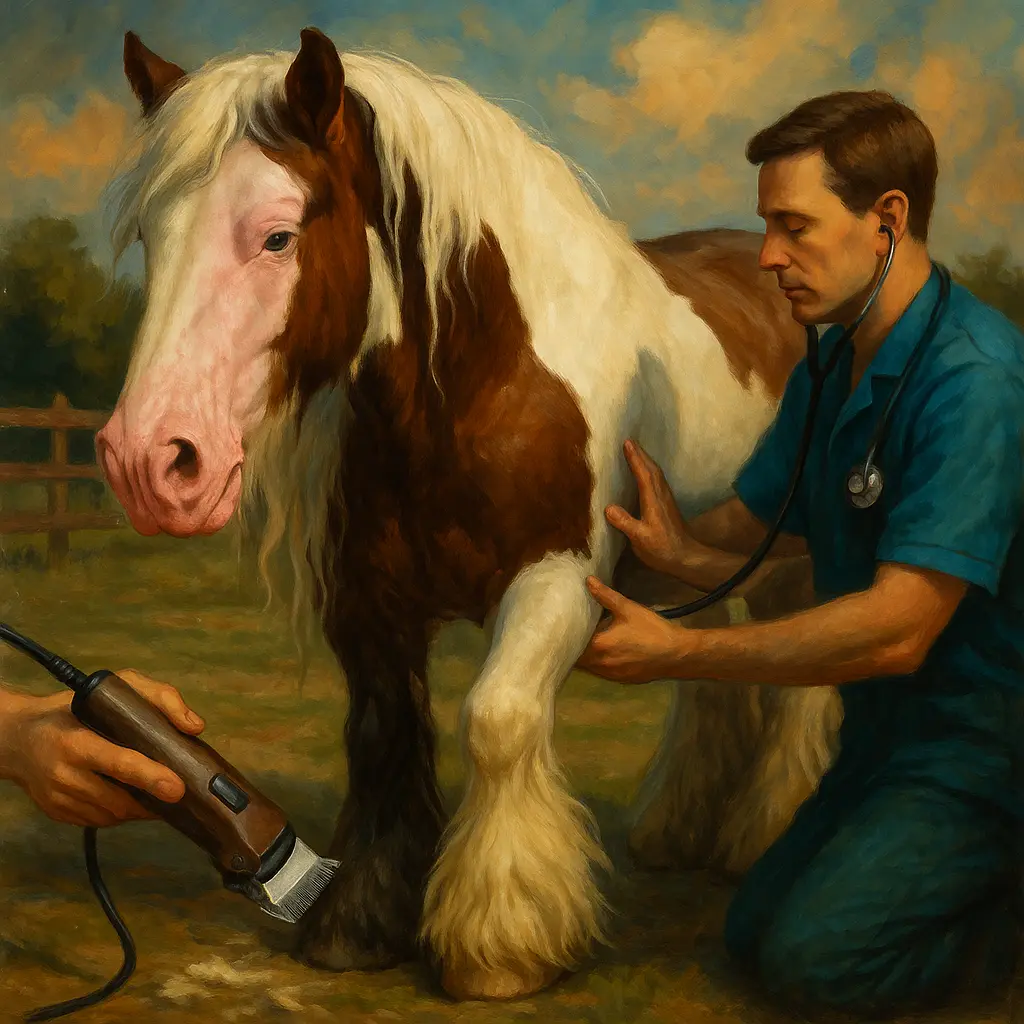
If you own a Gypsy Cob with pink skin and plenty of feather, managing leg health can feel like a full‑time job. Chronic Progressive Lymphedema (CPL) is a real challenge in feathered breeds — but with a consistent routine and the right kit, you can keep your horse comfortable, active and looking smart year‑round.
Key takeaway: CPL isn’t curable, but a simple, repeatable routine — clean, dry, protect — will dramatically reduce flare‑ups in pink‑skinned, feathered Gypsy Cobs.
What is CPL in Gypsy Cobs?
CPL (Chronic Progressive Lymphedema) is a lifelong lymphatic disorder that causes swelling, skin thickening and folds, particularly from the fetlocks down in heavy, feathered breeds like Gypsy Cobs. It develops gradually and is worsened by moisture, mites and skin trauma, so management focuses on meticulous skin care, parasite control and supporting circulation.
You’ll often first notice puffiness around the pasterns, small skin nodules in the feather, scurf and itching. Over time, the skin can become thick and ridged, with recurrent infections and discomfort. While there’s no cure, early, consistent management slows progression and keeps horses comfortable and in work.
CPL vs PPID (Cushing’s disease): what’s the difference?
CPL is a lymphatic and skin condition, whereas PPID (equine Cushing’s disease) is a hormonal disorder of the pituitary gland; they’re distinct problems, though a horse can have both. If you’re seeing long curly coats that don’t shed, laminitis, or muscle loss alongside leg swelling, speak to your vet about PPID testing — managing hormones can indirectly help skin health too.
Think of CPL as a local limb/skin management challenge, and PPID as a whole‑horse endocrine issue. Your BEVA-registered vet can help you map out testing, treatment and monitoring so neither condition is missed.
Why pink skin and heavy feather complicate CPL
Pink skin burns more readily and is more reactive, while heavy feather traps moisture, mud and mites — together, they create ideal conditions for CPL flare‑ups. Sunburn, mud fever and chorioptic mites all magnify inflammation, making legs itchier, thicker and more difficult to keep clean.
In UK summers, UV exposure can be surprisingly strong between late spring and early autumn, and in winters our persistent wet and mud are tough on pasterns. The goal is to protect pink skin from sun, reduce wet/mud contact, and keep the skin visible enough to monitor and treat promptly.
Day-to-day leg and skin routine that actually works
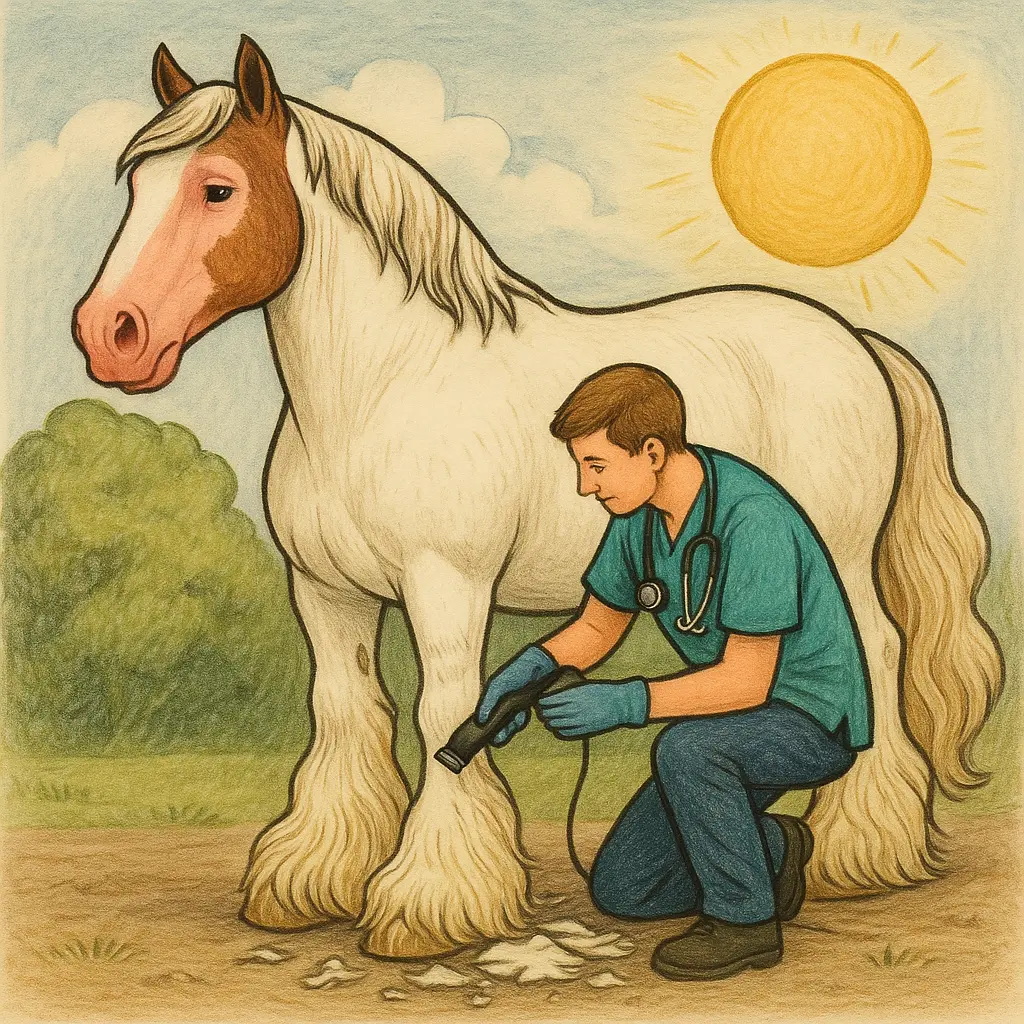
The best daily routine for CPL is simple: cleanse gently, dry thoroughly, moisturise and protect. Repeatable steps beat one‑off “deep cleans” every time.
- Rinse or wipe off mud and scurf with lukewarm water or a mild, vet‑recommended skin wash; avoid harsh scrubbing.
- Pat dry with a clean towel and air‑dry fully; never rug or boot damp legs.
- Apply a light, breathable moisturiser or barrier to protect pink areas and skin folds.
- Lift and separate feather to inspect skin daily; remove loose scurf with soft brushes.
- Introduce a regular mite prevention plan for your yard under veterinary guidance.
Quick tip: Build your routine around times you can guarantee drying — after riding, late afternoon, or when stabled overnight. Consistency matters more than products. For the tools that make this easy, see our carefully curated grooming collection.
For exercise or turnout when the ground is abrasive or you need post‑wash compression, supportive wraps can help — but only on clean, fully dry legs, and for limited periods. Explore soft, breathable options in our horse boots and bandages range.
Clipping feathers with CPL: when, how and how much
Clip enough feather to see and treat the skin, but avoid taking feathers right down to the skin just before wet turnout or in cold weather. The aim is visibility and hygiene without sacrificing all natural protection.
Practical pointers:
- Start with a hygienic “tidy” rather than a full close clip: thin and shorten feather to expose the pasterns and heels while leaving a light protective veil.
- Use clean, sharp blades; clip with the hair grain on sensitive zones and avoid aggressive pressure.
- Schedule clipping when you can keep legs dry for a day or two afterwards to let micro‑nicks settle.
- For showing or clinics, clip at least 10–14 days beforehand so clip lines soften and any skin reactions calm before you travel.
- Patch test any post‑clip products on a small area of pink skin first.
If your horse is in hard work or you’re battling persistent infections, a more thorough clip may be necessary so medicated washes and treatments reach the skin. Balance that with extra protection (see sun and mud strategies below).
Mites and infection control: stopping the flare cycle
Chorioptic mites thrive in feather and are a major driver of itching and secondary infection in CPL, so treat the whole yard plan, not just the individual horse. Work with your vet on a product and repeat‑treatment schedule, and decontaminate grooming kit and stable surfaces at the same time.
When the skin barrier is compromised, bacteria and yeasts can take hold. A steady rhythm of gentle cleansing and drying beats frequent strong chemicals, which can irritate pink skin. Reserve medicated washes for active flare‑ups as advised by your vet, and always moisturise lightly afterwards to support the barrier.
Movement, farriery and weight: the unsung essentials
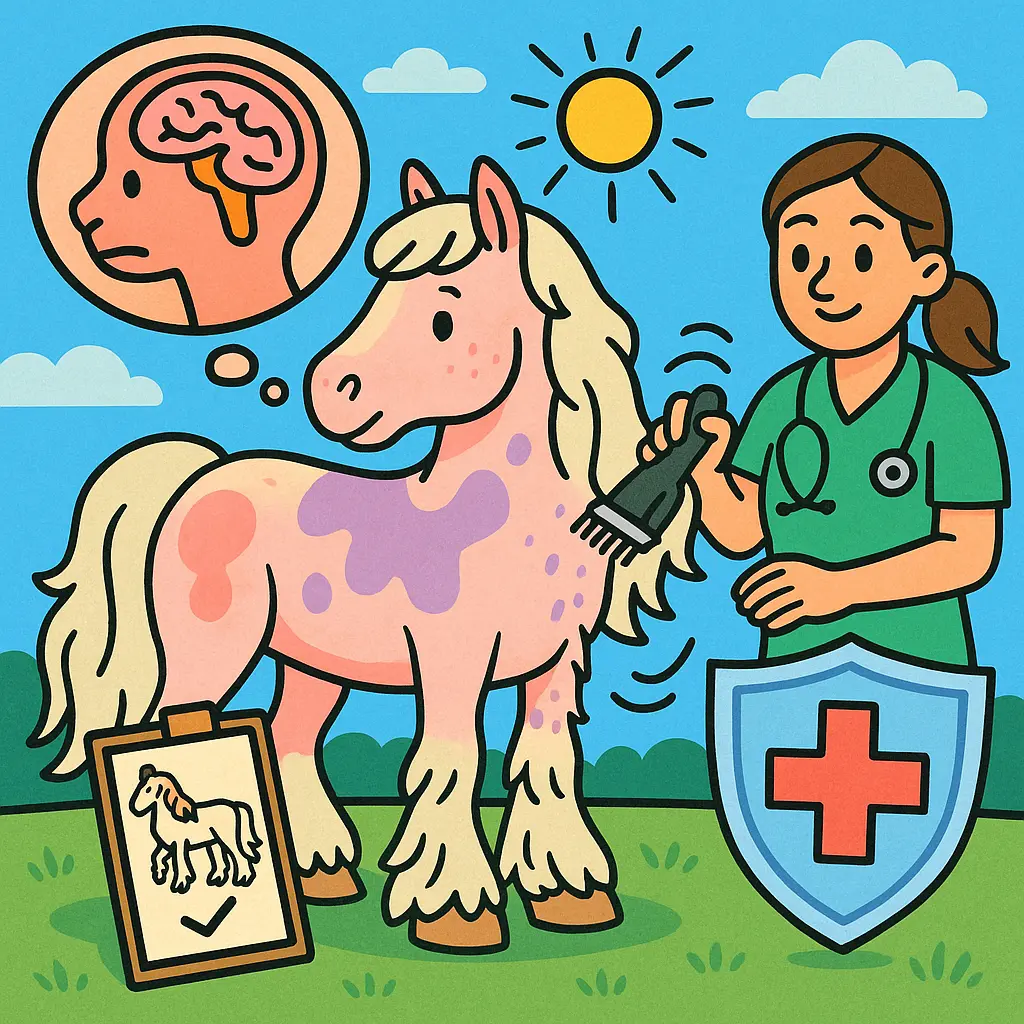
Regular movement, balanced feet and appropriate body condition all help lymph flow and slow CPL thickening. Daily turnout, in‑hand walks or ridden work keep the “leg pump” active and reduce stocking up.
Ask your farrier to keep a close eye on pastern and heel balance so skin folds aren’t aggravated by hoof angles. Hoof care that promotes even loading makes a real difference to comfort when the skin is tender. If your Cob is an easy keeper, controlled calories and low sugar/starch feeds reduce systemic inflammation and laminitis risk — particularly important if PPID is on your vet’s radar.
Sun, mud and UK season strategy for pink skin
In summer, protect pink skin from UV with shade, long grass turnout and UV-blocking layers; in winter, minimise prolonged wet and mud contact to avoid pastern dermatitis. Season‑specific protection prevents the triggers that make CPL spiral.
Summer tactics:
- Use UV-protective layers that breathe well; many modern fly rugs offer excellent coverage for sensitive skin.
- Apply high‑protection equine‑safe sunblock to white/pink noses, heels and pasterns; reapply after washing.
- Avoid turnout during peak sun hours on very bright days.
Winter/wet tactics:
- Manage turnout so legs aren’t submerged in deep mud for hours on end; rotate fields and use hardstanding where possible.
- Rinse mud off promptly and dry fully before stabling; never trap damp under boots or wraps.
- Use breathable turnout layers that keep the body warm so legs dry faster after work or washing.
To help with UV and insect defence, browse our lightweight, breathable fly rugs with UV protection. For wet months, quality layering from our turnout rugs and cosy options from our stable rugs range support faster drying and consistent comfort.
Nutrition and supplements that support skin
A balanced diet with quality protein, essential fatty acids and the right trace minerals supports skin resilience and healing. Look for targeted omega‑3, zinc and copper support if your base ration is light, and keep overall sugar/starch modest, especially if laminitis or PPID are concerns.
At Just Horse Riders, we’ve seen good results when owners pair a consistent skin routine with a well‑chosen supplement. Explore options in our supplements collection, including trusted formulations from NAF.
Build a simple CPL care kit
A small, consistent kit makes daily care quick — and quick is what keeps you doing it.
- Gentle skin wash and soft sponge or microfibre cloths.
- Clean, absorbent towels for thorough drying.
- Light barrier/moisturiser suitable for sensitive, pink skin.
- Feather comb and soft body brush to lift and check skin without scratching.
- Clipper with sharp blades for hygienic tidies and post‑clip soothing spray.
- Breathable support wraps/boots for travel or short, clean post‑wash compression.
- UV-protective fly rug and targeted sunblock for pink areas.
You’ll find the everyday tools in our grooming range and supportive lower‑limb options in horse boots and bandages. For summer coverage, pick from well‑priced, durable designs in our fly rugs selection.
Conclusion
CPL management for pink‑skinned Gypsy Cobs is all about rhythm: clean, dry, protect — every day. Keep feathers tidy enough to see the skin, protect against sun and mud, treat mites across the yard, and support circulation with movement and good farriery. If PPID is a possibility, bring your vet into the plan early.
Need help choosing kit for a sensitive horse? Our team is here to help you build a practical routine with products that work. Start with our grooming essentials and add smart seasonal layers from turnout rugs to UV fly rugs.
FAQs
Is CPL curable?
No — CPL is a lifelong condition, but you can slow progression and keep your horse comfortable with consistent skin care, mite control, and good movement and farriery. Many Gypsy Cobs live active, happy lives with a solid routine.
Should I remove all feather on a Gypsy Cob with CPL?
Not always. Clip enough to clearly see and treat the skin, but avoid very close clips right before wet, muddy turnout or in cold snaps. A tidy, shortened feather often strikes the best balance between hygiene and natural protection.
When is the best time to clip feathers?
Clip when you can keep legs dry for 24–48 hours afterwards so the skin can settle. If you’re heading to a show, clip at least 10–14 days before so lines soften and any irritation resolves before you travel.
Are mites the cause of CPL or just a complication?
Mites don’t cause CPL, but they drive itching and inflammation that make CPL worse. Treat the horse and the environment on a repeat schedule advised by your vet, and maintain strict grooming hygiene.
Can I still show a Gypsy Cob with clipped feathers?
Check your discipline’s rules and show preferences. Health and welfare come first — if clipping is needed to manage skin disease, do it, and present your horse clean, comfortable and well turned out.
How do I protect pink skin from sunburn?
Use UV-protective fly rugs, apply high‑protection sunblock to pink areas, and adjust turnout to avoid peak sun. Browse breathable options in our UV fly rug collection.
What rugs help in winter for a horse with CPL?
Choose breathable turnout layers to speed drying after work or washing, and add stable layers that keep the body warm while legs air‑dry. See our curated turnout rug and stable rug selections for UK conditions.