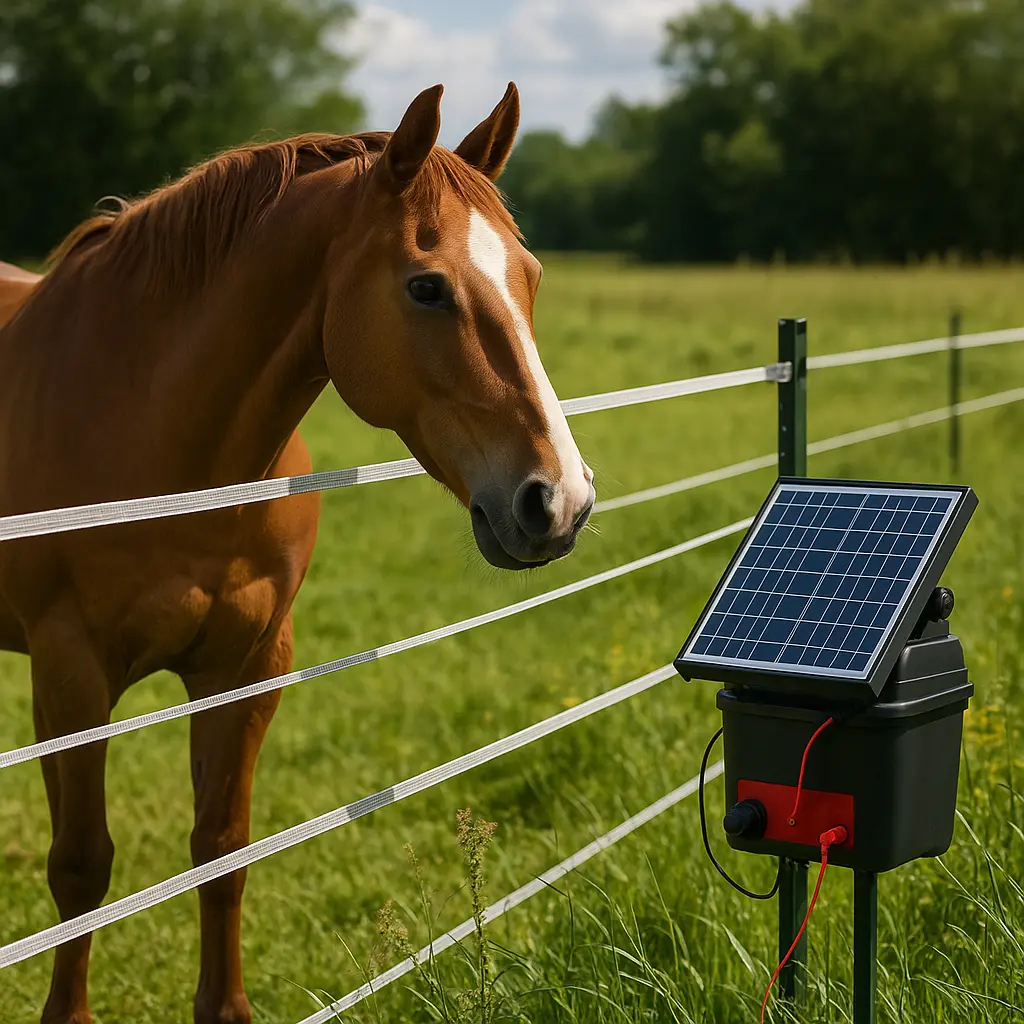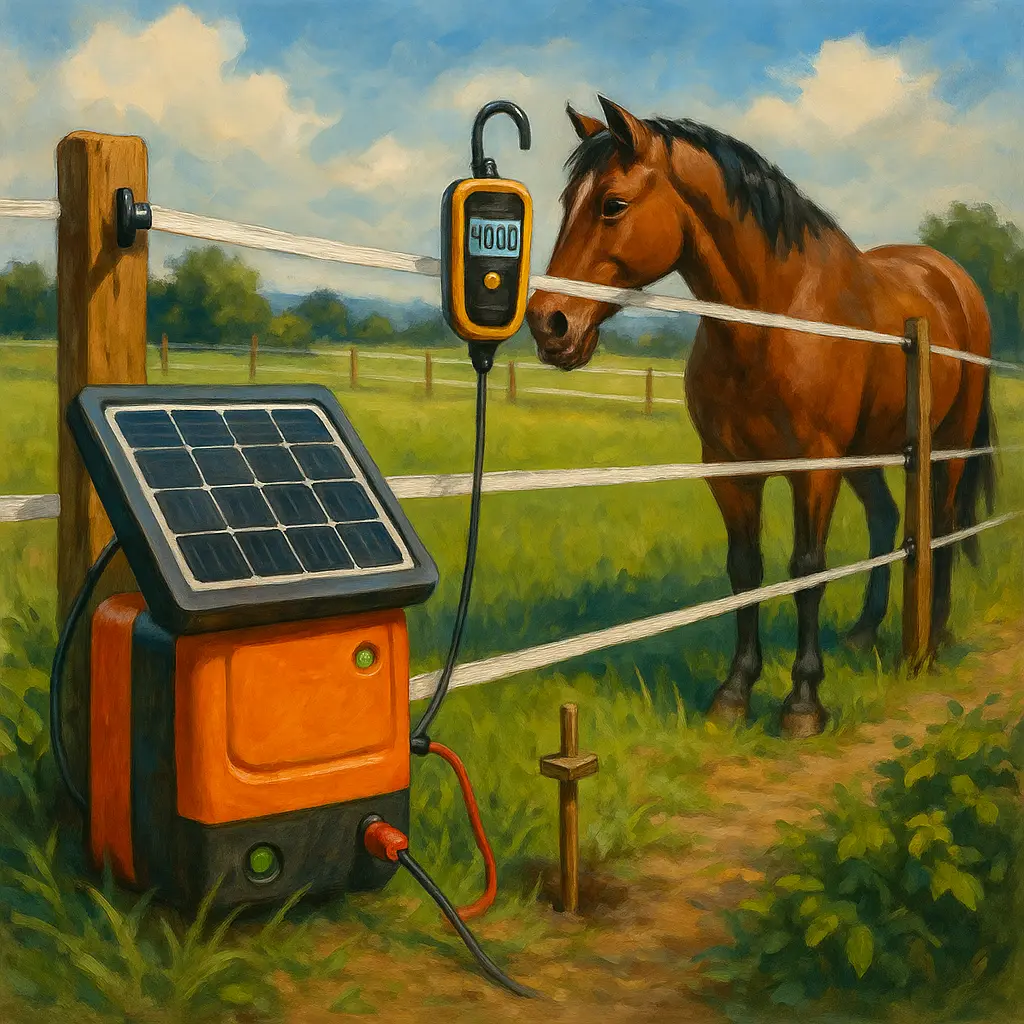
Planning electric fencing for your horse field can feel like a maze of volts, joules and brand names — but a few clear rules will get you a safe, reliable setup that works year-round in UK weather.
Key takeaway: For most UK horse paddocks, aim for 3,000 volts at the fence line, power it with a low‑impedance energiser sized at roughly 1 joule per mile of fence, and overspec slightly for summer weeds and long runs.
What voltage does a horse electric fence need?
For horses, you need a minimum of 2,000–3,000 volts, with 3,000V ideal; go to 4,000–5,000V output if you have long runs or heavy vegetation. This ensures your tape still delivers 3,000V+ at the far end once grass growth and damp UK conditions sap power. Technical guidance from HorseRail confirms that pairing adequate volts with a properly sized energiser is key to consistent performance.
Voltage is the “attention getter” your horse feels. If the reading at your furthest post drops below 3,000V, many horses will lean, itch and eventually walk through. In summer, growth bleeds power to ground; in winter, wet clay soils increase leakage. That’s why you size for the worst week of the year, not the best. Quick tip: test at the farthest point of your fence once a week with a proper fence tester — energiser LEDs are handy but the line reading is what matters.
Which energiser type is best for your paddock?
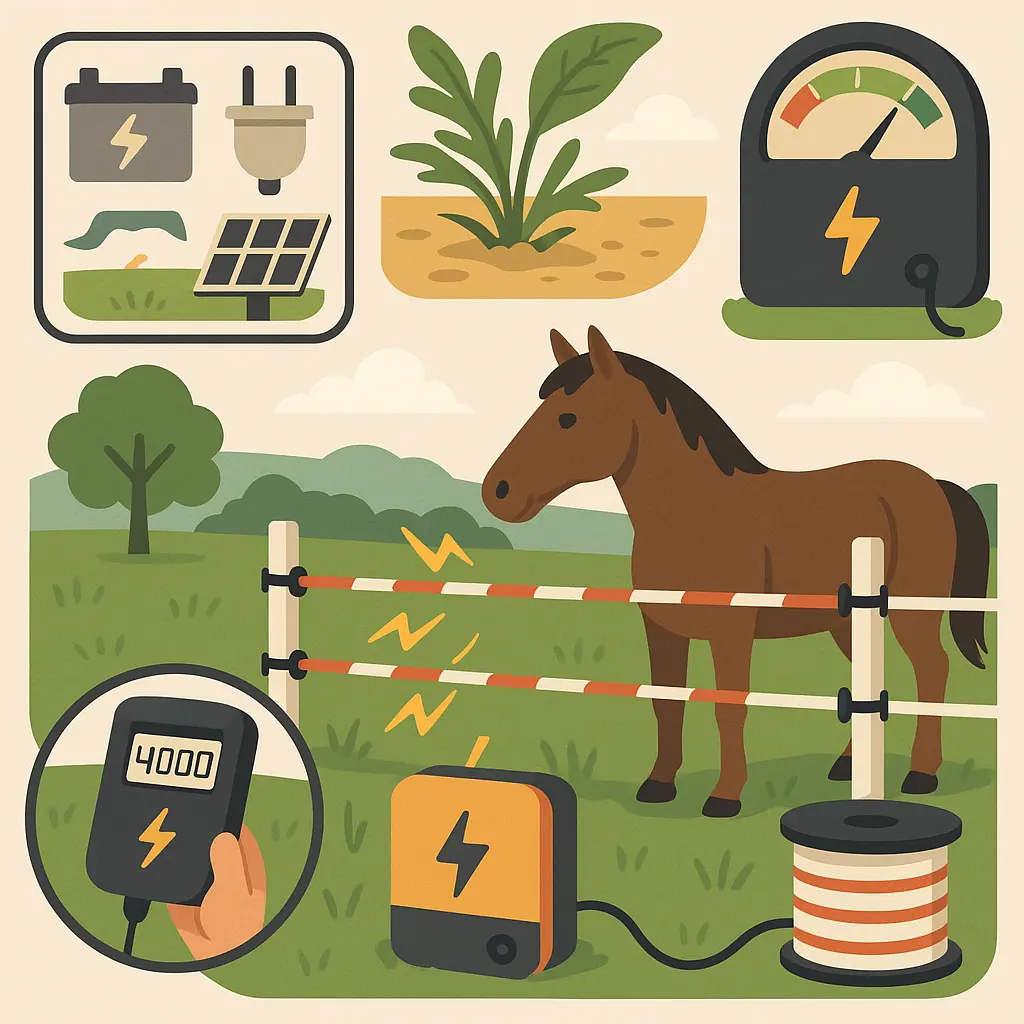
Choose mains for permanent fences near power, solar for remote UK fields, and battery for temporary or portable paddocks. Battery-powered units typically cost £80–£200, mains £100–£250, and solar £150–£400 in the UK market — all suitable for one-acre horse paddocks (Dalton Supplies).
Mains units (e.g., Hotline Gemini mains/12V or Gallagher M-series) give the most consistent power through tough conditions and are great for boundary fencing at livery yards. Battery units (e.g., Gallagher B10/BA20 or Hotline Shrike/Gemini on 9V/12V) are ideal for strip-grazing and seasonal divisions — easy to move and store in winter. Solar energisers shine in truly remote paddocks with no mains access; models like the Hotline FireDrake pair a panel with a battery for set-and-forget operation. UK-focused suppliers also note that solar kits handle variable light surprisingly well if you get the panel angle right and keep it clean in wet months.
Budget-wise, allow for a leisure battery if going battery or solar. One example from UK retail: a 55Ah battery in a Horizont Trapper solar kit has been reported to last around three months of continuous use, with replacements at roughly £14.99 (FarmCare UK). Monitor closely in prolonged wet weather and in the darker weeks around December–January.
Hotline vs Gallagher: which offers better value for UK horse owners?
Hotline typically gives more power per pound for smallholders and horse paddocks, while Gallagher offers premium features and a 7‑year warranty (on registration) for long-term, permanent fences. Independent UK suppliers consistently position Hotline as the value workhorse and Gallagher as the premium, feature-rich option.
Electric Fencing Direct summarises it well: Hotline units are rugged, competitively priced and ideal for seasonal grazing, while Gallagher adds high‑end tech and exceptional warranty support for extensive systems. The Hotline Gemini 40 (mains/12V) is around £89.99; Gallagher’s compact BA20/B60 battery models are popular for small paddocks, with 7-year warranties when registered (FarmCare UK).
“Hotline equalisers are a better price point (you get much more power for your pound) but Gallagher offers 7 year guarantee if registered; for solar, I’d pick the Hotline FireDrake 67 for power and price combo.” — FarmCare UK team
If you’re going solar and want serious punch for horses that test boundaries, the Hotline FireDrake range starts around £219.99 (FarmCare UK). Note that Voss Farming energisers were discontinued in the UK from February 2024, so stick with readily supported brands like Hotline and Gallagher for spares and advice.
How much will a one-acre electric fence cost?
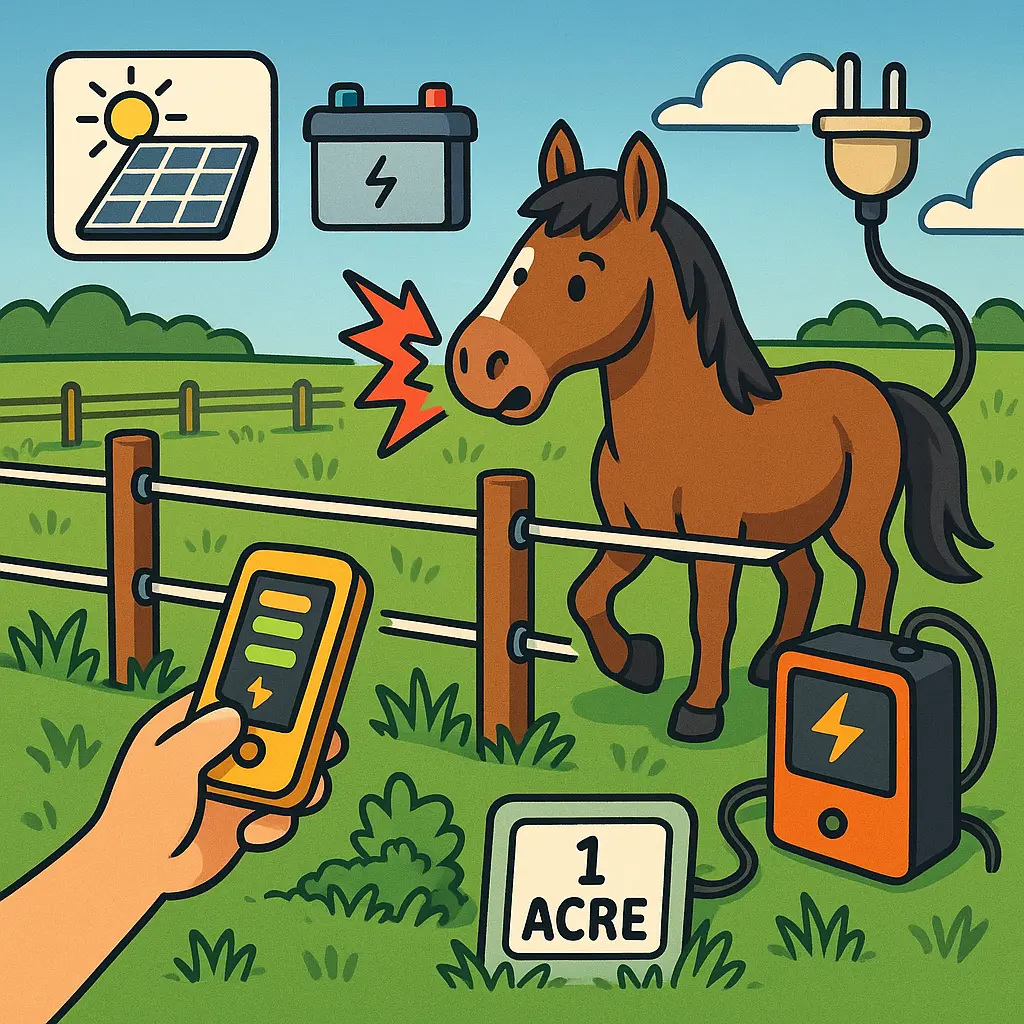
For a typical one-acre horse paddock using 2–3 strands of 20–40mm polytape, budget roughly £90–£180 for tape plus £80–£200 for a battery energiser; expect a mid-range total from about £300 before posts and gates (Dalton Supplies). That estimate scales up if you choose solar or a higher-powered unit for heavy vegetation.
Polytape built for horses is wider (20–40mm) for visibility and safer contact, costing £30–£60 per 200m reel. Two to three lines typically use 600–900m of tape for an acre, so £90–£180 covers tape alone. From there, add energiser, posts, insulators, grounding rods and a tester. Solar energisers average £150–£400, while mains are £100–£250 if you can site your unit near a power source. Pro tip: buy once, cry once — slightly oversizing your energiser saves you from replacing it when summer growth arrives.
At Just Horse Riders, we recommend pairing your fencing project with a quick check of other seasonal yard essentials. If your horse is leaning to scratch because of flies, fitting a dedicated fly sheet can reduce that urge and protect your new tape — browse breathable fly rugs for summer. In winter mud, sturdy clothing helps with fence checks and repairs — keep comfortable in durable women’s jodhpurs & breeches or kit out younger helpers with children’s breeches.
Power sizing: joules, low-impedance and coping with UK weeds
Use a low‑impedance energiser rated around 1 joule of output per mile of fence, and start summer with 4,000–5,000V at the unit to maintain 3,000V+ at the far end through vegetation. This “oversize for summer” approach prevents the all-too-common July voltage sag.
Low-impedance energisers push power through light shorts (like wet grass) without stalling; they’re the standard for horse fencing. HorseRail’s technical guide recommends “around 1 joule per mile” paired with 3,000+ volts for horses — and to oversize slightly for seasonal changes (HorseRail). In practice, UK suppliers suggest models like the Gallagher B40/BA20 or Hotline Gemini/FireDrake for portable or solar setups that can hold their own against British weeds and long lines (Electric Fencing Direct).
Quick tip: if you notice animals testing the fence most at the far corner, take your reading there first, not at the energiser. You want 3,000V+ at the end of the run — that’s the number that matters to your horse.
Installation essentials: grounding, tape and visibility
Install at least one proper earth rod (more for bigger setups), use 20–40mm polytape for horse visibility, and keep your joins, insulators and corners tidy to stop power bleeding. A well-earthed, visible fence trains faster and holds its voltage.
Grounding is the silent hero of any electric fence. Poor earthing is the number one cause of “it’s on but my horse doesn’t care.” Drive your earth rod(s) deep into moist soil, space multiple rods a couple of metres apart if needed, and ensure tight, corrosion‑free connections. An earth return system can also help on very dry, sandy or chalky ground, but for many UK fields the standard earth rod approach works well thanks to our regular rainfall.
For horses, visibility matters as much as the zap. Choose 20–40mm polytape rather than thin wire so horses recognise the barrier and avoid panicking. Keep your lines straight, at chest and nose height for your herd — typically two lines suffice for calm groups, three for keen jumpers or inquisitive youngsters. Tighten tape sensibly to prevent wind whip.
Training makes a huge difference: introduce horses on a low setting first (some UK retailers cite starter options like Fenceman DP350B or CP450), then move to a higher setting for determined leaners once they understand the boundary. During the learning phase, protect legs from any exploratory tangles with supportive horse boots & bandages, and keep on-hand cleaning supplies for minor scrapes from curious noses with yard-ready grooming kit and washes.
Seasonal setup: summer weed growth, winter battery care and UK weather
In UK summers, oversize your energiser and trim vegetation regularly; in winter, monitor battery health and keep connections clean and dry. Wet clay, frost and exposed paddocks all demand more from your system, so maintenance is non‑negotiable.
Summer: growth touches your lower line, siphoning voltage. Start the season with 4,000–5,000V at the energiser, mow or strim under lower strands, and consider lifting the bottom line a notch for heavy weeks. Wider tape also helps horses “see” the fence in bright light and wind. If flies are causing rubbing and fence testing, reducing the itch factor helps — lightweight fly rugs can lower the urge to lean and scratch.
Winter: battery performance dips in the cold and in prolonged wet. Keep solar panels clean and angled to winter sun; store spare batteries off the ground, charged and dry. The 55Ah leisure battery example that runs for around three months is a ballpark — be ready to top up sooner during dark, wet spells (FarmCare UK). If you’re regularly checking fields at dusk, add a layer of safety for you, too — a simple hi‑vis waistcoat or hat band makes you visible to yard traffic and road users if your route crosses lanes.
Hardware: both Hotline and Gallagher design for British conditions — wet clay, driving rain, frost, and exposed uplands. Look for robust, UV‑stabilised posts and quality insulators that won’t go brittle by spring. If you’re kitting out on a budget, keep an eye on seasonal deals in our Secret Tack Room clearance for yardwear and accessories that make fence work more comfortable.
Weekly checks and safety: how to know your fence is working
Test your fence weekly at the furthest point and aim for 3,000V+ on the line; fix poor earthing, vegetation shorts or weak joins before horses exploit them. Consistent, proactive checks beat emergency repairs every time.
Most energisers feature status LEDs, but a dedicated fence tester is the gold standard — use it at your longest or weediest run. If you’re under 3,000V, work through this order: a) earthing (rods deep, tight and corrosion‑free), b) vegetation (trim back and lift bottom line if needed), c) joins and insulators (clean, tight, non‑metallic insulators for tape), d) energiser output (confirm spec and battery state). If a unit feels undersized once summer arrives, don’t be afraid to step up a class; both Electric Fencing Direct and HorseRail advise building in a buffer.
At Just Horse Riders, we often hear from customers whose horses only started respecting the fence after they switched to highly visible tape and bumped voltage to hold 3,000V+ at the end post. If your horse still rubs hard even with a solid zap, check comfort factors — a correctly fitted winter layer can reduce itch and moulting rubs; browse dependable turnout rugs for cold snaps and cosy stable rugs for off‑field downtime.
FAQs
What’s the minimum voltage for a horse electric fence in the UK?
2,000–3,000 volts minimum, with 3,000V ideal at the fence line. For long runs or heavy weeds, plan for 4,000–5,000V at the unit to maintain 3,000V+ at the far end (HorseRail).
Which is better for a remote paddock — battery, solar or mains?
Solar is best if there’s no mains power (e.g., Hotline FireDrake from £219.99+), battery suits portable strip‑grazing, and mains is ideal for permanent fences near a socket (Electric Fencing Direct; FarmCare UK).
How long does a leisure battery last on a horse fence energiser?
As a ballpark, a 55Ah battery in a popular UK solar kit has been reported to last around three months of continuous use; monitor more frequently in dark, wet winters (FarmCare UK).
Hotline or Gallagher — which offers better value for horses?
For most smallholders and mobile paddocks, Hotline delivers robust power at a friendlier price; for long-term, permanent fencing, Gallagher’s premium features and 7‑year registered warranty are compelling (Electric Fencing Direct; FarmCare UK).
How do I check if my horse fence is working properly?
Use a fence tester at the furthest point weekly and aim for 3,000V+. Fix earthing, vegetation shorts and weak joins first; energiser LEDs are helpful but don’t replace a line reading (HorseRail).
What will a one-acre electric fence cost me in the UK?
Expect around £90–£180 for 20–40mm polytape (2–3 strands, 600–900m) plus £80–£200 for a battery energiser; mid‑range totals land at roughly £300+ before posts and gates (Dalton Supplies).
Any final tips to stop horses testing the fence?
Use visible 20–40mm tape, train on low then increase power, hold 3,000V+ at the end post, and manage flies or winter rubs so your horse isn’t hunting the fence for relief. If you’re upgrading yard kit while you’re at it, our curated WeatherBeeta selection and rider-safe riding helmets help keep both horse and handler comfortable and protected during fence checks.