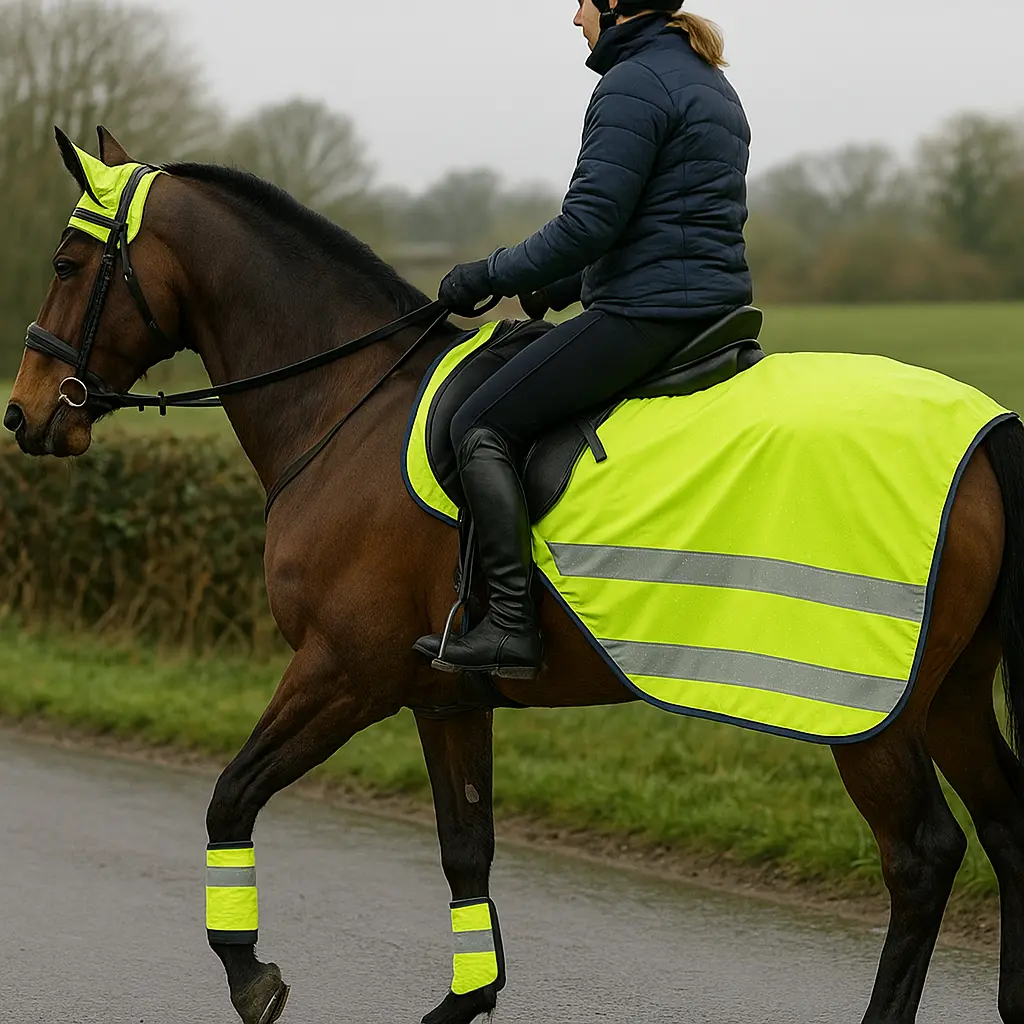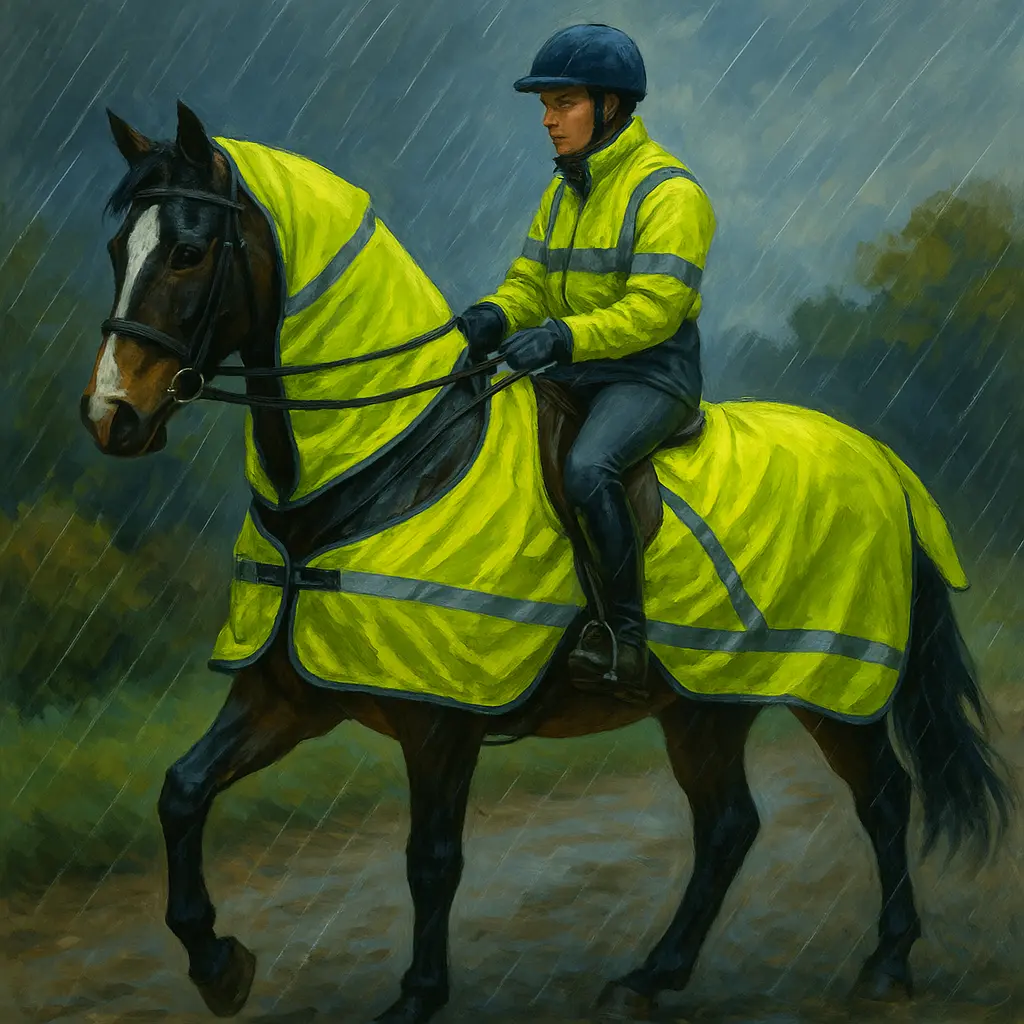
Cold rain, sideways wind, early-dark hacks — British weather loves a plot twist. The right exercise sheet keeps muscles warm, backs dry, and your horse visible so you both stay confident and comfortable all year.
Key takeaway: In the UK, use an exercise sheet for wet, windy or sub‑10°C rides — especially if your horse is clipped — and choose waterproof, fleece-lined or hi‑vis designs to match the conditions.
What is an exercise sheet and when does your horse need one?
An exercise sheet is a quarter or full-coverage rug worn during work to protect from rain, wind and cold; it’s particularly useful for clipped horses in UK autumn/winter and for warm-up or cool-down. Use one on dull, wet or windy days, on the road for visibility, and whenever a clipped or cold-backed horse needs extra warmth to prevent a chill.
Exercise sheets come into their own in classic British conditions — drizzle turning to downpour, gusts that chill a sweaty back, or gloomy light on the lanes. They sit over or around the saddle to shield the loins and quarters, helping muscles stay warm and supple. Horses with a full or hunter clip are most vulnerable to windchill and rain; protecting the large muscle groups over the hindquarters supports better performance and a safer cool-down.
For horses with a history of tying-up or PSSM-like muscle sensitivity, maintaining warmth at the start and end of work is especially important. A sheet can make the difference between a tense, tight start and a loose, swinging walk into your session.
“British weather normally requires us to be prepared for every eventuality! There are many different styles available to suit various temperatures and weather conditions.” — Online For Equine
Which type of exercise sheet should you choose?
Pick waterproof for wet or windy rides, fleece for dry warm-up/cool-down, and hi‑vis for road hacking — many riders choose a fleece‑lined waterproof sheet to cover all three needs in winter. If your horse is fully or hunter clipped, prioritise windproof and waterproof protection to prevent a rapid chill.
Here’s how the main types compare:
- Waterproof exercise sheets: Best for classic UK drizzle-to-downpour, keeping backs dry and shielding from wind. Look for taped seams and a cut that doesn’t flap. Fleece-lined options add cosy warmth without bulk — ideal for clipped horses on cold, wet days.
- Fleece or wool sheets: Great for dry days and during warm-up or cool-down. They wick sweat and prevent chills but will soak through in rain, so avoid on wet hacks.
- Hi‑vis sheets: Essential for hacking, especially on dull days, foggy mornings and at dusk. Choose bright colours with reflective strips that cover a large surface area for maximum driver visibility. Pair with rider hi‑vis for a complete profile on the road.
- Neck-cover or wrap-around designs: Offer extra protection in severe wind and rain. These are useful for horses that are cold-backed, fully clipped, or who tighten in the neck and back when chilled.
At Just Horse Riders, we recommend waterproof or fleece-lined waterproof sheets for most British winters; they’re the most versatile and keep working when the weather turns mid-ride.
How to size and fit an exercise sheet correctly
Measure from the highest point of the withers to the root of the tail; UK exercise sheets are sized in feet and inches. Fit should be snug over the quarters with a fillet string to stop flapping, leaving full freedom for the shoulder and hindleg.
Use a soft tape measure along the topline from wither peak to tail root. Match this measurement to the brand’s size chart in feet/inches. The aim is coverage without excess fabric:
- Too small: pulls across the quarters, restricts stride, or creeps forward under the saddle.
- Too big: catches wind, risks snagging on hedges or fences, and can shift under the saddle flaps.
Styles and fit notes:
- Under-saddle sheets sit beneath the saddle panels for stability and are easy to remove after warm-up.
- Behind-the-saddle sheets sit over the cantle; they’re simple to whip off mid-ride but must be well-balanced.
- Wrap-around designs secure with Velcro around the saddle for quick on/off without dismounting.
Always use the fillet string to anchor the sheet in wind. If you ride in a mono-flap dressage or jump saddle, test at walk, trot and canter to be sure the sheet doesn’t creep or rub.
Quick tip: Stand your horse square and check that the sheet ends just past the top of the tail without drooping below the hock — that’s a neat, safe length for schooling.
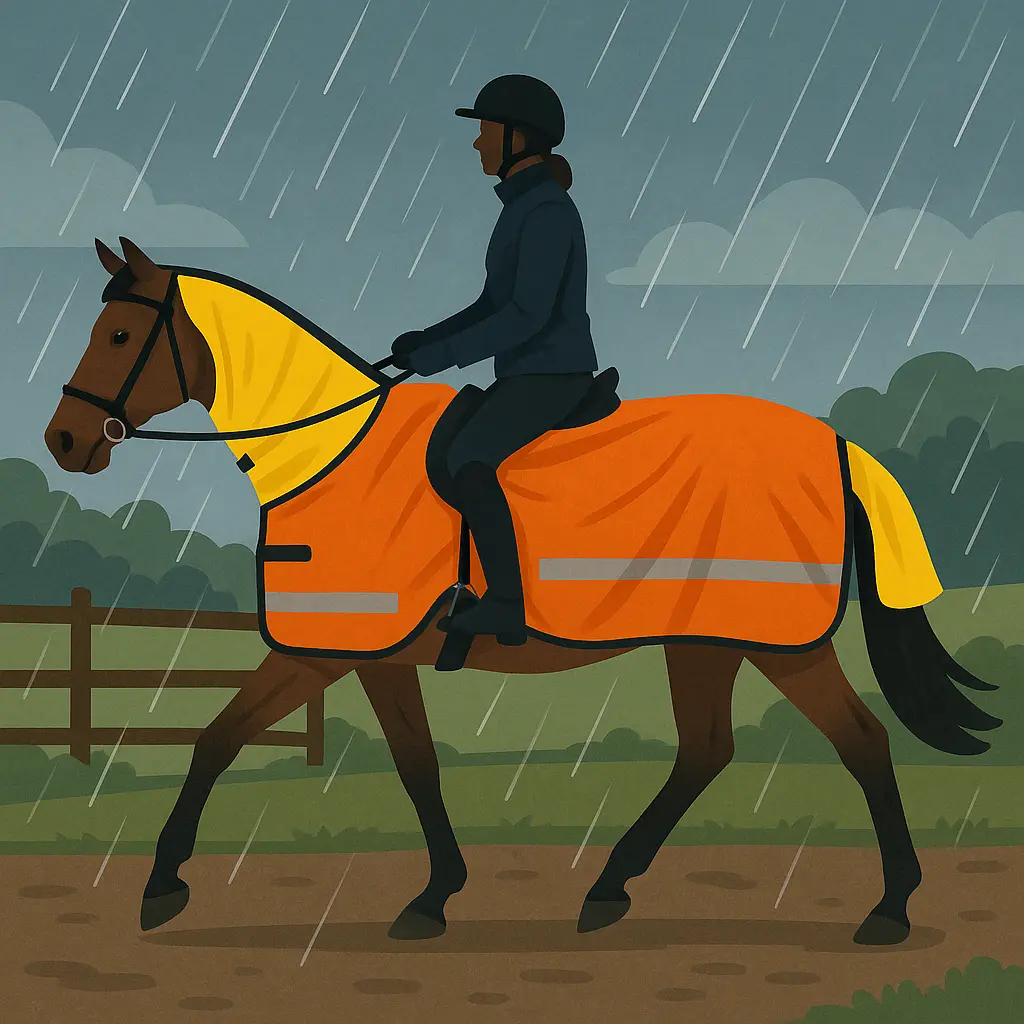
Temperature and clipping guide: matching sheets to UK weather
Below 10°C, clipped horses benefit from a warm or fleece‑lined exercise sheet during warm-up and on exposed hacks; above 15°C most horses won’t need one unless it’s raining and windy. Use lightweight sheets (0–150g) on 10–15°C days to avoid overheating during work.
While full rugging decisions depend on turnout and stable conditions, the same temperature logic helps you choose an exercise sheet that supports warm muscles without creating sweat. As a guide adapted from UK rug weights:
- 15°C and above: Generally no sheet unless heavy rain and wind are forecast — in which case a lightweight waterproof sheet can protect the back and saddle.
- 10–15°C: Lightweight (0–150g) sheets are ideal, especially if the horse is clipped or fine-skinned.
- 5–10°C: Choose a fleece or fleece‑lined waterproof sheet for warm-up, or keep it on for slow hacks in exposed areas.
- 0–4°C: Go for a waterproof with insulation and good coverage; clipped horses in windchill appreciate consistent protection.
Remember that work rate matters: a fast hack generates more heat than a long rein walk. Remove or loosen the sheet once your horse’s muscles are warm to avoid sweating, then pop it back on for the cool-down to prevent a chill.
Pro tip: Feel under the sheet at the girth area 10–15 minutes into your ride. If the skin is warm and dry (not hot or damp), you’ve judged it right.
Safety, visibility and road hacking in British winters
Use a hi‑vis exercise sheet with reflective strips for any roadwork in dull, wet or low‑light conditions. Pair it with bright, reflective rider gear and a well-fitted hat for maximum visibility and safety.
Dark horses in dark weather become nearly invisible at speed; a hi‑vis sheet presents a large, moving block of colour that drivers recognise sooner and from further away. Reflective banding catches headlights in fog, rain and dusk. Complement your horse’s sheet with a hi‑vis tabard or jacket from our rider high‑visibility range and a secure, certified riding helmet.
Quick tip: If you school in a busy livery with shared arenas and poor winter light, keep the hi‑vis sheet on for warm-up so other riders see you earlier in their peripheral vision.
“Whether the horse is clipped and type of clip – if full/hunter clipped the horse will need more protection from the elements.” — Online For Equine
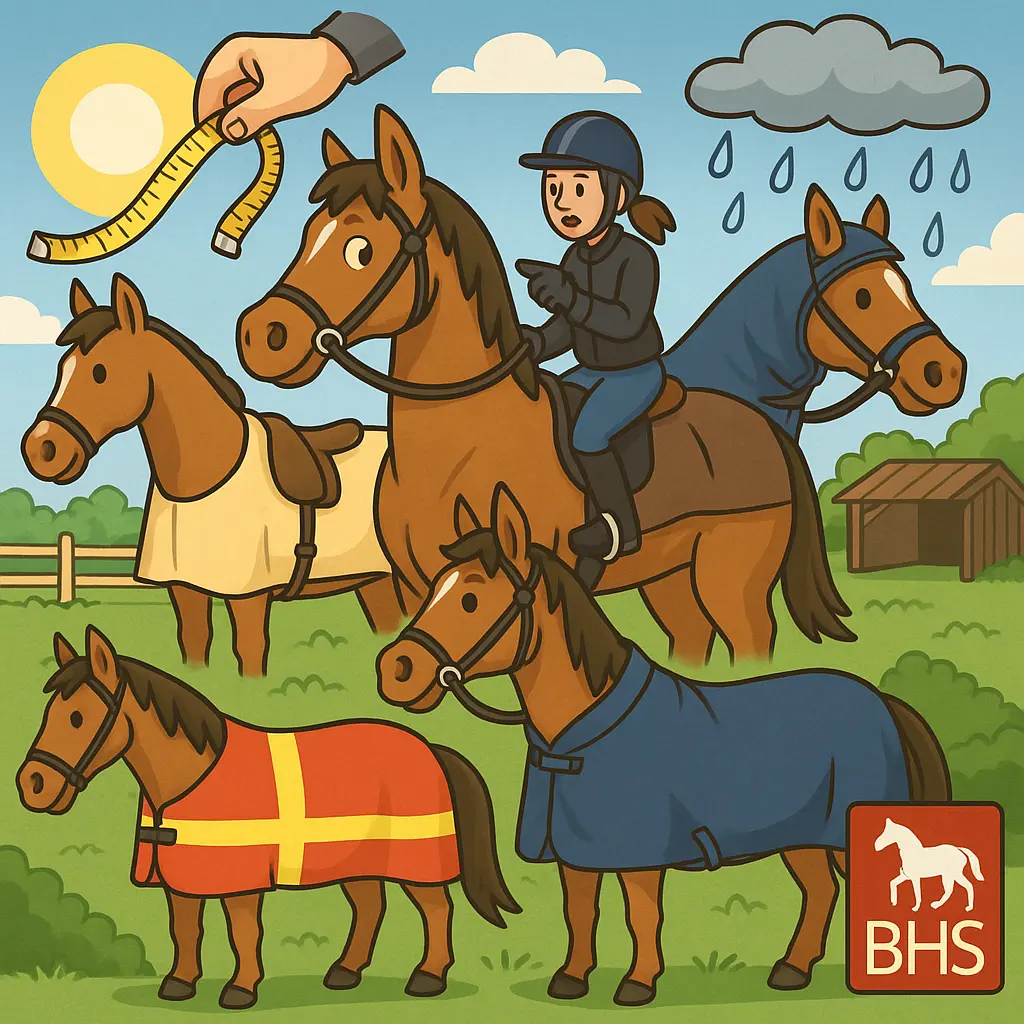
Practical set-ups for schooling, hacking and events
Use under‑saddle or wrap‑around designs for easy removal after warm-up, and avoid excess fabric for flatwork. Waterproof, fleece‑lined sheets are best for hacking in wind and rain; check stability under mono‑flap saddles before faster work.
For flatwork: Choose a cut that frees the thigh and avoids bulk under your lower leg. Under‑saddle sheets stay put through transitions and lateral work. Keep lengths tidy to prevent the sheet touching the hock, which can distract sensitive horses.
For hacking: Waterproof trumps everything in British drizzle and gusts. A fleece‑lined waterproof balances warmth and weatherproofing, especially for clipped horses. Add leg protection to support warm tendons and cannon bones — explore our horse boots and bandages to complete the set-up.
At competitions: Warm-up in a fleece or fleece‑lined waterproof sheet, remove just before you go in, and re‑apply for the cool-down. Under UK welfare expectations, horses should be appropriately protected for weather and work; align your warm-up plan with these standards and your horse’s fitness. While specific tack rules vary by discipline, the principle is simple: comfort first, training aids last.
Pro tip: Practise removing a wrap‑around sheet from the saddle at home so you can do it smoothly at events without fussing your horse or your test warm-up.
Welfare, turnout and yard planning for year-round comfort
The British Horse Society advises 0.4–0.6 hectares (1–1.5 acres) of permanent grazing per horse and a minimum stable size of 12ft x 12ft for horses, helping reduce weather stress and over‑reliance on heavy gear. Good management and shelter mean your horse needs the exercise sheet less often.
Winter is easier on horses with the right basics sorted: enough grazing without poaching, functional field shelters, and stables that allow a full lie-down and easy turning. The BHS also advises field shelters around 3.65m deep by 3–3.65m wide (10–12ft), adding approximately 1.5m width per extra horse on shared space. Well‑planned shelter gives you flexibility: exercise sheet on the hack, then into a dry, wind‑free area afterwards to cool off safely.
Explore warm, weatherproof options for non‑ridden time with our curated winter turnout rugs and cosy stable rugs. For pasture guidance, see the BHS overview of stocking rates and grass management: BHS Pasture Management.
Quick tip: Over‑grazed, muddy fields create constant windchill at fetlock height. Good grass cover or hardstanding areas near gates reduce chilling after work — your exercise sheet won’t be doing all the heavy lifting.
Buying checklist and common mistakes to avoid
Choose material to match the day, measure accurately, secure the fit, and prioritise hi‑vis on roads. Avoid oversized sheets, non‑waterproof fleece in rain, and designs that interfere with your leg or saddle flaps.
- Match to weather: Waterproof for wet/windy; fleece for dry warm-up/cool-down; fleece‑lined waterproof for versatile winter use.
- Size right: Measure withers to tail root; UK sizing in feet/inches. A fillet string is non‑negotiable in wind.
- Freedom to move: Check at trot and canter that the sheet doesn’t slip or flap. Test with your actual saddle, especially mono‑flap designs.
- Visibility first: On roads, pick hi‑vis with reflective strips — then add rider hi‑vis layers for a complete 360° profile.
- Plan your warm-up: Start with the sheet on, remove once muscles are warm, and put it back for cool-down to prevent chills.
- Buy once, buy right: Trusted brands like WeatherBeeta and LeMieux offer robust waterproofing, thoughtful cuts and reliable attachment points that stand up to British weather.
At Just Horse Riders, our customers most often choose a lightweight hi‑vis waterproof for autumn and a fleece‑lined waterproof for mid‑winter — a two‑sheet combo that covers most UK riding days.
FAQs
Do I need an exercise sheet for windy, wet rides?
Yes. For British hacks in wind and rain, a waterproof sheet prevents the back and loins from chilling, especially if your horse is clipped. Choose fleece‑lined waterproof for extra warmth on cold days.
How do I size an exercise sheet correctly?
Measure from the highest point of the withers to the root of the tail with a soft tape. UK sizes are in feet/inches. The sheet should sit neatly over the quarters with a fillet string, without drooping below the hock or pulling across the croup.
Can I use an exercise sheet for full schooling sessions?
Yes, provided it’s stable and doesn’t flap or slip. Many riders school in under‑saddle designs; test at all paces, especially under mono‑flap dressage saddles, and avoid excess length that could catch the hocks.
What’s best for visibility in poor UK weather?
A hi‑vis exercise sheet with reflective strips offers a large, highly visible surface at car‑headlight level. Combine with a hi‑vis tabard or jacket from our rider high‑visibility collection for maximum impact.
When should I use waterproof vs. fleece?
Use waterproof (ideally fleece‑lined) for wet or windy rides. Use fleece for dry warm-up and cool-down to wick sweat and prevent chills. If in doubt in winter, the fleece‑lined waterproof covers both bases.
My horse is fully clipped — what’s the priority?
Windproof, waterproof warmth. Below 10°C, start your ride with a fleece‑lined waterproof sheet, remove for fast work if needed, and re‑apply for the cool-down. A well‑fitting, stable cut prevents any mid-ride fuss.
What else should I pair with an exercise sheet in winter?
Complete your set-up with safe head protection and leg care. A certified riding helmet and suitable horse boots/bandages help you ride confidently through typical UK conditions, while quality turnout and stable rugs keep your horse comfortable before and after work.
Ready to kit out for the season? Explore proven designs from WeatherBeeta and LeMieux and ride through British weather with confidence.