

How Different Terrains Affect the Fitness and Health of Horses During Hacking
Hacking—the practice of riding horses out in the countryside or along trails—offers more than just scenic views. It exposes horses to varied terrains like grass, roads, hills, and tracks, which significantly boosts their fitness, proprioception (body awareness), and overall health compared to arena work alone. This variety builds stronger muscles, tendons, and cardiovascular endurance while reducing injury risk from repetitive strain.
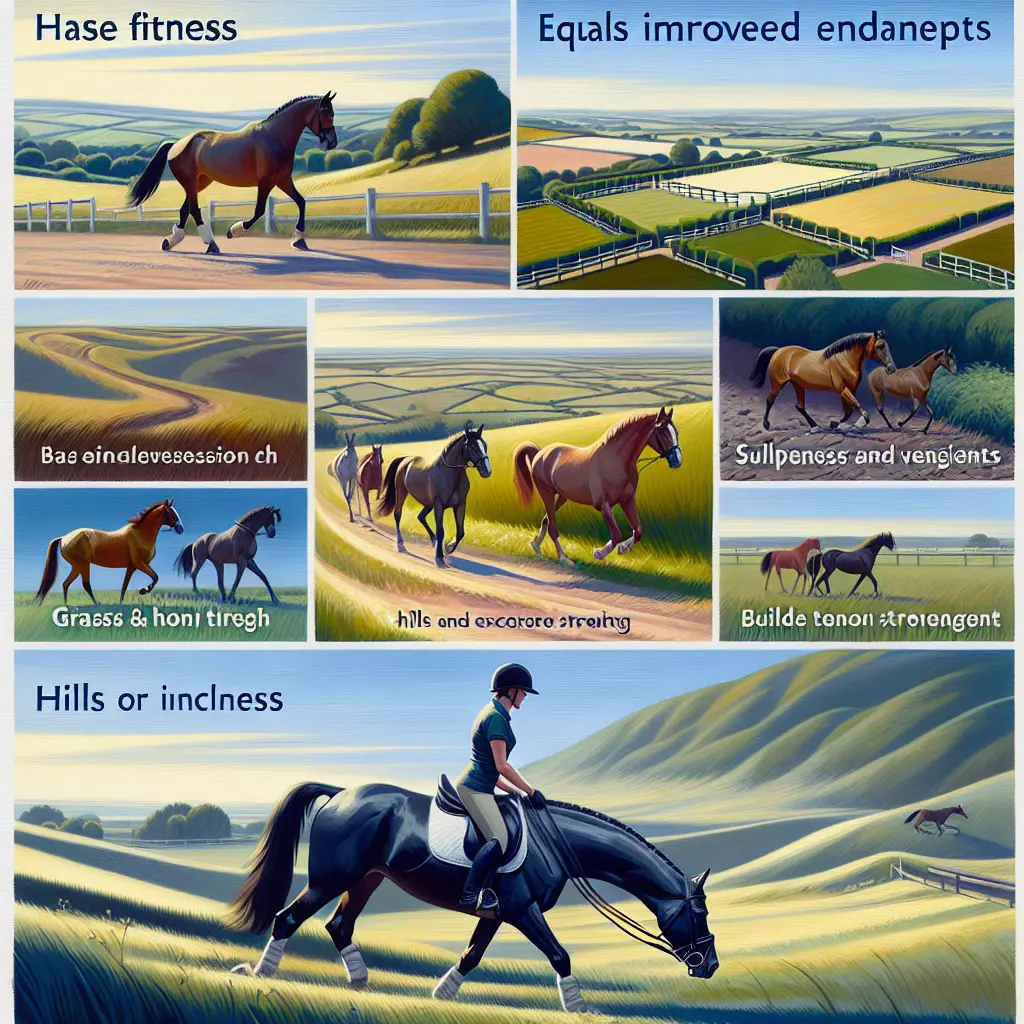
Why Terrain Variety Matters for Horse Fitness and Health
Horses evolved on diverse landscapes, not flat arenas. Sticking to one surface, like artificial sand or rubber, limits their adaptability, making them prone to injury on unfamiliar ground. A horse worked only on level arenas may develop weaker neuromuscular control and spatial awareness.
- Improved proprioception and surefootedness: Uneven surfaces like hills or tracks teach horses to place their feet precisely, enhancing balance and coordination.
- Cardiovascular and muscle gains: Hill work delivers a full-body workout, strengthening the topline, hindquarters, and lower legs while boosting heart fitness.
- Joint and tendon health: Varying surfaces prevent overuse injuries by developing soft tissues evenly. Road walking for weeks hardens tendons before trotting, preparing horses for harder efforts.
- Mental sharpness: Navigating new terrains engages the brain, building confidence for unfamiliar environments.
Breaking Down Common Terrains and Their Impacts
Different surfaces affect horses' legs, muscles, and energy use uniquely. Here's how they influence fitness and health:
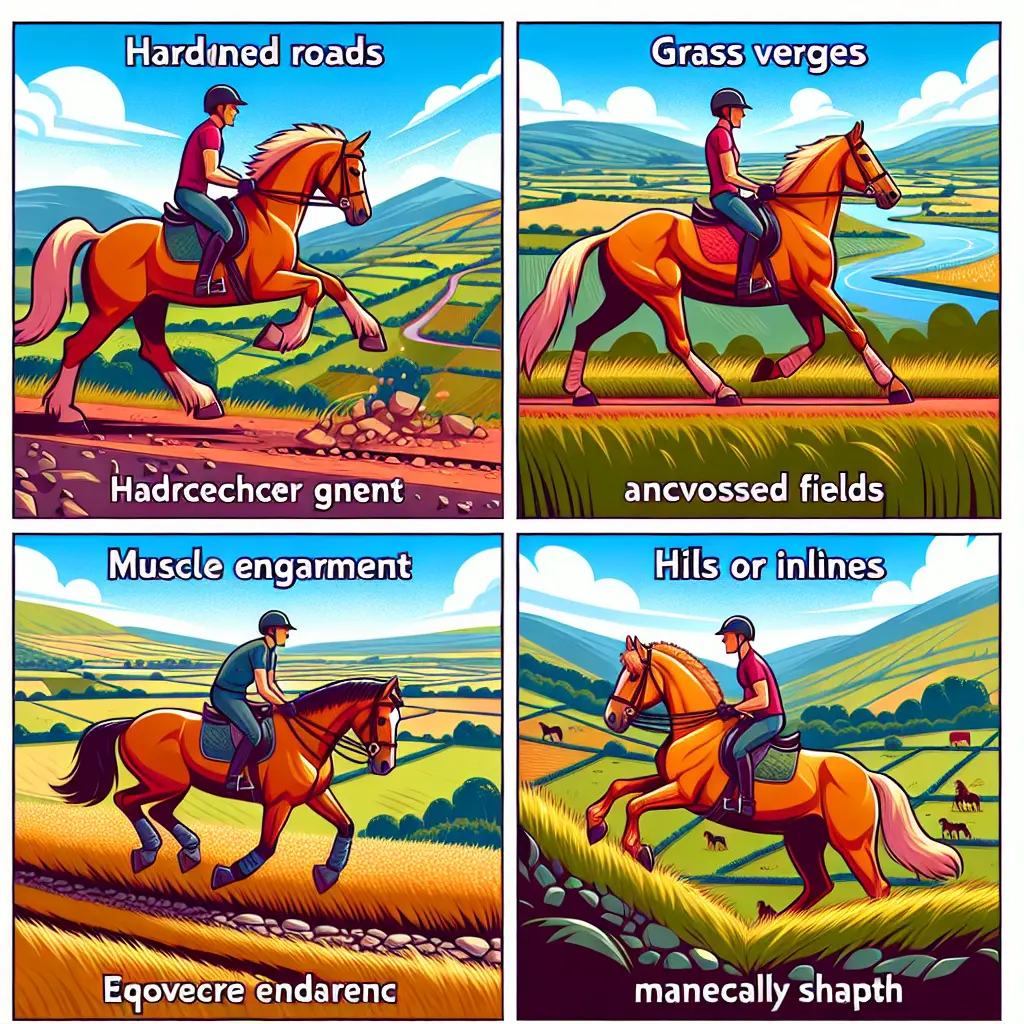
1. Hard Roads and Tracks
High concussion (impact shock) on joints but low "pull" (resistance). They build tendon strength and stamina.
- Fitness boost: Ideal for base fitness. Walk on hard roads for ~6 weeks to toughen ligaments before trotting.
- Health tip: Limit to 20-30% of hacks to avoid joint stress. Combine with softer surfaces.
- Pro fact: Horses on roads develop "harder" hooves and legs, reducing lameness risk in competitions.
2. Grass Verges and Fields (Soft, Even)
Low concussion but higher pull, engaging hindquarters more. Great for suppleness.
- Fitness boost: Perfect for transitions (walk-trot-halt) and lateral work like leg-yield in trot, improving symmetry and engagement.
- Health tip: Vary trot diagonals to balance muscle development. Use for recovery after hill work.
- Pro fact: Grass builds topline strength holistically, mimicking natural grazing movement.

3. Hills and Inclines (Up and Down)
Uphill strengthens hindquarters and cardio; downhill teaches balance and front-end control.
- Fitness boost: Full-body workout—uphill for power, downhill for coordination. Start gentle in walk.
- Health tip: Builds confidence in young horses for cross-country skills like ditches.
- Pro fact: Hill hacking improves lower leg strength and prevents "front-end heavy" posture.
4. Uneven or Stony Surfaces (Soil, Rocks, Sand/Clay)
Sand/clay pulls more (like deep arena), stones add proprioception challenge.
- Fitness boost: Enhances motor control; horses learn foot placement on trails.
- Health tip: Desensitize gradually (e.g., tarps, stones) to build mental resilience. Good for joint health via varied loading.
- Pro fact: Rocky tracks boost body awareness more than flat arenas, cutting injury from slips.
| Terrain Type | Concussion Level | Pull/Resistance | Key Fitness Gain | Health Benefit |
|---|---|---|---|---|
| Hard Roads | High | Low | Tendon stamina | Stronger ligaments |
| Grass/Fields | Low | Medium | Suppleness | Even muscle use |
| Hills | Medium-High | High (uphill) | Cardio & balance | Topline strength |
| Stony/Uneven | Variable | High | Proprioception | Injury prevention |
Practical Tips to Maximize Benefits During Hacks
Incorporate these strategies to train fitness and health safely:
- Plan variety: Mix road (20%), grass (30%), hills (30%), tracks (20%) weekly.
- Warm-up routine: 10-15 min loose walk with neck stretches; free trot long-and-low.
- Pace changes: 5-20 stride transitions keep muscles engaged and mind focused.
- School on hacks: Spirals, serpentines, or pole work on safe grass for bending.
- Build gradually: Fit horses handle 45-60 min hacks; beginners start 20-30 min.
- Monitor health: Watch for uneven gait or heat—vet check if needed. Fresh/flooded arenas? Hack instead.
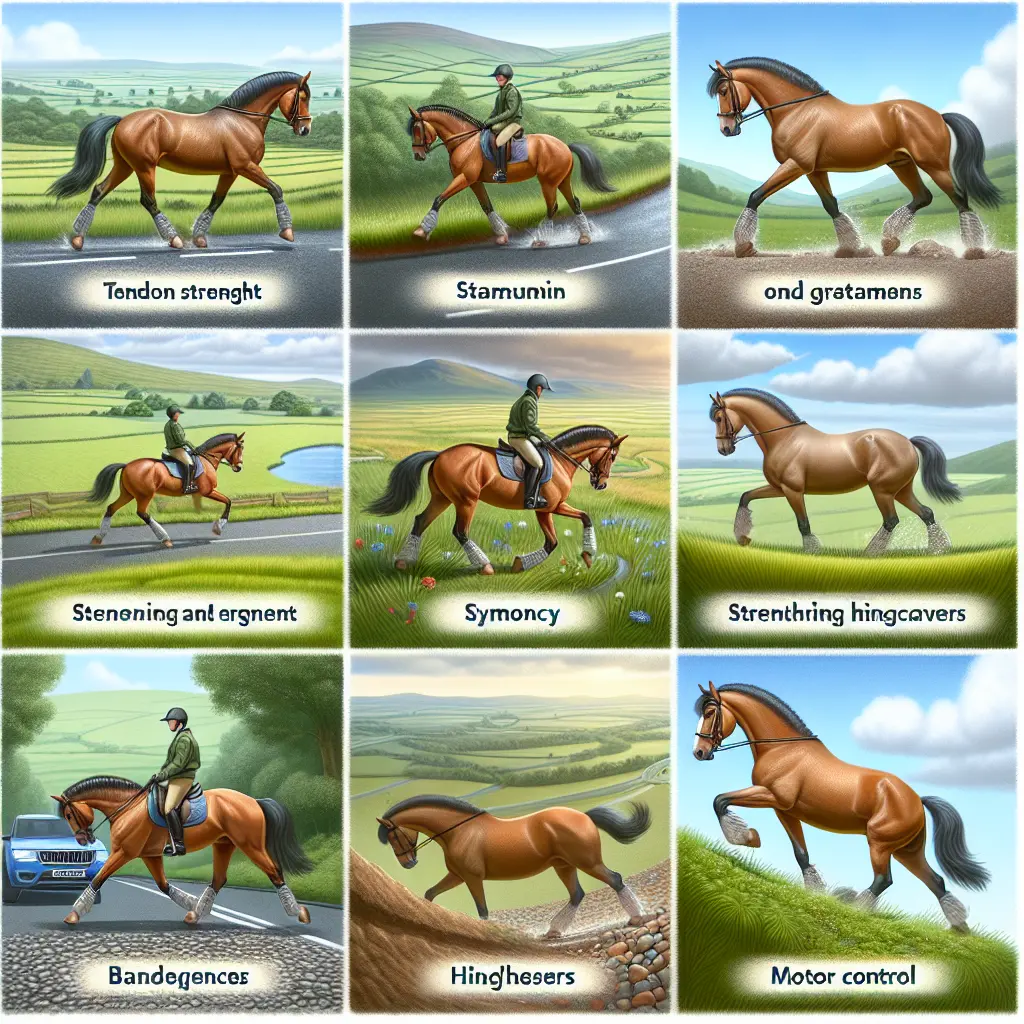
Common Mistakes and How to Avoid Them
- One-surface rut: Leads to weak adaptation; rotate weekly.
- Skipping warm-ups: Risks soft tissue strains; always loosen first.
- Overdoing hills early: Start walk-only on gentle slopes.
- Ignoring mental prep: Spooky horses benefit from brain-engaging exercises like bottle "ponds."
Long-Term Rewards for You and Your Horse
Regular varied hacking keeps horses sound, eager, and versatile—reducing arena sourness and injury downtime. Owners report better arena performance post-hack, with gains in straightness and power. For sport horses, it's essential: natural terrains replicate real-world demands arenas can't.
Start small, observe your horse, and watch fitness soar. Your next hack could be the best training session yet.