Your first clean, straight flying change feels like magic — but it isn’t a trick. It’s the result of rock-solid basics, a collected, expressive canter, and rider timing you can trust even on a windy British winter’s day.
Key takeaway: You’re ready to school flying changes when simple canter/walk/canter transitions are crisp and balanced, and your horse can maintain a collected, uphill canter with round, “off-the-ground” strides.
When is your horse ready for flying changes?
Your horse is ready when it produces clear canter/walk/canter simple changes with even walk steps and prompt strike-offs, and can stay in a collected, expressive canter. This foundation prevents tension and late or “dirty” changes.
Dressage master Nuno Oliveira’s standard still holds true today:
“When the horse executes the transitions from canter to walk calmly and strikes off equally well anywhere in the arena, he is ready for the flying changes.”
That simple change must be correct — downward transitions to walk without trot steps, and upward transitions that are quick off your leg without rushing. This is echoed in modern guidance from Horse & Hound and Eurodressage. Quality of canter matters as much as the transition: a collected canter with big, round, “bouncy” strides gives your horse time in the air to change legs. A flat or four-beat canter makes clean changes far less likely.
Quick tip: Count “one, two, three, walk — one” to school five even, balanced walk steps between canters before you gradually reduce them. Prioritise light aids and smooth transitions coming from behind.
What rider skills and position set you up for success?
A balanced seat, independent hands, and calm body control are non-negotiable for clear aids and security. If your upper body wobbles or your hands fix your horse’s neck, you’ll scramble the message.
As wehorse notes, riders need stability that’s independent of the reins so the horse can stay relaxed over the back and through the poll. The British Horse Society’s staged approach also underlines effective position and welfare-first preparation as riders progress to advanced work (see BHS Stage 1 standards). Focus on:
- Quiet core and hips that follow the canter, not drive it.
- Stable, elastic hands that don’t block the inside shoulder or bend change.
- Clear leg position: outside leg slightly behind the girth to indicate the new lead, inside leg at the girth to maintain jump and bend.
Pro tip: If you struggle to keep your seat secure as you collect, invest in well-fitting, grippy breeches. Our riders love the feel and stability of modern silicone-seat options in our women’s jodhpurs & breeches range, and never compromise on safety with properly fitted riding helmets.
Build the foundations: exercises that make changes easy
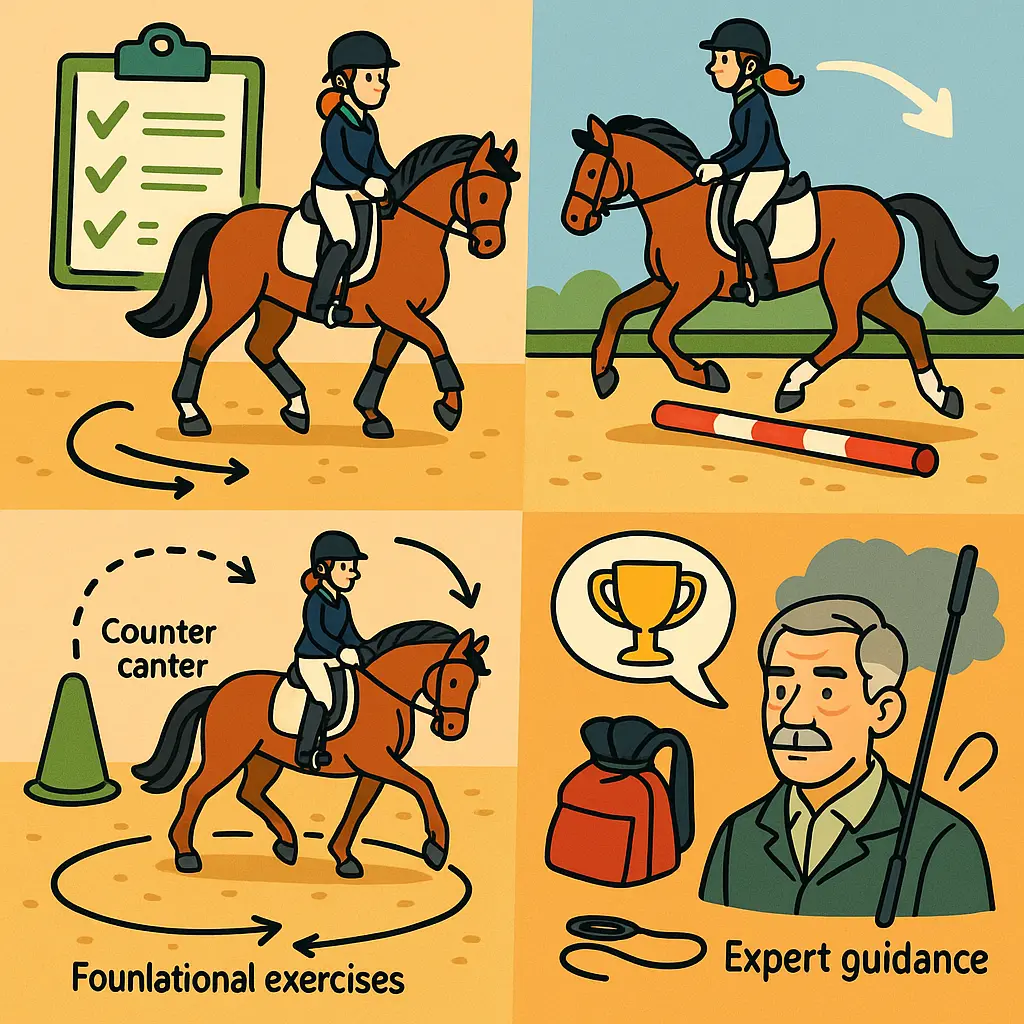
Use counter canter, shoulder-in, travers evolving to half-pass, frequent simple changes, and collecting half halts to improve canter quality and engagement. These exercises lift the shoulders, sit the hindquarters, and create the “airtime” changes require.
From Horse & Hound and wehorse training plans, prioritise:
- Counter canter to prove straightness and balance on the “new” lead without changing.
- Shoulder-in (including on a circle) to free the shoulders and mobilise the ribcage.
- Travers and then half-pass to build hindquarter engagement and lateral suppleness.
- Simple changes: shorten the canter with half halts, transition to five balanced walk steps, then strike off promptly; reduce the walk steps only once they’re even and relaxed.
Classical guidance (as cited on Eurodressage) is unequivocal:
“The most important thing in preparing for the changes is getting the canter/walk walk/canter transitions perfect!”
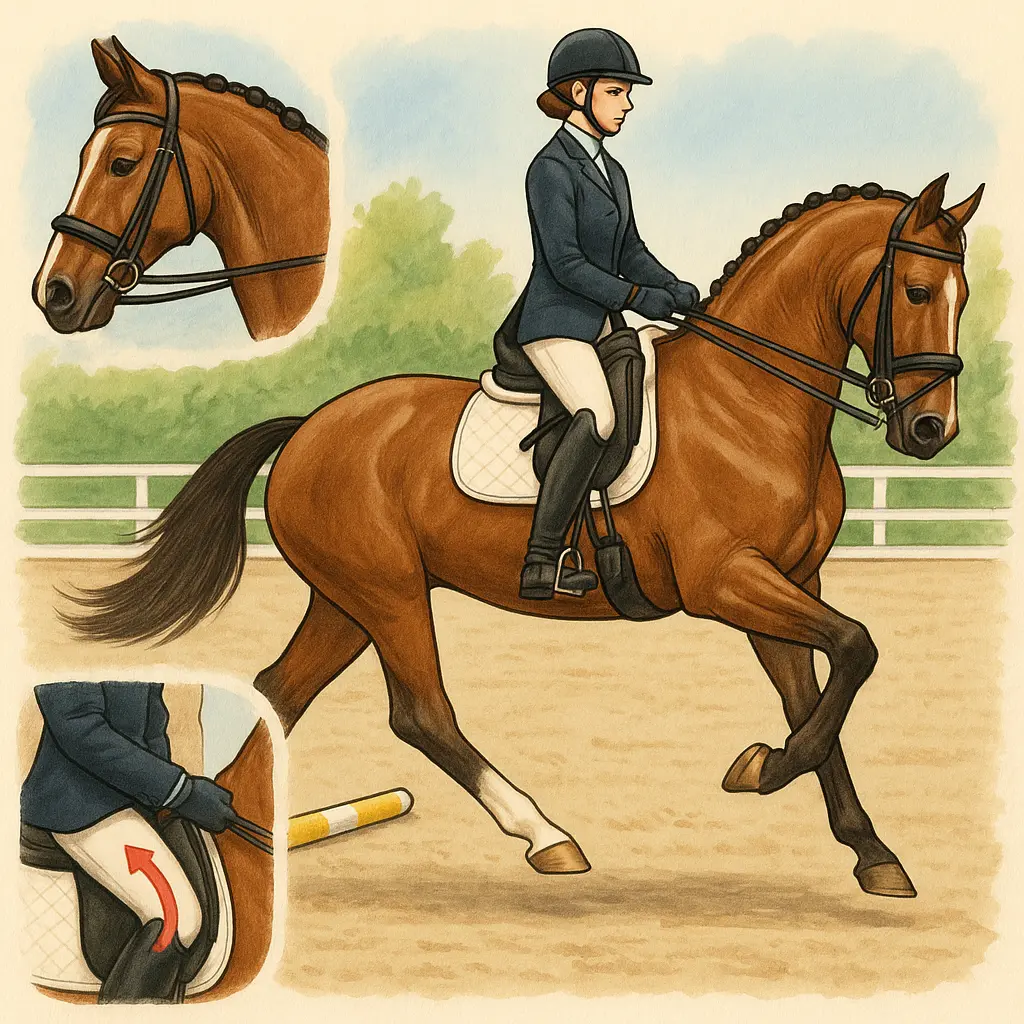
Try walk figure-eights before canter: at the centre, quietly shift your hip towards the new circle direction and allow the front end to follow for a soft change of bend. Build this feel at walk, then trot, before canter (see this useful visual from YouTube).
How to introduce the first flying change
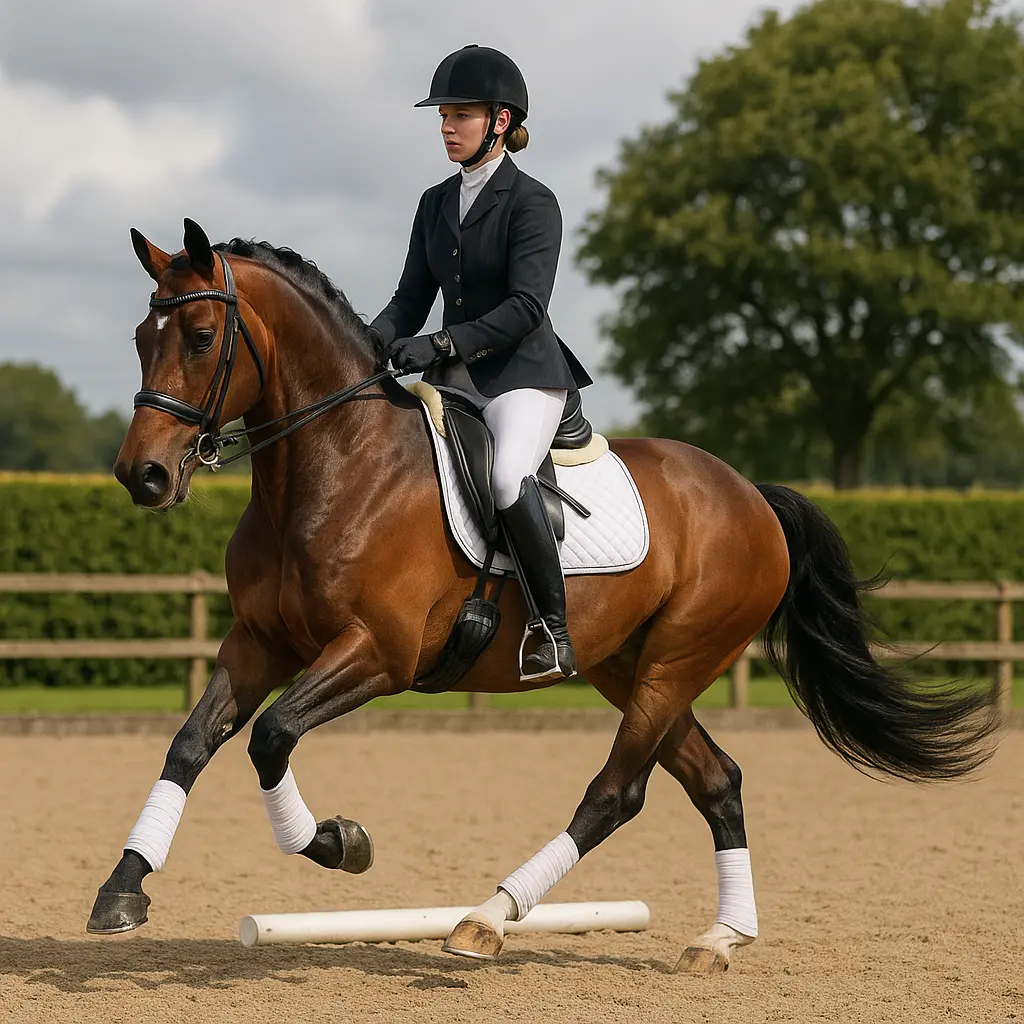
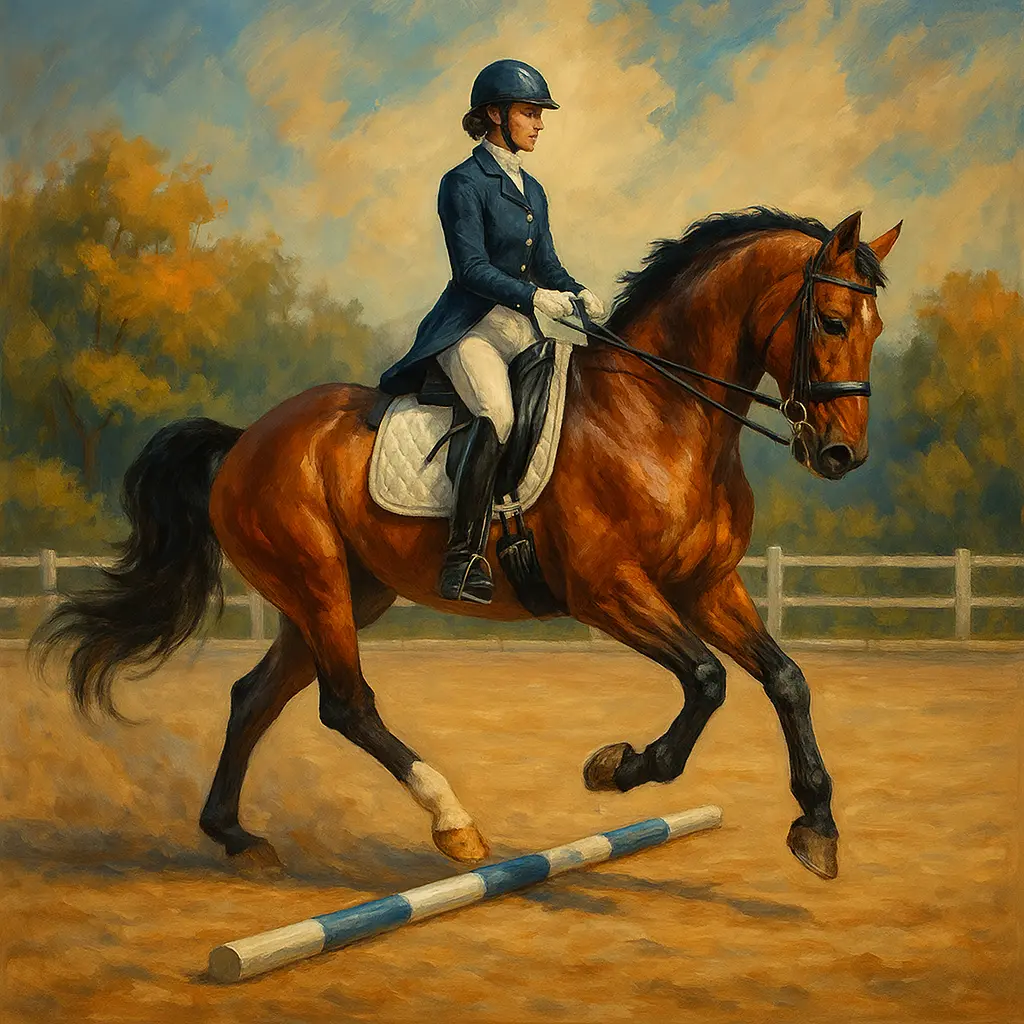
Start from a high-quality, collected canter and ride your first changes on a diagonal or between two circles; a single ground pole or cavaletti helps the horse use airtime to reorganise the legs. Keep the canter quick behind but not rushed.
Step-by-step:
- Warm up until the back feels loose and the canter feels springy. In cold, wet UK weather, take longer to get the muscles warm before asking for collection.
- On the diagonal, establish a straight, bouncy canter. Use a collecting half halt three to five strides before the change to bring the withers up and the hind legs under.
- Change the bend with your seat and inside leg; move your new outside leg slightly behind the girth as the leading foreleg leaves the ground. Keep hands elastic — no pulling the head for a “fake” bend.
- If using a pole or cavaletti (typically £20–£100 sets), time your aid as the horse lifts over it to capitalise on suspension.
- Stay forward thinking. If the change doesn’t happen, ride a clear canter–walk–canter and try again later. Don’t chase or kick; clarity beats force.
As emphasised by Horse & Hound and Eurodressage, your simple changes must be quick, light, and correct before you reduce the walk steps and ask in the canter. Keep your outside leg quietly back during the reduction so the aid picture remains consistent.
Quick tip: Count three quality canter strides of preparation — collect, balance, ask — and then ride away positively after the change so your horse stays straight and in front of the leg.
Fixing ‘dirty’ changes: straightness, timing and tension
Most problem changes stem from poor canter quality, back or poll tension, or unclear timing. Fix the canter first, then refine the aid picture and preparation.
As one expert explained on Eurodressage:
“In the lower classes it is often a lack of experience of the horse and/or of the rider. Quite often, within the test, the horses are not well prepared for the flying change. For example the quality of the canter is not good enough, the horse is tense in the back or in the poll. Alternatively the rider can give the aid in an incorrect manner.”
Correct common issues with targeted schooling:
- Late behind or four-time canter: Improve jump with shoulder-in on a circle, then ride travers to sit the quarters. Keep the canter collected yet active; avoid long, flat strides.
- Crossing or swinging quarters: Use counter canter on shallow lines and ride the change on a line with “rails” (imaginary or between poles) to maintain straightness.
- Head-tossing or bracing: Revisit simple changes, ensuring the downward is from the seat and leg, not the hand. Reward softness; tension kills clean timing.
- Pilot error: Stabilise your upper body. Don’t throw your shoulders into the new direction, and keep your new inside hand soft to allow the bend through the neck and shoulder.
Pro tip: Reward progress to build confidence, but only repeat and “bank” the feeling of a clean, straight change. If quality deteriorates, go back to simple changes and collection work. Clean basics today mean reliable tempis tomorrow.
Train smart in UK weather: warm-ups, cool-downs and routine
In cold or wet UK conditions, extend your warm-up before canter work and cool down gradually, rugging appropriately to protect muscles and welfare. Consistent routines support relaxation and learning.
The BHS stresses progressive warm-ups and good stable management for safety and welfare. On winter days, walk longer, add suppling lateral work in trot, then pick up canter only when the back swings. After schooling, allow relaxed walking until the breathing settles, then rug as needed in line with BHS guidance (BHS Caring for Your Horse).
At Just Horse Riders, we recommend planning for the forecast:
- Use appropriately weighted winter turnout rugs for the field, and change into breathable stable rugs after work to prevent chills.
- On short, rainy days, make the most of indoor-school sessions to keep your programme consistent, adjusting gradually across seasons as per BHS welfare guidance.
- Post-ride checks catch rubs and strains early — a well-stocked grooming kit makes it easy to run hands over muscles and legs as you cool down.
Quick tip: Don’t skip collection work just because it’s cold. You still need a round, engaged canter for successful changes — take the time to warm up correctly, then ask.
Helpful kit for cleaner changes (without over-aiding)
Use simple, precise tools to clarify the aids and protect your horse while strength develops. The goal is better communication, never stronger pressure.
- Dressage whip: A light tap can reinforce the forward reaction to the new outside leg, but avoid “chasing” into the change. Precision beats exaggeration.
- Lunging training aids or pessoa-type systems: Used correctly, these build topline and balance so the canter has enough jump before you add rider coordination.
- Ground poles/cavaletti (£20–£100): A single pole on the diagonal helps create suspension and focus without over-complicating the question.
- Leg protection: Support the limbs as you add collection and lateral work with breathable horse boots & bandages.
- Rider comfort and safety: Grippy women’s breeches enhance stability, and certified riding helmets are essential for schooling sessions.
- Reliable rugs: Keep muscles warm to maintain suppleness with trusted brands such as Weatherbeeta rugs.
At Just Horse Riders, we recommend keeping your training aids minimal and your standards high: if the canter gets flat, step back to collection exercises rather than pushing for a change.
Bringing it all together
Make simple changes effortless, build a springy, collected canter, then introduce your first changes over a clear line — poles optional — with quiet, precise aids. If quality slips, return to the basics and protect your horse’s confidence. With patience and good preparation, those clean changes will arrive and stick.
FAQs
When is my horse ready to start flying changes?
When it performs clear canter–walk–canter simple changes with balanced walk steps and prompt, calm strike-offs, and can hold a collected, expressive canter that’s “off the ground.” This standard is supported by classical guidance and modern advice from Horse & Hound.
What rider skills matter most for clean changes?
A balanced seat with independent hands and clear body control, so your aids are precise without tension. See the rider focus outlined by wehorse and the BHS’s staged standards for safe, effective riding.
How do I fix late-behind or “dirty” changes?
Improve the canter quality first: collect with half halts, ride shoulder-in and travers to engage the hindquarters, and check straightness with counter canter. Many issues come from poor preparation or incorrect aid timing (Eurodressage).
Should I praise every attempt, even if it’s messy?
Reward progress to build confidence, but only reinforce and repeat clean, straight changes. If the quality drops, return to simple changes and collection work before trying again (Eurodressage).
Can I use poles to help the first changes?
Yes — a single ground pole or cavaletti on the diagonal can give useful airtime for the leg rearrangement. Keep the canter collected and the aids light, as advised by wehorse.
Does UK weather affect training flying changes?
Absolutely. Cold, wet conditions require longer, progressive warm-ups and careful cool-downs, followed by appropriate rugging in line with BHS care guidance and consistent routines throughout the year.
What’s a good weekly plan for introducing changes?
Prioritise quality over quantity. Most horses progress best with regular work on collection, lateral exercises, and simple changes, interspersed with light days and hacks to keep backs loose. If a session unravels, end on a correct simple change and try flying changes another day.