

Bringing a horse home from livery can be liberating — and a little daunting. With the right plan, you’ll keep welfare standards high, stay compliant, and make the move seamless for you and your horse.
Key takeaway: Leaving livery shifts every daily decision to you — get your documents, turnout plan, welfare checks and parasite control in order before you load the lorry.
What leaving a livery yard really means
At a livery yard, your horse is housed and cared for in return for payment, but you remain the legal owner and may share care duties depending on the livery type. When you leave, you take full responsibility for all daily management, compliance and welfare decisions. The UK definition is clear on roles at GOV.UK, and many yards also require owners to follow written rules on turnout, records and welfare while the horse is on site.
Think of the move as a transfer of systems, not just location. Everything your yard quietly handled — turnout timings, worming protocols, record-keeping, field management, tack checks and safety rules — now needs replicating at home. The good news: with a short, focused checklist, you can bring these standards with you.
The records to collect before you go
Before you move home, you must obtain up-to-date horse registration details, insurance, vaccination records and the passport from your livery yard files. Many UK yards explicitly require these documents on site at all times, so ensure you collect copies and originals prior to departure (Chelmsford Equestrian Centre rules).
Why this matters:
- Insurance continuity: your liability and vet cover shouldn’t lapse mid-move. Confirm renewal dates and any transport or yard-change notifications required by your insurer.
- Vaccination compliance: competition entries, riding club activities and some yards require current flu/tetanus records — and you may be asked for them during vet visits.
- Passport control: it must travel with the horse. Keep it accessible but protected (a simple waterproof holder or document wallet in your tack room works well).
Quick tip: Photograph every page of your passport, insurance schedule and latest vaccination entry. Store digital copies in your phone and a shared folder so your vet or farrier can access them quickly if needed.
At Just Horse Riders, we recommend building a simple “yard file” with your horse’s ID, emergency contacts, feed chart, medication log and turnout schedule. Keep it next to a whiteboard or clipboard where you’ll record turnout times, worming dates and shoeing cycles.
Turnout routines you should copy at home
In winter, UK livery yards typically limit turnout to a maximum of 4 hours between daybreak and sunset; in summer, day turnout often runs 6am–7pm and night turnout must be logged from before sunset to 9am for security. Replicating these time frames helps protect fields, herd health and your horse’s routine (Chelmsford Equestrian Centre rules).
How to apply this at home:
- Winter: Cap turnout to 4 hours in poor ground conditions, rotating paddocks and providing forage in a mud-free area. A robust rug strategy keeps horses comfortable without over-rugging — choose insulated winter turnout rugs matched to weather and coat, and have a lighter option ready for mild spells.
- Summer: If you use night turnout, keep a yard book where you log turnout times and paddock use for safety and biosecurity. Consider fly management: add a breathable fly rug during the day and rotate fields to reduce insect pressure.
- Shelter: If turnout exceeds a couple of hours in mixed weather, ensure natural or field shelter access, and provide water in safe, regularly cleaned troughs.
- Stabling: Bring horses in if weather turns severe or underfoot conditions deteriorate; have appropriate stable rugs ready for colder nights.
Pro tip: Field gates and water points are high-traffic, high-wear zones — lay down hardcore or grass mats to keep these areas safe and prevent poaching.
Our customers often pair a hard-wearing rug from WeatherBeeta with a lighter backup for changeable British days, then adjust layers based on wind, rain and temperature rather than the calendar.
Welfare standards to keep when you leave livery
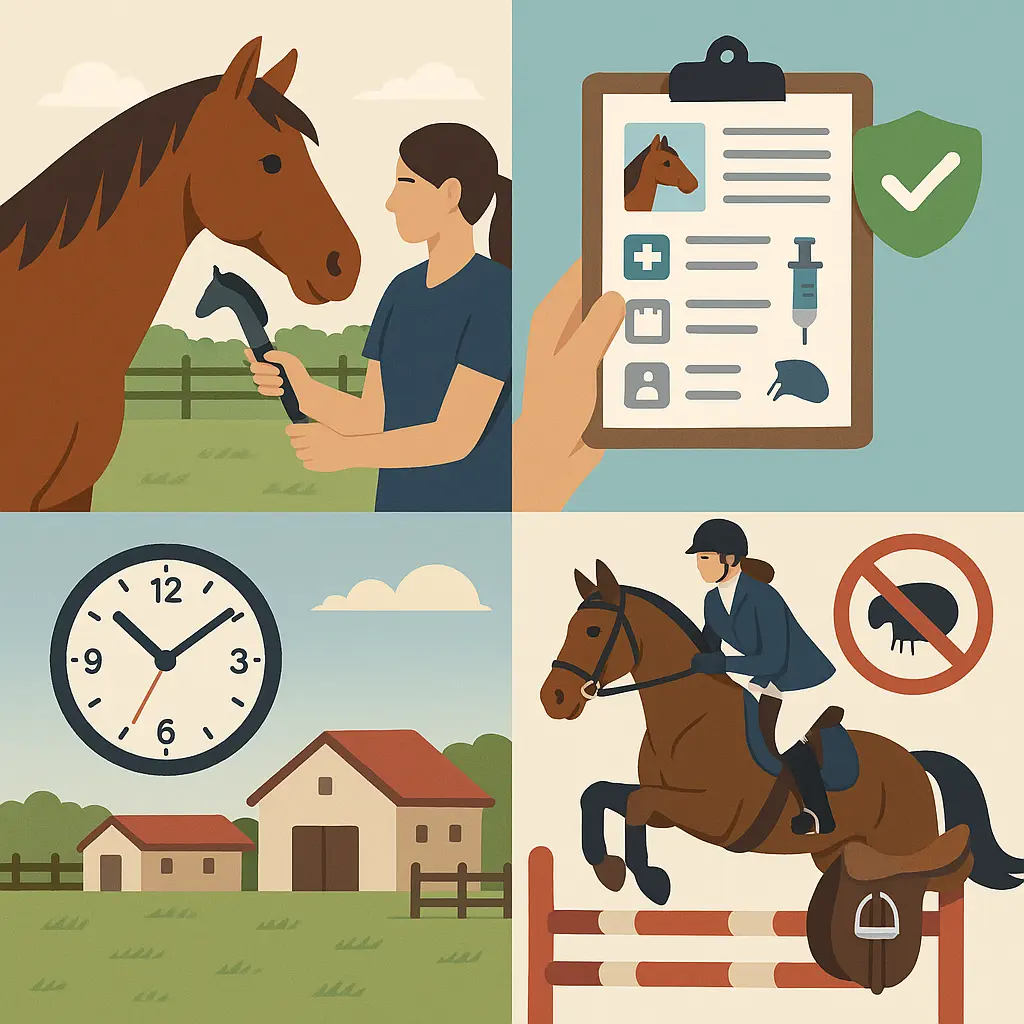
UK equestrian bodies require horse welfare to come first, prohibit clipping sensory hairs, and insist on correctly fitted, unmodified tack. These standards continue to apply when you manage your horse at home and if you plan to keep competing.
“It is vitally important for the future of equine sport that the welfare of the horse is always the primary consideration... Every rider, coach and club official must accept responsibility to uphold the highest level of horse welfare.” — British Riding Clubs (BRC), part of the British Horse Society (BRC Handbook)
“Clipped or shaven sensory hairs around the mouth, nose, eyes and inner ear are not permitted as this may reduce the horses’ sensory ability.” — BRC (BRC Handbook)
“Tack must always be designed and fitted correctly and used in a way that protects and safeguards the welfare and safety of both horse and exhibitor. Tack that has been modified is not permissible.” — The Showing Council (Unified Welfare Rules)
What to do at home:
- Tack audit: Check fit, condition and legality of bridles, bits, nosebands and martingales. Remove any “homemade” modifications.
- Grooming for welfare: Daily checks help spot rubs, skin changes and weight shifts. Keep a tidy, functional grooming kit to support this routine.
- Leg protection: Fit boots that don’t spin or rub and remove them after work to avoid heat build-up. Explore our horse boots and bandages for work, turnout and travel.
- Rider safety: If you’ll hack from home, maintain robust personal safety standards too — a properly fitted, up-to-standard riding helmet is non-negotiable.
If you continue competing under BRC or affiliated showing rules, double-check your turnout against the latest handbooks before vet checks or tack inspections. This includes leaving whiskers intact unless a vet has given written dispensation.
Keep parasite control on track
Every livery yard should operate a parasite control process, and you must continue this at home with veterinary guidance to prevent anthelmintic resistance (GOV.UK).
Build a simple, evidence-based plan:
- Test-led approach: Work with your vet to schedule faecal egg counts during the grazing season and target treatment appropriately.
- Pasture hygiene: Poo-pick small paddocks at least twice weekly, rest fields when possible, and avoid overstocking.
- Herd rules: If other horses visit or you take on a companion, quarantine, test and align their parasite plan before turnout together.
- Record everything: Keep dates, results and treatments in your yard file to avoid missed windows or repeat dosing.
Support overall gut health with consistent forage, controlled changes to diet and, where appropriate, targeted nutritional support from our range of horse care supplements. For specific products or worming schedules, always follow veterinary advice.
Licences, insurance and tax if you run a home yard
You do not need a general licence to keep your own horse at home or to offer basic livery, but a local authority licence is required under the Riding Establishments Act 1970 if you provide riding instruction or hire out horses. If you start taking liveries commercially, align your business admin and insurance from day one.
Key UK requirements and good practice:
- Licensing: If you intend to teach or hire out horses, contact your local council about licensing obligations under the Riding Establishments Act (see our overview in the Just Horse Riders guide to the UK livery yard shortage and 14-day plan).
- Insurance: Secure public liability cover if you have visitors, helpers or paying clients on site; check your policy if you hack from home, transport horses, or host clinics.
- Records and rules: Children under 14 should not be on a yard unsupervised; keep a visitors’ book and display emergency contacts (CEEC rules).
- Making Tax Digital: From April 2026, sole traders running livery services with income over £50,000 must keep digital records and submit quarterly updates to HMRC under MTD for ITSA (Yard Owner Hub).
Whether you manage one horse or expand to a small home yard, good documentation, sensible yard rules and the right insurance will protect you, your animals and your visitors.
Your two-week move-home plan
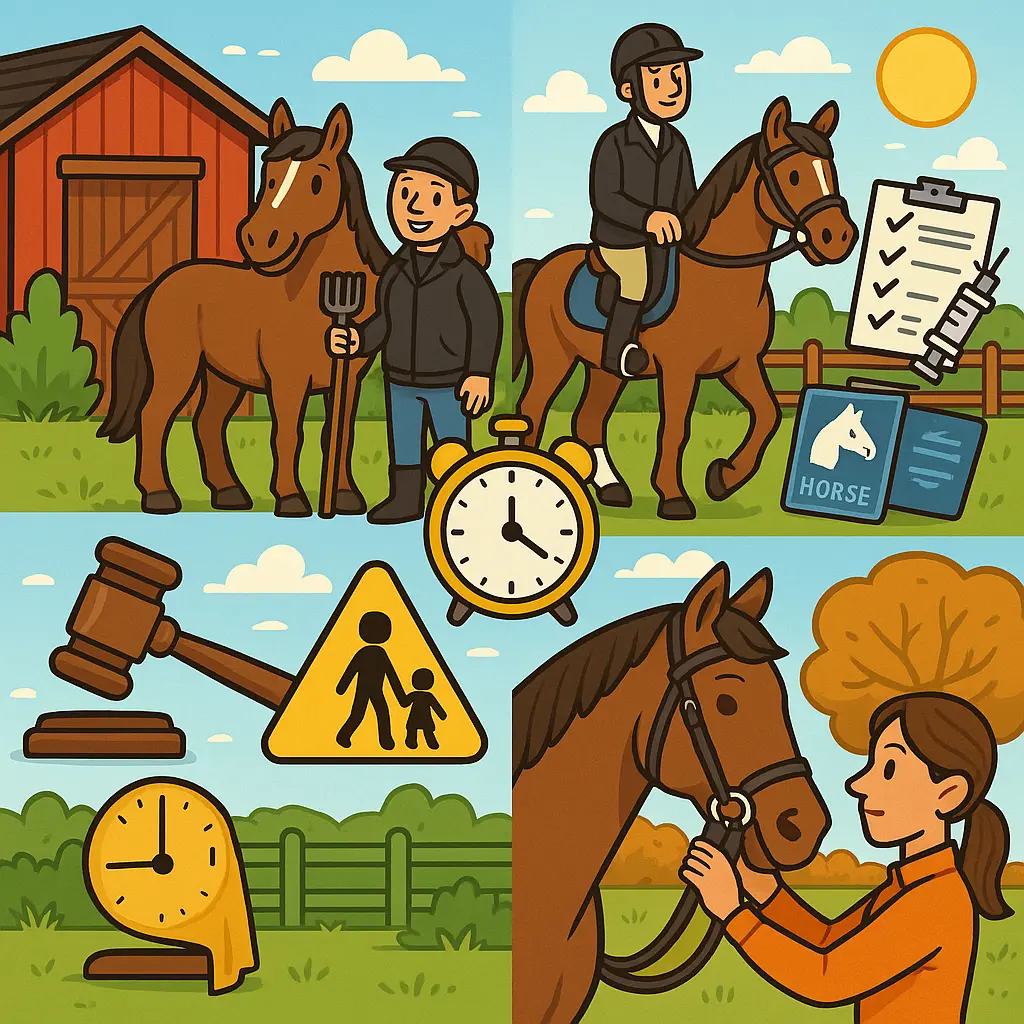
A 14-day checklist keeps you on track, reduces stress and ensures nothing critical gets missed. Here’s a proven timeline you can adopt immediately.
- Days 1–2: Confirm your move date, transport, and collection of all documents (passport, insurance, vaccines). Photograph everything. Share your new postcode with your vet and farrier.
- Days 3–4: Walk your fields; repair fencing; set up water; plan paddock rotations. If you’ll exceed a couple of hours’ turnout, ensure shelter access. Order weather-appropriate turnout rugs and a spare liner so you can adapt quickly to UK weather swings.
- Days 5–6: Build your “yard file” and whiteboard. Print a turnout log, worming/testing calendar, farrier schedule and emergency contacts. Stock your first-aid kit and a practical grooming kit (thermometer, digital scale for feed, hoof pick with brush, skin-friendly wash).
- Days 7–8: Arrange feed and forage deliveries; label bins clearly. Schedule your vet to advise on a test-based parasite plan and to set vaccination reminders. If you plan to hack from home, review helmet fit and standards — update if needed from our riding helmets range.
- Days 9–10: Tack audit: clean, check stitching, and assess fit. Retire or repair anything suspect. Ensure no modified items remain; welfare rules require correctly designed and fitted gear.
- Days 11–12: Prepare stabling: safe tying points, clear walkways, rubber matting secure, lighting functional. Lay out stable rugs for the first nights and have a lightweight layer handy for warmer evenings.
- Day 13: Pack the lorry with a labelled system: travel boots, spare headcollar, water, hay net, paperwork. Confirm turnout group or solo turnout plan for the first week at home.
- Day 14 (Move day): Unload calmly, allow a quiet graze or hand-walk, then stable for a check-over. Introduce turnout in short, predictable blocks and log times from day one.
Pro tip: Keep a small “problem-solver” box by the gate — spare lead rope, gloves, torch, pliers, baler twine. It pays for itself the first time a clip or gate catch fails in the rain.
Kit that makes home yard life easier
To match livery-level organisation at home, prioritise weather protection, safe storage and daily efficiency. The right kit saves time and supports welfare.
- Rugs for British weather: A core and a spare from a trusted brand will see you through most weeks. Explore durable options in turnout rugs for wet days and switch to stable rugs overnight as temperatures drop.
- All-weather reliability: Consider proven brands like WeatherBeeta for fit, fill choices and robust hardware that stands up to UK winter squalls.
- Leg and travel protection: Keep a set of horse boots and bandages ready for schooling, turnout in muddy conditions, and transport.
- Daily care essentials: A tidy, complete grooming collection turns checks into a habit — skin, eyes, feet and body condition at a glance.
- Nutrition support: If your horse is changing workload or grazing, consider targeted support from our supplements for horse care and review diet with your vet or nutritionist.
At Just Horse Riders, we recommend keeping a simple tack-storage system: labelled bridle hooks, a rack for clean numnahs, and a “competition-ready” bag for legal, unmodified show tack and documents. It keeps everyday gear separate from competition kit, so nothing accidental sneaks into the ring.
FAQs
Do I need to provide the livery yard with my horse’s insurance and vaccination records?
Yes. Livery yards require up-to-date registration, insurance and vaccination records to be held on site; collect copies before you leave to avoid any gaps in compliance (Chelmsford Equestrian Centre rules).
What are typical turnout times I should follow at home?
Use the common yard standards as your template: summer day turnout 6am–7pm, night turnout before sunset to 9am (log it for safety), and in winter limit turnout to a maximum of 4 hours between daybreak and sunset to protect fields and equine health (CEEC rules).
Is a licence required to run a home livery yard?
No general licence is needed for basic livery, but a local authority licence is mandatory if you offer riding instruction or hire out horses under the Riding Establishments Act 1970 (see our summary in the Just Horse Riders 14-day plan).
What welfare rules apply if I keep competing after leaving livery?
Follow BRC/BHS and showing welfare codes: welfare first, no clipping of sensory hairs without veterinary dispensation, and only use correctly fitted, unmodified tack (BRC Handbook; The Showing Council).
How do I continue parasite control when my horse comes home?
Adopt a yard-style parasite control process: schedule test-led checks with your vet, target any treatments, and record everything to prevent resistance (GOV.UK).
What should I check in my tack before my first show from home?
Ensure all tack is legal, correctly fitted and unmodified, remove any non-standard training aids before vet checks, and arrive with clean, functional gear. Consider upgrading worn items during your pre-move tack audit.
Can children under 14 be on my yard?
Not unless supervised by an appropriate adult, in line with common UK yard safety rules; maintain clear visitor policies and emergency contacts on display (CEEC rules).
Ready to bring your horse home? Start with your document pack, set your turnout and welfare routines, and stock the few key items that keep you winter-proof and competition-ready. If you need help choosing rugs, care kit or safety essentials, our team is here to advise — and our curated ranges of turnout rugs, stable rugs, WeatherBeeta rugs, grooming essentials, boots and bandages, helmets and supplements make ticking off your checklist fast and reliable.
