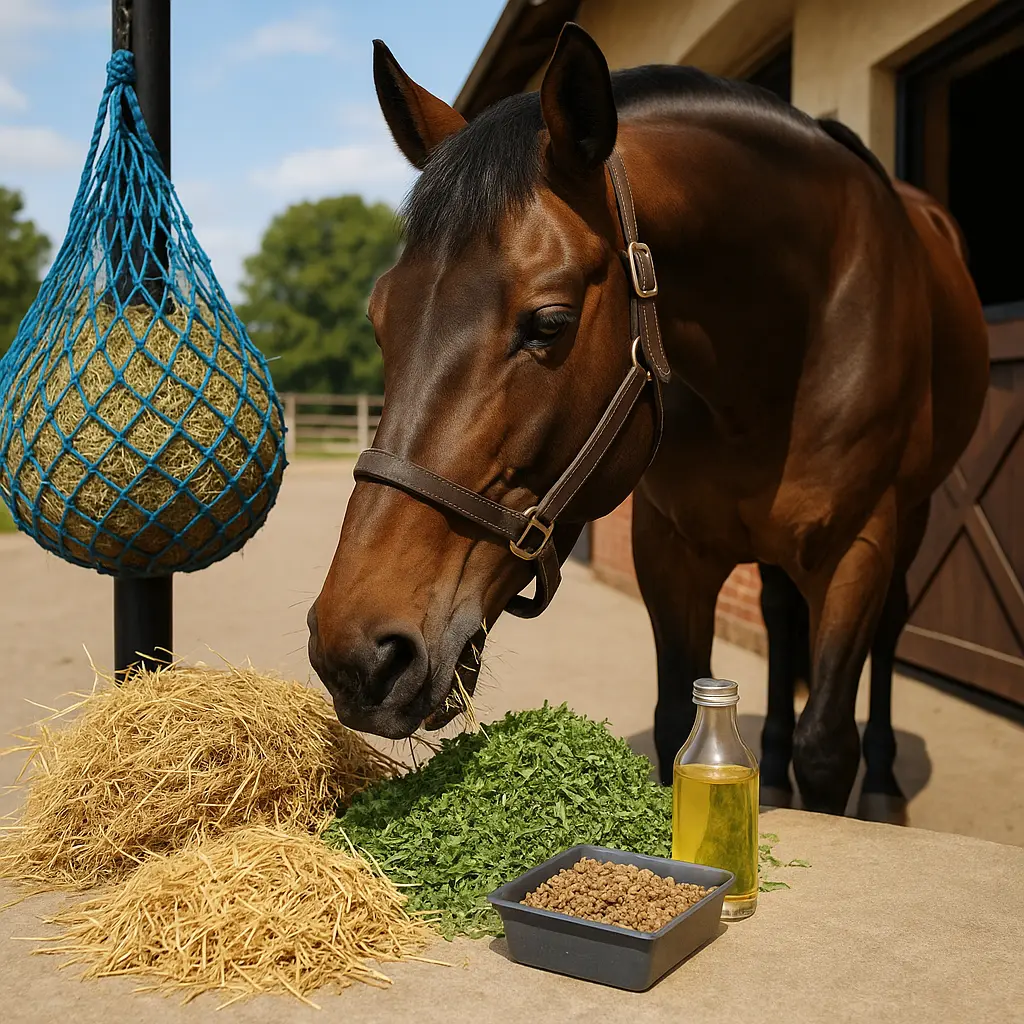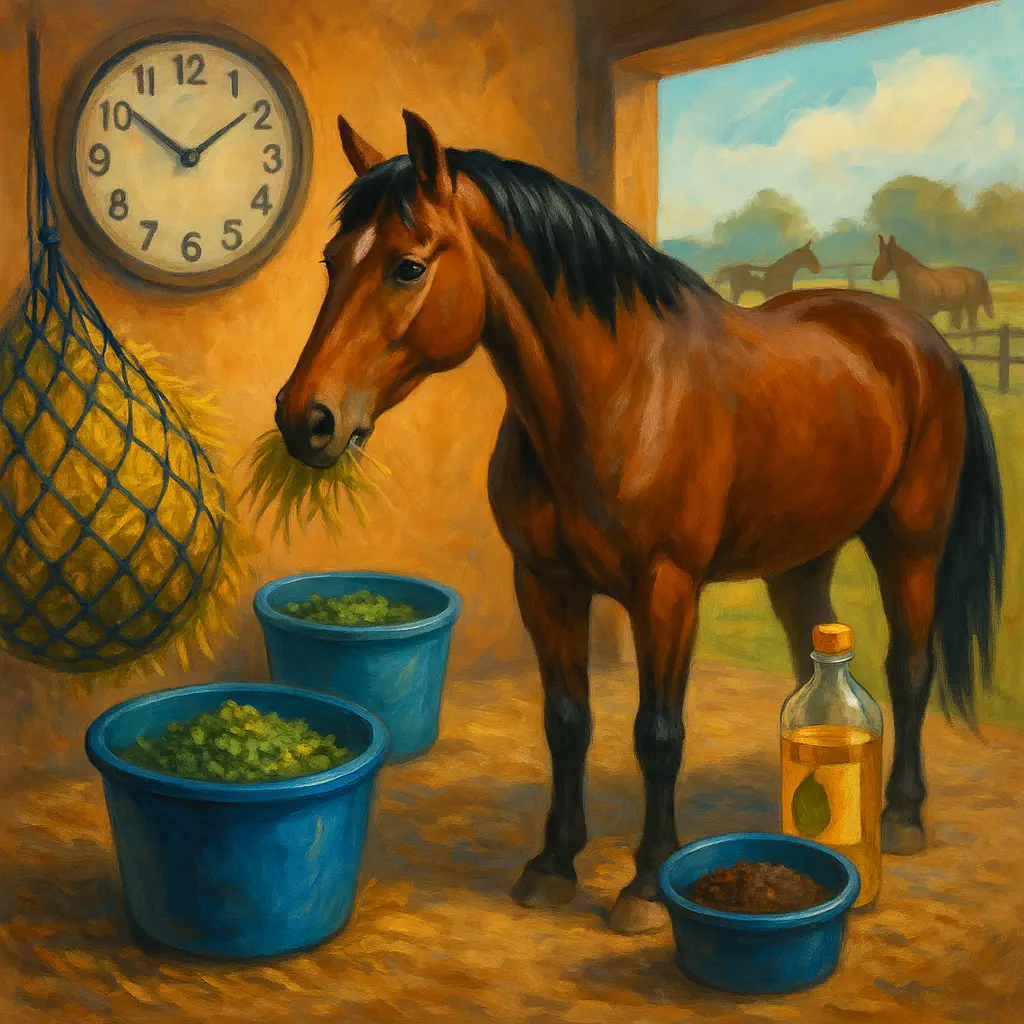
Gastric ulcers are frustratingly common in hard-working UK horses, but smart feeding and management dramatically reduce the risk. With a few high-impact changes — more daytime fibre, less starch, and a scoop of alfalfa before you ride — you can protect your horse’s stomach and performance.
Key takeaway: Feed at least 1.5% bodyweight in forage daily, bias 80% of it to daytime, keep starch low, and include alfalfa fibre — especially before exercise.
Why ulcers happen and who’s at risk
Ulcers are driven by acid exposure during daytime activity, high-starch feeding, frequent exercise, and any management that allows long fasting. In actively training populations, gastric ulcer incidence can reach up to 90%, underscoring how quickly things go wrong without buffering fibre and routine-friendly feeding. Source
Horses produce gastric acid continuously, so when the stomach sits empty — especially during the day when they’re alert, moving, travelling, or ridden — acid can bathe the unprotected squamous lining. UK research summaries highlight that even a short daytime fast is risky: horses starved from 7am to 7pm developed ulcers, while the same 12 hours at night did not. Source
Training schedules matter too. Horses exercised for more than five days a week had a 10% higher ulcer rate than those exercised four days or fewer, so factoring in rest days is protective. Source Combine frequent work with cereal-heavy rations and long gaps between forage and you have the classic recipe for equine squamous gastric disease (ESGD).
“If you want to make stomach ulcers, starve the horse. It’s really easy, you can do it in two to five days... The risk period for ulcer formation in horses appears to be the daytime.” — Richard Hepburn, Specialist in Equine Internal Medicine Source
How much forage and when
Feed a minimum of 1.5% of bodyweight in forage every day, with 80% of that forage offered between 7am and 7pm. For a 500kg horse without grazing, that’s about 9kg of hay or 10–12kg of haylage daily, fed to keep the stomach buffered during active daylight hours. Source Source
Long-stemmed fibre is a must. Aim for 1–1.5% of bodyweight as long-stemmed hay, and if you use straw for chewing time or bedding, keep it under 25% of the total forage to avoid excessive lignin intake and variable nutrition. Source In practice, that means a constant trickle of hay or haylage during the day, especially on livery yards where exercise, farrier visits, travelling, or lessons happen in daylight.
In UK winters when grazing is limited and many horses are stabled, daytime forage access is non-negotiable. Slow-feeding haynets or small-hole nets help extend chewing time, stimulate saliva, and buffer acid naturally. Spread forage feedings (or hang multiple nets) to remove long gaps, particularly from morning muck-out to late afternoon schooling.
Pro tip: If your horse wolfs down nets, double-net or hang two smaller nets a few metres apart to encourage movement and slow the rate of intake. For winter management that keeps weight steady without compromising gut health, combine consistent forage with appropriate winter turnout rugs and cosy stable rugs to reduce calorie demand from cold stress.
Is alfalfa safe for ulcers?
Yes — alfalfa hay or chopped fibre is protective for ulcer-prone horses because its higher calcium and protein help buffer stomach acid. Studies show horses on alfalfa plus grain had fewer ulcers and lower gastric acidity than those on grass hay without grain; and adding short-chopped alfalfa to meals supports the stomach’s top (squamous) region. Source Source
“Alfalfa may actually be protective by virtue of its higher calcium and protein content that act as buffers of the gastric acid.” — Dr. Merritt, equine researcher Source
In the real world, a double handful of alfalfa chaff before exercise and a small amount added to each bucket feed can make a clear difference. Katie, a nutrition specialist contributor, puts it simply:
“Adding short chopped fibre, ideally containing alfalfa, to every meal can be hugely beneficial as the high protein and calcium content in alfalfa is thought to help buffer stomach acid.” Source
UK owners can also look for the BETA feed approval mark for EGUS-prone horses (developed with the Veterinary Medicines Directorate). Options such as SPILLERS Alfalfa Pro Fibre and WINERGY Equilibrium Growth carry this independent certification, making label choices simpler. Source
Fuelling work without starch
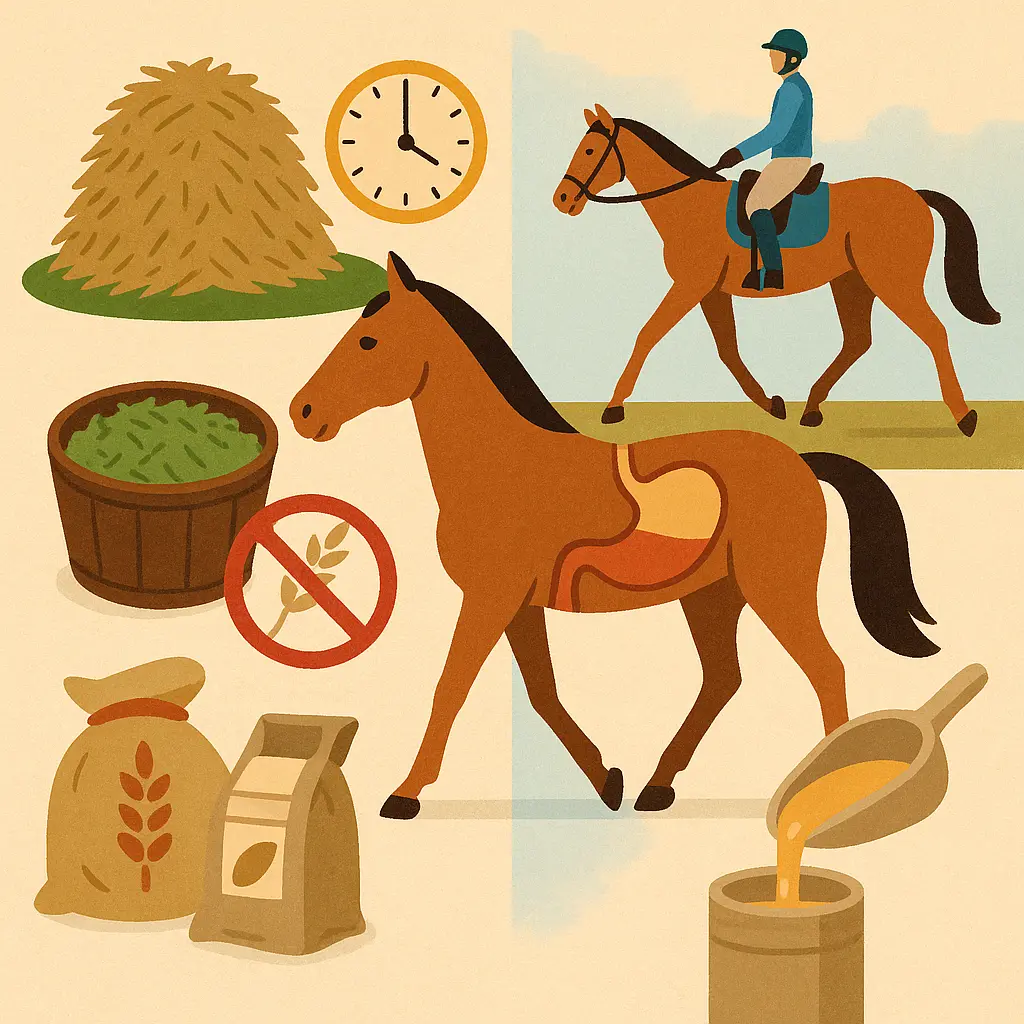
Swap cereals for high-fibre, high-oil, low-starch feeds, and limit starch to 2g/kg bodyweight per day (or 1g/kg per meal) split into at least three meals. For a 500kg horse that’s a maximum of 1kg starch per meal, but in ulcer-prone horses, keeping starch as low as practical is best. Source
“Starch, such as found in concentrated cereal feeds, is strongly associated with an increased risk of gastric ulcers. Therefore, stick to the high-fibre diet, supplemented to balance the micronutrients. If additional energy is required then this is best fed through a high-oil diet.” — Kate Hore, Head Nutritionist at NAF Source
After you’ve met the forage minimum, add calories via oil or high-oil cubes/mixes and a good vitamin–mineral balancer to keep starch load low. This approach maintains condition and performance once ulcers have healed, reducing relapse risk. UK owners can also incorporate targeted gut-support products from trusted ranges; browse our carefully selected digestive and gut supplements and popular support from NAF.
Pro tip: Build in two to three full rest days each week where possible. Horses exercised more than five days weekly are at higher ulcer risk; rest supports repair, appetite, and temperament. Source Source
What to feed around exercise
Give a small fibre meal 20–25 minutes before riding — as little as 300g of hay or a large handful of alfalfa chaff buffers stomach acid and reduces splash onto the squamous lining. This simple step helps guard against ESGD during schooling, hacking, or travel. Source Source
Before you tack up, offer a small net or a scoop of a fibre-based product (for example, those containing alfalfa). During longer sessions, brief walking breaks and water access help comfort. After exercise, return the horse to forage promptly, and avoid riding on an empty stomach in the middle of the day — the highest-risk window for acid exposure.
Heading out on the lanes? Protecting your horse’s stomach and your safety go hand in hand. Keep hacks relaxed, plan your route, and make yourself seen with high-visibility riding kit. Don’t forget correctly fitted riding helmets and supportive horse boots and bandages to keep training consistent without adding stress.
UK winter yard strategies that work
Use slow haynets, frequent top-ups, and turnout where possible to keep chewing continuous without overfeeding; combine with appropriate rugs to reduce cold stress and unnecessary calorie demand. In restricted grazing conditions, plan for 9–12kg of hay/haylage per day for a 500kg horse and deliver most of it in daylight. Source
Day–night balance matters. Implement an 80:20 daytime forage bias (80% of the day’s total offered 7am–7pm) to buffer acid during busy yard hours, lessons, and travel. This aligns neatly with typical UK livery routines. Source
Manage straw intake by providing sufficient hay first and keeping straw under 25% of the total forage. If your horse hoovers straw bedding, add an extra daytime net to prevent gaps. For weather resilience, shop proven rug brands like WeatherBeeta rugs and comfort-focused stablewear from LeMieux to keep horses warm without cranking up cereal calories.
After omeprazole: keeping ulcers away
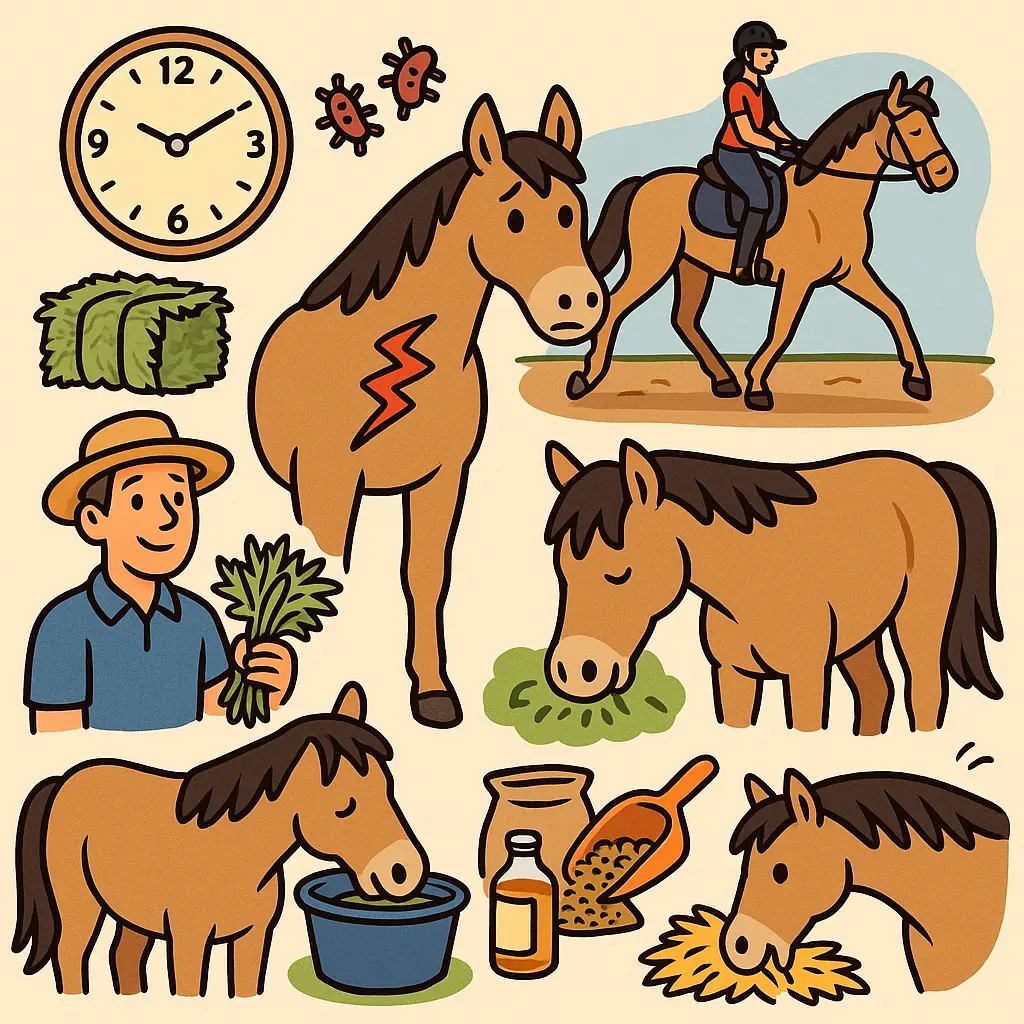
Post-treatment, maintain a high-fibre, alfalfa-inclusive, low-starch diet and never allow fasting periods longer than six hours. This prevents rebound problems and supports long-term mucosal health. Source Source
Stick with the basics that work:
- Forage first: 1.5% bodyweight minimum, biased toward daytime.
- Alfalfa buffer: Include chopped alfalfa in every bucket feed and before exercise.
- Low starch: Keep to 2g/kg/day or under 1g/kg/meal; the lower, the better.
- High oil: Replace grain calories with oil-based feeds and balancers as needed.
- Rest days: Build in two to three per week to reduce ulcer pressure.
At Just Horse Riders, we recommend choosing BETA EGUS-approved feeds where relevant, and bolstering everyday fibre with a gut-friendly regime. Our team can help you pair the right feed plan with supportive supplements and practical yard tools like slow nets to keep the programme consistent.
Common mistakes to avoid
Avoid daytime fasting, cereal-heavy rations, and cramming work into seven days a week — these are the fastest routes to trouble. Instead, programme in fibre, rest, and pre-ride buffering.
- Skipping daytime forage: Daytime is the high-risk ulcer window; aim for an 80:20 day bias. Source
- Overdoing starch: Keep below 2g/kg/day and below 1g/kg/meal; pick high-fibre, high-oil alternatives. Source
- Not feeding before work: Even 300g of hay or a handful of alfalfa 20–25 minutes pre-exercise helps. Source
- Riding six or seven days straight: More than five days increases risk; schedule two to three rest days. Source
- Letting straw become the main forage: Keep straw under 25% of the total forage. Source
Quick tip: If your horse needs more energy for winter training or competitions, choose high-oil, low-starch performance feeds and BETA EGUS-marked options over cereals — your horse’s stomach will thank you. For competition days, pack a small alfalfa chaff and fibre tub to feed 20 minutes before you get on. While you’re at it, make sure your show kit is ready with comfortable competition clothing so you can focus on your ride, not your horse’s tummy.
Finally, remember this expert-backed principle:
“Feed hay or a fibre-based product before exercise to prevent acid splashing; aim for a handful of chaff or a haynet 20–25 minutes prior.” Source Source
With the right plan, most horses stay comfortable, keen to work, and easier to keep in condition through the UK seasons.
FAQs
Is alfalfa safe for ulcer-prone horses?
Yes. Alfalfa’s higher calcium and protein help buffer gastric acid, reducing ulcer severity compared with grass hays. Include chopped alfalfa in meals and offer a handful before exercise. Source Source
How much forage does my horse need daily to help prevent ulcers?
Feed at least 1.5% of bodyweight in forage every day — about 9kg hay or 10–12kg haylage for a 500kg horse — delivered as continuous access with an 80:20 daytime bias. Source Source
Should I feed before exercise, especially in winter?
Yes. Provide a small fibre meal 20–25 minutes before riding — as little as 300g hay or a handful of alfalfa chaff — to buffer acid and reduce splash during work. This is particularly helpful when stabled in damp UK winters. Source Source
Does daytime vs nighttime fasting really matter?
Yes. Daytime starvation (e.g., 7am–7pm) induces ulcers rapidly, while the same period at night does not. Prioritise daytime forage to match UK routines and protect the stomach when risk is highest. Source
What if my horse needs extra energy for work?
Choose high-oil, low-starch feeds and balancers instead of cereals, and keep starch below 2g/kg/day (1g/kg/meal). Look for BETA EGUS-certified options to support performance without increasing ulcer risk. Source Source
How often should my ulcer-prone horse be worked?
Plan two to three full rest days per week. Horses exercised more than five days had a 10% higher ulcer rate than those worked four days or fewer. Source
Can straw be my horse’s main forage?
No. Keep straw to under 25% of total forage and ensure adequate hay/haylage first to maintain nutrition and chewing time. Source
Ready to tighten up your ulcer-prevention plan? Stock up on the right fibre, choose proven supplements, and set your winter yard up for success. Our team is here to help — and while you’re refreshing your routine, check your safety kit too with essential hi-vis and reliable helmets for confident winter miles.