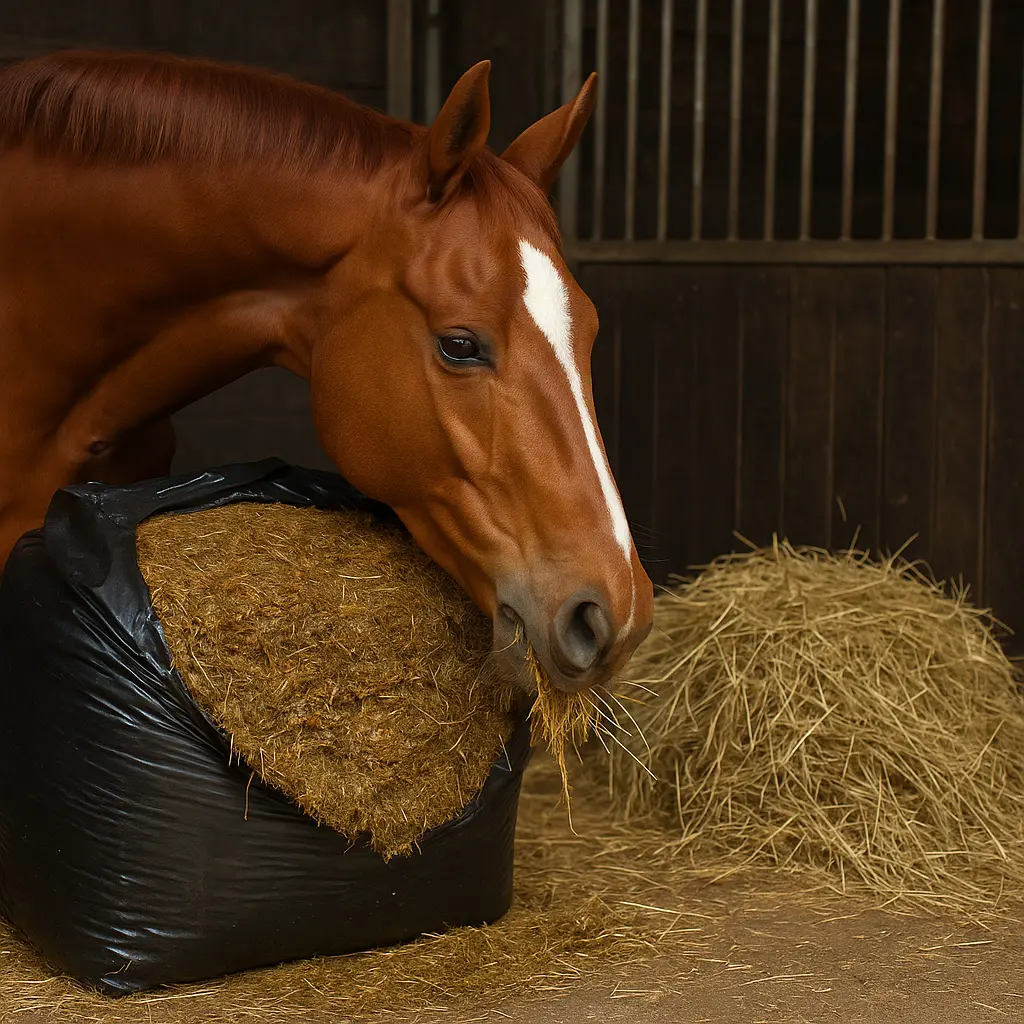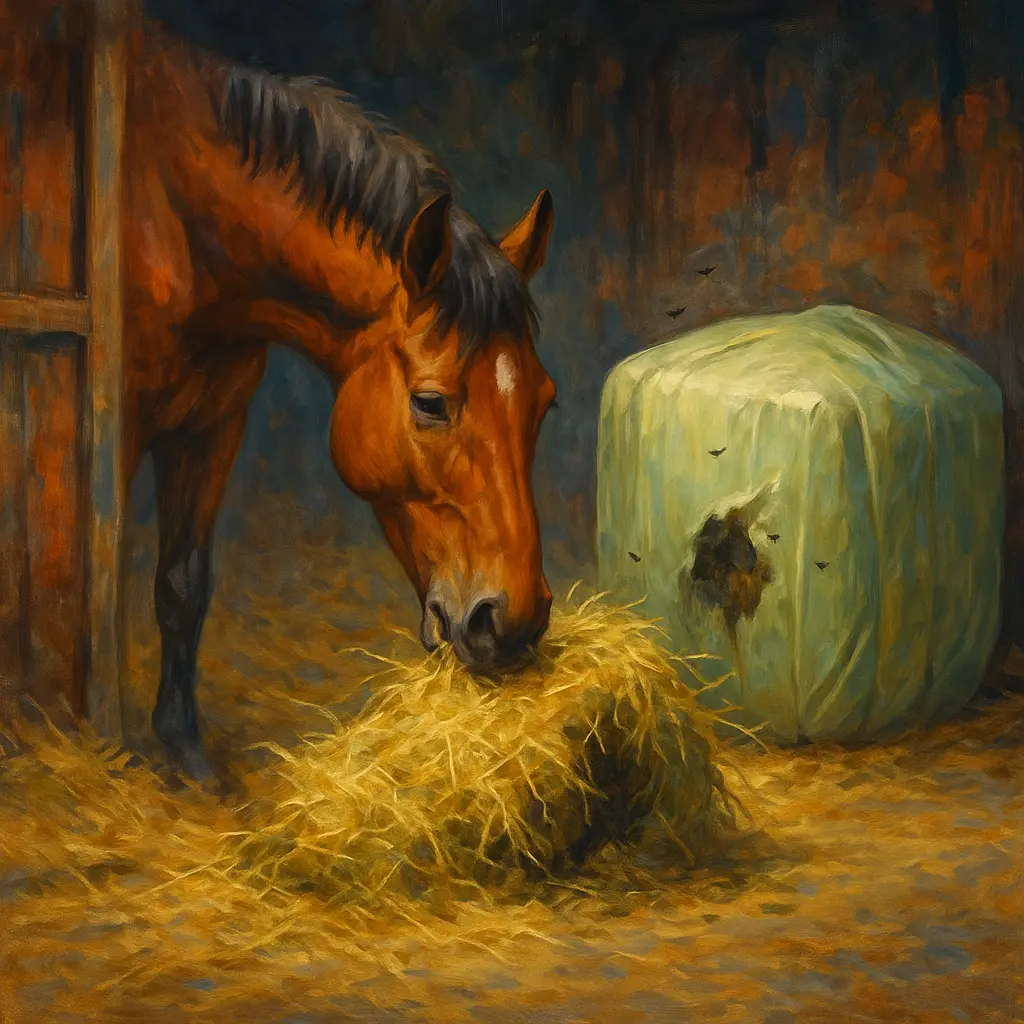
Deciding between haylage and hay can transform your horse’s condition, behaviour and gut health — especially through the UK’s damp winters and short grazing days. The latest studies show clear pros and cons, so you can make a confident, horse-first choice.
Key takeaway: Haylage is moister (50–65% dry matter vs 85–90% in hay), usually lower in sugars but higher in digestible energy and protein. Feed more by weight, use opened bales within 2–7 days, choose the right cut, and monitor for free fecal water or extra fizz.
What is haylage and how does it differ from hay?
Haylage is a fermented forage with 50–65% dry matter (DM) versus 85–90% in grass hay, so it’s moister, typically lower in sugars, and often higher in digestible energy and protein.
UK-produced haylage is cut, wilted, and wrapped anaerobically to ferment, converting some water-soluble carbohydrates (sugars) into volatile fatty acids. This process lowers sugar and can increase digestibility, while retaining more nutrients than hay if the wrap stays perfectly sealed. Early-cut haylage is generally more nutrient-dense and more acidic; late-cut is stalkier, higher in fibre, and lower in energy. See the UK overview from Horse & Rider and the feeding notes from HorseHage.
Because haylage relies on airtight wrapping, any puncture risks aerobic spoilage and mould. UK guidelines for wrapped silage (Defra) aim to prevent botulism risks by maintaining anaerobic storage — so daily bale checks matter, especially in wet autumns and mild winters.
How much haylage should you feed compared to hay?
You must feed more haylage by weight than hay to deliver the same dry fibre because haylage contains much more water.
Here’s the simplest way to think about it. If your horse eats 10 kg of hay at 90% DM, that’s roughly 9 kg of dry matter. To supply the same 9 kg DM using haylage at 60% DM, you’d need about 15 kg of haylage. In practice, most owners notice they’re carting bigger, heavier nets when they switch to haylage. This added volume isn’t a flaw — it’s the moisture difference doing its job.
There’s a bonus: horses take longer to finish haylage meals, boosting chewing time and saliva production. Research presented by Kentucky Equine Research found horses fed haylage took longer to eat than those on grass hay, which may help buffer stomach acid and lower ulcer risk; however, they also reported lower fibre digestibility in haylage-fed horses. Read more via The Horse and Horse & Rider.
Quick tip: If you normally feed by “slices” or net count, weigh a few typical nets of hay and haylage so you aren’t underfeeding fibre when you switch.
Is haylage better for gut health and ulcer risk?
Haylage increases chewing time and saliva, which can help buffer acid and support ulcer management, but studies show lower fibre digestibility and a risk of free faecal water syndrome in some horses.
At the Equine Science Society Symposium, nutritionist Ashley Fowler, PhD (Kentucky Equine Research), reported that haylage-fed horses chewed for longer but digested fibre less efficiently and showed increased faecal water and sodium (free faecal water syndrome). Their advice frames haylage as useful for time-at-forage and ulcer risk, with a clear caveat to watch the hindgut response:
“Haylage is often a good option for horses that need a restricted diet because it increases their time spent eating, which might help reduce their risk of ulcers and stereotypies... The fiber digestibility of haylage was lower than we expected, and the horses developed free fecal water syndrome.”
Longer term, forage choice appears to influence metabolism and the gut microbiota. In a 13‑month UK study, the University of Surrey found haylage-fed ponies had significantly different urinary metabolic profiles compared with hay-fed ponies — for example, higher ethyl‑glucoside, creatinine and p‑cresol sulphate — suggesting meaningful shifts in hindgut fermentation pathways. Explore the peer‑reviewed findings here: University of Surrey.
Practical takeaway: Haylage can be kind to the stomach but occasionally tricky for the hindgut. If you notice free faecal water (watery staining down the hind legs or tail), first adjust the cut (try later-cut, higher-fibre haylage, or blend with hay), and consider digestive support (yeast/pre- and probiotics).
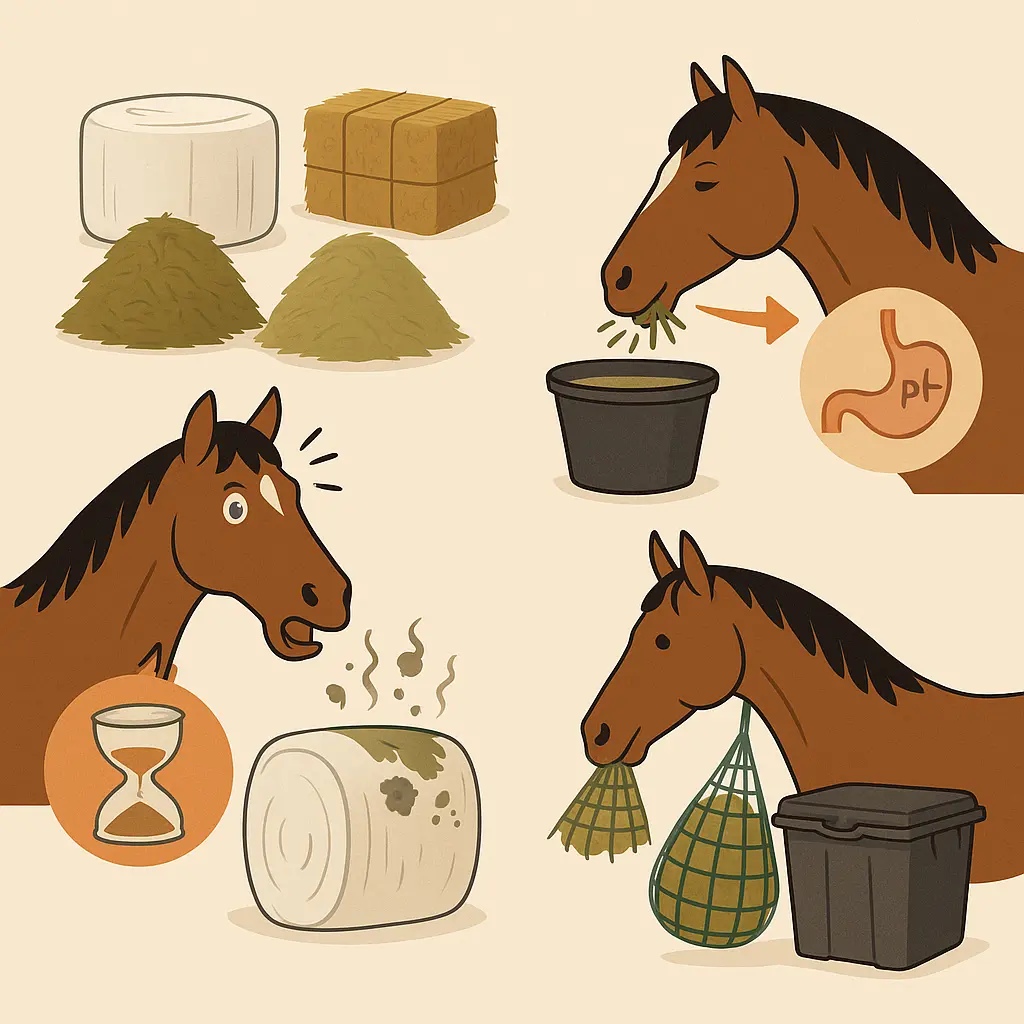
Can haylage make horses sharp, spooky or aggressive?
Yes — haylage typically delivers more digestible energy and protein than hay, which can translate to “excess fizz” in some horses, especially when stabled through short winter days.
UK owner reports regularly link haylage to sharper behaviour, spookiness or even aggression, particularly in good-doers and natives on restricted work. The mechanism is simple: higher digestible energy equals more fuel. If your horse becomes too bright on haylage, switch to late-cut haylage (higher fibre, lower energy), reduce hard feed, or blend with hay to dilute total calories. Read owner experiences on Horse & Hound.
Quick tip: If you change forage and see behaviour change within a week or two, adjust the forage before blaming the bit, saddle or training plan. For many horses, energy balance starts in the haynet.
How to switch to haylage safely
Transition over 7–10 days by mixing haylage with hay, keep forage breaks to no more than 4–6 hours, and monitor droppings and behaviour closely for the first fortnight.
Follow this simple plan for a smooth switch:
- Days 1–3: 75% hay, 25% haylage (by dry matter — remember haylage is wetter; feed more by weight)
- Days 4–6: 50% hay, 50% haylage
- Days 7–10: 25% hay, 75% haylage, then move to 100% haylage if all is well
As a rule of thumb, horses shouldn’t go longer than 4 hours without forage to keep hindgut microbes happy; haylage helps by prolonging eating time. See owner discussion referencing UK welfare standards: Horse & Hound.
Watch for free faecal water (damp tail, splashing on the hocks), loose droppings, or new spookiness. If any appear, slow the transition, switch to later-cut haylage, or keep a 50:50 blend. Many owners find a targeted digestive supplement steadies things when moving to fermented forages. At Just Horse Riders, we see excellent feedback for targeted yeast/prebiotic formulas in our digestive supplements collection, including options from trusted brands like NAF.
Pro tip: Log a 10‑day diary covering net weights, turnout, droppings score, and any behaviour changes. It’s the fastest way to spot a pattern and adjust calmly.
Storing and steaming haylage in the UK
Use opened haylage within 2–7 days (shorter in warm, humid or wet conditions), keep wraps puncture-free and bales dry, and consider high‑temperature steaming to reduce dust/microbes and extend palatability.
Once a bale is opened, oxygen gets in and the clock starts ticking. Early‑cut haylage typically lasts 3–5 days; late‑cut can be shorter. In a UK winter with damp yards and big temperature swings, plan smaller purchases or share bales to stay inside the 2–7 day window. Guidance from Horse & Rider and Haygain emphasises quick usage to avoid aerobic spoilage and mould.
Daily, inspect for punctures, warm spots, unusual odours (sour, musty, or sickly sweet), dark discolouration, or visible mould threads. Discard any suspect portions — horses are extremely sensitive to mycotoxins and bacterial overgrowth. In the UK’s damp climate, store opened bales off the floor, out of the rain, and in sealed containers or waterproof covers to reduce contamination.
Steaming haylage at high temperature reduces respirable dust, bacteria and mould. It also helps maintain palatability and can buy you some extra safe feeding time after opening compared with leaving the forage raw. Many respiratory vets favour steaming for coughy, dust‑sensitive horses, especially through winter when ventilation is reduced.
Quick tip: Keep a spare clean haynet for each horse so you can empty any unfinished haylage if a bale turns suspect mid‑week. It stops you trying to “use it up” and protects your horse’s gut.
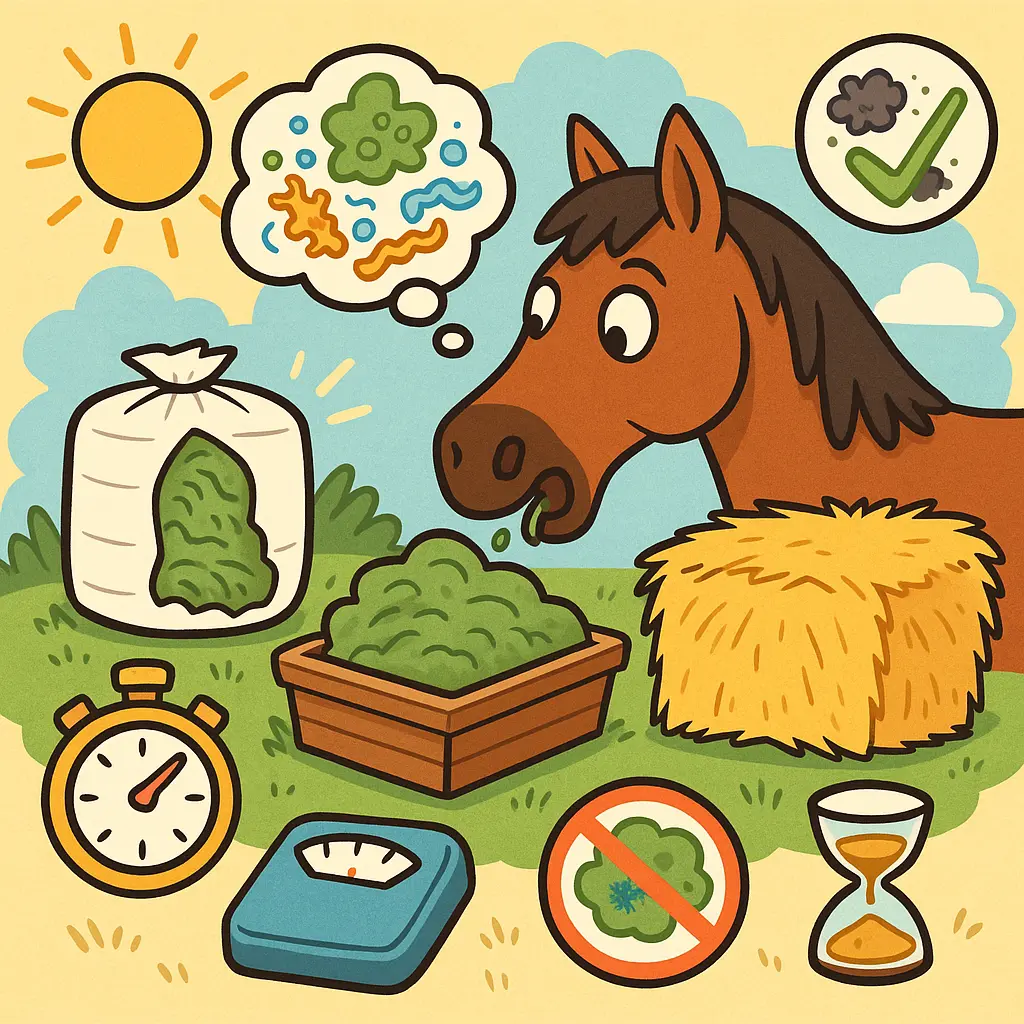
Which haylage cut to choose — and when?
Choose early‑cut haylage in spring/summer for nutrient density and dust‑sensitive horses, and late‑cut in winter or for good‑doers to lower energy, raise fibre, and encourage longer chewing.
UK weather patterns matter. In a good summer, early cuts are leafy and rich — ideal for poor doers, those in higher work, or when you need extra palatability for fussy eaters. In muddy winters with less exercise, later cuts help manage calories, support gut fill, and keep horses settled at the net. Remember, late‑cut haylage tends to be more acidic than hay, but usually delivers lower sugar (thanks to fermentation) and higher structural fibre.
The British Horse Society encourages testing forage for WSC/NSC where possible; UK labs such as Forageplus can profile your batch so you can match it to your horse’s needs. If your horse tends to gain weight or feel sharp on rich forage, a later cut plus more turnout and appropriate rugging will often steady energy. Explore reliable winter layers in our turnout rugs and yard‑friendly options in stable rugs, with robust, wet‑weather choices from WeatherBeeta.
Watching for free faecal water? Late‑cut haylage or a hay/haylage blend commonly improves it, alongside a gut supplement. Keep the hindquarters clean while you monitor changes — a thorough brush and rinse routine from our grooming range makes spotting improvements much easier.
Pro tip: If you’re managing sugar for a laminitis‑prone horse, you can soak haylage for up to 8–12 hours to leach additional sugars; note the increased fibre may slow digestion further, so build changes in gradually and monitor weight.
FAQs
How long does haylage stay in a horse’s digestive system compared to hay?
Haylage typically moves more slowly due to higher moisture and lower fibre digestibility, with full gut transit around 2–3 days; hay often digests faster thanks to higher dry matter. Research presented by Kentucky Equine Research noted longer eating times and lower fibre digestibility on haylage; see The Horse.
Why does haylage make my horse spooky or aggressive?
Haylage usually contains more digestible energy and protein than hay, so some horses get “excess fuel” and feel sharper. Choose later‑cut haylage, reduce concentrates, or blend with hay. Owner experiences are summarised on Horse & Hound.
How quickly must I use opened haylage in the UK?
Use within 2–7 days, with 3–5 days typical for early‑cut in cool weather; the window shortens in mild, wet or warm conditions. After that, mould and bacteria multiply rapidly once oxygen is present. See Horse & Rider and Haygain.
Is haylage better for gut health than hay?
It promotes longer chewing and saliva, which can support the stomach, but some horses show lower fibre digestibility and free faecal water on haylage. Steaming and gradual transitions help, and a gut supplement can stabilise the hindgut. Sources: The Horse, Haygain.
Can haylage cause long‑term metabolic changes?
Yes — a 13‑month UK study found distinct urinary metabolites in haylage‑fed ponies (e.g., higher ethyl‑glucoside, creatinine and p‑cresol sulphate) compared with hay, indicating different hindgut fermentation patterns. Details: University of Surrey.
What’s the maximum time without forage for UK‑stabled horses?
No longer than about 4 hours to protect hindgut microbes and reduce ulcer risk. Haylage’s moisture can extend eating time between nets. Discussion and welfare references: Horse & Hound.
What should I do if my haylage shows white mould or smells “off”?
Discard it immediately. Do not try to shake off suspect areas — mycotoxins and pathogens can harm your horse even if the forage looks mostly fine. Open smaller bales, store them dry, steam if needed, and keep to the 2–7 day window after opening.
At Just Horse Riders, we’re here to help you fine‑tune forage with practical, UK‑ready solutions — from gut support in our supplements range (including NAF) to season‑smart turnout rugs, cosy stable rugs and durable options from WeatherBeeta. If you’d like personalised pointers for your horse, get in touch — and happy, healthy munching.