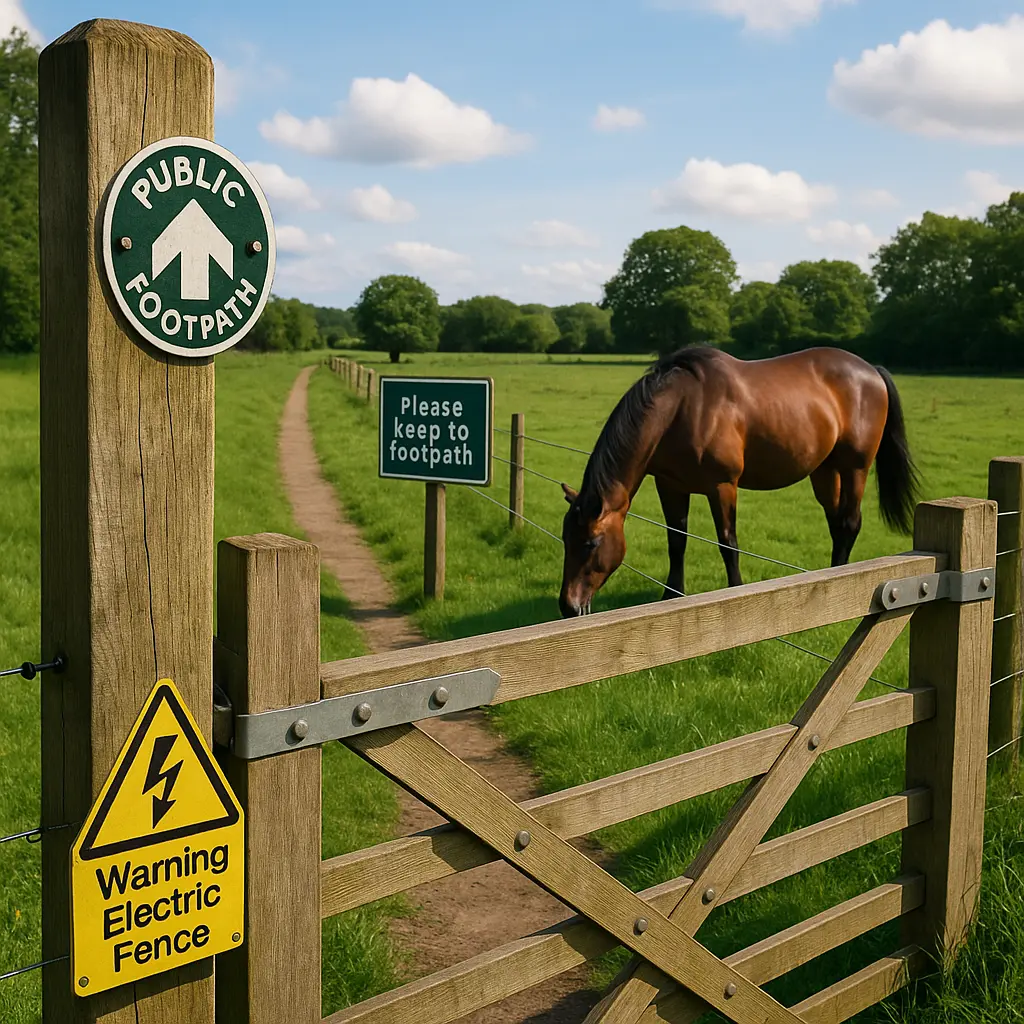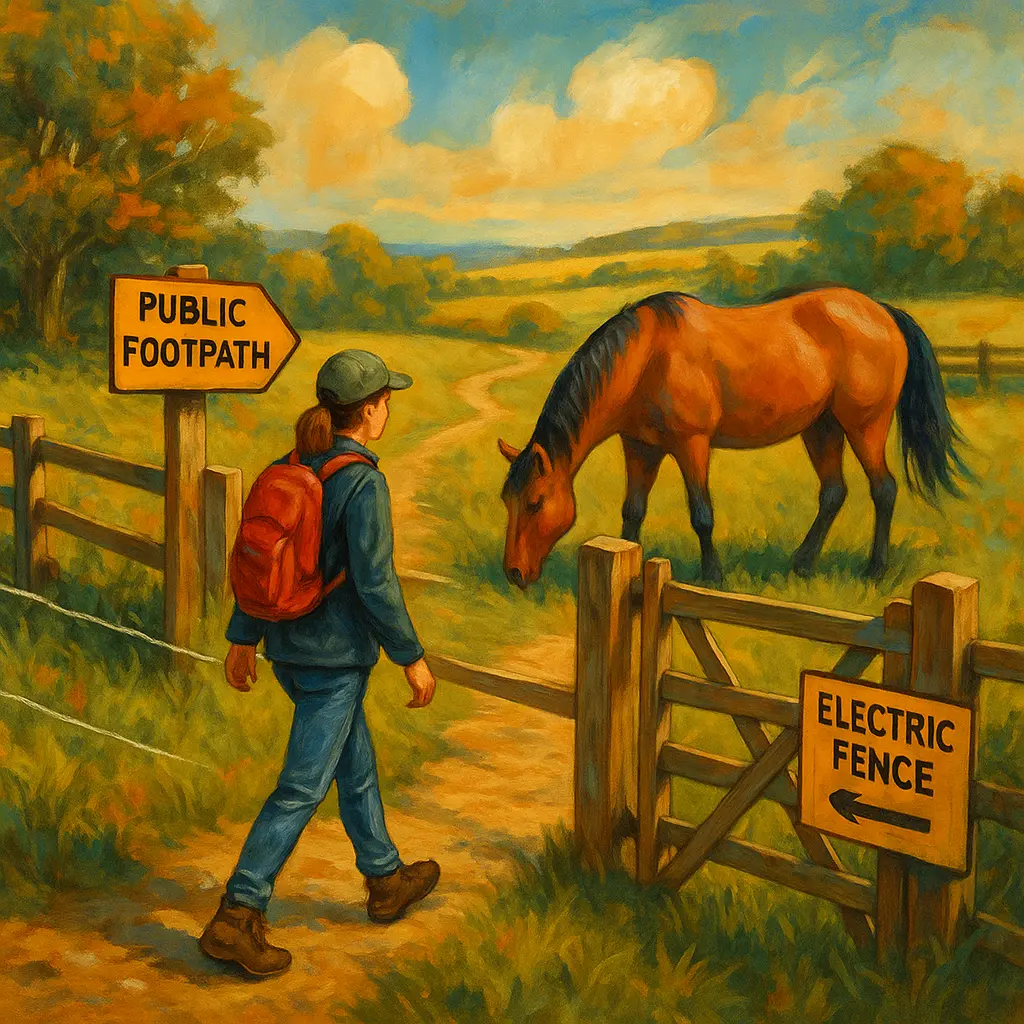
When a public footpath crosses your grazing, you’re balancing two non‑negotiables: the public’s legal right to pass and your duty to keep people and horses safe. Get the setup right and the footpath will quietly coexist with your herd year‑round.
Key takeaway: If a public footpath runs through your field, you must keep the route open and safe, select suitable horses for that field, fence and sign the path lawfully, and hold robust public liability cover (the BHS Gold policy provides up to £30 million).
What the law allows on footpaths, bridleways and byways
In England and Wales, horse riders may use bridleways and byways, but not public footpaths; pedestrians have the right to pass and repass on foot along a footpath through your land, and you must not obstruct it. The UK Highway Code makes clear that horses must not be taken onto footpaths or pavements, and riding on a footpath without permission is trespass.
The public rights of way network in England spans 188,700km: 146,600km footpaths, 32,400km bridleways, 3,700km byways and 6,000km restricted byways. Riders can legally use just 22% (bridleways and byways), which is why footpaths across grazing are common and must be managed correctly. See the British Horse Society’s access work for the national picture and ongoing advocacy (BHS), and the Highway Code’s rules about animals and horse riders (Highway Code). For a quick refresher on the distinctions:
- Footpaths: pedestrians only (no horses).
- Bridleways: pedestrians, cyclists and horse riders.
- Byways (BOATs/RBs): all users including vehicles, plus horses and pedestrians.
Once a footpath is legally recorded, you cannot gate or block it except with gates approved and operable by the public. Local authorities can and do enforce obstructions. For more background, see Horse & Hound’s guide to horses in fields with public footpaths (Horse & Hound).
Your legal duties when a footpath crosses your horse field
You owe a duty of care to people using the footpath and must not keep a horse known to be dangerous in a field crossed by a right of way; failure can lead to prosecution. Gates must both contain your horses and be easy for the public to operate, and the route should be clear, safe and unobstructed.
This duty of care is practical as well as legal: choose appropriate horses, maintain boundaries, and communicate clearly with waymarking. The British Horse Society advises landowners to use polite Countryside Code‑aligned signage to guide the public on gate use and behaviour.
“Owners have the important responsibility not to keep a horse known to be potentially dangerous in a field crossed by a right of way. This could result in a prosecution and is a serious responsibility.”
If the worst happens, liability can be substantial. The BHS Gold membership includes up to £30 million public liability insurance, which is the level of cover we recommend for any land with public access (details via Horse & Hound/BHS).
Quick tip: When you’re moving horses between fields on lanes or minor roads, you count as a vulnerable road user. The 2022 Highway Code updates require drivers to pass horses at under 10mph with at least 2 metres’ clearance (Blue Cross). For visibility and self‑protection, kit up with hi‑vis for riders and a properly fitted riding helmet even when leading from the ground.
Define the route: check the legal line and width before you fence
Before installing or altering any fencing or gates, contact your local Rights of Way Officer to confirm the precise legal alignment and recorded width of the footpath. The path’s width may not be documented on the council’s legal record, so agree this upfront to avoid disputes or costly rework.
Ask the officer to help you “fix” the route on the ground with waymarks so the public can see exactly where to go and you can plan fencing accordingly. This avoids desire lines drifting into your grazing and reduces accidental trespass. Administration guidance and BHS advice both emphasise that clearly signposted routes are in everyone’s best interests.
“Define the route on the land if necessary to avoid confusion over where the public can pass… It is best for all concerned if the landowner clearly signposts rights of way.”
If your plan involves narrowing, realigning, or creating a fenced corridor, confirm the lawful width for your path and any furniture (gates, stiles) in writing with the Rights of Way Officer. They can advise on acceptable barriers and specifications that let people pass while keeping livestock secure.
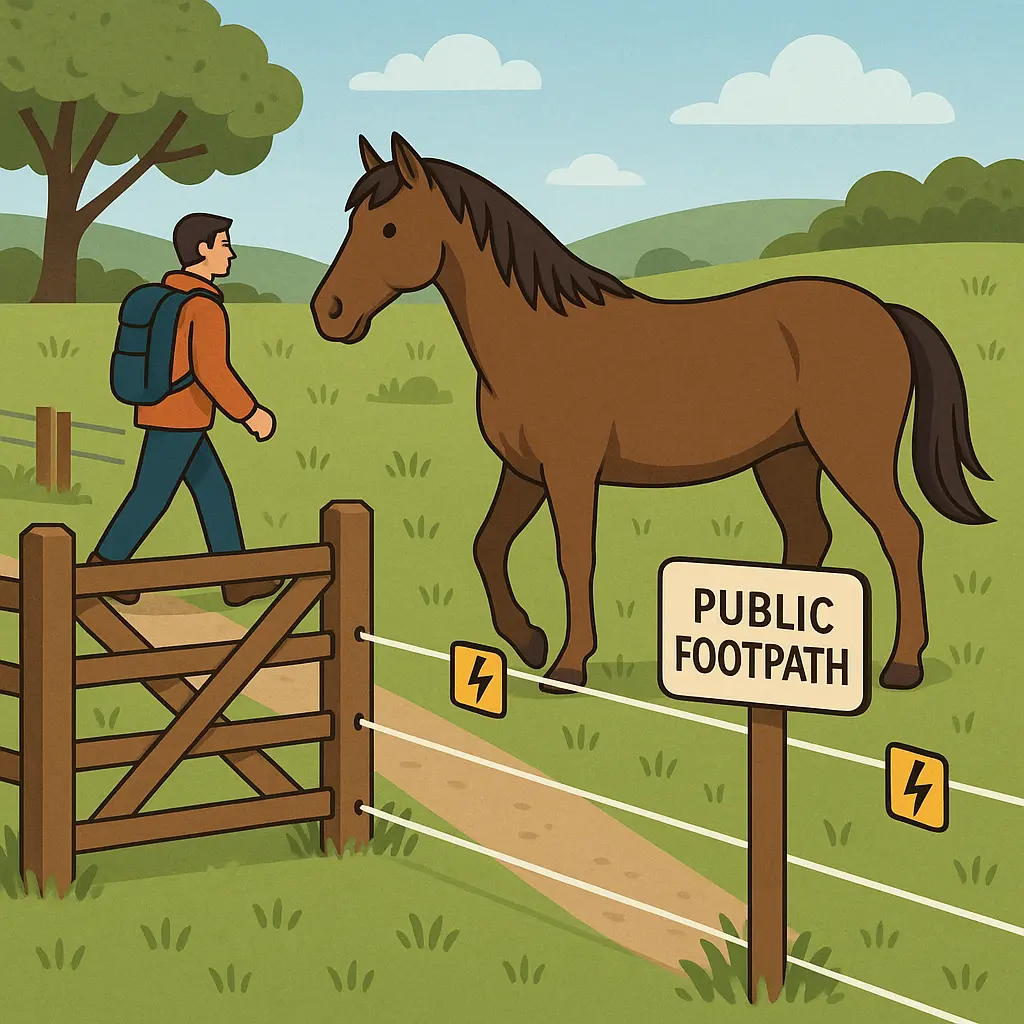
Fencing, gates and signs that keep horses in and the public safe
Electric fencing next to a right of way must be insulated and clearly signposted at regular intervals, and gates must contain horses while opening freely for the public without keys or specialist knowledge. Signs should be polite, weatherproof and BHS‑compliant with rounded edges and safe positioning.
Practical standards to adopt immediately:
- Electric fencing: Use proper insulators and earth correctly; put yellow warning signs every 20–30 metres along any stretch beside a path and at all entrances. Keep live wires well clear of gate furniture and public touch points. This is a legal requirement where electric fencing abuts a public right of way (see Horse & Hound).
- Gates: They must be stock‑proof yet easily operable by hand. Self‑closing, self‑latching mechanisms that the public can understand at a glance work well. Ensure no barbed wire or live electric lines are within at least 2 metres of gate openings, and maintain hinges and latches so gates swing freely in all seasons.
- Signage and waymarking: Place clear, polite notices at each entry/exit reminding walkers to leave gates as they find them and to keep dogs under close control. BHS recommends rounded edges and no sharp points at head height, with signs high enough for mounted riders to pass under on multi‑use routes. Replace any faded or cracked boards annually.
Pro tip: Many complaints stem from confusion. Mark the route with simple arrows or discs, trim vegetation to keep the line obvious, and use “Please keep to the path” rather than confrontational wording. Align your messages with the Countryside Code (GOV.UK).
At Just Horse Riders, our yard teams also check nearby kit for snag risks: turnout chest buckles, leg straps and tail cords should be tidy and secure. If your horses live out near public gates and rails, consider robust, well‑fitted winter turnout rugs and summer layers you trust; the right cut reduces the chance of catches on fixtures. Routine condition checks with good grooming tools help you spot rubs or wire nicks early.
Field management: choose the right horses and plan for busy times
Do not graze stallions in fields crossed by public rights of way, and prioritise calm, people‑savvy horses for these paddocks; adjust turnout and grazing plans at peak public‑use times such as sunny weekends and bank holidays. This lowers risk for everyone using the land.
The BHS is explicit on stallions and rights of way, particularly where unfamiliar horses can access boundaries:
“We strongly recommend against keeping stallions in a field through which rights of way pass, especially if unfamiliar horses access your land.”
Practical ways to stack the odds in your favour:
- Pairings: Use steady companions and avoid bully dynamics near the path line. If a horse shows repeated territorial or herding behaviour towards walkers or dogs, move it to a different paddock.
- Seasonal planning: Expect more walkers during spring bluebell season, summer holidays, harvest‑time stubble walks and crisp autumn weekends. Consider shifting water, hay points and high‑value resources away from the path to reduce congregation at the fence.
- Dog interactions: Clear signage requesting dogs on leads near livestock can reduce chases and spooks; many owners appreciate guidance tied to the Countryside Code.
- Training: Reinforce good field manners at gateways and along fences. Keep a pocket of your own horse treats to reward calm recall away from the path—never encourage the public to feed your horses.
- Horse protection: If your path runs beside uneven or stony ground, protective boots can help horses who brush or overreach during exuberant moments; look at sturdy horse boots and bandages for regular turnout use.
In fly‑heavy summers, calm horses stay calmer when comfortable; choose suitable fly layers and maintain shade and water. Our customers often pair breathable sheets with routine fly care, then switch to weatherproof rugs as Atlantic fronts move in; explore quality options from brands such as Shires as the seasons turn.
Insurance and planning rules you shouldn’t ignore
Hold specialist public liability insurance—BHS Gold membership includes up to £30 million cover—and seek planning advice if you add stables, exercise facilities or otherwise change land use beyond grazing. Both steps protect you from major legal and financial shocks.
Why the big number? Injuries to members of the public can generate substantial claims. The BHS Gold level is widely cited and offers a realistic floor for land with public access. If you run lessons, livery, events or more complex operations, speak to an equestrian broker about tailored additions.
On planning, grazing horses on agricultural land typically does not need permission, but permanent stables, arenas or intensive activities may represent a “material change of use” under the Town and Country Planning Act 1990. Before you invest in infrastructure, take early advice from an agricultural solicitor to avoid enforcement headaches (Crombie Wilkinson).
Remember: a sign that says “Enter at your own risk” does not remove your duty of care. Good management, clear routes, appropriate fencing and robust insurance are the real safeguards.
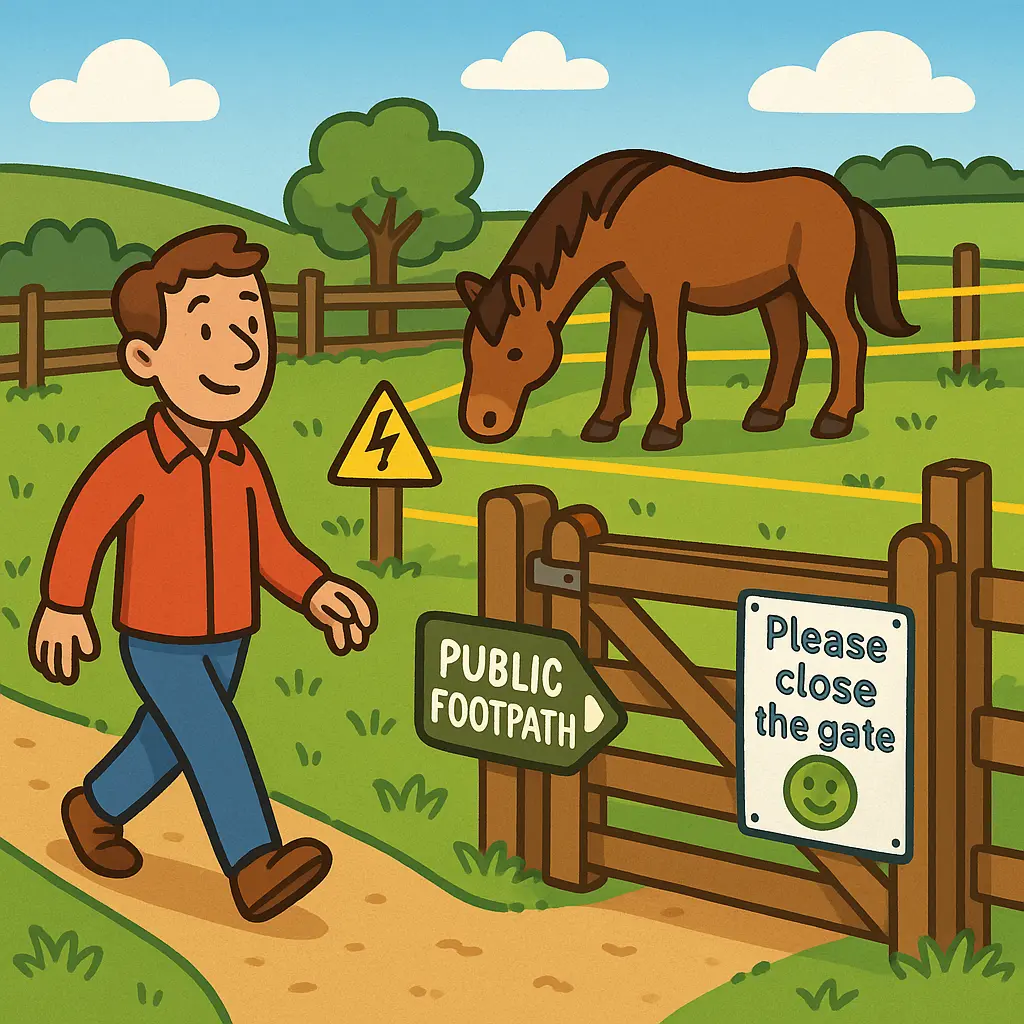
Step‑by‑step checklist before you turn out
Follow this 10‑step checklist to make a footpath through your horse field safe, legal and hassle‑free.
- Confirm the line: Contact your local Rights of Way Officer to verify the exact legal alignment and width of the footpath; get written confirmation.
- Map it on the ground: Waymark the route visibly from both directions; prune vegetation and remove trip hazards.
- Fence sensibly: Where needed, create a clear corridor with stock‑proof fencing that does not encroach on the legally agreed width.
- Electrify safely: If using electric fencing adjacent to the path, fully insulate and add yellow warning signs every 20–30m and at all entries.
- Fit the right gates: Install self‑closing, easy‑to‑use gates that contain horses; keep barbed wire and live wires at least 2m away from openings.
- Sign politely: Add Countryside Code‑aligned notices at entry/exit points: “Please keep to the path,” “Please keep dogs on a lead near livestock,” and “Please leave gates as you find them.”
- Choose the right herd: Do not keep stallions; select calm, people‑savvy horses for this field and move any known aggressors elsewhere.
- Arrange insurance: Maintain public liability cover of at least £30m (e.g., via BHS Gold) and review annually.
- Plan for seasons: Adjust grazing and resource locations during high footfall periods; check fencing after storms and heatwaves.
- Prepare yourself: When handling horses near roads or busy paths, wear visible kit and protective gear—quality hi‑vis, a secure helmet, and supportive yard or horse riding boots reduce your risk.
England, Wales and Scotland: who to ask and where to look
England and Wales follow the rights of way system and Countryside Code, while Scotland follows the Scottish Outdoor Access Code (SOAC), which allows broader responsible access. Always follow the guidance for your nation and consult your council’s Rights of Way team when in doubt.
Useful contacts and references:
- Rights of way and open access (England/Wales): GOV.UK guide
- Scottish Outdoor Access Code—equestrian detail: SOAC equestrian guidance
- BHS access and routes: BHS Access Work
- Highway Code rules for horse riders and animals: Highway Code
If you move horses on roads to reach the field, remember the 2022 Highway Code changes: drivers must slow to under 10mph and give at least 2m clearance. Enhance your visibility with practical layers and reflective details; riders often combine weatherproof outers with hi‑vis accessories—browse season‑ready options, from turnout rugs to rider‑focused high‑visibility gear, to stay comfortable and seen.
FAQs
Can I legally prevent people from using a footpath that crosses my field?
No. A recorded public footpath gives the public the right to pass and repass on foot, and you must not obstruct it. Blocking, locking or diverting without due legal process can trigger local authority enforcement (Horse & Hound).
What happens if a member of the public is injured by my horse while using the footpath?
You have a duty of care. If you keep a horse known to be dangerous in a field with a right of way and injury occurs, you could face prosecution and civil claims. Carry robust public liability insurance; BHS Gold includes up to £30 million cover (Horse & Hound/BHS).
Are there specific fencing standards I must meet around a public footpath?
Yes. Electric fencing alongside a right of way must be fully insulated and clearly signed at regular intervals; keep barbed or live wires away from gates. Path width and furniture standards vary by council—agree details with your Rights of Way Officer and consult BHS specifications for safe equestrian routes (BHS standards).
Do I need planning permission to graze horses in a field with a public right of way?
Grazing horses alone on agricultural land typically does not require permission. However, adding stables, exercise facilities or more intensive equestrian use may be a “material change of use” and need planning consent—seek early advice (Crombie Wilkinson).
What is the difference between a footpath, a bridleway and a byway?
Footpaths are for pedestrians only. Bridleways allow horse riders and cyclists as well as walkers. Byways open to all traffic (BOATs) and restricted byways allow wider use; riders are permitted. Horses are not allowed on footpaths without the landowner’s permission (Harrowells Solicitors; Highway Code).
Should I keep stallions in a field with a public footpath?
No. The BHS strongly advises against keeping stallions in fields crossed by public rights of way due to safety and welfare concerns (Horse & Hound/BHS).
What kit helps me manage footpaths safely day to day?
For you: high‑visibility layers and a protective helmet when handling horses near roads or busy paths—see rider hi‑vis and helmets. For horses: durable turnout rugs in winter, plus regular checks with grooming essentials to spot any fence‑related marks early.
Manage the route clearly, choose the right horses for the field, and keep your insurance watertight. If you’d like product help—whether that’s comfort rugs for 24/7 turnout or safer yard footwear—our team at Just Horse Riders is here to help you and your horses thrive alongside the public right of way.