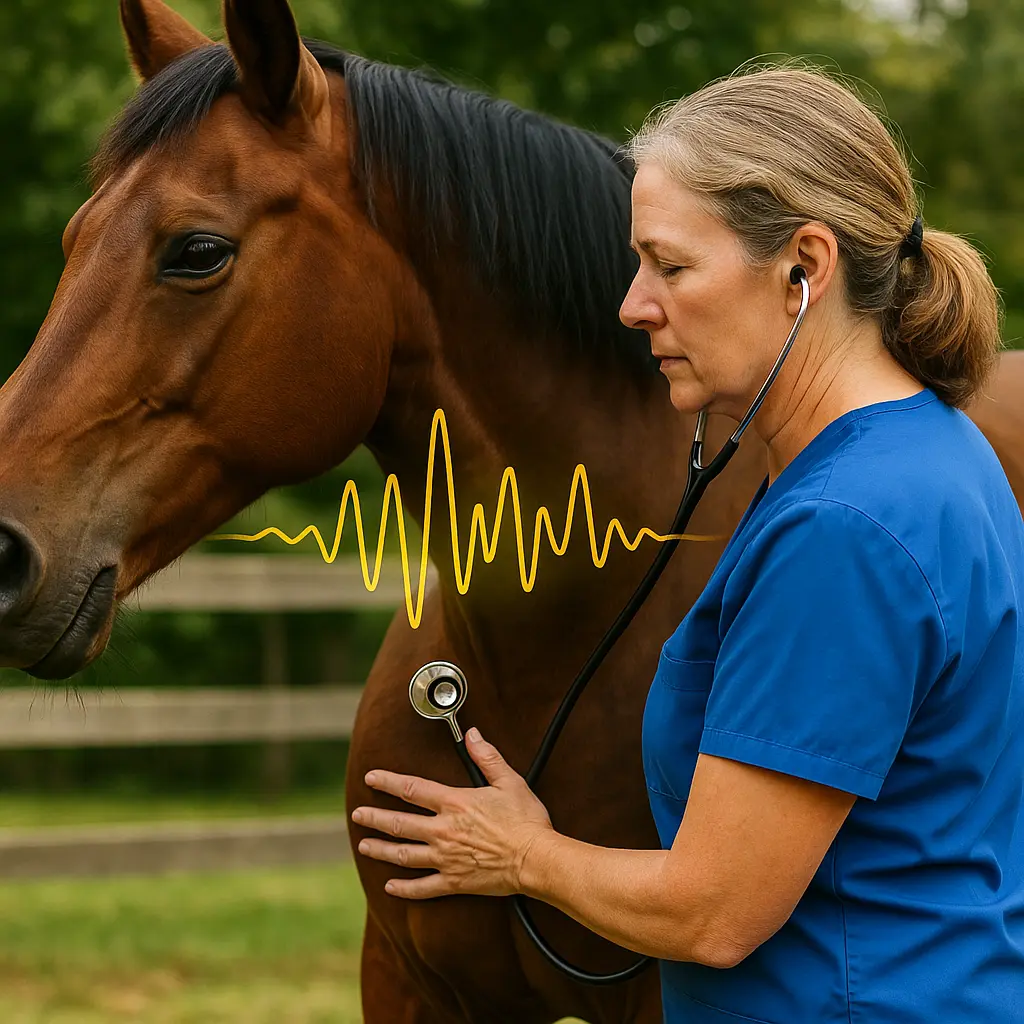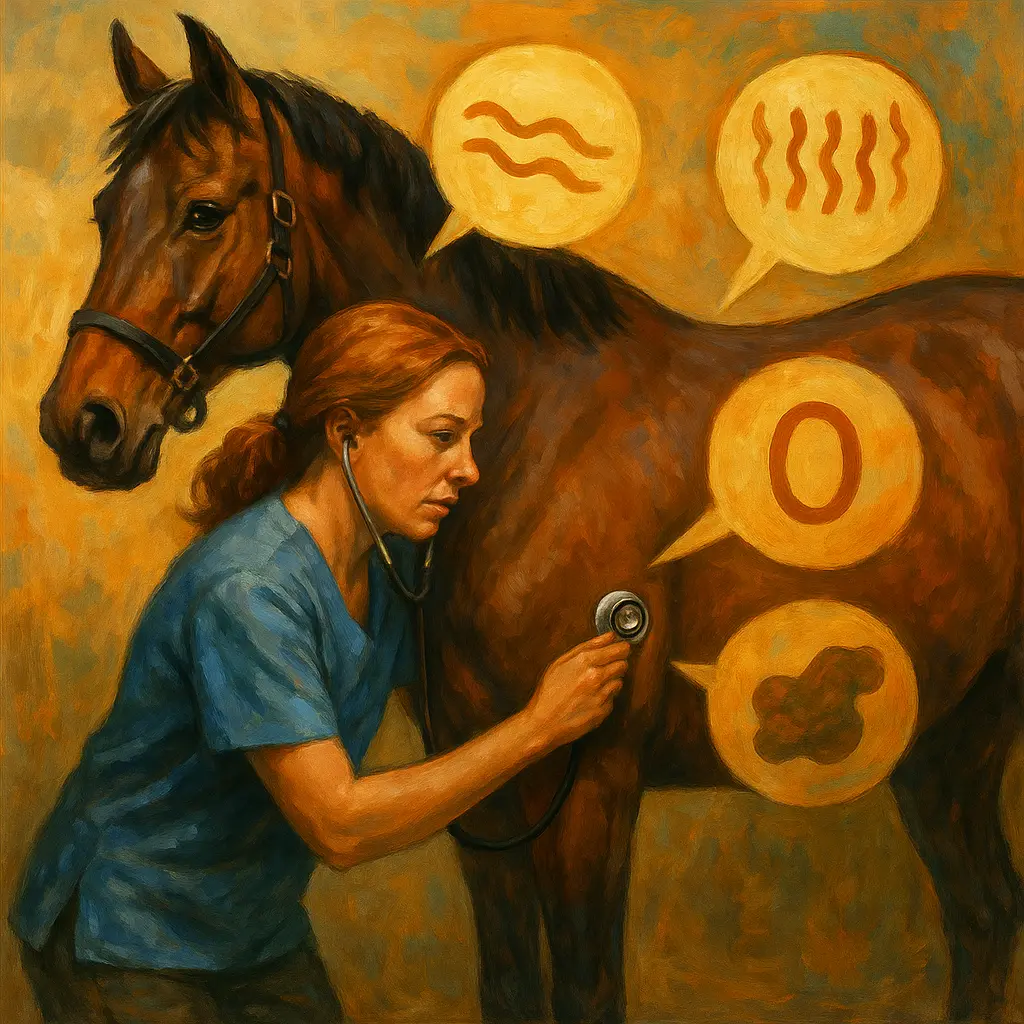
Your horse’s belly can tell you a lot. A healthy digestive tract hums along with regular, rolling rumbles — but silence or a sudden change can be the first sign of trouble. Learning what’s normal (and what isn’t) takes minutes and pays off for life.
Key takeaway: In a healthy horse you should hear 1–3 gut sounds per minute; silence or a marked change in pattern or frequency warrants immediate attention and a call to your vet.
What is a normal gut sound — and how often should you hear it?
In a healthy horse, you should hear 1–3 borborygmi (gut sounds) per minute across the abdomen, with mixing sounds 2–4 times per minute shortly after a meal that taper to once every 2–4 minutes over the next few hours. That pattern reflects steady, efficient motility.
Veterinary references consistently place “normal” at roughly one to three audible rumbles per minute when the horse is at rest, not stressed, and not just fed. Shortly after eating, you’ll naturally hear more frequent “mixing” sounds (often lasting 6–10 seconds) as feed and fluid move through the gut, then the rhythm settles again as digestion progresses. Importantly, while the loudness (amplitude) of gut sounds varies between individuals, the frequency within the same healthy horse stays fairly consistent day to day. Sources you can trust on this include KPP USA, Mad Barn and the Horse Side Vet Guide.
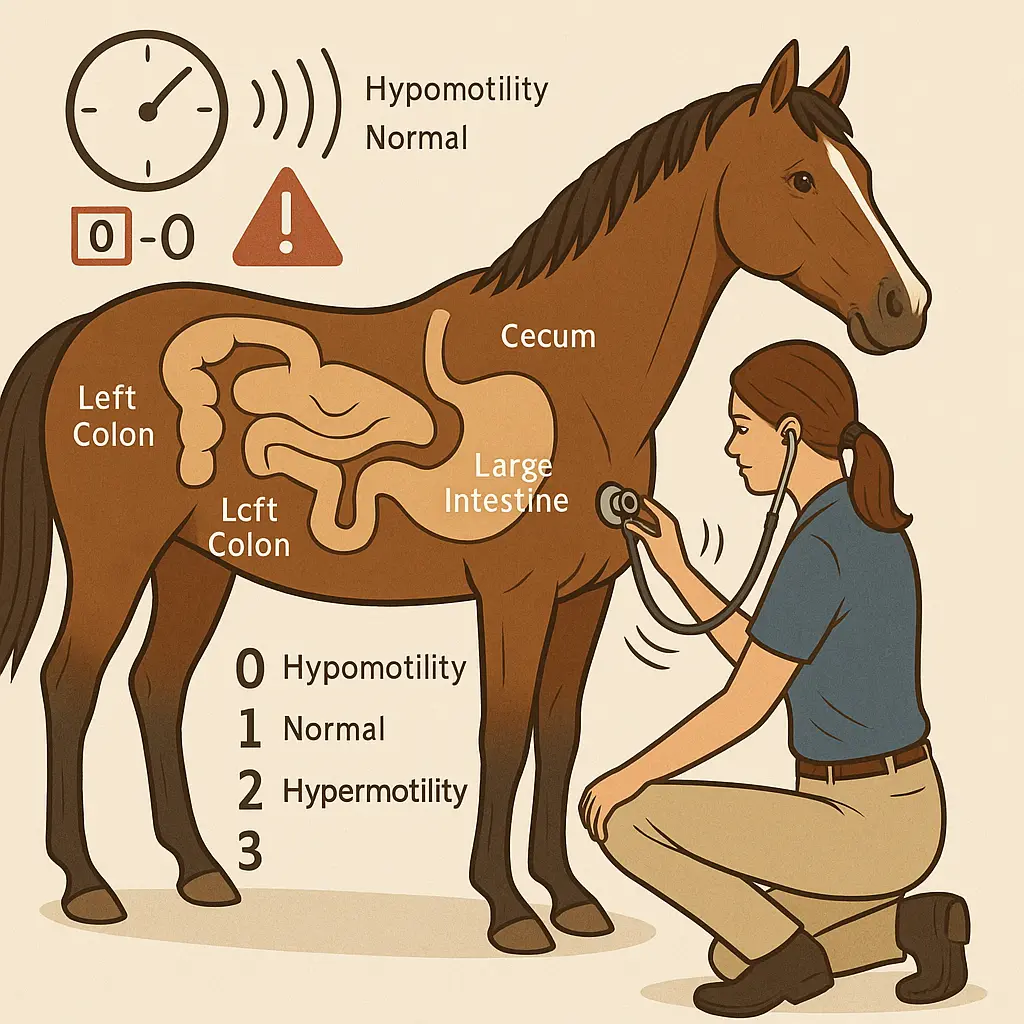
Vets commonly score motility on a 0–3 scale: 0–1 suggests hypomotility (sluggish movement), 2 is normal, and 3 indicates hypermotility (fast movement) that’s often linked with diarrhoea or inflammation. As Mad Barn summarises:
“Consistent gut noise generally indicates a healthy digestive system, while significant changes or a complete absence of sound can signal serious concerns such as colic, ileus, or abnormal gut motility.” (Mad Barn)
When are loud gut sounds a problem?
Loud gut sounds are normal for many horses if they match your horse’s usual pattern; more than 3 sounds per minute indicates hypermotility, which is commonly associated with diarrhoea, enterocolitis, or early obstructive disease.
Think “pattern before volume”. Some horses are naturally boisterous in the belly. What matters is whether you’re hearing an unexpected increase in frequency, a new “tinkling” or “musical” quality, or gurgles that persist alongside loose droppings, discomfort, or reduced appetite. Hypermotile patterns can occur with inflammation or impending diarrhoea; less commonly, they appear early in obstructive disease as the gut “overworks” against a blockage. If you’re hearing sudden, dramatic changes — or that distinctive tinkling often linked with increased fluid and gas — pair your observations with behaviour and manure output and call your vet for advice. Reliable primers from KPP USA and FullBucket Health explain how hypermotility presents.
Quick tip: Always note the time since your horse last ate. Post-feeding hyperactivity is expected; hyperactivity hours after feeding (especially with diarrhoea or lethargy) is not.
How to listen to gut sounds: the four-quadrant method
Auscultate each of the four abdominal quadrants for 30–60 seconds with a stethoscope; expect the loudest, most constant activity in the lower right quadrant (large intestine/caecum region).
With a simple technique you can assess the entire abdomen in a couple of minutes. Ask your vet to demonstrate at your next visit, then practise during your daily yard routine. Here’s the standard four-quadrant approach used in equine practice:
- Upper left quadrant (behind the last rib, mid-abdomen): Quieter small intestine sounds.
- Lower left quadrant (about 20 cm below the upper left): Left colon sounds; moderate gurgles.
- Upper right quadrant (behind the last rib, right side): Base of the caecum; intermittent “flushes.”
- Lower right quadrant (lower abdomen, right side): Large intestine; typically the loudest, with steady activity.
Technique matters. Press the stethoscope diaphragm firmly into the flank (skin contact, not over a thick rug). Stay still, minimise background noise and listen for at least 30–60 seconds in each spot — long enough to fairly judge frequency. If you don’t have a stethoscope, you can place your ear close to the flank, but a scope improves clarity. Guidance from KPP USA, Mad Barn and the Horse Side Vet Guide all support this layout and duration.
Pro tip: Record a short voice memo on your phone while you listen — say the quadrant and count the sounds. You’ll build a baseline record you can share with your vet if things change.
Red flags that need your vet today
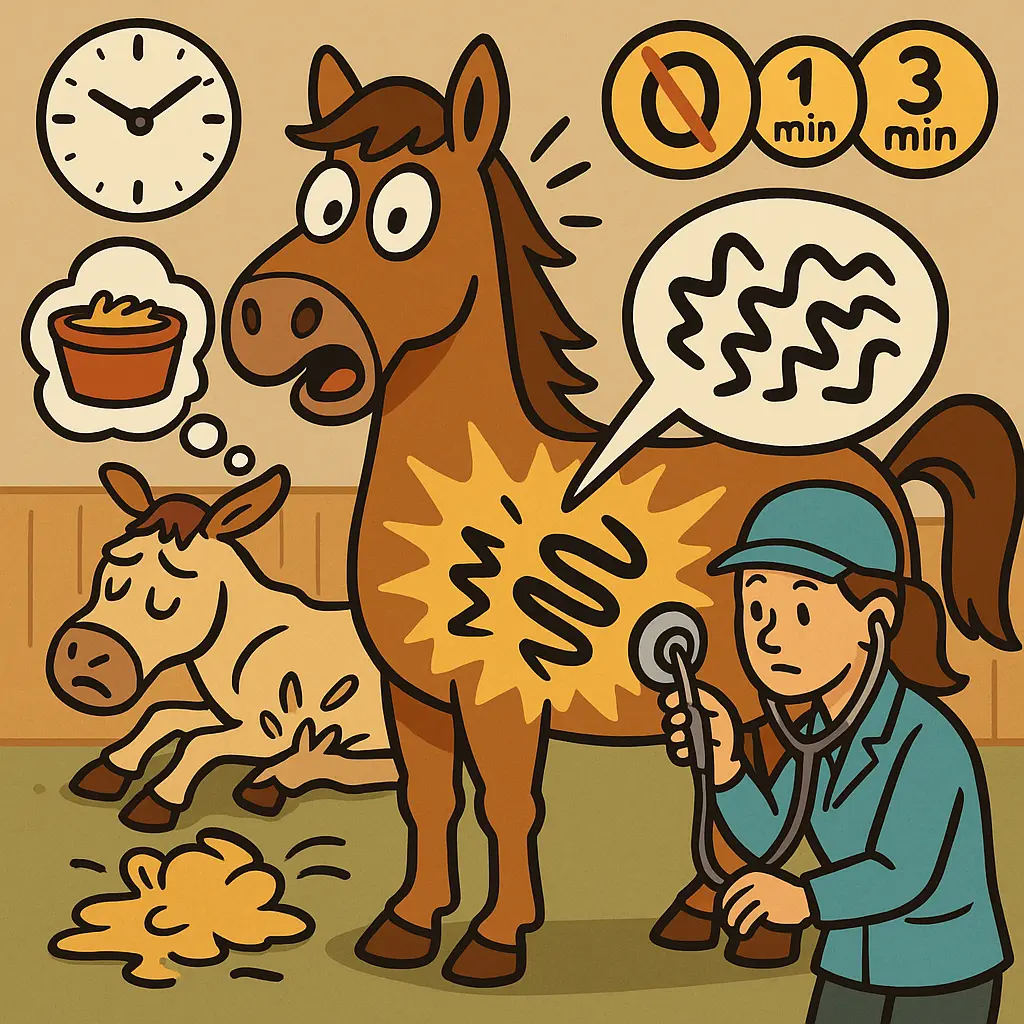
If you hear fewer than 1 sound per minute (hypomotility), no sounds in a quadrant for 60 seconds, or silence across the abdomen, contact your vet the same day. Complete absence of gut sounds is a medical emergency.
Markedly reduced or absent gut sounds suggest serious problems such as colic, ileus (shutdown of gut motility), or intestinal obstruction. The The Horse and the Equine Institute emphasise that silence is a major red flag. UK vets following BEVA-style exam protocols include gut auscultation as standard; if you report “silent guts” along with behaviour change, you’ll help them triage faster.
Call your vet urgently if abnormal or silent gut sounds occur with any of the following:
- Pain signs: pawing, looking at flanks, rolling, stretching as if to urinate, teeth grinding
- Depression, sweating, or agitation
- Little or no manure output, very dry or very loose droppings
- Reduced appetite or refusal to eat
- Elevated vital signs (e.g., increased heart rate) or cold extremities
Remember: borborygmi alone don’t diagnose colic. As KPP USA notes, they’re one piece of the puzzle — your vet will combine them with a full physical exam and, if needed, further diagnostics.
Why gut sounds change: feed, stress and UK seasons
Feeding timing, stress (travel, livery changes, cold-wet weather), forage quality and dysbiosis all alter gut motility and gut sound patterns — sometimes within hours.
In the UK, we ask a lot of the equine digestive system as seasons swing from lush spring grass to older autumn forage and stormy winters. Here are common, UK-specific reasons your horse’s belly might sound different:
- Feeding and timing: Expect more frequent mixing sounds shortly after feed, then a gradual return to baseline over several hours. Always log when you last fed relative to your assessment (Mad Barn).
- Forage quality: Seasonal hay can vary by cut, field, and storage. Sudden switches (e.g., onto spring grass or a new batch of haylage) can disrupt the microbiota and shift motility. Monitor more closely during transitions.
- Stress and yard routines: Livery yard changes, box rest, transport, or clipping days can influence motility via the stress response. Cold, wet, windy winter weather is another common stressor in the UK; careful management and monitoring help maintain microbial balance.
- Dysbiosis: When “good” bacteria decline and lactic acid bacteria/coliforms overgrow, motility can swing to either sluggish or overactive. Emerging research links dysbiosis with laminitis and metabolic syndrome, underscoring why early detection and steady management matter (Nouvelle Research).
Quick tip: During spring turnout changes, check gut sounds daily for a week. Pair your listening with notes on droppings (number, consistency) and behaviour — you’ll catch trends before they become problems.
Build your horse’s baseline — the habit that catches trouble early
Listen when your horse is well and record frequency, volume, and pattern by quadrant; this personal baseline is the single best way to spot early abnormalities.
Baseline building is simple and powerful. The Horse Side Vet Guide recommends listening around feeding time and again during quiet periods, so you learn your horse’s “post-feed” pattern versus their resting pattern. Note:
- Frequency per quadrant (over 30–60 seconds)
- Volume (quiet/moderate/loud) and any “tinkling” quality
- Time since last feed, type of feed/forage, and stressors (e.g., travel, shoeing, weather)
- Manure output/consistency and behaviour that day
Store your notes in your phone’s Health or Notes app, or keep a yard whiteboard for all horses. If your horse ever needs veterinary attention, those records will be gold.
Pro tip: Keep a simple first-aid set to hand — thermometers for vital checks and a printed recording sheet for gut sounds, heart rate and respiration. Having numbers when you call the vet speeds decision-making.
Practical management — and helpful kit from Just Horse Riders
Support steady motility with consistent forage and routines, sensible rugging in our variable UK weather, and targeted digestive support during change or stress.
At Just Horse Riders, we see the same theme with customers managing sensitive guts: routine, records and the right kit.
- Digestive support during transitions: When moving yard, changing forage, or after antibiotics, consider evidence-led digestive supplements. Explore our curated digestive supplements and gut balancers, including options from trusted brands like NAF.
- Keep horses comfortable in cold, wet snaps: Sensible rugging reduces stress from temperature swings. Browse our winter-ready turnout rugs and cosy stable rugs to help maintain comfort and routine.
- Smooth daily routines: Calm handling and consistent grooming lower stress and let you listen in peace. Stock up on time-saving tools in our grooming collection.
- Lower travel stress: For yard moves, clinics or competitions, protect and stabilise with supportive horse boots and bandages, and plan ahead with your feeding and hydration.
- Safer hacking, calmer horses: Clear communication and visibility on the roads help reduce spooks and stress. Check our rider hi-vis essentials to stay seen.
Our customer care team can help you match products to your horse’s routine and your yard’s needs — and we ship across the UK with fast delivery options.
Two-minute yard routine: a quick gut sound check
You can screen gut motility in under two minutes during grooming or mucking out by listening 30 seconds in each quadrant and noting the time since the last feed.
Here’s a practical, repeatable routine you can slot into daily care:
- Observe first: Is your horse bright, comfortable and passing normal droppings? Note time since last feed.
- Position your stethoscope (or ear) on the upper left quadrant; count audible rumbles for 30 seconds.
- Move to the lower left quadrant; repeat for 30 seconds.
- Upper right quadrant; 30 seconds.
- Lower right quadrant (often the loudest); 30 seconds.
- Log the counts and any unusual qualities (tinkling, prolonged silence) and compare with your baseline.
Quick tip: Do this at the same time each day (for example, 90 minutes after the morning feed). Consistency makes patterns crystal-clear.
If your counts drop below 1 per minute, spike above 3 per minute away from feeding, or change abruptly alongside discomfort or diarrhoea, call your vet for guidance.
Bottom line: trust your ears. Consistent, familiar sounds are good news; silence or sudden change needs a plan — and often a prompt call to your BEVA-registered practice.
FAQs
Is it normal for my horse’s gut sounds to be loud?
Yes — loud isn’t automatically abnormal. What matters is your horse’s usual pattern and context. If loud sounds fit the baseline you’ve recorded, they’re likely fine. If they’re suddenly louder or more frequent (especially >3 per minute) away from feeding, or paired with diarrhoea or discomfort, speak to your vet. See overviews from Mad Barn and KPP USA.
What does it mean if I hear absolutely no gut sounds?
Silence after listening a full 60 seconds per quadrant is a red flag for severe reduction in motility, colic, ileus or obstruction, and needs urgent veterinary assessment. Don’t wait — call your vet and describe what you’ve heard (or not heard). Guidance from the Equine Institute and The Horse supports urgent action.
Should I be concerned if my horse has loud, tinkling sounds?
Often, yes. Tinkling or “musical” sounds can indicate increased liquid and gas movement consistent with diarrhoea or inflammation (hypermotility). If you also see loose droppings, reduced appetite, or behaviour change, arrange a veterinary check. See FullBucket Health’s owner guide for examples.
Can gut sounds alone tell me my horse has colic?
No. They are a vital clue but not a diagnosis. Vets combine gut sounds with behaviour, vitals and examination findings (and sometimes imaging or bloods). Absent or markedly reduced sounds especially warrant prompt vet involvement. More at KPP USA.
How often should I check gut sounds?
There’s no fixed rule, but build a baseline in health and re-check during change or stress: new forage, yard moves, competition travel, or cold snaps. Many owners listen during daily grooming to keep tabs. See the Horse Side Vet Guide for practical tips.
What causes dysbiosis and how does it affect gut sounds?
Dysbiosis (microbial imbalance) can follow stress, sudden diet changes, antibiotic use or parasites. It shifts motility towards hyper- or hypomotility, so you’ll hear either unusually frequent or unusually sparse sounds versus your baseline. It’s also increasingly linked with laminitis and metabolic syndrome; learn more at Nouvelle Research.
How long should I listen in each area?
Listen 30–60 seconds in each of the four abdominal quadrants. Shorter listens risk missing slow, but normal, cycles; longer periods help you judge frequency accurately. This timing is recommended by Mad Barn and the Horse Side Vet Guide.