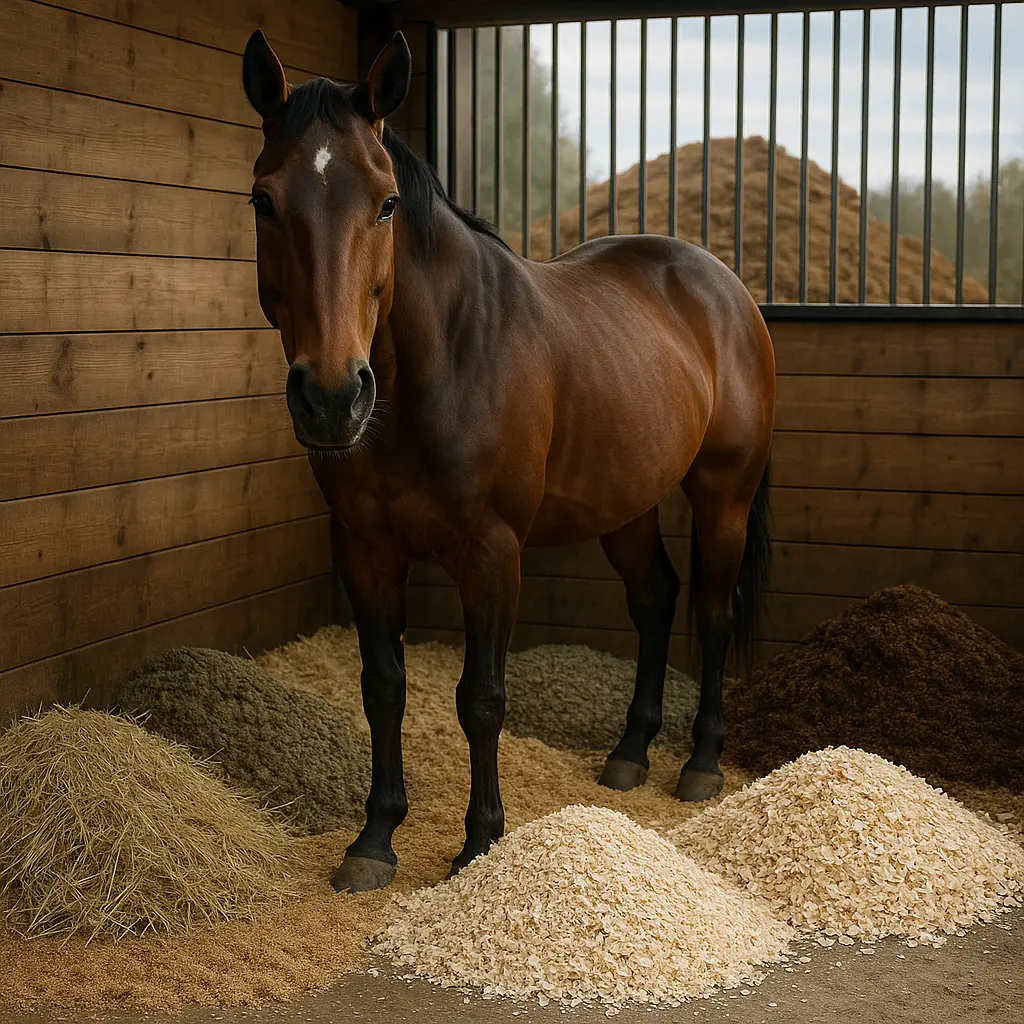
Trying to shrink your muck heap without compromising your horse’s comfort? The right bedding can cut waste, speed mucking out, and keep your stable drier and healthier all year round.
Key takeaway: To minimise muck heap size and daily waste in UK yards, choose hemp, miscanthus or flax (Aubiose), or a well-managed wood fibre or straw pellet bed; they’re more absorbent, dust-free, and break down quickly compared with traditional straw.
What bedding makes the smallest muck heap?
Hemp, miscanthus and flax (Aubiose) create the smallest muck heaps because they’re highly absorbent, dust-free and compost quickly; wood fibre beds also reduce volume by using less material overall. These options trap wet efficiently so you remove fewer kilos of soiled bedding each day, and they degrade rapidly on the heap for faster turn-around.
Hemp is a standout for absorbency and odour control, and it’s virtually dust-free when sourced from reliable suppliers. It also absorbs ammonia and breaks down quickly, which suits respiratory-sensitive horses and small yards where muck heap space is tight (Sorbeo; Your Horse). Miscanthus (elephant grass) is more absorbent than straw, biodegradable and hygienic, so you’ll lift out less waste daily and the heap stays smaller, although a few horses may try to eat it (Your Horse; Ethos). Flax-based options like Aubiose are also highly absorbent, dust-free and noted for easy composting, which further limits heap size (Horse & Hound forum).
Wood fibre bedding is designed to use less material overall and forms a firm, supportive surface that keeps droppings on top, so you can skip out quickly and keep waste volumes down. As bedding specialist Clare explains in Your Horse:
“Wood fibre horse bedding also creates a bed that is firm under foot, so droppings tend to stay on the top layer of the bed, making it easier to skip out... This is because it uses less bedding and results in a smaller muck heap to dispose of.”
By contrast, wheat straw is affordable and warm but typically generates more daily waste than shavings and creates a larger muck heap—fine if you’ve got space, less ideal if you don’t (Your Horse).
Quick tip: If your yard uses a muck trailer, choose lightweight, compressible beddings (pellets or wood fibre) so the trailer needs emptying less often (Your Horse).
Which bedding is most cost-effective in UK yards?
Straight-up cheapest to buy is usually wheat straw, but straw pellets and other pelletised beddings are often more economical long-term because they expand, absorb more (300%+ for straw pellets) and produce less waste to replace. That means fewer top-ups and a smaller, faster-composting heap.
Straw pellets absorb over 300% of their weight in water within 15 minutes, making wet patches compact and easy to isolate—so you remove less each day and cut mucking-out time (BioPellet Solutions). They’re simple to set up (soak, spread, fluff), economical to run and degrade well on the heap, though you should monitor for compaction (Horse & Hound forum; Horse & Hound forum).
While hemp and miscanthus can cost more per bale initially, their superior absorbency and fast breakdown mean you’ll generally remove fewer wheelbarrows and spend less time mucking out. Over a wet UK winter, that running efficiency often offsets the upfront spend.
Pro tip: Combine a compact, efficient bed with more turnout when the weather allows; the right winter turnout rugs keep horses comfortable outside, reducing stable time and bedding use.
Best bedding for respiratory-sensitive horses
For horses with coughs or a history of RAO, choose dust-free hemp or miscanthus, or flax-based Aubiose; these absorb ammonia, control odour and contain minimal airborne particles compared with straw or poor-quality shavings. This helps you maintain cleaner air in the stable, especially in damp UK conditions that can aggravate airways.
Hemp is frequently recommended for respiratory management because it’s dust-free, absorbs ammonia fumes and reduces stable odour; it also decomposes rapidly (Sorbeo). Miscanthus is similarly low-dust and hygienic, offering superior absorbency to straw (Your Horse). Flax-based bedding like Aubiose is also known for very low dust and fast composting (Horse & Hound forum).
Stable ventilation and consistent mucking-out routines are critical alongside bedding choice. In real terms, that means opening top doors where safe, ensuring grills and vents aren’t blocked, and removing wet patches promptly. For horses needing extra support, our customers often pair a low-dust bed with respiratory supplements; browse targeted options from trusted brands like NAF respiratory support.
How to set up a deep litter bed that composts well
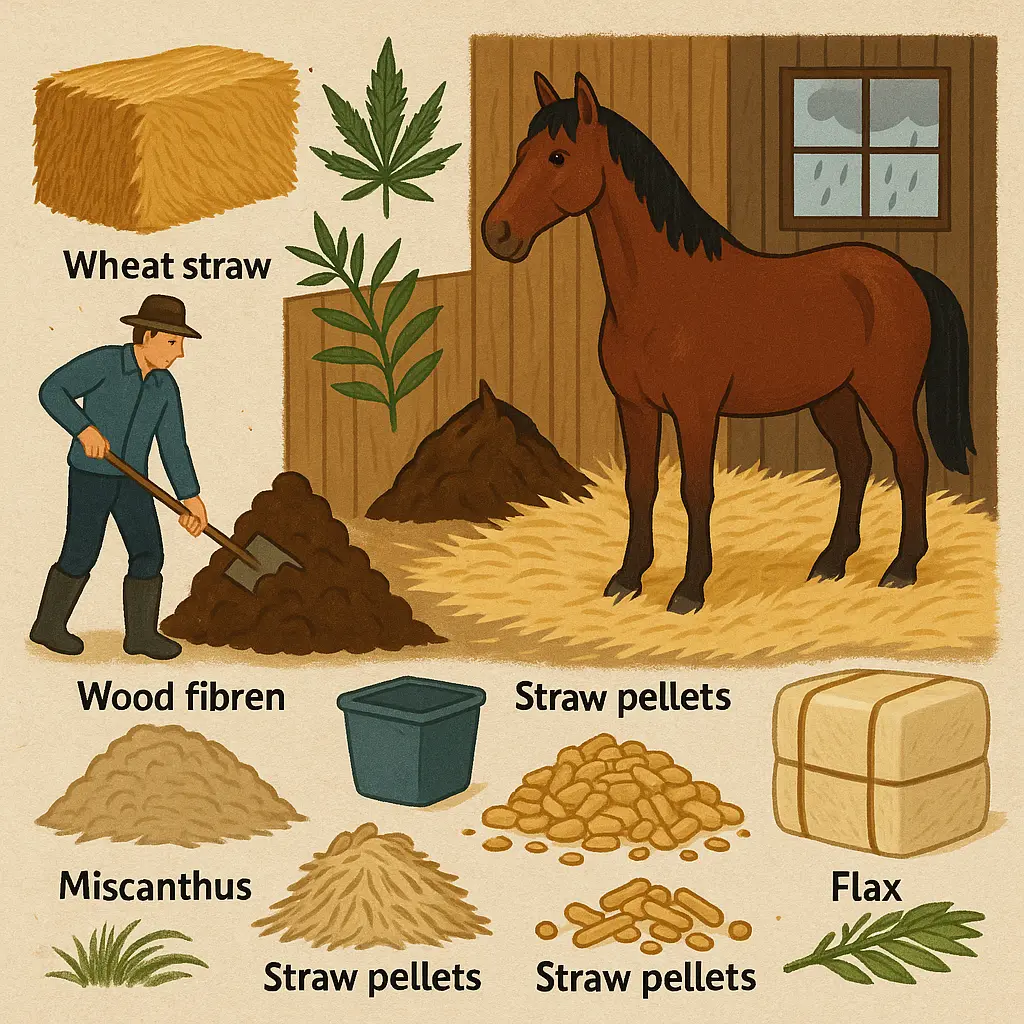
For deep litter systems, use hemp or miscanthus; start with a generous base (for miscanthus, 5–7 bales in a 12ft x 12ft stable), remove droppings daily, top up weekly, and fully strip every 4–6 weeks for composting. These materials lock in wet at the base, stay springy on top and break down quickly on the heap.
Deep litter done well saves time and reduces waste removal:
- Base: For miscanthus, 5–7 bales will establish an effective base in a 12 × 12 stable (Ethos). Hemp works similarly—lay a deep, even bed, banking sides to protect against walls and draughts.
- Daily routine: Skip out droppings; keep the top layer fluffed and dry. Leave the stable base undisturbed so the bed “locks” wet at the bottom.
- Weekly top-up: Add a bale as needed to maintain thickness and comfort.
- Strip cycle: Fully remove and refresh every 4–6 weeks (frequency varies by horse and season). These biodegradable fibres compost rapidly when mixed with manure.
Many UK yards prefer deep-litter-capable, compostable beddings that keep the muck heap small and manageable, particularly where space is limited or removal services charge extra for wood-based waste. Always check livery rules—some require non-wood options for council disposal or on-site composting compliance (Horse & Hound forum).
Quick tip: If your horse eats bedding, miscanthus and flax are usually less tempting than straw. Provide ad-lib forage and use boredom-busters (a small handful from our horse treats selection in a toy) to reduce nibbling.
Managing your muck heap and disposal in the UK
Pick a bedding that matches your yard’s disposal method: choose lightweight, compressible beddings for muck trailers and compostable fibres (hemp, flax, miscanthus, straw pellets) for static heaps you’ll turn into usable compost. The goal is fewer empties and faster breakdown.
As equestrian expert Sue Hurford advises in Your Horse:
“You should also consider your yard’s muck heap options. If you use a muck trailer, go for a lightweight bedding that can be easily squashed down to save on the amount of times you have to empty it. If you have lots of space for a big muck heap, use bedding that will break down and compost well.”
For composting: mix manure with biodegradable bedding like hemp or wood fibre, turn the heap regularly and keep it slightly moist to accelerate decomposition. Most straw pellets, hemp, flax and miscanthus break down readily, producing garden-ready compost and keeping waste off landfill. If you rely on third-party removal, confirm whether they accept wood-based bedding; some free services exclude it (Horse & Hound forum).
Pro tip: Good grooming reduces airborne dust and keeps coats cleaner so beds stay fresher. A few minutes with the right brushes from our grooming range after exercise pays off in less stable mess later.
How much bedding do I need for a 12×12 stable?
To start a deep, functional bed, expect 5–7 bales of miscanthus for a 12 × 12 ft stable; hemp or flax setups are typically similar, while pellets need fewer bags because they expand when activated with water. Straw uses more volume over time due to higher daily waste removal, even if it’s cheaper per bale.
Once established, top-up frequency depends on your horse’s habits, season, and turnout pattern. Pellet beds (including straw pellets) are quick to refresh because a few bags go a long way once soaked; straw pellet systems are particularly efficient thanks to their rapid expansion and 300%+ absorbency within 15 minutes (BioPellet Solutions). For miscanthus, a weekly top-up keeps the top springy while the base continues to lock in wet (Ethos).
At Just Horse Riders, we recommend starting deep and adjusting after the first fortnight—most owners slightly overestimate or underestimate initial depth. Aim for a bed that supports the fetlocks, with well-banked sides to prevent casting.
Winter vs summer bedding choices for UK weather
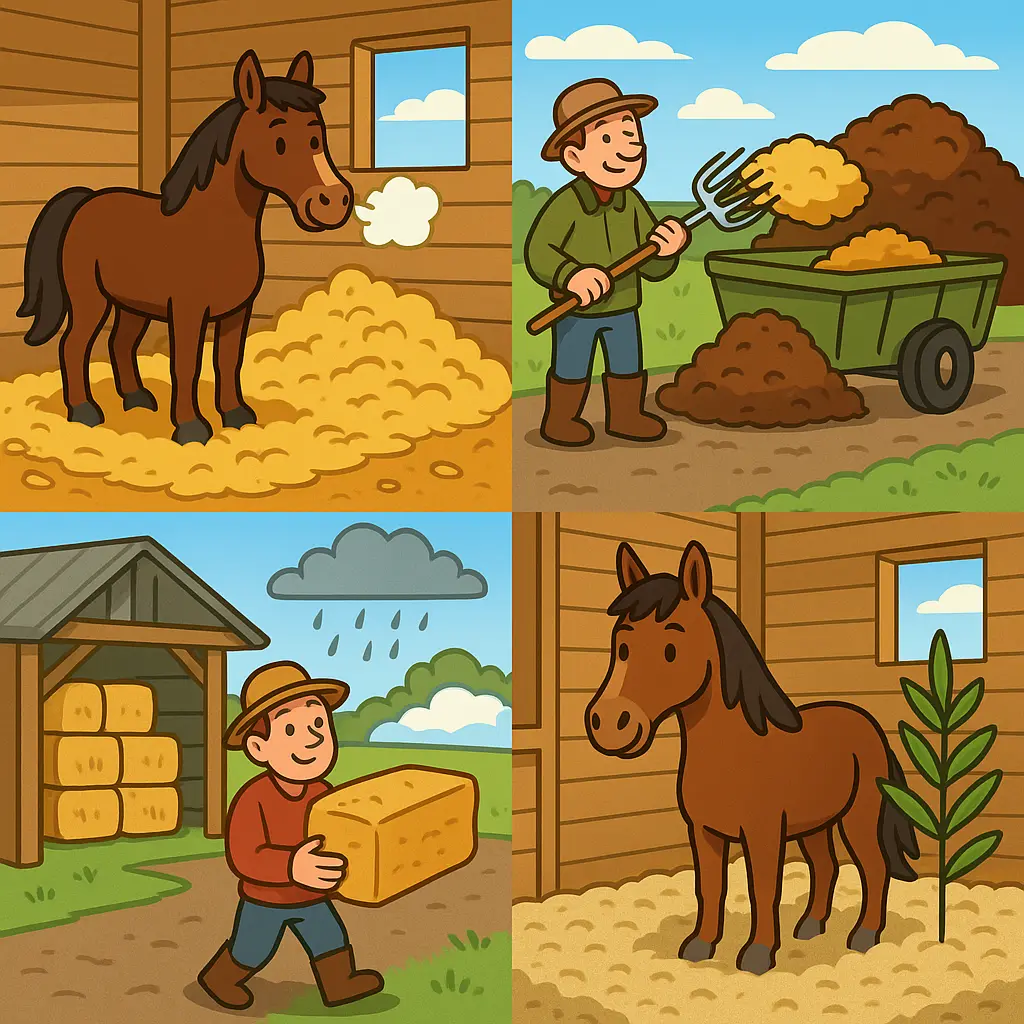
In wet UK winters, use highly absorbent, dust-free bedding such as hemp or miscanthus to keep stables dry and airways clear; in drier months, you can switch to cost-saving options like straw or maintain pellets/wood fibre for speed and low waste. Matching bedding to season controls odour, damp and workload.
Winter brings rain, mud and prolonged stabling—perfect conditions for damp beds and ammonia build-up. Hemp and miscanthus excel here, locking in moisture and keeping the top layer dry, which is kinder to hooves and lungs (Your Horse; Sorbeo). Through summer (and dry springs/autumns), many yards lighten the load with straw or keep pellet/wood fibre systems for their quick skip-outs and small heaps.
Rugging and turnout also influence bedding use. Well-fitted stable rugs keep clipped horses comfortable without overusing deep, insulating beds, while good turnout rugs extend outdoor time in changeable weather, reducing stable hours and bedding consumption.
Common mistakes and how to avoid them
Skipping the “match bedding to disposal” step, starting too shallow, and over-mixing the base layer are the fastest ways to inflate your muck heap and workload. A few simple fixes keep your bed drier and your heap smaller.
- Not checking yard rules: Some yards or council disposal schemes restrict wood-based beddings—verify before you buy (Horse & Hound forum).
- Starting too shallow: Thin beds churn and spread wet. Begin deep (e.g., 5–7 bales for miscanthus in 12 × 12) and maintain thickness.
- Over-disturbing deep litter: Only lift droppings daily. Fluff the top; let the base lock in wet to prevent it surfacing.
- Choosing dusty, spore-prone materials for coughy horses: Go dust-free with hemp, miscanthus or flax; add targeted NAF respiratory support if needed.
- Ignoring seasonality: In winter, stick with high-absorbency options; in summer, adjust to reduce costs without sacrificing hygiene.
- Underfeeding forage: Hungry horses are more likely to eat bedding. Offer sufficient hay and provide enrichment—try options from our treats collection in a feeder.
Quick tip: If you use a muck trailer, favour pellets or wood fibre; if you compost on site, choose hemp, flax, miscanthus or straw pellets for quicker, richer compost.
Practical recommendations and quick setup guides
For a small muck heap and fast muck-out times, choose hemp, miscanthus or flax (Aubiose) for deep litter; for budget and speed, choose straw pellets or wood fibre. Here are quick-start setups you can copy this weekend.
- Hemp deep litter (12 × 12): Lay a deep, even base; bank sides. Skip droppings daily, top up weekly, strip 4–6 weekly. Benefits: dust-free, absorbs ammonia, composts quickly (Sorbeo).
- Miscanthus deep litter (12 × 12): Start with 5–7 bales; maintain a springy top layer. Excellent in wet winters; produces small heaps (Ethos).
- Straw pellets (economy/composable): Soak to activate, spread, and fluff. Absorbs 300%+ in 15 minutes, quick to skip, minimal waste (BioPellet Solutions).
- Wood fibre (fast skip-out): Creates a firm surface so droppings sit on top; uses less material and reduces heap size (Your Horse).
Round out your winter stable management with regular grooming to control dust (browse grooming essentials) and appropriate rugging to manage stable time and warmth (see stable rugs). If you’re kitting out on a budget, check our rotating deals in the Secret Tack Room clearance.
FAQs
Which bedding minimises muck heap size for small UK yards?
Hemp, miscanthus and flax (Aubiose) minimise muck heap size because they’re highly absorbent and compost quickly; wood fibre also reduces volume by using less bedding overall (Your Horse; Horse & Hound forum).
Is straw still cost-effective if I’m tight on space?
Wheat straw is affordable and easy to muck out, but it produces more daily waste than shavings or modern fibres, so the muck heap grows faster—better for yards with ample space than small, busy livery settings (Your Horse).
What’s the best bedding for a horse with a cough?
Choose dust-free hemp or miscanthus, or flax-based Aubiose; these absorb ammonia and have minimal dust. Pair with good ventilation and consider targeted respiratory support from NAF where appropriate (Sorbeo; Your Horse).
How do I start a deep litter bed?
Use hemp or miscanthus. Lay a deep base (for miscanthus, 5–7 bales in a 12 × 12), remove droppings daily, top up weekly and fully strip every 4–6 weeks; these materials suit deep litter and compost well (Ethos; Your Horse).
Can I compost used bedding for the garden?
Yes. Biodegradable bedding like straw pellets, hemp, wood fibre and miscanthus mixes with manure to create nutrient-rich compost. Turn the heap regularly for faster breakdown.
Are pellets actually more economical long-term?
Often, yes. Pellets expand to use less volume, absorb exceptionally well (straw pellets 300%+ in 15 minutes), and produce smaller heaps—so you top up less, even if the upfront price is higher (BioPellet Solutions).
What should I choose if my yard uses a muck trailer?
Opt for lightweight, compressible options—pellets or wood fibre—so the load squashes down and you empty the trailer less often (Your Horse).
Ready to switch? Start with a deep, absorbent base that suits your yard’s disposal, add a smart grooming routine, and keep your horse comfortable in all weathers with the right stable rugs and turnout rugs. Your muck heap—and your mucking-out time—will thank you.