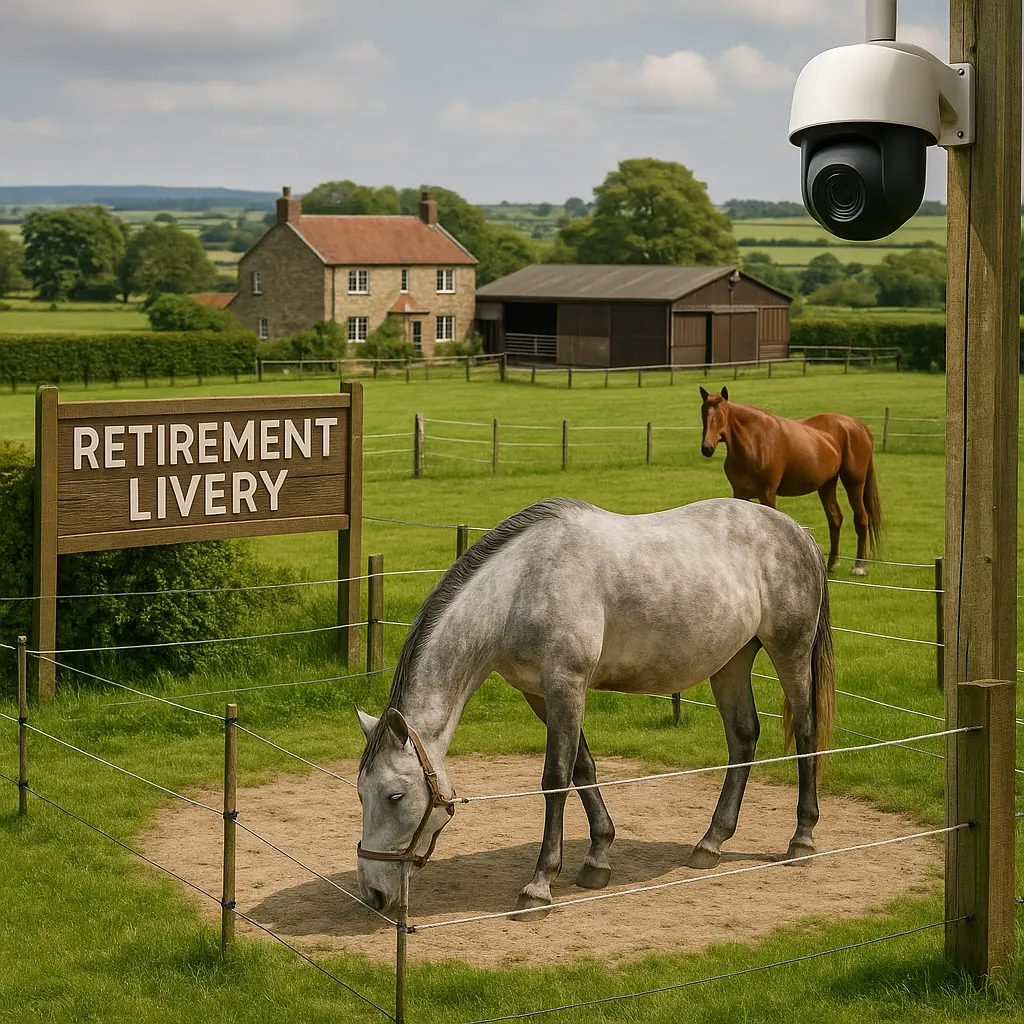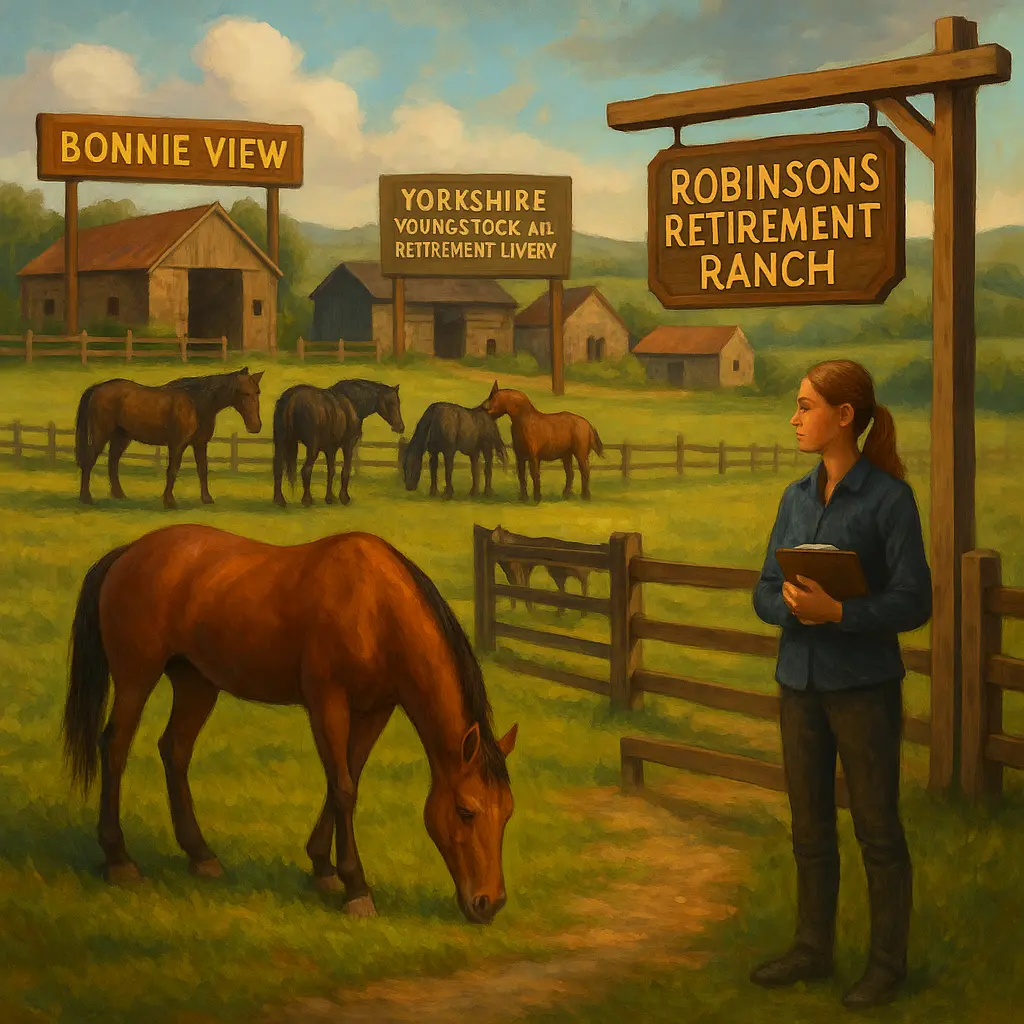
Your EMS-prone retiree can live a relaxed, comfortable life in Yorkshire — but only if the yard gets grazing, forage, movement and hoof care right. The good news: you can spot an EMS-friendly retirement livery quickly once you know what to look for.
Key takeaway: Choose a retirement livery that combines restricted grazing, low-sugar forage, consistent turnout, careful herd management and routine hoof care — and ask to see exactly how those are delivered day-to-day.
What does an EMS-friendly retirement livery look like?
An EMS-friendly retirement livery in Yorkshire offers controlled grazing, low-sugar forage, steady movement and routine monitoring, with year-round turnout options. Look for yards that can explain — and show — how they keep weight, grass access and laminitis risk under control for every horse.
Retired horses with Equine Metabolic Syndrome (EMS) do best in a calm, predictable set-up that avoids sugar spikes and encourages gentle movement. In practice, that means restricted grass, plenty of appropriate fibre, and surfaces that stay usable through Yorkshire’s wet winters. Some Yorkshire yards even advertise 24-hour turnout, 365 days, which helps maintain routine and movement for horses that struggle in a stable.
Core features to expect:
- Restricted grazing options: track systems, surfaced pens, bare or conserved paddocks, and muzzling protocols where appropriate
- Forage-first feeding: low-sugar hay (often soaked), slow-feeding and careful haylage policies
- Routine monitoring: regular weight/crest checks, body condition scoring and a simple yard record
- Confident hoof care planning: farriery on a schedule, laminitis-aware handling and safe surfaces
- Settled social groups matched by age, temperament and mobility
How do you control grazing and forage safely?
Pick a yard that limits grass intake and provides consistent low-sugar fibre, typically through restricted turnout, track systems and soaked hay. EMS horses need predictable forage without access to flushes of rich grass.
The best retirement yards balance movement with sugar control. Ask to see:
- Track or “paddock paradise” systems that encourage walking without offering lush grass
- Sacrifice or bare paddocks for high-risk times (spring and autumn flushes, and after clear frosts followed by bright sun)
- Clear muzzling protocols and supervision if muzzles are used
- Soaked hay routines (how long, where it drains, and how the team ensures hygienic handling)
- Slow-feeding nets or feeders to reduce gorging and stress
- Haylage rules — many EMS owners avoid it due to variable sugar levels; ask what the yard uses for metabolic horses
Quick tip: Ask whether the yard can source or store a dedicated batch of low-sugar hay for metabolic horses. Forage consistency is your friend.
What herd management keeps EMS retirees calm and safe?
Choose yards that build small, stable herds matched by age, temperament and mobility, and that observe groups closely for stress or bullying. Social stability reduces stress-related weight swings and makes daily management safer.
“Horses are social animals, and a well-managed herd is vital for their mental health. Look for yards that match horses by age, temperament, and health status (e.g. similar fat scores or mobility levels) and monitor herd behaviour closely to prevent bullying.”
Good yards rotate fields as a herd, not as individuals, use companion pairings to settle anxious retirees, and change groups rarely. For EMS horses, that stability helps maintain a steady routine — fewer surprises, steadier appetites, calmer movement. Ask how new horses are introduced and how the team intervenes if a horse is pushed off forage or bullied off a track.
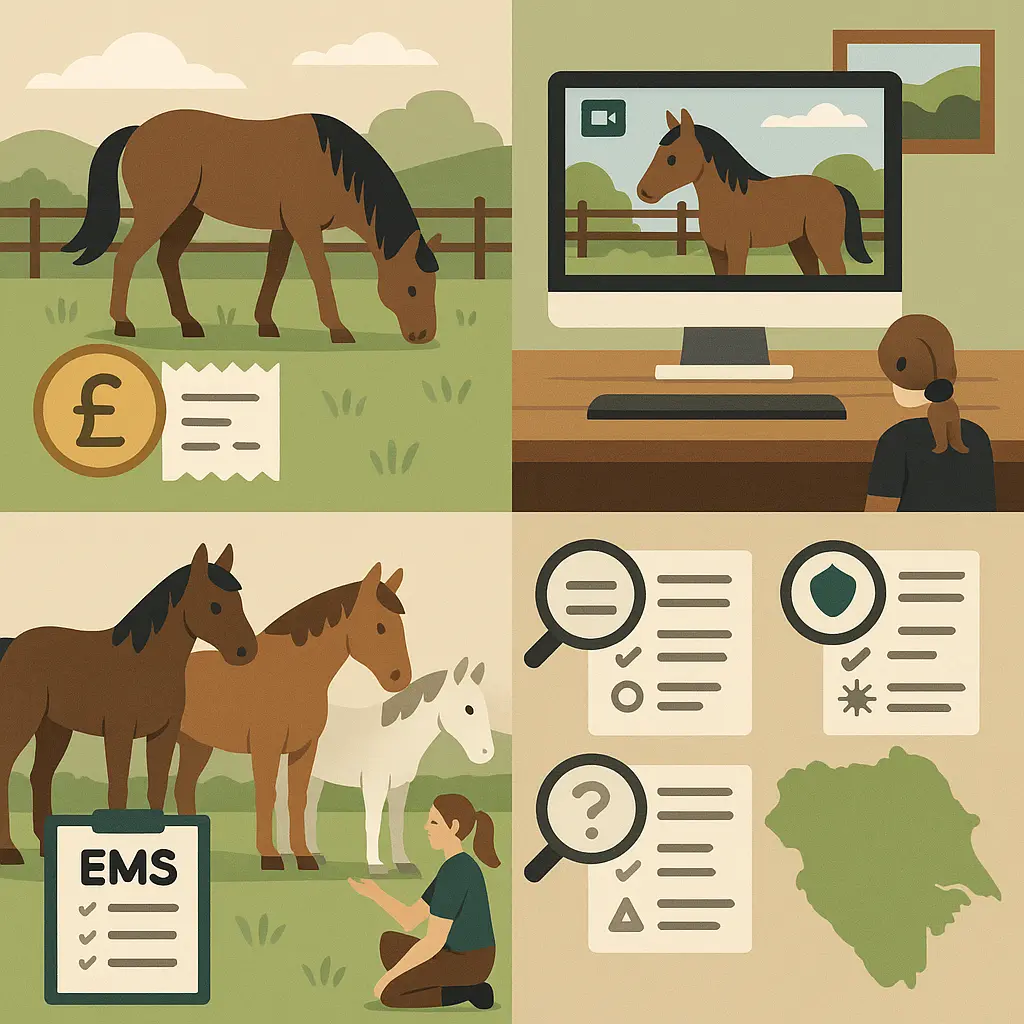
What turnout routines work in Yorkshire weather?
EMS horses benefit from consistent turnout with shelter and surfaces that stay usable through wet, windy winters; movement matters more than prolonged stabling. Look for all‑weather pens, gateways with hardcore, and shelter belts that encourage horses to stay out and move.
Yorkshire’s moors, wolds and dales can be blustery and very wet over winter. The right facility plans for this with:
- All-weather standing areas, surfaced tracks and drained gateways
- Field shelters or natural windbreaks so horses stay comfortable outdoors
- A clear winter turnout rota that avoids long periods confined in a stable
Rugging should suit your horse’s age, coat, shelter access and body condition, not the calendar. At Just Horse Riders, we recommend choosing waterproof, breathable rugs that support steady movement and comfort without causing overheating or weight gain. Explore our curated ranges of winter turnout rugs for wet days, and stable rugs if your horse spends part of the day inside. In midge-heavy areas or on sunny spring days, consider fly rugs and sheets to reduce irritation that can drive fretful movement.
Quick tip: Ask the yard how they adjust turnout during storms or when fields are waterlogged — good yards switch to surfaced pens or tracks to keep horses moving safely without churning pasture.
How do you handle hoof care and laminitis prevention on retirement yards?
Book regular farriery and choose a yard that recognises laminitis early, manages movement sensibly and provides supportive surfaces. EMS raises laminitis risk, so prevention and prompt response are non‑negotiable.
Discuss with the yard manager how they:
- Schedule routine trims or shoeing, and what notice they give you or your farrier
- Check for early warning signs (heat, strong digital pulse, reluctance to turn)
- Adjust turnout immediately if a horse looks footsore or pottery
- Work with your vet’s plan for box rest or controlled movement if needed
For additional comfort during recovery phases, controlled support can help. Our selection of horse boots and bandages includes options suitable for gentle, vet‑guided use around the yard or in the stable. Always follow your vet and farrier’s advice on any therapeutic booting.
What are simple ways to track weight and metabolic health?
Weigh-tape, body condition score and crest-check your horse monthly, and share those notes with the yard so small gains are corrected early. Photos from the same angles each month help you and the manager act before weight creeps up.
Good yards keep a basic log. Ask them to record:
- Monthly weight tape readings and body condition score
- Crest thickness and firmness notes
- Changes in forage type, soaking times or turnout hours
- Any footiness, stiffness or behaviour changes
At Just Horse Riders, we recommend adding a weigh tape and soft brush to your field-visit bag so you can check and feel for changes yourself. Our grooming kit range makes regular hands-on checks easy and enjoyable for your horse. If your vet advises a balancer or specific metabolic support, you’ll find a wide range of reputable options in our horse supplements collection — always choose in line with your vet’s guidance for EMS.
Pro tip: Create a simple one-page “EMS profile” for your horse (target condition, crest notes, current forage routine, vet/farrier contacts) and give copies to the yard team so everyone acts consistently.
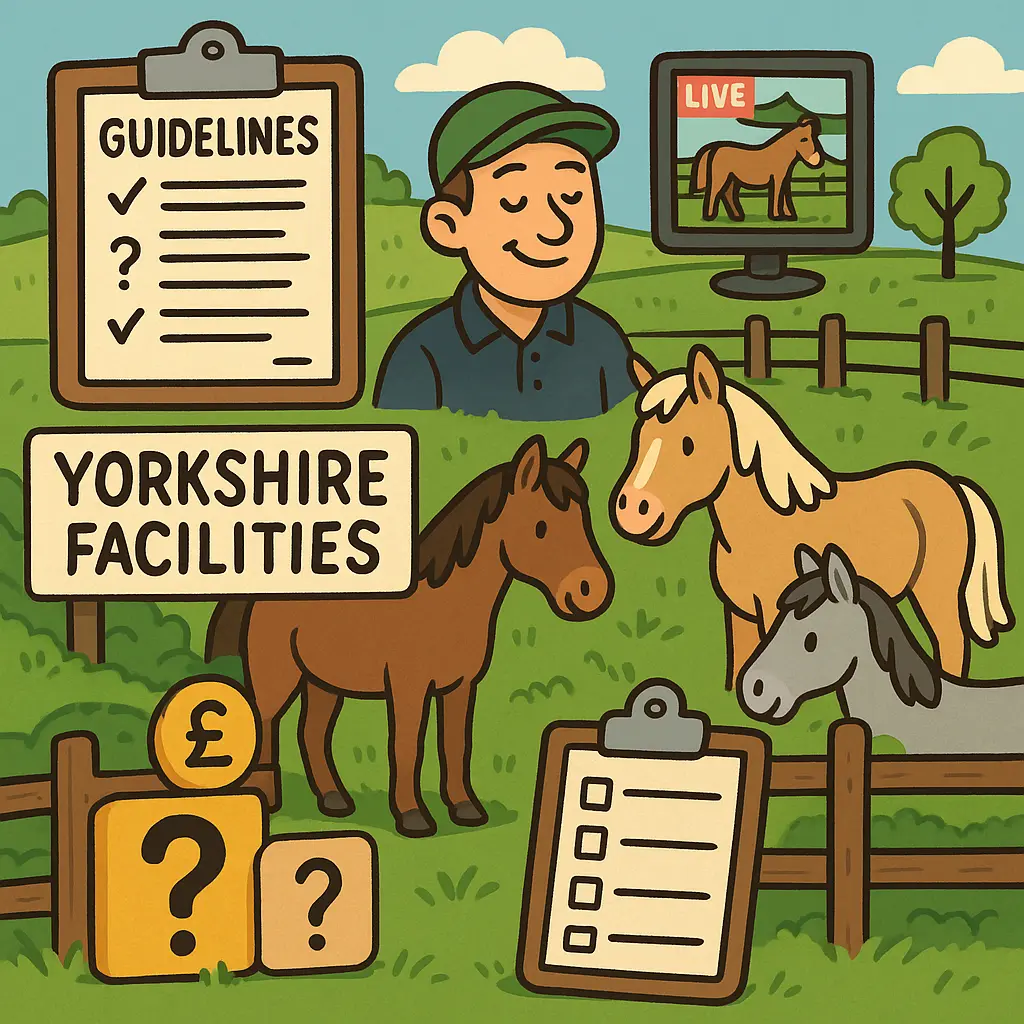
What questions should you ask — and what are the red flags?
Ask for written EMS routines (grazing, forage, monitoring, hoof care) and a clear turnout plan year‑round; avoid yards that rely on rich pasture or ad‑lib haylage for all horses. Transparency and consistency are the hallmarks of safe EMS management.
Essential questions for viewings:
- How do you restrict grass for metabolic horses — tracks, bare paddocks, muzzles? Show me.
- What forage do EMS horses get, and how is soaking managed?
- What’s your winter turnout plan when fields are saturated?
- How often do you record weight/condition, and can I see a sample log?
- What’s your protocol if a horse looks footsore or shows laminitis signs?
- How are herds formed and changed, and how do you prevent bullying?
- Is 24/7 turnout available in some form year‑round (e.g. tracks, surfaced pens)?
- What’s included in the fee, and what are common extras (soaking, muzzling checks, farrier handling)?
Red flags to walk away from:
- “One-size-fits-all” grazing with rich pasture for every horse
- No written plan for soaked hay or forage management
- Haylage by default for all horses, including metabolic ones
- No safe surfaced areas for winter turnout or for horses on restricted movement
- Vague answers about hoof care or early laminitis signs
Quick tip: If you’ll be leading on lanes or crossing roads to turnout, add high‑visibility to your kit — our rider hi-vis selection improves safety in low winter light.
Where can you start your Yorkshire search?
North and West Yorkshire host several retirement-specific yards; use them as starting points and discuss your EMS needs in detail. Always visit in person to see grazing controls, forage routines and daily handling.
Examples mentioned in recent Yorkshire retirement searches:
- Bonnie View Retirement Livery (North Yorkshire Moors National Park) — cost‑effective care packages and live camera streaming
- Yorkshire Equine Youngstock and Retirement Livery (North Yorkshire) — family farm setting
- Bugthorpe Grange Retirement Livery (Yorkshire Wolds) — year‑round grazing with full livery packages
- The Robinsons Retirement Ranch (Bradford, West Yorkshire) — all‑inclusive packages and specialist care for pregnant mares
Note: The yards above are examples to help you frame the right questions; speak directly to managers about your horse’s EMS plan, veterinary input and practical grazing controls before deciding.
Pro tip: View at least two contrasting yards — for example, one with a full track system and one with restricted paddocks — to see which routine will suit your horse’s temperament and your budget best.
FAQs
Here are clear answers to the most common EMS retirement livery questions from UK owners.
What makes a retirement livery “EMS-safe”?
Consistent restricted grazing, low-sugar forage (often soaked hay), routine weight/crest checks, stable herd groups and laminitis-aware hoof care. Ask the yard to show you exactly how they deliver each point, not just tell you.
Do EMS retirees need 24/7 turnout?
Many do best with some form of year‑round turnout because steady movement supports metabolic health and mental wellbeing. In winter, that can mean surfaced tracks or pens rather than grassy fields; some Yorkshire yards offer 24‑hour turnout, 365 days.
Is soaked hay essential for EMS horses at grass?
Soaked hay is a common tool to lower sugar intake when grass must be restricted. The exact approach should follow your vet’s advice, but good yards have clear, hygienic soaking routines and slow-feeding systems ready for metabolic horses.
How should Yorkshire’s seasons change management?
Spring and autumn grass flushes and sunny mornings after clear frosts are classic high-sugar periods, so EMS horses often move to tracks, bare paddocks or muzzles at these times. In wet winters, surfaced turnout areas keep movement going without exposing horses to rich grass.
Should my retired EMS horse be rugged?
Rug for the individual: age, coat, body condition, clip and shelter matter more than the date. Waterproof, breathable turnout rugs help keep horses comfortable and moving outdoors; choose the lightest effective option to avoid unnecessary weight gain.
How often should the farrier see an EMS-prone retiree?
Keep to a regular schedule agreed with your farrier and yard (for example, every few weeks as suited to your horse) and be ready to adjust if feet change. Early intervention at the first hint of footiness is key to preventing setbacks.
What paperwork should I ask the yard to share?
Request their written EMS management notes (grazing, forage, soaking), hoof-care schedule, turnout plan for winter, and a simple weight/condition log. Add your horse’s EMS profile with vet and farrier contacts so everyone is aligned.
With the right questions and a yard that shows its systems in action, your EMS retiree can thrive — calmly, safely and comfortably — in Yorkshire’s beautiful (and sometimes blustery) landscape. If you’d like help choosing practical gear for your horse’s new routine, our team at Just Horse Riders is here to help you pick the right fly rugs and sheets, stable rugs and day‑to‑day grooming kit to keep checks quick and kind.