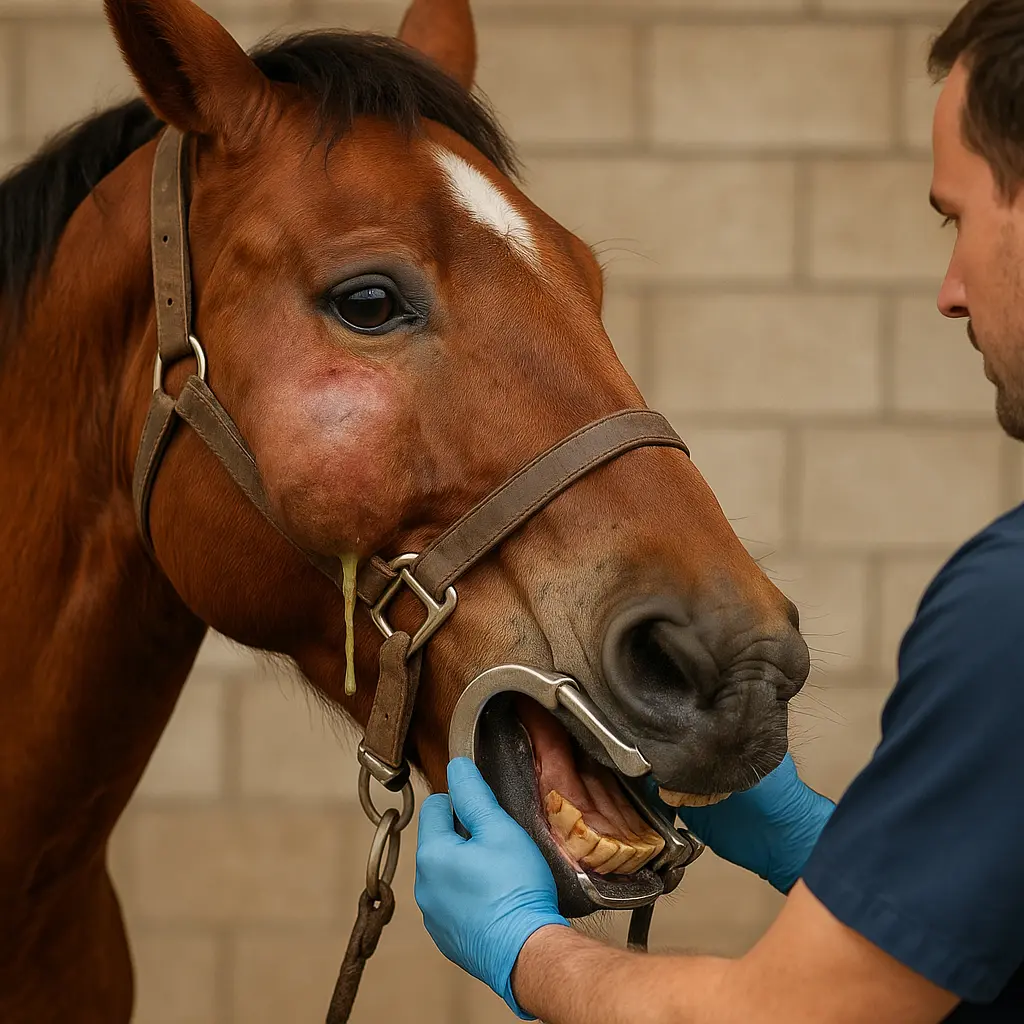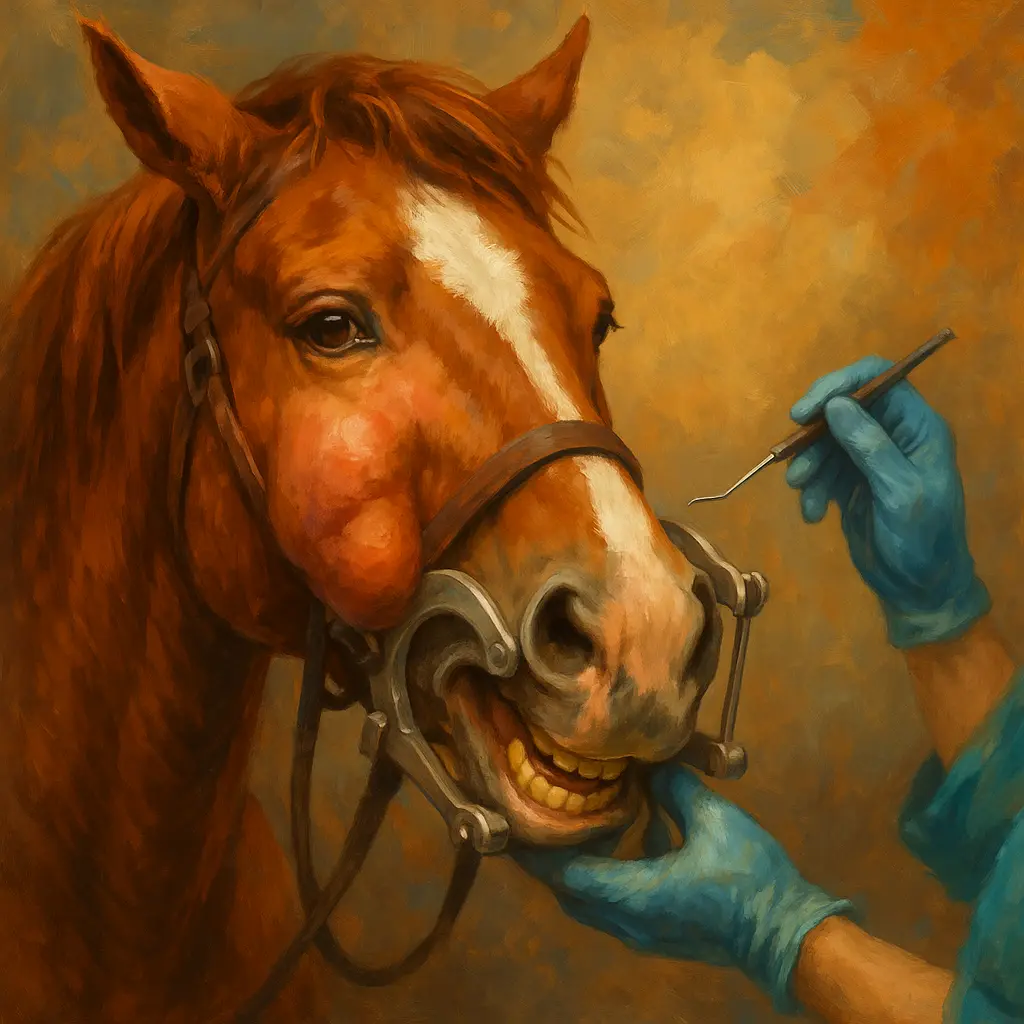
A swollen muzzle or a foul, one-sided nasal discharge is more than a quirk — in horses, it’s one of the clearest early warnings of a dental infection. Acting quickly can prevent months of discomfort, costly sinus disease, and even tooth extraction.
Key takeaway: In horses, any swelling over the upper jaw (maxillary region) or foul-smelling discharge from one nostril should be presumed dental until proven otherwise — book a dental exam within 24–48 hours.
What nasal swelling and discharge mean
Unilateral, foul-smelling nasal discharge and facial swelling are classic signs of a tooth-root infection and secondary sinusitis. The smell is typically very unpleasant due to anaerobic bacteria, and swelling often localises over the maxillary (upper jaw) area.
Dental roots of the upper cheek teeth sit beneath the sinuses; when a tooth becomes infected or decays, bacteria and pus can drain into the sinus and then out through a single nostril. This is why dental disease so often “presents” as a snotty, smelly nose on one side. Horses may show intermittent discharge as the head position changes, with visible fullness or heat over the affected side of the face or along the jaw.
Older horses have more cumulative wear and are more prone to periodontal disease and diastemata (gaps that trap feed), but young horses are not exempt. In fact, swollen maxillary regions in youngsters are strongly suggestive of dental trouble as their deciduous (baby) teeth shed and permanent teeth erupt.
“A thorough exam of the horse (intra and extra-oral exams) to detect early stages of dental pathology and appropriate treatment is fundamental.”
Modern equine dentistry, led in the UK by BEVA and BHS guidance, has advanced dramatically in two decades — the right exam and early action prevent most complications.
The red flags you can spot today
Dental disease often shows as subtle changes first: slower eating, quidding (dropping partially chewed feed), chewing on one side, or reluctance to drink cold water. Foul odour from the nostril or mouth and one-sided nasal discharge are high-alert signs.
Run through this quick at-home checklist and call your vet or qualified equine dental technician if you notice:
- One-sided, smelly nasal discharge (often thick or pus-like); occasional blood-tinge can occur with severe gum disease
- Facial/jaw swelling or heat, especially over the upper cheek teeth
- Quidding, slow eating, holding the head to one side while chewing, or pouching feed in the cheeks
- Reluctance to accept the bit, headshaking, or resistance under saddle
- Weight loss despite “eating normally” — many horses hide dental pain well
- Excessive saliva, mouth sores, or visible feed trapped between teeth
Quick tip: A tiny amount of clear or slightly milky discharge can be normal in horses; anything coloured, pus-like, blood-tinged, or foul-smelling is not.
Keep a small torch in your yard kit to check for quidding piles, lodged feed, or facial asymmetry during routine grooming; our grooming collection is a handy place to start building a dedicated “health check” kit.
Young horses: why teeth are the first suspect
In young horses, maxillary swelling is presumed dental until proven otherwise. Erupting permanent teeth, retained caps (deciduous teeth), and early root infections can all cause dramatic facial swelling.
Periapical abscesses in youngsters can develop quickly and are painful. You may see sudden quidding, mouth ulcers, loss of appetite, or reluctance to be bridled. Clinical guidance used by UK vets is clear:
“Any swelling in the maxillary region should be presumed to be dental-related until proven otherwise.”
An early, thorough exam prevents months of sinus issues. If you’re breaking or backing a young horse, schedule dental checks at 6–12 month intervals to catch problems before introducing a bit.
How vets diagnose dental-related nasal swelling
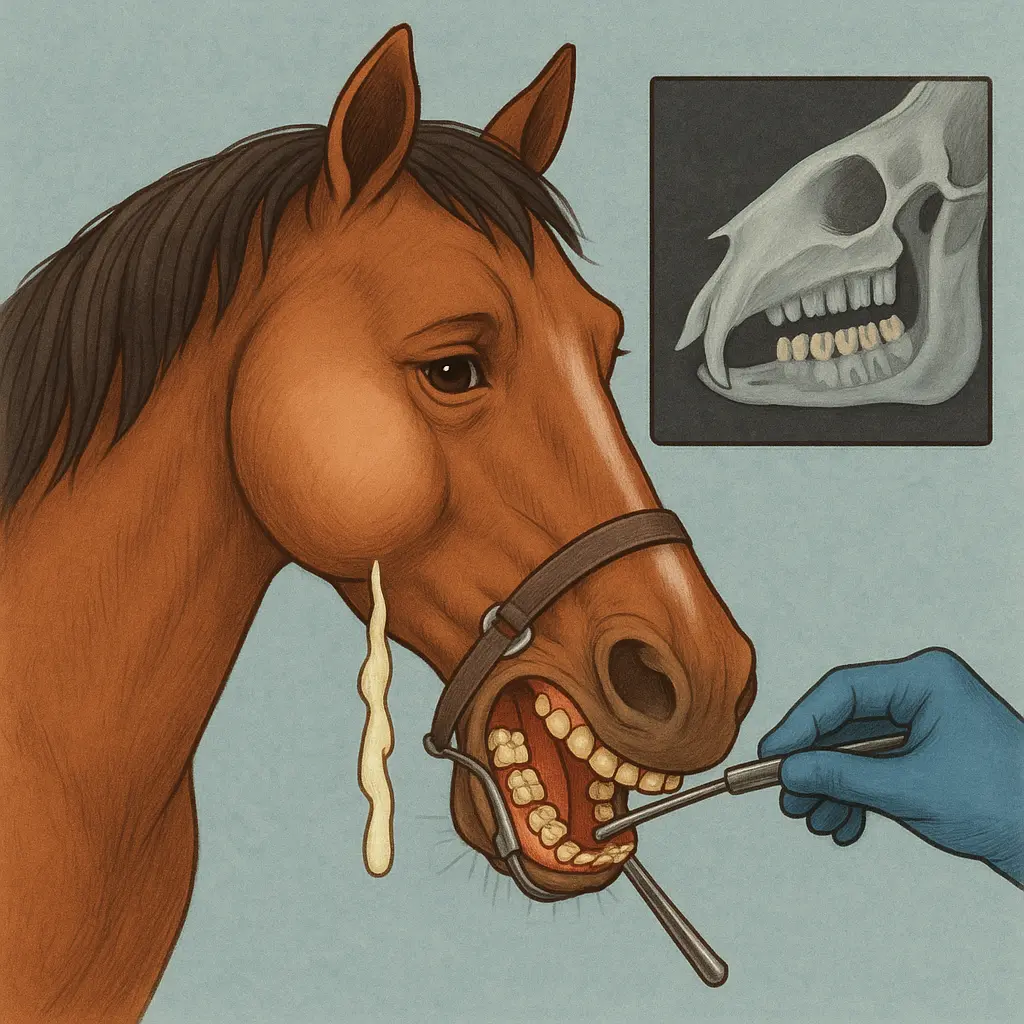
Diagnosis starts with a full physical and a detailed oral exam using a speculum, bright lighting, and often sedation. Imaging (X‑rays) is commonly used to confirm tooth-root infection or sinus involvement, and bloodwork may support complex cases.
Expect your veterinary surgeon or qualified equine dental technician to:
- Assess the head externally for asymmetry, swelling, heat, and nasal discharge
- Use a gag (speculum) and light to inspect for sharp enamel points, ulcers, fractured/loose teeth, decay, diastemata, and gum disease
- Probe periodontal pockets and check for painful feed trapping between cheek teeth
- Take dental X‑rays to assess roots and the maxillary sinuses; advanced cases may require hospital referral
Some horses tolerate only a cursory look without sedation; proper intra-oral assessment almost always needs sedation to be safe and thorough. According to UK standards (RCVS/BEVA), oral exams should form part of your horse’s annual veterinary health check, with dental checks every 6–12 months to intercept problems early.
Pro tip: Ask for a dental chart. A written record of findings and treatments makes it easy to track changes and plan rechecks, especially if your horse has diastemata or ongoing periodontal care.
Treatment options and what to expect
Treatment ranges from corrective dentistry (floating and rebalancing) and periodontal care to endodontics (root canal) or extraction. Most horses recover well and return to normal quality of life after dental extraction.
Here’s how your vet or equine dental specialist may proceed:
- Corrective dentistry (“floating”): Smoothing sharp points, correcting overgrowths, and addressing malocclusions under sedation to restore comfortable, efficient chewing.
- Periodontal therapy: Removing trapped feed, flushing pockets, and managing gum inflammation. Diastema management may include careful widening; reported outcomes are about 50% complete resolution, 20% partial improvement, and 30% requiring extraction.
- Antibiotics and sinus management: Where roots and sinuses are infected, systemic antibiotics and sinus flushing may be needed alongside dental treatment.
- Endodontics (root canal): In selected cases, especially where preserving the tooth is feasible, root canal therapy can be performed; age, root integrity, and extent of infection guide decisions.
- Extraction: If the tooth is severely diseased or fractured, removal is often the most effective cure. Prognosis is excellent; opposing teeth and neighbours are monitored and balanced at 6–12 month intervals to prevent overgrowth.
Sedation is standard for most procedures; complex extractions or advanced imaging may require hospital referral and, occasionally, general anaesthesia. Aftercare often includes short-term dietary adjustments and mouth rinses. Many owners also support healing and overall condition with targeted nutrition; browse our horse supplements and care to discuss with your vet which products suit your horse’s plan, including trusted options from NAF.
Prevention that pays: your UK dental plan
Schedule dental checks every 6–12 months with a qualified equine vet or dental technician, and book an extra visit at the first sign of nasal discharge, odour, or facial swelling. Autumn appointments are especially valuable before winter forage and reduced grazing increase chewing demands.
Prevention is consistently more cost-effective than emergency treatment. Regular balancing prevents deep periodontal pockets, reduces the risk of diastemata and decay, and catches fractured or loose teeth early — all before they escalate into sinus infections and hospital stays.
What a gold-standard preventive visit looks like:
- Extra-oral exam: symmetry, swellings, nasal airflow, and odour
- Intra-oral exam under sedation: speculum, lighting, probing, targeted rasping/floating, and charting
- Discussion of diet, turnout, and seasonal risk (e.g., frozen water, stemmy hay)
- Action plan: recheck interval (often 6 months for seniors/youngsters; up to 12 months for low-risk adults)
Comfort through winter matters too. If your horse is recovering from dental work or needs extra calories while adjusting to softer feeds, a warm, dry horse spends less energy keeping warm. Explore dependable winter layers like our stable rugs for cosy nights and weatherproof turnout rugs for the field — we stock favourites from WeatherBeeta and more to help you tailor warmth without bulk. For value, check our rotating offers in the Secret Tack Room clearance.
Feeding and management when chewing hurts
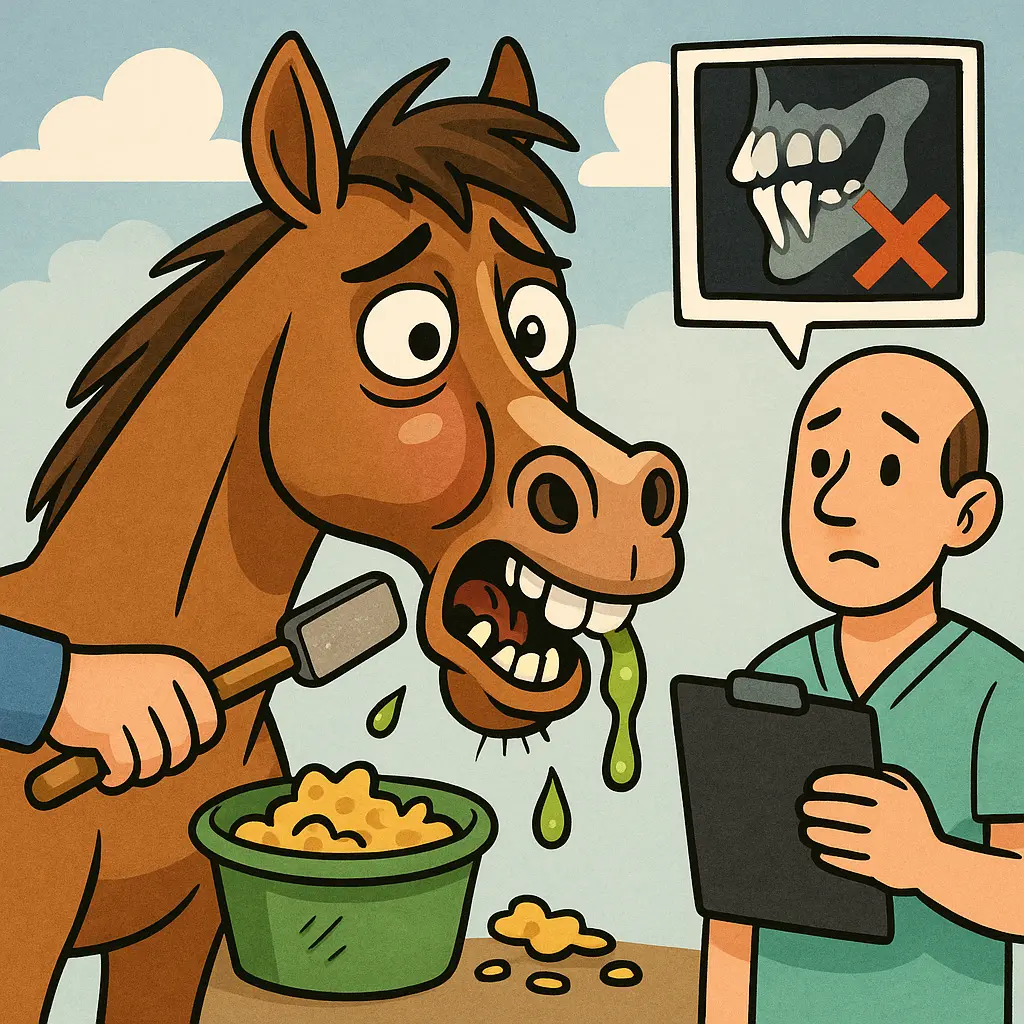
Switch to easy-chew, high-fibre rations such as chopped hay, soaked hay cubes, soaked pellets, and beet pulp/forage-based complete feeds when dental pain or missing teeth limit chewing. Introduce changes gradually and feed smaller, more frequent meals.
Horses with periodontal pockets may benefit from careful mouth flushing as directed by your vet and short-term use of antiseptic rinses. Warm water can improve comfort in winter if your horse resists very cold water. Monitor weight and droppings closely — poorly chewed forage can increase colic risk.
Practical tips owners rate highly:
- Soak cubes/pellets thoroughly to a mash; consistency should be damp and crumble easily
- Offer forage at chest height to reduce sinus pressure during recovery
- Separate at feed time to reduce rushing if your horse eats slowly
- Keep a nose-to-tail grooming and monitoring routine; a quick daily face check spots swelling early
- Use soft rewards after treatments — our selection of gentle horse treats is ideal for positive associations
At Just Horse Riders, we recommend discussing any supplement changes with your vet, then using our curated supplements range to support condition, gut health, and recovery during dental treatment.
When to call the vet urgently
Call your vet immediately if you notice one-sided, foul-smelling nasal discharge or a new swelling over the upper jaw. These signs strongly indicate dental-root infection with sinus involvement and require prompt professional care.
Seek urgent help too if your horse:
- Stops eating or drinking, or shows signs of choke or colic
- Has a fever or is depressed
- Shows painful swelling that’s hot to the touch
- Has blood-tinged nasal discharge or severe facial asymmetry
While you wait, keep your horse quiet, offer soft soaked feeds and fresh water, and avoid riding in a bit if you suspect mouth pain. Bitless options and well-fitted headcollars are sensible short-term alternatives until your vet advises otherwise.
Cost and outlook: what owners can expect
Most horses do extremely well after treatment — including extractions — and return to normal quality of life. Regular 6–12 monthly checks afterwards keep the opposing or neighbouring teeth from overgrowing into any gap.
Prevention has a clear cost advantage over crisis care. Routine dentistry spreads costs predictably and avoids the higher bills associated with advanced sinus disease, hospital referrals, and general anaesthesia. UK owners find planning an autumn check and a spring review fits well with our grazing seasons and winter forage patterns, while ensuring issues are caught early.
Remember, UK standards encourage that an oral exam is part of every annual veterinary health check. Using BEVA- and RCVS-qualified professionals gives the best outcomes and documentation should you ever need referral.
FAQs
What does normal nasal discharge look like in horses?
A small amount of clear or slightly milky fluid can be normal. Any discharge that is discoloured, purulent (pus-like), blood-tinged, or foul-smelling needs prompt veterinary evaluation.
How is nasal swelling from dental disease different from other causes?
Dental-related swelling typically sits over the maxillary (upper jaw) region and is often paired with very unpleasant, one-sided nasal discharge. The odour comes from anaerobic bacteria associated with tooth-root infections and sinusitis.
Can my horse still eat normally if they have dental problems?
Many carry on eating but show subtle signs: slower chewing, dropping balls of feed (quidding), chewing on one side, or pouching food in the cheeks. Some show no obvious signs despite significant disease, so regular checks are essential.
What happens during a dental “floating” procedure?
Under sedation, the clinician uses a speculum and lighting to assess the mouth, then gently grinds sharp enamel points and corrects overgrowths to restore comfortable, efficient chewing. Floating reduces ulcers, improves bit comfort, and can prevent periodontal pockets from worsening.
At what age do young horses commonly have dental problems?
Issues often arise during the shedding of deciduous (baby) teeth and eruption of permanent teeth. Retained caps, ulcers, and, in some cases, periapical abscesses can cause significant maxillary swelling that needs prompt treatment.
If my horse’s tooth is extracted, will this cause long-term problems?
Most horses do very well after extraction and return to normal quality of life. The opposing tooth may overgrow slightly and neighbouring teeth drift over time — routine 6–12 monthly balancing keeps the mouth comfortable and functional.
What should I expect in a routine dental appointment in the UK?
Expect an external head check, full intra-oral exam with a speculum and bright light (usually under sedation), targeted corrections, and a dental chart documenting findings and treatment. Qualified equine vets and dental technicians follow UK standards for safe, effective care.
Looking for practical help while you organise the vet? Keep your horse comfortable with season-appropriate layers from our stable rugs and weatherproof turnout rugs, and stock up on recovery essentials from our supplements and grooming ranges — we’re here to help you act early and keep your horse happy, healthy, and eating well.