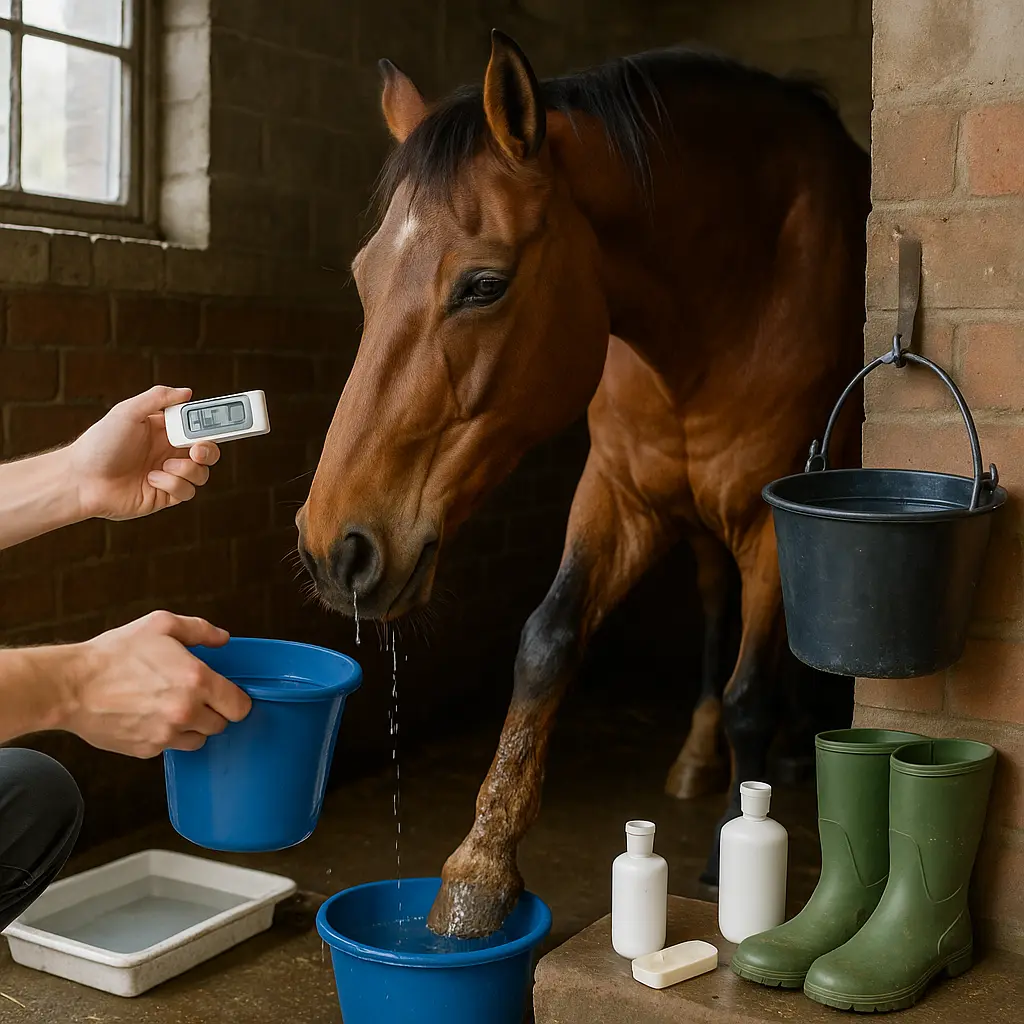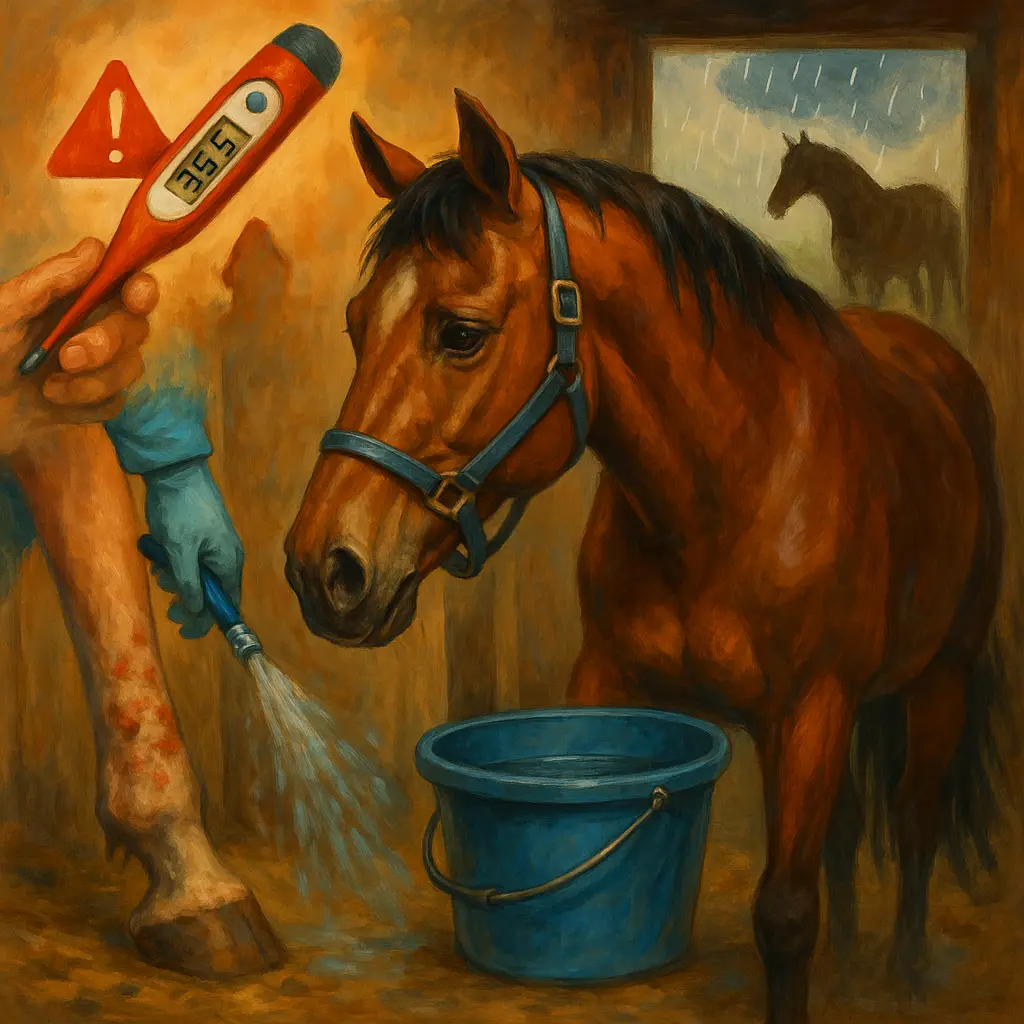
Your horse is running a temperature and has gone off its hay — that’s a red flag you should act on today. Here’s exactly how to check, what to record, when to call the vet, and how to handle common UK causes like mud fever (and the rarer Potomac Horse Fever) safely and confidently.
Key takeaway: A horse’s normal temperature is 37.5–38.5°C; if your horse is off feed and hits 39.2°C or higher, call your vet immediately and isolate if there’s diarrhoea or a cough.
What counts as a fever in a horse?
A fever in horses starts above 38.5°C, and anything at or above 39.2°C with depression, off feed, diarrhoea, cough or nasal discharge warrants an immediate call to your vet. Normal equine temperature is 37.5–38.5°C (99.5–101.3°F).
Take your horse’s temperature rectally using a digital thermometer and clean lubricant, then record the reading and time. According to veterinary-aligned guidance from Horse Education Online, you should, “Call your veterinarian if temp is >102.5°F (39.2°C) or your horse is depressed, off feed, has diarrhea... Offer clean water; don’t give medication unless your vet directs you. Isolate if you suspect a contagious cause.” You can review their guidance here: Horse Education Online: Fever in horses.
Quick tip: Keep a stable-side “vitals kit” with a thermometer, clean lube, a notebook, and charged phone. Log temperature, appetite, manure consistency, and any cough or nasal discharge — this will help your vet act faster.
First 15 minutes: what to do now
Check a rectal temperature, remove shared contact if diarrhoea/cough is present, call your vet if it reads 39.2°C or higher (especially with appetite loss), and do not give NSAIDs unless your vet instructs you.
Follow this simple order of actions while you wait for veterinary advice:
- Take and log the rectal temperature (use clean lubricant; don’t force the thermometer).
- Assess appetite (off hay or concentrates), energy (lethargy), droppings (normal or loose), and any cough/nasal discharge.
- Isolate if you suspect a contagious cause (see below).
- Offer fresh, clean water in an easy-to-reach bucket; remove dusty hay if coughing.
- If the horse is sweaty or hot to the touch, use cool (not icy) hosing and scrape repeatedly to aid evaporation and heat loss.
- Avoid starting anti-inflammatories (e.g., phenylbutazone/“bute”) until your vet advises, as these can mask crucial signs needed for diagnosis.
At Just Horse Riders, we recommend keeping a spare digital thermometer in the tack room and another in your first-aid kit — misplacing one when you need it most is all too common on busy livery yards.
Is it contagious? When to isolate at UK livery yards
If your horse has a fever plus diarrhoea, a cough, or nasal discharge, isolate immediately using a separate stable, buckets, and footbath to protect others at the yard.
Set up a simple biosecurity routine until you have a veterinary diagnosis:
- Stable separately and use dedicated buckets, feed bowls, and grooming kit.
- Handle your sick horse last and wash hands/boots between horses.
- Use a disinfectant footbath at the stable door and a skip for that horse only.
- Minimise yard traffic to the isolation area and keep gear outside the door.
This approach aligns with veterinary guidance to isolate if a contagious cause is suspected and to avoid self-medicating before veterinary assessment (Horse Education Online).
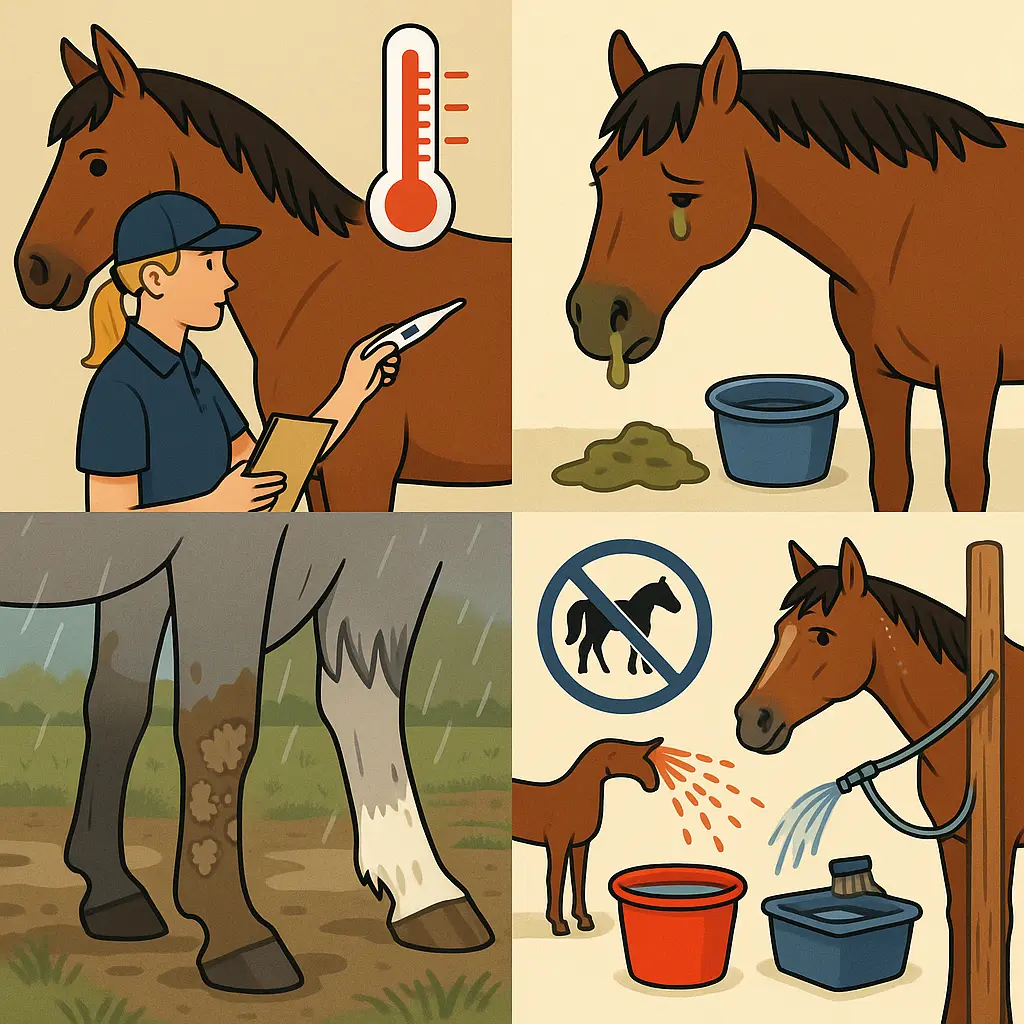
Mud fever can cause fever: recognise and treat it
Mud fever causes hair loss, crusting, serum ooze and scabs, and in severe cases swelling, heat, lameness, and even fever; cleaning with a very dilute 0.1% Hibiscrub solution, thorough drying, and appropriate creams are the mainstays, with vets sometimes prescribing systemic antibiotics.
UK autumn and winter’s wet, muddy conditions — especially on clay-heavy turnout — make mud fever (pastern dermatitis) a frequent culprit behind lower-limb pain and occasional whole-horse malaise. As Horse & Rider UK notes, early signs progress from small scabs to significant swelling and heat, and horses may become lame; some cases warrant systemic antibiotics given orally or by injection. Review their guidance here: Horse & Rider UK: Manage mud fever.
Treatment pillars you can start while you wait for your vet’s advice:
- Wash the affected area with warm water and a very dilute 0.1% chlorhexidine (Hibiscrub) solution — never use it neat — then rinse thoroughly.
- Dry meticulously with clean towels (one per leg to avoid spread). Damp skin delays healing and invites infection.
- Apply an antibacterial cream such as silver sulfadiazine to softened, clean skin as directed by your vet, typically once daily.
- Repeat washing only every 3–4 days to avoid drying and cracking the skin; maintain daily cream/barrier care as advised.
- Clip feathers only in severe cases and ideally with veterinary guidance or sedation if painful. Clipped skin must be kept scrupulously clean and dry.
World Horse Welfare reinforces the dilution point: “You’ll need to wash the affected leg(s) with a warm, very dilute Hibiscrub solution – 0.1% solution is recommended... In severe cases the hair needs to be clipped away... speak to your vet if concerned.” Read more here: World Horse Welfare: Mud fever.
Pro tip: Build your care kit now so you’re ready on muddy mornings. Stock up on leg-care washes and clean towels in our grooming essentials, add protective mud socks from our horse boots and bandages range, and use a barrier cream on clean, dry legs before turnout.
Potomac Horse Fever: rare in the UK, but know the red flags
Potomac Horse Fever (PHF) causes high fever (often over 39°C), lethargy, inappetence progressing to colic and diarrhoea, and laminitis develops in 20–30% of cases; immediate veterinary care with early IV oxytetracycline and supportive therapy is essential.
While PHF is less common in the UK, climate change and humid summers near waterways increase risk. Our deep-dive explains that vaccination may reduce severity but isn’t fully protective; management still matters. Read more here: Just Horse Riders: Understanding Potomac Horse Fever.
What to watch for and do, especially in summer or near rivers/streams:
- Fever over 39°C with rapid onset, going off feed, depression, and diarrhoea after an initial dull/colicky phase.
- Call your vet urgently — PHF is time-sensitive; early IV oxytetracycline and NSAIDs for fever plus hydration support improve outcomes.
- Strictly monitor for laminitis signs (increased digital pulses, reluctance to move); follow your vet’s anti-laminitis plan.
- Prevention: cover hay and feed, control insects, limit grazing right on water edges in warmer months, and vaccinate per veterinary advice.
Pro tip: Pair fly control and shade with physical barriers. In humid UK summers, a well-fitted fly rug or sheet and good stable airflow reduce insect pressure around barns and paddock shelters.
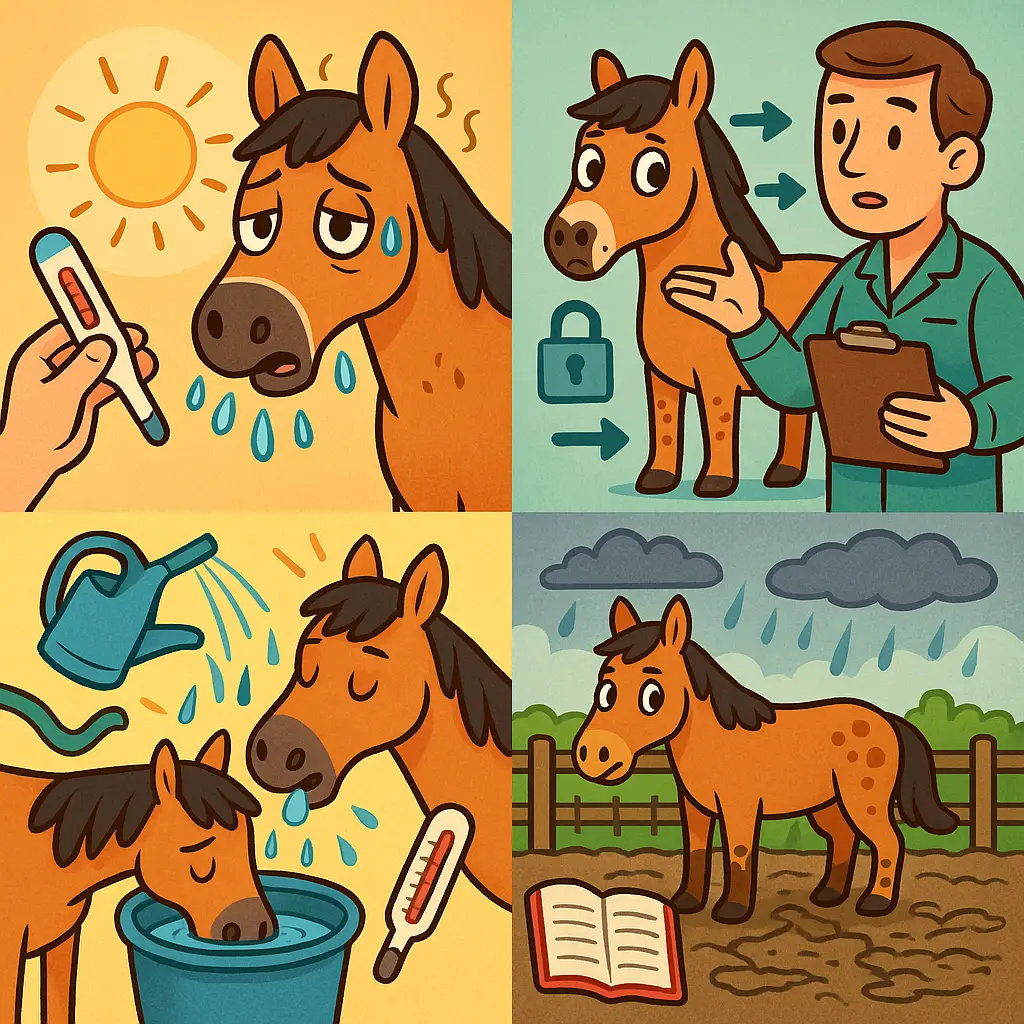
Hydration and cooling: safe ways to support a feverish horse
Offer fresh, clean water ad lib, use cool (not icy) hosing and scraping cycles to shed heat, and avoid forcing electrolytes until your horse is drinking normally.
Hydration supports circulation and gut function during illness. Place multiple fresh water buckets at chest height, keep them clean, and consider slightly warming the water in winter to encourage intake. If your horse is hot or sweaty, hose with cool water for several minutes, scrape, and repeat — evaporation is what removes heat efficiently. Do not use very cold or icy water which can cause peripheral vasoconstriction.
Once your horse is drinking and your vet is happy, you can reintroduce electrolytes to support recovery. Choose reputable options from our supplements and horse care collection and follow manufacturer or veterinary directions.
Quick tip: Some horses drink better from a familiar bucket. If you must move to isolation, bring their usual bucket along and refresh water more often than normal.
What to record for your vet (and UK legal duty of care)
Take rectal temperature twice daily, and record appetite, faeces, cough/nasal discharge, and any limb swelling; if temperature hits 39.2°C with appetite loss or systemic signs, contact your RCVS-registered vet promptly.
Good records speed diagnosis and reduce risk. Create a simple chart listing:
- Time and temperature (AM/PM), appetite (hay/hard feed), demeanour (bright/dull), droppings (normal/loose), respiratory signs (cough/discharge), and any limb or hoof heat/swelling.
- Any treatments given (only as instructed by your vet) and the response.
- Photos of lesions (e.g., mud fever) day by day to track progress objectively.
Under the UK Animal Welfare Act 2006, you have a legal duty of care to seek timely veterinary treatment. BEVA-aligned veterinary protocols advise prompt assessment for fever over 39.2°C, especially with depression, inappetence, diarrhoea, or respiratory signs — so do not delay.
Pro tip: Text your vet the temperature log and short video clips (breathing rate, limb swelling, diarrhoea consistency) before they arrive. It often shortens time to treatment decisions.
Preventing repeat problems in UK weather
Before winter turnout, apply a barrier cream to clean, dry legs, use mud socks for live-out horses, dry limbs thoroughly after work or turnout, and step up fly control and water-edge management in summer; vaccinate against PHF if advised by your vet.
In the UK, tackle the two biggest seasonal drivers: persistent mud and summer insect pressure.
- Mud management: On wet days, towel legs bone-dry before stabling; apply a zinc oxide barrier (e.g., Sudocrem) to clean, dry skin pre-turnout; and use mud boots/socks for sensitive horses that live out. Explore protective options in our horse boots and bandages range.
- Rug choices: Reduce prolonged skin wetting by choosing well-fitting winter turnout rugs for persistent rain and switch to breathable options in milder spells. Trusted brands like WeatherBeeta turnout rugs balance waterproofing with comfort.
- Skincare kit: Keep gentle washes, soft brushes, and plenty of clean towels ready in your grooming kit for post-hack clean-ups without over-scrubbing.
- Summer vectors: In humid months near rivers or streams, combine a good fly rug or fly sheet with yard hygiene (covered feed, manure management) and airflow in barns.
- PHF risk reduction: Cover hay/forage, limit grazing at the water’s edge in peak warmth, and ask your vet about vaccinations and local risk patterns.
At Just Horse Riders, our customers often report fewer mud fever flare-ups when they stick to a simple routine: barrier cream on dry legs before turnout, gentle wash and total dry-off after, and mud socks on the worst days.
FAQs
What temperature is an emergency if my horse is off its hay?
A temperature of 39.2°C (102.5°F) or higher with depression, off feed, diarrhoea, cough, or nasal discharge is an emergency — call your vet immediately. The normal range is 37.5–38.5°C. Source: Horse Education Online.
Can I treat mud fever myself if my horse also has a fever and won’t eat?
You can start gentle care — wash with a very dilute 0.1% Hibiscrub solution, rinse, dry thoroughly, and apply antibacterial cream — but a fever and appetite loss suggest systemic involvement, so speak to your vet promptly. Systemic antibiotics may be needed for moderate to severe cases. Sources: Horse & Rider UK, World Horse Welfare.
How can I safely lower my horse’s fever at the yard?
Offer fresh clean water, use cool (not icy) hosing and scraping cycles to shed heat, provide shade and good airflow, and avoid NSAIDs unless your vet instructs you to use them. Isolate if you suspect contagion. Source: Horse Education Online.
Is going off feed with a fever always colic or infection?
Often it’s linked to infection, inflammation, or gut upset (including diarrhoea), but don’t overlook common UK issues like mud fever causing pain and malaise, or summer risks like Potomac Horse Fever near waterways. Log temperature and symptoms for your vet. Sources: Horse Education Online, JHR: Potomac Horse Fever.
When should I clip feathers for mud fever?
Only in severe cases and ideally under veterinary guidance, especially if the skin is very painful. Clipping can aid cleaning and drying but increases infection risk if skin isn’t kept scrupulously dry and protected. Source: World Horse Welfare.
Can Sudocrem or zinc oxide barrier creams prevent mud fever in UK rain?
Yes, they’re useful as a daily barrier on clean, dry legs before turnout, especially on clay-heavy, wet fields. Reapply as needed and always dry legs thoroughly after work or turnout. Explore leg-care tools in our grooming collection.
Which products should I keep in a fever first-aid kit?
A digital thermometer, clean lubricant, disposable gloves, soft towels, a gentle antiseptic wash (for mud fever protocols), barrier cream, and your vet’s number on speed dial. For ongoing care, consider electrolytes from our supplements range, fly protection from our fly rugs and sheets, and weatherproof turnout rugs for prolonged wet spells.
Fever plus appetite loss is never a “wait and see” moment. With a thermometer, a clear action plan, and the right yard kit, you’ll help your horse get prompt, targeted care — and you’ll protect the rest of the yard in the process.