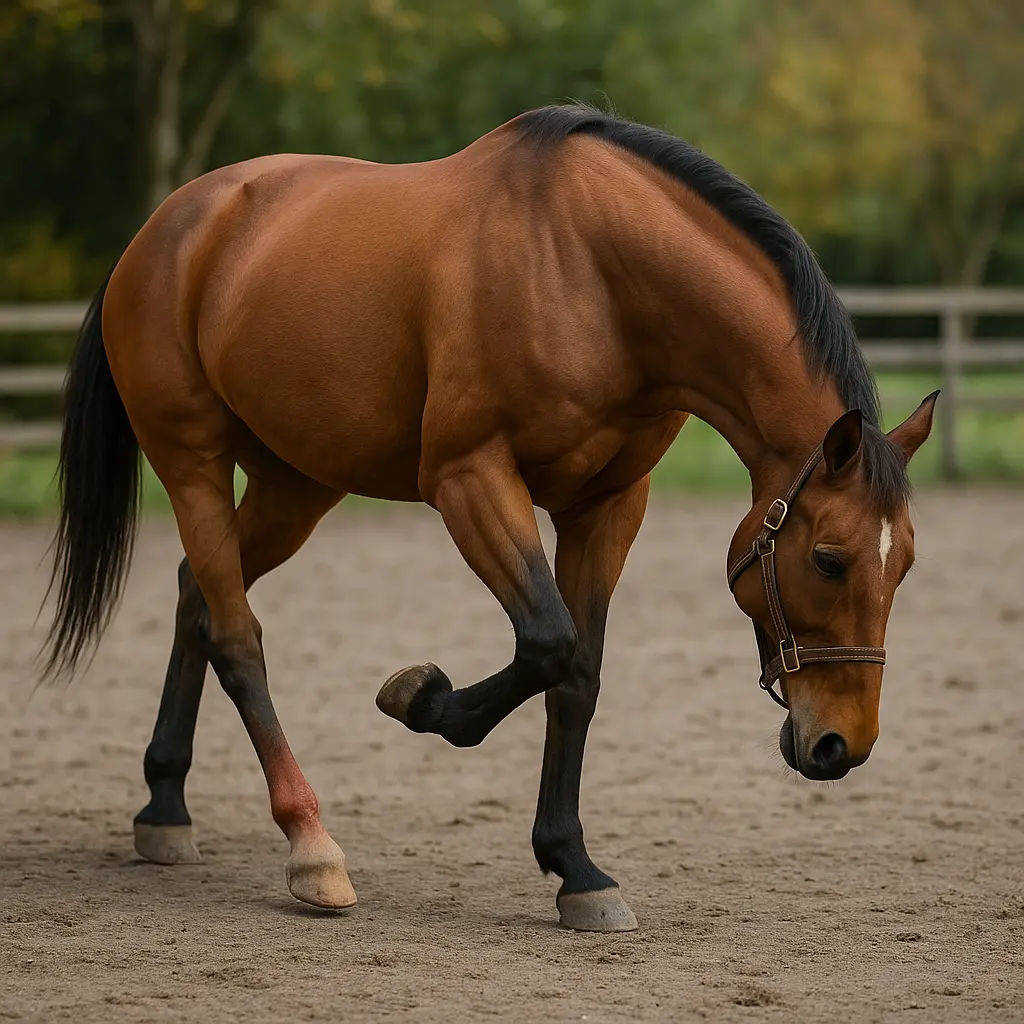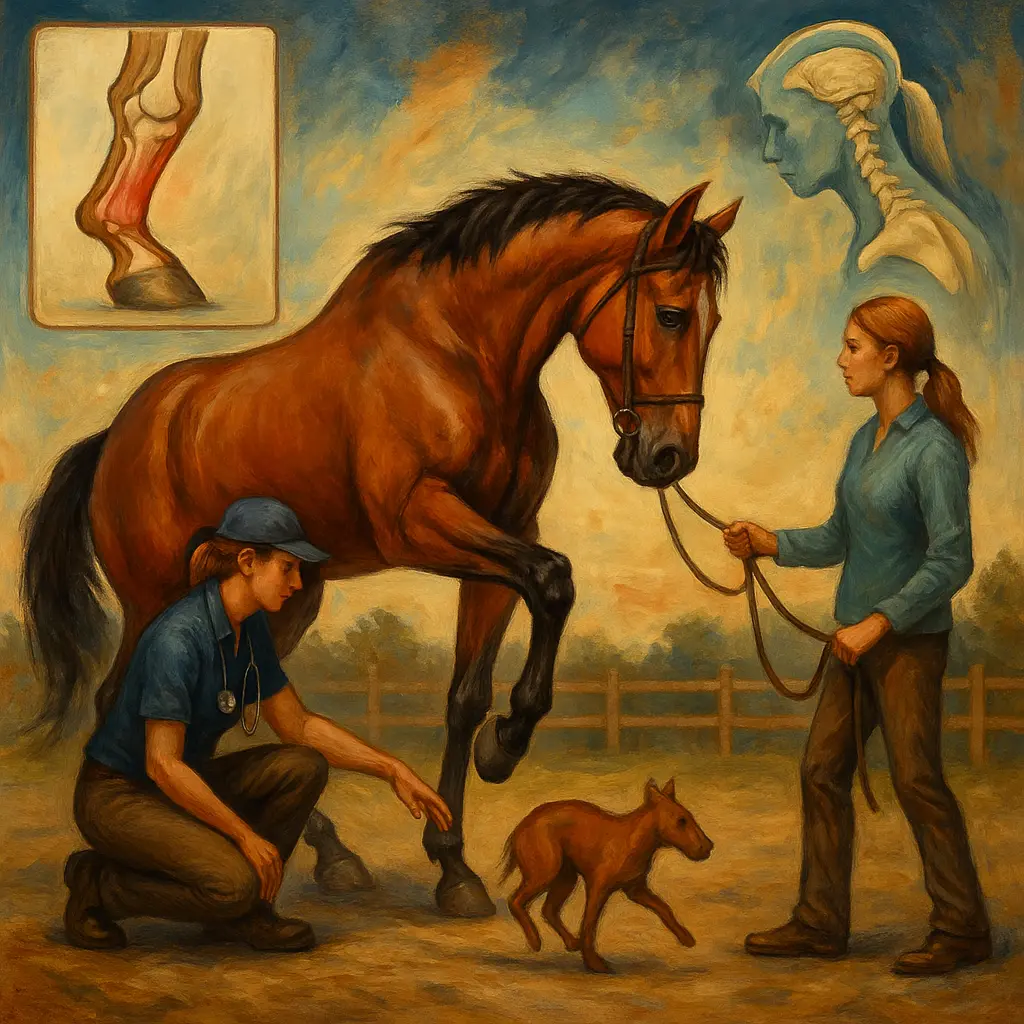
Your horse gets up, takes a few steps and suddenly “hops” or looks uneven. In the UK’s stop–start weather and variable footing, this is a common — and worrying — sight. Quick, calm action now protects your horse and speeds diagnosis.
Key takeaway: Pain is the most common cause of lameness in horses, but neurological problems can also create hopping or after-rest unevenness — stop riding, assess safely, and call your vet if signs persist or you can’t localise the problem.
What does sudden hopping or “after-rest” lameness mean?
Most sudden or post-rest lameness is pain-related from orthopaedic causes such as hoof bruising, joint pain, or soft-tissue injury; however, some cases are neurological and need prompt veterinary assessment.
In the UK, two patterns crop up repeatedly:
- After-rest stiffness that eases with gentle movement — think arthritis, foot bruising on hard or uneven ground, or subclinical soft-tissue strain.
- Sudden “hopping” from the hind end — commonly upward fixation of the patella (stifle locks straight), but a similar hopping-like gait can also stem from nerve root issues in the neck.
Blue Cross reminds owners that horses are hard-wired to hide pain, so obvious unevenness often means discomfort has already escalated. As they put it:
“Pain is the most common cause of lameness in all horses. Due to their natural flight instincts, horses mask signs of lameness and pain to avoid making themselves a target.” — Blue Cross UK
The top causes of lameness in UK horses
In the UK, orthopaedic problems are the leading cause of lameness, with trauma, poor hoof balance, repetitive strain, conformational issues, and footing all major contributors.
Here’s what sits behind most after-rest or hopping presentations:
- Orthopaedic pain: hoof bruising/abscess, stone bruises on hard summer ground, joint arthritis (stiff after box rest), tendon/ligament strains, or low-grade laminitis. Conformation faults and poor hoof balance increase risk, especially if shoeing intervals drift or the farrier isn’t registered.
- Upward fixation of the patella: the hind limb appears stuck straight and the horse “hops”, linked to straight hind limb conformation, weak quadriceps/gluteals, stifle trauma, or genetics.
- Neurological causes: cervical vertebral stenotic myelopathy (wobbler disease), cervical inflammation with nerve root compression, or other neuro disease can create intermittent, multi-limb gait abnormalities, sometimes mimicking a hopping lameness.
Merck’s equine guidance highlights the classic visual cues owners can use in the yard:
“The most consistent sign of lameness in one forelimb is the head nod... The pelvic rise is the most consistent and easily observed sign of hindlimb lameness.” — Merck Veterinary Manual
And while orthopaedic issues are most common, UK vets warn not to overlook neurological contributors:
“Lameness or gait abnormalities in horses most commonly are due to underlying orthopaedic aetiologies, but neurological disorders can also be a significant cause... Affected horses often have bilateral muscle atrophy especially affecting the cervical and gluteal musculature, as opposed to more asymmetric muscle atrophy associated with orthopaedic conditions.” — Veterinary Times
How to tell orthopaedic from neurological lameness at home
Orthopaedic lameness typically affects a single limb with asymmetric muscle loss, while neurological problems often cause intermittent, multi-limb gait changes and more symmetrical (bilateral) muscle atrophy.
Use this at-home screen to guide your next step (not to self-diagnose):
- Watch on a straight line and small circles: look for head nod (forelimb), pelvic rise/fall (hindlimb), a hopping step (stifle lock), or ataxia (inconsistent, “drifty” steps).
- Feel for heat and increased digital pulses at the hoof; check for swelling or pain on palpation along the limb.
- Scan the neck and hindquarters for muscle loss. Bilateral cervical and gluteal atrophy, neck stiffness, or variable lameness that shifts limb-to-limb suggests neurological involvement.
- Note triggers: worse after rest, on hard ground, on circles, or downhill. Orthopaedic pain often worsens on specific surfaces and may block to nerve analgesia at the vet; neurological causes generally do not “block out”.
Pro tip: Video your horse in walk and trot in a straight line and a 10–15 m circle on each rein. Good footage helps your vet triage and saves time.
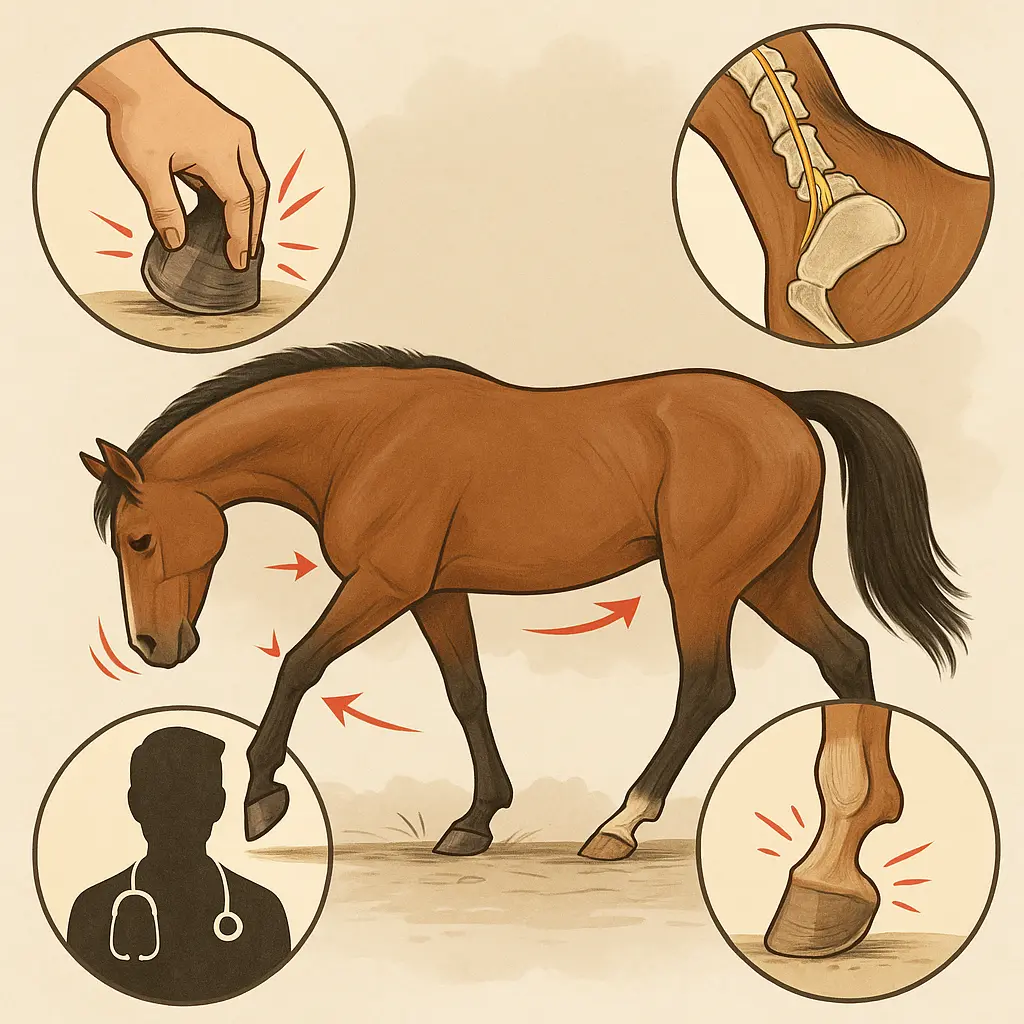
Step-by-step checks: what to do in the first 24 hours
Stop riding immediately, confine movement, and gather clear observations for your vet; early rest reduces damage and speeds recovery.
- Stop work and move to a safe, level area. Do not lunge for exercise — lunge only for brief assessment if your vet advises and your horse is comfortable.
- Check hooves and limbs: pick out feet, feel for heat, swelling, and digital pulses; compare both sides. Note any wounds, stones, or sole tenderness.
- Assess gait briefly in-hand. Walk straight, then small circles on each rein. Look for head nods (fore), pelvic rise/fall (hind), or a locked stifle “hop”.
- Provide comfort: deep, dry bedding and limited turnout if safe. Box rest on deep shavings or straw reduces pressure on painful limbs; typical bales cost around £10–£20 in the UK.
- Cold-hose acute heat/swelling for 10–15 minutes, 2–3 times on day one, if your horse tolerates it and there’s no open wound needing immediate vet care.
- Call your vet promptly if the lameness is moderate–severe, you see hopping that doesn’t resolve after a few steps, there’s neck stiffness/atrophy, ataxia, or you cannot localise the problem.
Quick tip: Keep a yard kit ready — thermometer, stable bandages, hoof testers (if you’re confident to use), and a charged phone for video. For safe in-hand checks, sturdy footwear and a hat are wise; browse our horse riding boots for secure yard grip.
When to call the vet — and what they may do next
Call your vet immediately for persistent hopping, severe or non-weight-bearing lameness, ataxia, multi-limb signs, or if pain worsens after rest despite basic care.
Your vet will perform a full lameness and possibly neurological exam. Expect some or all of the following:
- Static and dynamic assessment on different surfaces and circles.
- Hoof testers, flexion tests, and diagnostic analgesia to localise pain (orthopaedic cases often improve when the painful area is “blocked”).
- Imaging: X-ray or ultrasound for foot, bone, joint, or soft-tissue injury. If neurological disease is suspected, cervical imaging or scintigraphy may be advised.
- Bloods or further tests if infection, metabolic disease, or a notifiable disease is on the differential — reportable diseases must be notified to the APHA in the UK.
Under the Animal Welfare Act 2006, owners have a duty to prevent unnecessary suffering. If you’re unsure, err on the side of calling — early intervention protects your horse and your legal responsibilities.
UK-seasonal risk factors you can manage today
UK wet winters and hard summer ground raise lameness risk from bruising, slips, and uneven footing; proactive hoof care, conditioning, and turnout management reduce episodes.
- Winter: saturated, poached fields and slippery gateways stress joints and soft tissues, while cold, wet conditions exacerbate stiffness after rest. Use appropriate winter turnout rugs to keep muscles warm and reduce post-rest stiffness; brands like WeatherBeeta offer durable options for UK weather.
- Summer: baked ground increases subsolar bruising and concussion injuries. Consider protective hoof boots and support bandages for hacking on hard tracks, and adjust workload after dry spells.
- Footing: avoid repeated tight circles on deep or rutted arenas; vary surfaces and gradients. Many livery yards have mixed-quality tracks — pick the safest route and shorten sessions when in doubt.
- Farriery: maintain regular appointments with a registered farrier (check the Farriers Registration Council list). Poor hoof balance is a repeat offender for lameness; follow BHS hoof care guidelines and shoeing intervals.
- Conditioning: strengthen stifles and gluteals with straight-line hill work and pole exercises when sound. Upward fixation of the patella is more likely with weak hindquarter muscling.
At Just Horse Riders, we recommend keeping a seasonal diary: note footing, workload, rug weights, and any stiffness after rest. Patterns often reveal the trigger.
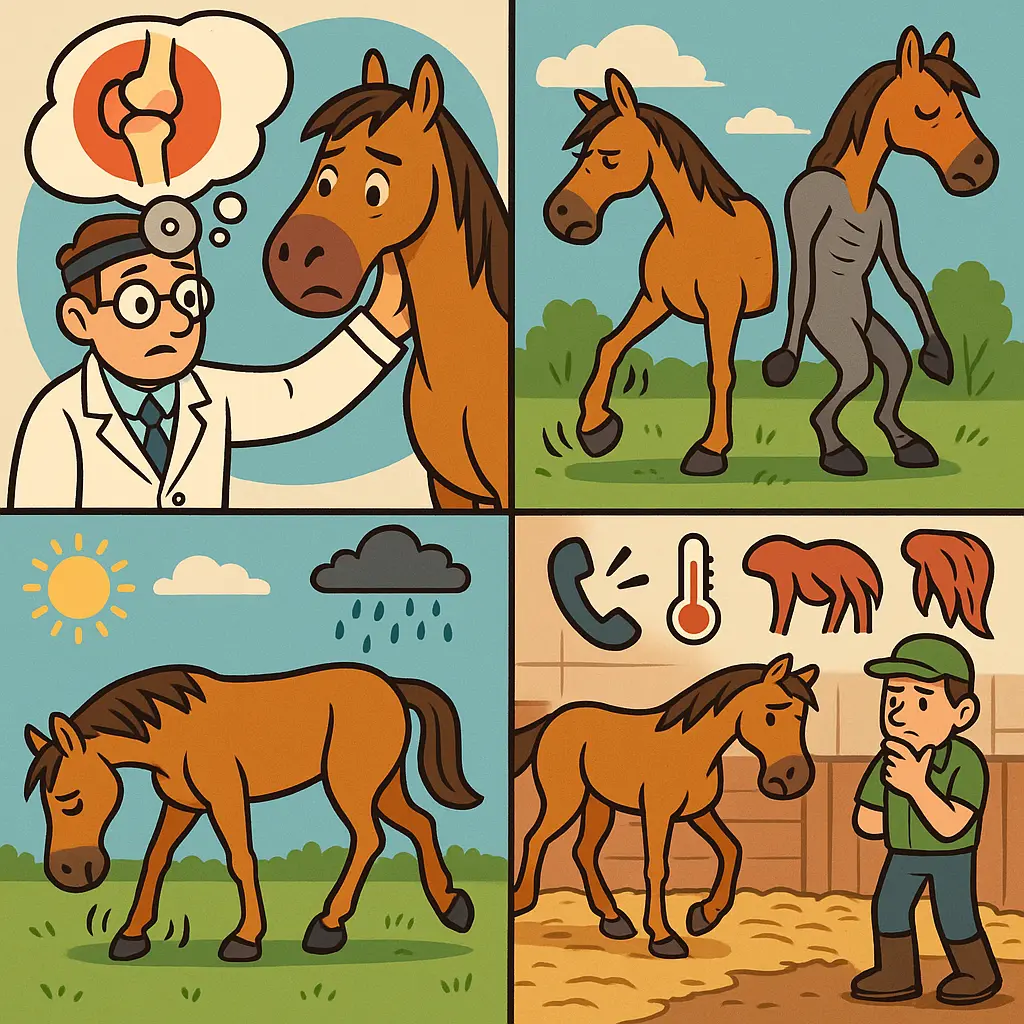
Supportive management: comfort, protection and safe observation
Provide deep bedding, protect hooves on poor ground, keep muscles warm and supple, and observe safely in-hand until your vet has assessed your horse.
Practical, product-backed steps UK owners find useful:
- Comfort in the stable: deep, dry shavings or straw help lame horses rise and lie comfortably and reduce pressure on sore limbs. Add banks to prevent casting.
- Warmth for stiff joints: a correctly weighted rug helps in cold, wet snaps. See our stable rugs for cosy nights and turnout rugs for muddy mornings; many owners rate LeMieux for premium rug linings and comfort.
- Hoof and limb protection: if your vet approves gentle turnout or hand-walking on hard tracks, consider hoof boots and supportive bandages to guard against concussion and knocks.
- Joint support for older horses: targeted nutrition can help everyday comfort alongside veterinary care. Explore proven formulas in our supplements range, including popular options from NAF.
- Hands-on checks: daily grooming improves circulation and helps you detect heat or swelling early — a quality brush kit from our grooming collection makes thorough checks easy.
- Safe observation: if you need to assess movement, handle in a well-fitting headcollar with gloves and consider personal safety gear. For visibility on yard tracks, our hi-vis for riders keeps you seen during winter dusks.
Our customers often keep “lameness boxes” ready with spare bandages, poultice pads, a thermometer, and extra bedding. A small investment upfront saves stress when minutes matter.
How to spot red flags and avoid common mistakes
Persistent hopping, worsening after rest, or signs of ataxia are red flags; common owner errors include exercising through lameness or delaying a vet call hoping it will “walk off”.
- Don’t ride through it. Working a lame horse risks escalating soft-tissue damage or joint injury.
- Don’t medicate without guidance before examination. Pain relief can mask localisation during your vet’s assessment.
- Watch recumbency. Reluctance to rise, spending longer down, or a rocked-back stance can indicate progression and risks such as muscle damage or colic — call the vet.
- Note whole-horse signs. Neck stiffness, bilateral muscle loss (neck and gluteals), or shifting/multi-limb lameness points towards neurological involvement that needs targeted diagnostics.
- Plan follow-up. Even if your horse improves, schedule a check. Chronic, smouldering lameness often follows an “it improved after a few days” episode if the root cause isn’t addressed.
Case pointers: hopping lameness in the real world
A “hopping” gait is not always orthopaedic; upward fixation of the patella is classic, but a similar presentation can stem from cervical nerve root compression with neck muscle atrophy.
Look for these patterns:
- Upward fixation of the patella: the hind leg stays extended; the horse may “catch” then release the stifle with a hop. Often linked to straight hind limb conformation and weak hindquarter muscles. Conditioning and, in some cases, veterinary procedures help.
- Idiopathic hopping-like lameness with neck involvement: signs may include mid-to-distal neck muscle atrophy, intermittent or non-regionalised lameness, and gait changes that don’t fit a single-limb pain pattern. These horses need a neurological work-up and possibly cervical imaging.
If you spot bilateral cervical/gluteal muscle loss, inconsistent limb involvement, or ataxia, request a neuro exam — these are hallmark differences from most single-limb orthopaedic cases.
FAQs
Why does my horse look more lame after getting up?
Pain and stiffness build during rest, so arthritis, sole bruising, or soft-tissue soreness often look worse for the first steps. As Blue Cross notes, horses tend to mask pain while moving — if lameness is clear after rest, call your vet for guidance.
Is a hopping lameness always from the stifle?
No. Upward fixation of the patella is a common cause, but cervical nerve root compression and other neurological problems can mimic a hopping gait, especially when paired with neck muscle atrophy or inconsistent limb involvement.
How can I tell forelimb from hindlimb lameness?
Watch the head and pelvis. The head typically rises when the lame forelimb lands and drops on the sound limb; the pelvis rises or “hikes” more on the lame hindlimb. See the Merck Veterinary Manual for clear descriptions.
When should I call the vet for sudden hopping?
Immediately if it persists beyond a few steps, there’s heat/swelling, ataxia, multi-limb involvement, neck pain/atrophy, or your horse won’t bear weight. Early assessment prevents complications and meets your duty under the Animal Welfare Act 2006.
Can UK weather really trigger these episodes?
Yes. Hard summer ground increases sole bruising, while wet winters and slippery fields aggravate joint stiffness and soft-tissue strains. Manage rugs, footing, and workload accordingly; consider weather-appropriate turnout rugs and protective hoof boots for hard tracks.
What stable management helps while I wait for the vet?
Box rest with deep bedding, cold-hosing heat/swelling, and safe, brief in-hand assessment if advised. Keep the horse warm with suitable stable rugs and monitor digital pulses. Avoid riding or vigorous exercise until examined.
How do I reduce the risk of repeat episodes?
Work with a registered farrier on hoof balance, strengthen hindquarters, vary surfaces, and adapt work to ground conditions. Consider joint support in our supplement range alongside your vet’s plan, and use our grooming tools for daily heat/swelling checks.