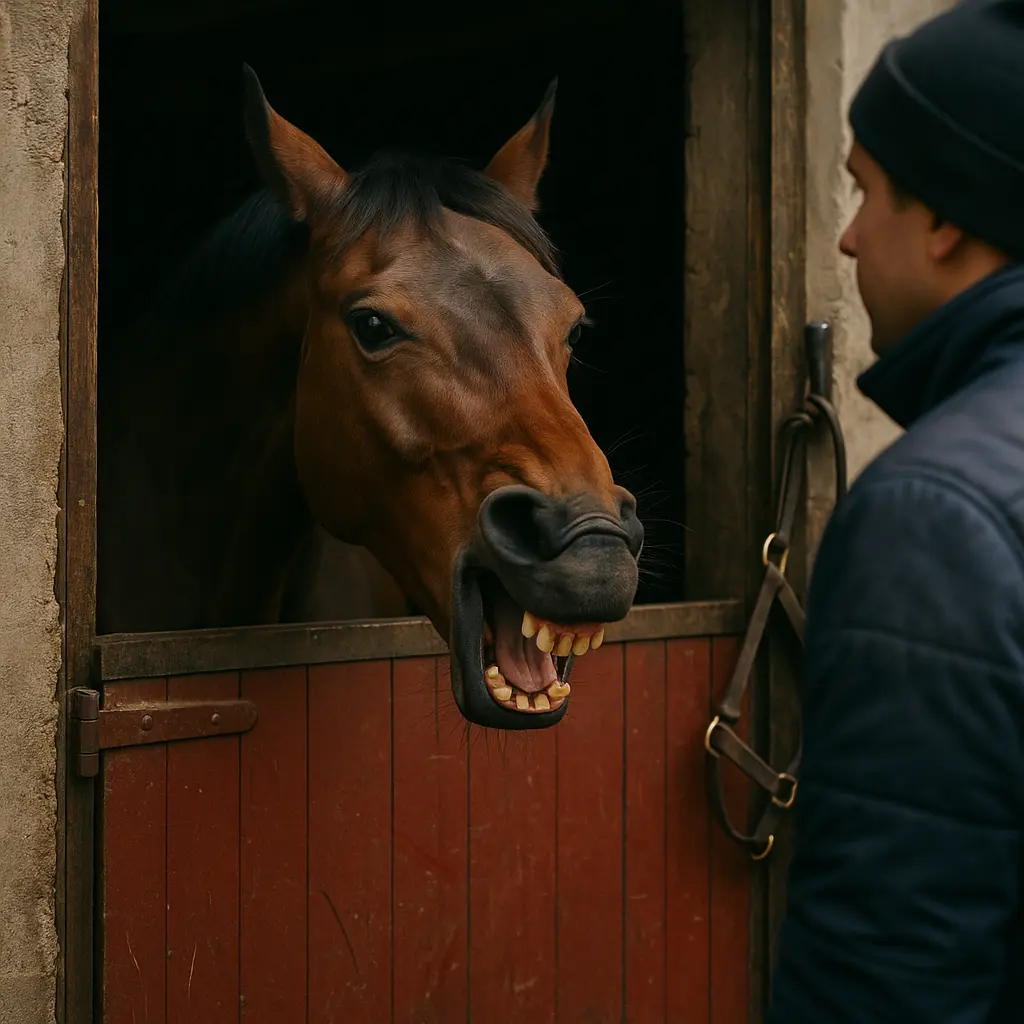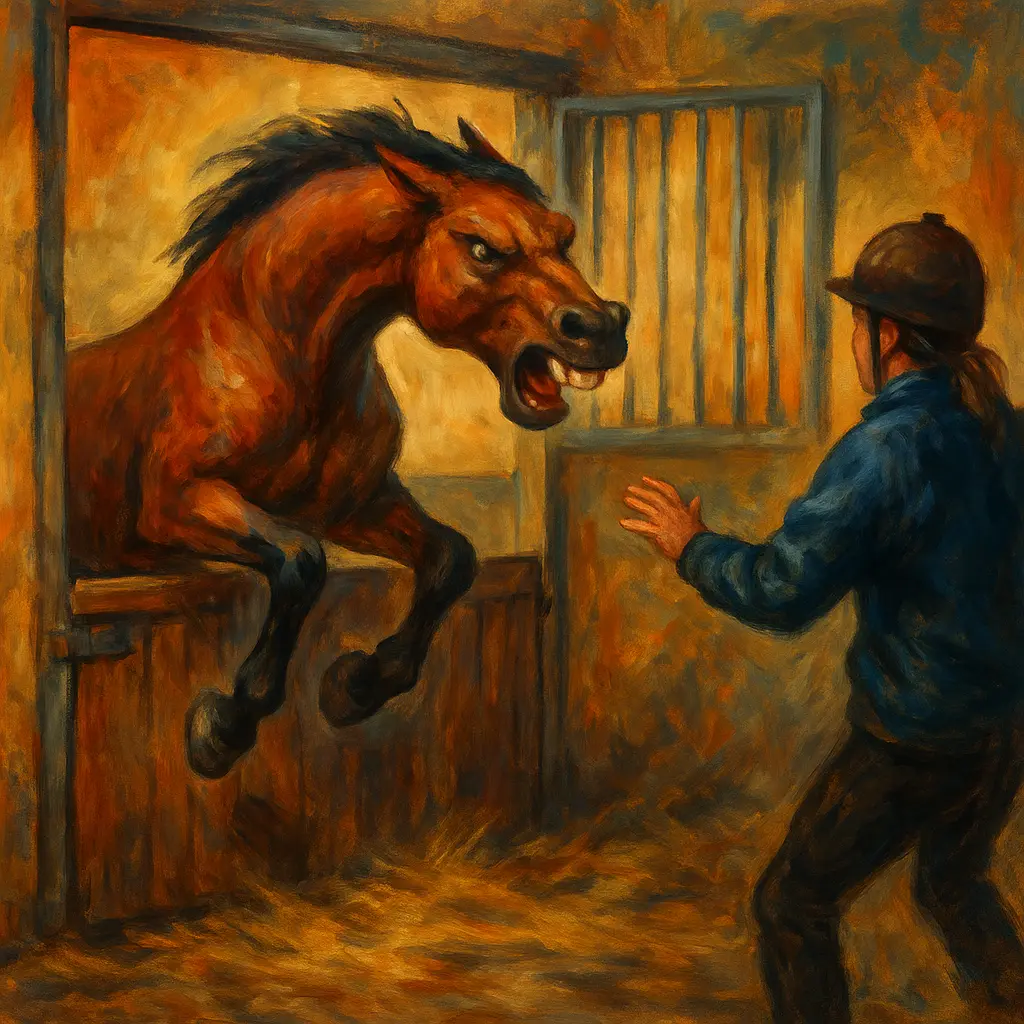
Your horse being sweet in the field but sharp in the stable isn’t “naughtiness” — it’s a welfare signal. In UK studies, stable aggression is linked to ridden conflict behaviours like bolting, rearing or bucking, and it’s often driven by pain or confinement stress.
Key takeaway: Stable aggression is common, pain-linked and highly manageable with a vet check, turnout, enrichment and positive training — never punishment.
What is stable aggression and why it matters
Stable aggression describes threat or defensive behaviours at or in the box (ear pinning, lunging, snapping, kicking walls/doors, guarding feed) and it directly predicts harder-to-ride horses and more conflict under saddle. In UK/Ireland data, 9% of horses show antisocial behaviours including stable aggression, rising to 37% in 10–14‑year‑olds, with higher handling issues in sport horse and thoroughbred types compared to cobs and native ponies (Furtado et al., 2024).
These behaviours aren’t about “dominance”. They’re defensive responses to fear, frustration, pain or resource stress, especially when a horse can’t create distance in a confined box. Critically, horses aggressive in the stable are harder to ride and show more bolting, rearing or bucking than non‑aggressive peers (Hawkins et al., 2020).
“Horses that are aggressive in the stable may be harder to ride… linked to conflict behaviours under saddle; always rule out pain first via veterinary check.” — Dr Debbie Hawkins, equine vet researcher (2020)
First, rule out pain: book a BEVA‑guided vet check
Pain is a frequent driver of stable aggression and must be ruled out first. A UK/Ireland survey found 26% of horses had lameness — a common hidden trigger for aggression, especially in older horses (Furtado et al., 2024).
Ask your vet (BEVA guidelines) for a full exam targeting teeth, back and limbs. Combine this with a farriery review — FRA‑registered farriers regularly flag foot soreness from wet UK winter terrain as a factor in door‑kicking and touch‑aversive behaviour. Where indicated, your vet may recommend a lameness workup, imaging, dental float, back palpation and changes to hoof balance and shoeing.
Quick tip: Schedule checks ahead of winter stabling (Oct–Mar) when wet, muddy going, rug rubs and reduced movement can magnify discomfort. If your horse is on a vet‑approved management plan, consider targeted support and forage balancers from our curated range of supplements to complement clinical care.
If behaviour changed suddenly or is paired with ear pinning on approach, tail swishing during grooming, girth aversion, headshaking, weight shift or heat/swelling, treat it as a pain red flag and call your vet promptly (backed by Hawkins et al., 2020).
Understand the emotions driving aggression
Most stable aggression stems from fear or frustration in confinement, not “bad attitude”. Confinement removes escape options, so horses use threat displays — from ear pinning to lunging — to create space and feel safe (Mad Barn).
Renate Larssen MSc (equine ethologist) recommends learning the Equine Ladder of Aggression to catch early signs before escalation: tension around eyes and muzzle, ear pinning, neck bracing, tail swishing, head snaking, air‑biting, then striking or kicking if pressure continues (World Horse Welfare webinar). Punishment at any rung increases fear and defensive reactions; behaviourist case studies show it entrenches the problem (IAABC Journal).
“Aggression in horses stems from emotions like fear or frustration in confined spaces; use the Equine Ladder of Aggression to identify early signs before escalation.” — Renate Larssen, MSc, Equine Ethologist (World Horse Welfare)
In group settings, 64% of farms reported injuries from aggression often mislabelled “playing too hard” — a sign that management (confinement, competition, unstable groups) fuels conflict (University of Bristol). Addressing the emotional drivers is kinder and more effective than suppressing the symptoms.
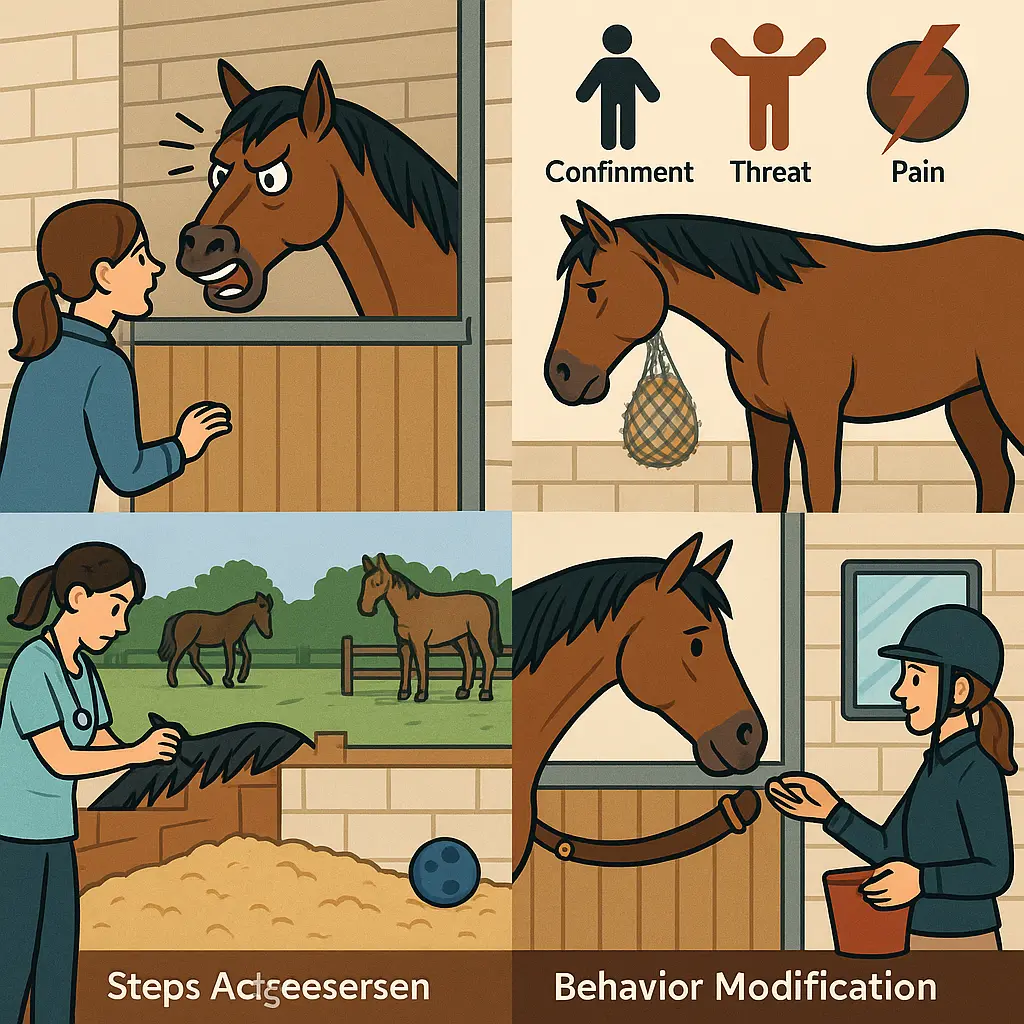
Make the stable work: enrich, feed and manage turnout
Daily turnout plus targeted enrichment reduces stable aggression by lowering frustration and increasing control over the environment. Mirrors, slow feeding and toys provide safe outlets for natural behaviours and reduce guarding at doors and feed times.
Start with the basics:
- Turnout: Prioritise daily turnout, ideally in compatible pairs or stable groups to support social needs and reduce guarding. Aim for group stability to avoid constant reshuffling (University of Bristol).
- Forage: Use slow‑feed hay nets (typical UK prices £15–£25) to mimic grazing and spread intake through the day, reducing tension at feed times.
- Stable mirrors: Anti‑weave mirrors (£20–£40) can reduce isolation stress on livery yards with single boxes.
- Toys and enrichment: Jolly balls and treat dispensers build positive associations with the stable. Browse fun, durable boredom busters in our gifts and enrichment picks and seasonal Christmas gifts for horses.
- Bedding and comfort: Deep bed to >15 cm (BHS guidance) using dust‑extracted shavings (£8–£12 per bale typical) or straw for padding and warmth in damp UK stables. Comfort reduces lying reluctance and irritability.
Pro tip: If your horse paws, paces or bangs, increase forage availability and add a secondary hay net at a different height to reduce resource guarding. For winter warmth that helps muscles stay comfortable, check well‑fitting stable rugs from quality brands like Shires and consider robust turnout rugs for daily field time.
Use counter‑conditioning, not confrontation
Approach from over 3 metres, reinforce calm, and gradually reduce distance; never punish, as it escalates fear‑based aggression. Behaviourist case studies show counter‑conditioning and environmental change resolve most human‑directed stable aggression (IAABC Journal).
Try this stepwise plan:
- Identify the “threshold distance” where your horse first shows tension (often around 3 m at the stable front).
- Start beyond that distance. Wait for a soft sign (ears neutral, relaxed muzzle), then calmly deliver forage or a low‑sugar reward in a feed bowl. For easy, safe reinforcers, stock up on high‑quality horse treats.
- Repeat short sessions, gradually closing distance in small steps while maintaining relaxation. If any tension appears (ears pin, neck brace), retreat and work at the previous distance.
- Change the picture: Add an enrichment toy or a second hay net before training to lower baseline arousal.
- Generalise: Practise with different people, times of day and around routine triggers like mucking out or feed delivery.
Pro tip: Protect your horse and yourself while retraining. Leg guards and tail protection can prevent scrapes if he startles; see our protective horse boots and bandages. For grooming‑based counter‑conditioning, choose soft brushes and reward micro‑calm moments; explore our thoughtful grooming range.
“Human‑directed stable aggression often resolves with counter‑conditioning, environmental enrichment, and addressing triggers like proximity stress (e.g., humans within 3 m of the stable door), not punishment.” — IAABC Foundation case study (read the case)
Handle grooming and tacking with care
Retrain handling with positive reinforcement and avoid cross‑ties if fear is involved; sport horse breeds (22%) and thoroughbred types (24%) show more issues when groomed or tacked up than cobs and natives (8–10%) (Furtado et al., 2024).
Replace “hold still” demands with short, predictable routines that your horse can choose to participate in. Present the brush or girth, mark a relaxed posture, reinforce, and remove the item before tension appears. Build duration slowly. Position the handler at the shoulder with a loose lead, avoiding corner traps and cross‑ties for anxious horses. If tacking triggers ear pinning or tail swishing, pause and return to counter‑conditioning steps, pairing the girth or saddle pad with rewards and breaks.
Safety first: Wear a fitted riding helmet or yard hat and supportive, grippy horse riding boots when retraining in confined spaces. Keep sessions short and end on an easy win. For kind, horse‑friendly tools, browse soft brushes and skin‑care essentials in our grooming collection.
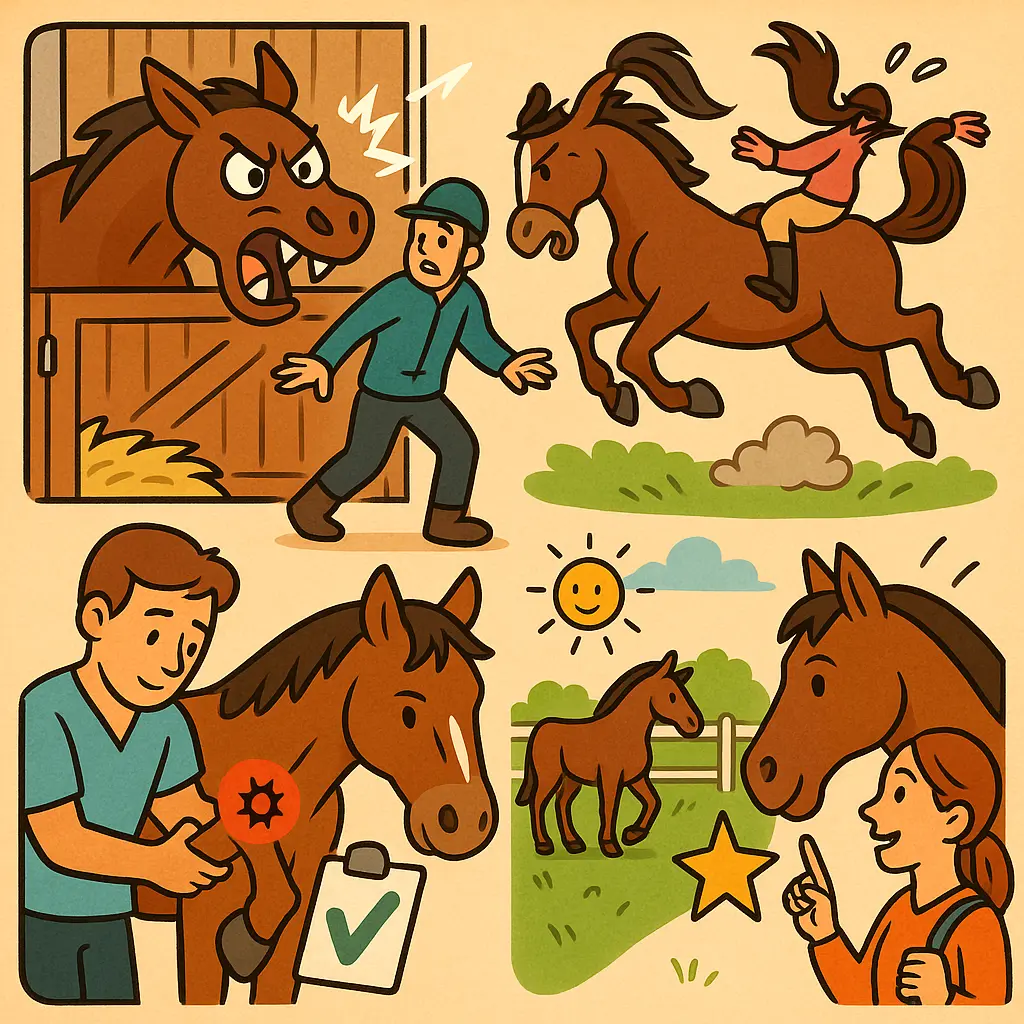
UK winter and livery yard realities
Winter stabling (Oct–Mar) increases confinement stress and aggression risk; meet welfare basics with adequate space, deep bedding and consistent turnout. On livery, aim for minimum 12 m² box space per horse and stable group stability to reduce conflict and injuries (University of Bristol).
Under the Animal Welfare Act 2006 (enforced by APHA), persistent stable aggression can indicate compromised welfare from poor management. The BHS recommends deep beds (>15 cm shavings or straw) and, in freezing spells, heated or insulated water provision to avoid dehydration‑driven irritability and resource guarding. Turn out daily where ground and yard rules allow; if turnout must be limited, increase enrichment and hand‑grazing time. For warmth and comfort between field and box, choose weather‑resilient turnout rugs and breathable stable rugs from trusted brands like WeatherBeeta.
Our customers on busy UK livery yards report that simple changes — fixed feeding times, enough hay stations, and not walking straight into a horse’s “bubble” at the door — make an immediate difference. At Just Horse Riders, we recommend agreeing yard‑wide protocols for approaching doors, delivering feed and maintaining quiet hours to keep arousal low across the barn.
When to seek expert help
Call your vet urgently for new‑onset aggression, any sign of lameness, sudden sensitivity to touch, or unexplained weight shift. If pain is ruled out, work with an evidence‑based trainer or accredited behaviourist using positive reinforcement, as recommended by equitation science experts.
Andy Booth (equitation science) and welfare organisations emphasise resolving the underlying fear, pain or discomfort rather than chasing “dominance” myths (Just Horse Riders: Andy Booth on aggression). For a deeper dive into reading the Ladder of Aggression and planning humane training, see World Horse Welfare’s webinar, and review the IAABC Foundation case study on resolving human‑directed aggression through counter‑conditioning.
Pro tip: If you feel unsafe at any stage, step back to a distance your horse finds easy, wear appropriate PPE, and ask your yard manager to help structure protected training windows.
Looking to gear up without breaking the bank? Check our rotating bargains in the Secret Tack Room clearance, and explore trusted performance brands like LeMieux and NAF across horse care essentials.
FAQs
Stable aggression in UK horses is common, often pain‑linked, and best improved with turnout, enrichment and positive reinforcement. Use these concise, research‑backed answers to act quickly and safely.
Why is my horse sweet outside but aggressive in the stable?
Confinement removes escape options, so fear or frustration turns into defensive behaviours at the door or feed station. Research also links stable aggression to ridden conflict behaviours, so check for pain first and adjust management (Hawkins et al., 2020; Mad Barn).
Is stable aggression due to dominance?
No. Modern evidence shows it’s driven by fear, pain or learned responses from past punishment. Address root causes with turnout, enrichment and reward‑based training (World Horse Welfare).
When should I call a vet for stable biting or kicking?
Immediately if there’s lameness, new onset of aggression, ear pinning on approach, or sudden sensitivity to grooming. A UK/Ireland survey found 26% lameness prevalence, making pain a likely factor (Furtado et al., 2024).
Does turnout fix stable aggression?
Often, yes. Daily turnout lowers chronic stress and reduces guarding. Combine it with enrichment (mirrors, slow‑feed nets, toys) and counter‑conditioning for best results. For weather‑ready kit, see our turnout rugs.
Can punishment stop stable door kicking?
No. Punishment increases fear and can escalate to striking or biting. Use positive reinforcement and environmental change instead (IAABC Journal).
Is this more common in older UK horses or specific breeds?
Yes. 37% of 10–14‑year‑olds showed antisocial stable behaviours vs 6–11% in horses ≤5 years. Handling issues are higher in sport horse (22%) and thoroughbred types (24%) than in cobs and natives (8–10%) (Furtado et al., 2024).
What simple changes can I make this week?
Add a slow‑feed hay net (£15–£25), hang an anti‑weave mirror (£20–£40), deepen bedding to >15 cm, and practise 5‑minute counter‑conditioning from >3 m with high‑value treats. For comfort in cold snaps, fit a breathable stable rug.
Stable aggression isn’t a character flaw — it’s feedback. With a vet‑first approach, better stabling and kind training, you can turn the stable back into a calm, safe place for both of you.