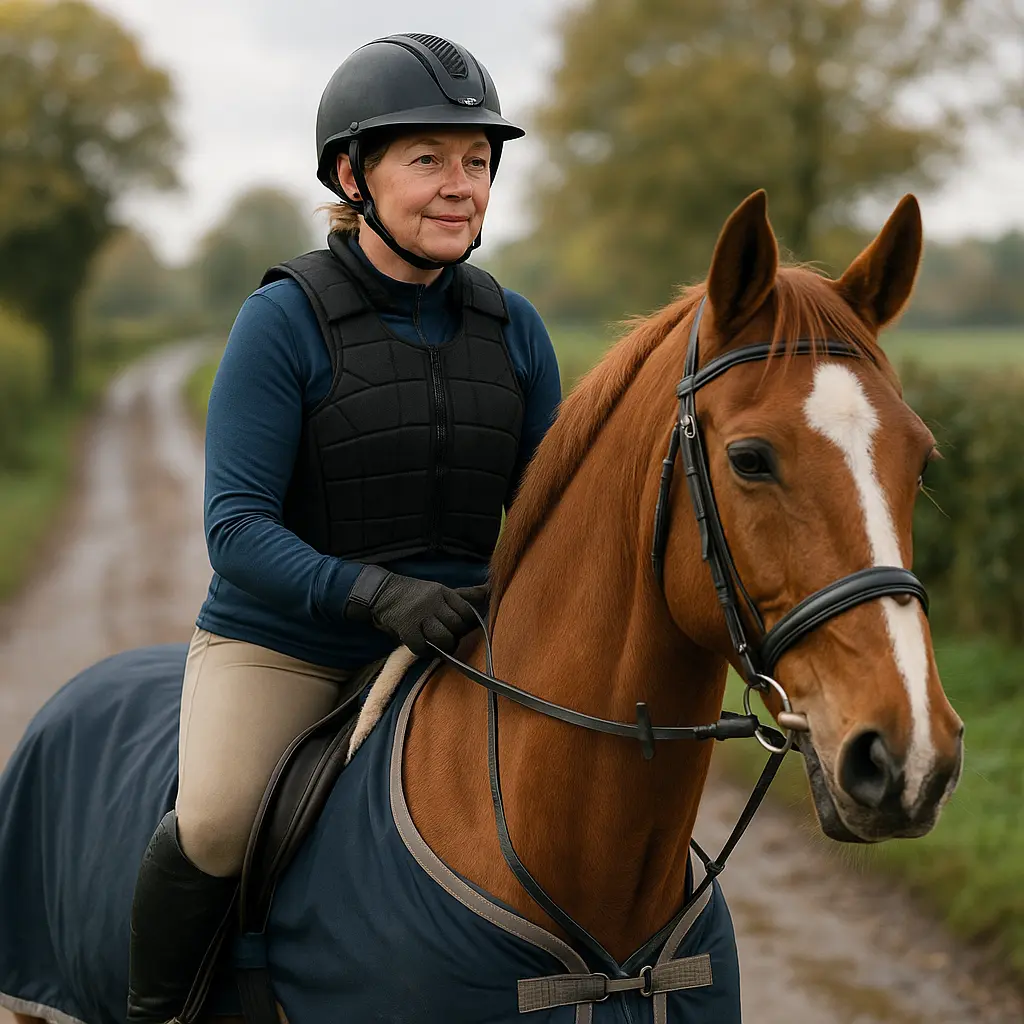
You’re not “too old” to get back in the saddle — you’re in the sweet spot. In the UK, women and riders over 45 are the backbone of equestrian life, and riding is a proven, enjoyable way to tick off your weekly exercise.
Key takeaway: If you’re 40+, start with 30-minute, moderate rides two to three times a week, prioritise safety gear and off-road routes, and lean on a supportive riding centre or club — you’ll meet UK activity guidelines while rebuilding confidence and fitness.
Why midlife is the perfect time to ride again
Yes — midlife is an ideal time to ride: in Britain, more than 90% of riders are female and 37% of female riders are aged 45+, unmatched by any other UK sport. Riding also makes a measurable public health difference, with 48% of participants saying they’d otherwise be inactive.
The British Horse Society (BHS) and University of Brighton research shows riding delivers moderate-intensity activity that meets the UK Department of Health’s 30-minutes, five-days guideline. Peak heart-rate data from typical sessions reached 67.4% of HR peak — right in the moderate zone. That’s why riding is highlighted as a powerful way to engage women and those over 45 in sustained physical activity across the UK.
“Horse riding is especially well placed to play a valuable role in initiatives to encourage physical activity amongst women and those aged over 45.” — BHS research summary, University of Brighton and Plumpton College (full report)
Beyond the stats, the culture of UK equestrianism supports late starters and returners: friendly riding clubs, clinics, and local competitions keep goals attainable and community-focused. With 1.82 million regular riders and roughly 726,000 horses nationwide, you’re in good company.
Start safely in your first 30 days
Start with 30-minute rides at a moderate effort two to three times a week, aiming for around 67% of your heart-rate peak to build steadily without overexertion. If you’re over 45 or have a longstanding condition (23% of riders do), book a quick GP check to align your plan with riding’s physical demands.
Your first month is about rhythm and safety. Book an assessment lesson at a BHS- or ABRS+‑approved centre with a UKCC‑qualified coach; 70% of UK riding centres report capacity constraints, so reserve early. Ask for a suitable horse or pony with a calm, forgiving way of going — this accelerates balance, coordination and confidence far more than muscling through on a sharp or green horse.
Stick to simple goals in Weeks 1–4: get mounted and dismounted efficiently, establish a secure lower leg and soft contact, and ride transitions within walk and trot. Keep hacks short initially and avoid peak traffic times; 33% of riders report road rage or abuse, with 81% of incidents caused by vehicles passing too close or too fast. Prioritise off-road routes for now (see “Where to ride” below).
At Just Horse Riders, we recommend three non‑negotiables from day one: a helmet certified to BSI PAS 015:2011, a confidence-boosting body protector, and hi‑vis when you leave the yard. Explore our curated ranges for returning riders, including riding helmets to current safety standards, practical rider hi‑vis for roads and tracks, supportive horse riding boots with grip, and comfortable women’s jodhpurs and breeches.
Quick tip: keep a simple ride log noting duration, surfaces, how you felt, and anything your instructor adjusted. It’s motivating — and it helps your coach tailor your next steps.
Choose safe places to ride
Choose bridleways, arenas, and quiet tracks because 81% of road incidents involve close or fast passes, and 33% of riders report road rage or abuse. Schedule hacks outside commuter peaks and build traffic exposure gradually with an experienced escort.
Make the most of your area’s off‑road network. Link bridleways and permissive paths into short loops you can extend as confidence grows. If you must use roads, ride in high‑visibility clothing and consider reflective leg bands for visibility. Keep your signals clear, occupy the lane where needed to prevent unsafe overtakes, and thank patient drivers — it encourages better behaviour for everyone.
On varied or stony ground, protect your horse’s legs and tendons with appropriate boots; our horse boots and bandages collection includes breathable brushing boots for flatwork and hacking. After muddy rides, clean and check legs and tendons during your cool-down, then pick out feet and dry heels to prevent winter skin troubles.
Pro tip: use yard noticeboards or local Facebook groups to arrange “quiet-time hacks” with other riders — safety in numbers, and more fun.
What kit you and your horse actually need
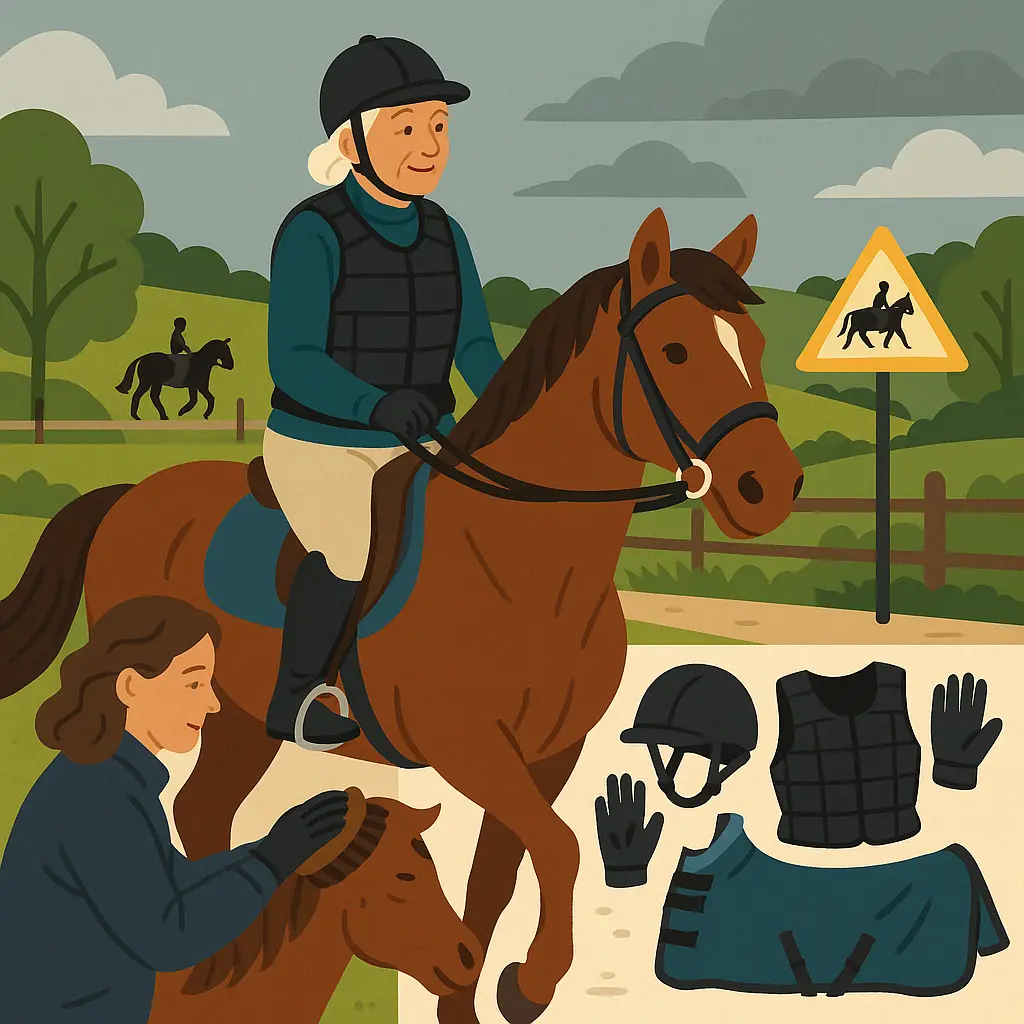
You need a BSI PAS 015:2011 riding helmet, a body protector, weatherproof turnout for wet/cold days (especially below 5°C), grippy boots, and comfortable breeches and gloves. For UK seasons, plan for rain, wind, and mud as standard.
For you:
- Head protection: choose a certified helmet that fits snugly; browse our riding helmets for current standards.
- Body protector: essential for confidence and impact protection when returning to jumping, hacking, or young horses.
- Footwear: safe heels and good tread reduce slips on wet yards — see our riding boots.
- Clothing: stretch, non‑rub fabrics make longer sessions comfortable — explore women’s breeches with grip or full seats for stability.
- Hi‑vis: wear it anytime you might meet a vehicle or low light — our hi‑vis range covers vests to hat bands.
For your horse:
- Rugs for British weather: when it’s wet and cold — particularly below 5°C — choose a waterproof turnout to prevent chills on clipped or finer-coated horses. See our durable turnout rugs and cosy stable rugs for overnight comfort. Trusted brands like WeatherBeeta turnout rugs are built for UK rain.
- Leg protection: choose boots that fit and stay put; our horse boots and bandages range suits hacking and schooling.
- Daily care: a basic box with dandy brush, body brush, hoof pick, and mane comb starts your routine; our grooming kits make barn life easier and help you spot niggles early.
At Just Horse Riders, our customers often start with a minimal, reliable kit and add seasonally. If you love a quality bargain, check our rotating offers in the Secret Tack Room clearance before you buy.
Build a support network that keeps you riding
Join a BHS‑approved centre and a local riding club to access qualified instruction and a supportive network that keeps you progressing. Clinics, shared yard duties, and low‑pressure competitions are the backbone of staying motivated after 40.
Community matters for confidence and consistency. A friendly coach helps you set realistic goals — perhaps a summer fun ride, a winter dressage test, or a spring camp. Local riding clubs and adult camps are full of people “back after a break,” and many centres run confidence-builder hack groups. If competition calls, you don’t have to go big: riding club (RC) classes, pleasure rides, and training shows are welcoming steps.
“The eventing community is very fraternal... You have to have people around you to help you through a journey such as this.” — Dr Kevin Keane, full‑time veterinarian and amateur rider, who reached his first major event at 59 (Eventing Nation)
“Eventing is full of ups and downs... set your own goals. There is great beauty in being the best partner to your horse.” — Amy Nelson, upper‑level eventer and OTTB retrainer (Eventing Nation)
If you plan to dip into dressage or showing, a few smart pieces from our women’s competition clothing range make ring days simpler. But remember: your timetable is yours — steady progress with your horse is the real win.
An 8-week return-to-riding plan
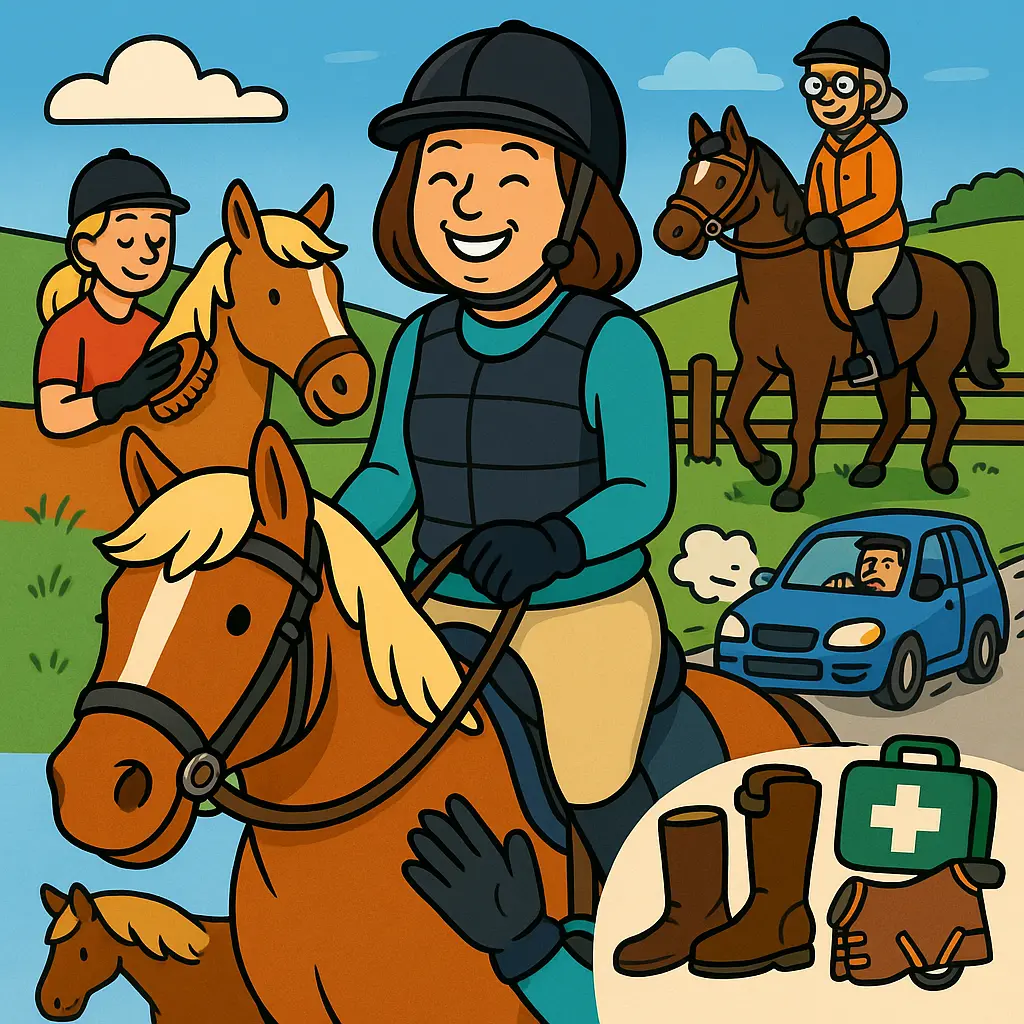
An eight‑week plan built around two to three 30‑minute, moderate sessions per week will meet UK health guidelines and restore core, balance, and cardio without overload. Keep heart‑rate effort close to 67% of your peak on schooling days and listen to your body on hacks.
Weeks 1–2: two 30‑minute sessions weekly. Focus on balance at walk and rising trot, transitions, large figures. Add 10 minutes of in‑hand work or grooming on non‑ride days to build your partnership and routine.
Weeks 3–4: three 30‑minute sessions. Introduce short hacks on quiet, off‑road routes; add light polework in walk. Build posting-trot endurance with 2–3 minute sets and generous walk breaks.
Weeks 5–6: three sessions, 35–40 minutes. Add trot‑pole lines, a few canter transitions, and hill work on hacks if footing allows. Keep schooling days moderate in intensity and prioritise rhythm and straightness.
Weeks 7–8: three sessions, 40 minutes. Consolidate canter balance, ride patterns with more precision, and practise a simple dressage test or fun ride pace. If you jump, start with ground poles and crossed poles in a controlled setting with your coach.
Support work: quick mobility for hips, hamstrings, and thoracic spine after rides; light strength twice a week (bodyweight squats, split squats, rows, planks). Hydrate and fuel rides with a small, carb‑led snack 60–90 minutes before.
Pro tip: schedule one “celebration ride” at Week 8 — a favourite hack loop or a low‑key lesson challenge — to mark your progress.
Costs, access and common barriers — solved
The UK equestrian sector contributes £5 billion to the economy with an average of £6,887 per horse, but access — not enthusiasm — is the main barrier for many returners. Seventy percent of riding centres report capacity constraints, and 22% of lapsed riders cite lack of facilities.
Beat the bottlenecks by booking blocks of lessons, riding at off‑peak times, and asking about adult confidence groups. Consider part‑loans or share schemes to reduce costs and guarantee saddle time; many yards advertise quiet, schoolmaster types ideal for returners.
Make the most of local infrastructure. Prioritise off‑road access where possible to reduce risk and stress, and plan winter turnout and stabling to keep horses comfortable in wet, cold weather. For practical winter prep, our robust winter turnout rugs and warm stable rugs reduce the faff when the mercury drops. If you’re stretching a budget, keep an eye on the Secret Tack Room clearance for seasonal deals, and consider hard‑wearing staples from brands like Shires for everyday value.
Quick tip: ask your centre about volunteering for shows or pony days — it’s a great way to learn, meet your community, and sometimes earn ride credits.
Health checks and injury prevention over 40
Book a GP check if you’re 45+ or have any longstanding condition, because riding is a moderate-intensity sport and 23% of riders report a disability or chronic issue. With sign‑off and a sensible plan, riding is an accessible way to improve mobility, strength, and cardio.
Protect the “big three” for returning riders: back, hips, and shoulders. Warm up before mounting (hip circles, cat‑cows, shoulder rolls), ride shorter stirrups for jumping and longer for flat only as your hips allow, and avoid holding your breath on transitions. A properly fitted body protector helps confidence if you’re re‑introducing poles or canter, and your coach can adjust exercises to respect any previous injuries.
For nerves, stack small wins: a calm mounting routine, five perfect transitions, a short hack loop you know well. Build from there. Many riders over 40 thrive with clinics focused on mindset and position — ask your centre or club for recommendations.
FAQs
Is it too late to start serious riding after 40?
No. In the UK, 37% of female riders are 45+ and many compete at local riding club events, clinics, and fun rides. Your goals can be as ambitious or as relaxed as you want — the key is consistent, coached practice.
What fitness level do I need to get back into horse riding?
Moderate fitness is enough to start. Two to three 30‑minute rides weekly meet UK guidelines; research shows typical sessions reach about 67% of heart‑rate peak, which is squarely “moderate.” Build gradually and you’ll notice stamina and core stability improve quickly.
How can I ride safely if I’ve been away for years?
Begin with an assessment at a BHS‑approved centre, wear a BSI PAS 015:2011 helmet and body protector, and stick to off‑road hacks initially. Add visibility whenever you could meet traffic — our hi‑vis range is designed for UK lanes and bridleways.
What kit should I prioritise on a budget?
Prioritise safety and saddle-time comfort: a certified riding helmet, sturdy riding boots, and well‑fitting breeches. For your horse, start with essentials like a waterproof turnout rug for wet/cold spells and a simple grooming kit. Check the Secret Tack Room for savings.
Where should I ride to avoid traffic problems?
Use bridleways, arenas, and quiet off‑road tracks. If you must use roads, avoid rush hours, ride in hi‑vis, and keep your signals clear. Close/fast passing accounts for 81% of reported incidents; building confidence off‑road first is the safest route back.
Will riding help my health if I’ve been inactive?
Yes. Nearly 40% of riders do no other activity, and 48% say they’d be inactive without riding. It’s a proven, enjoyable way to meet UK activity guidelines, especially for women and those over 45, according to BHS‑led research.
How do I keep motivation going after the first month?
Set a simple goal (a fun ride or a dressage test), book lessons in a block, and ride with a friend or club group. Reward your milestones — even with small things like a new pair from your favourite brand, whether that’s LeMieux saddlecloths and accessories or a fresh grooming brush — and keep a ride journal to see your progress.
Ready to begin? Book that first lesson, gear up safely, and choose a quiet bridleway loop. The rest — confidence, fitness, and the joy of partnership — will follow.