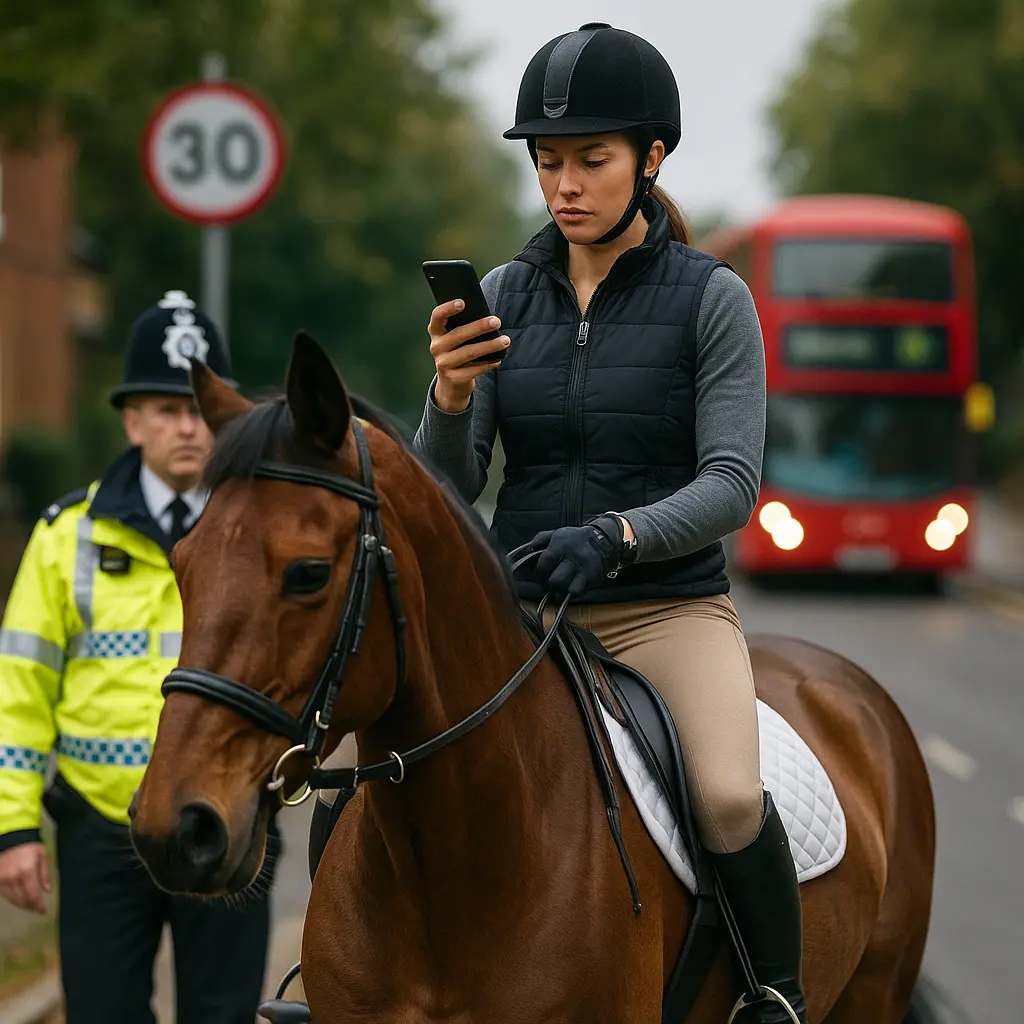
You can’t ride well if you’re distracted. Whether you’re hacking along a narrow lane at dusk or circling a busy warm-up, your horse needs both your hands and your head. Here’s exactly what UK riders need to know about using mobile phones in the saddle — on the road and in competition — and how to stay connected without compromising safety.
Key takeaway: Don’t use a handheld phone while riding. Stop and use it safely off the horse, and follow FEI and Highway Code rules to keep you and your horse protected.
What does the Highway Code say about phones on horseback?
Under Highway Code Rule 53, riders must keep both hands on the reins unless signalling, so handheld phone use while riding is out — except in an emergency. The intention is simple: maintain control and full awareness around traffic and other road hazards.
This rule applies to anyone riding on UK roads. While there isn’t a specific mobile phone fine for riders, Rule 53 is clear that your hands and attention belong on your horse, not your screen. Safety experts emphasise that riders are “vulnerable road users” who must maximise control and observation when sharing space with cars, lorries and cyclists, especially in low light and wet conditions typical of UK autumn and winter.
“As vulnerable road users, it is vitally important horse riders… adhere to the rules of the Highway Code when riding on the road. Rule 53 states that equestrians should keep both hands on the reins… so they should not be using mobile phones while riding, unless in an emergency. In addition, riders should always concentrate on their surroundings.” — Alan Hiscox, Safety Expert, Horse & Hound via HorseSolicitor (source)
Practically, this means no scrolling, no texting, no filming, and no calls while mounted on the road unless you’re dealing with an emergency — and even then, you should stop in a safe place first if at all possible.
Are there penalties for using a phone while riding on the road?
There are currently no specific UK fines for riders using phones, but phone distraction could be used as evidence of negligence if an incident occurs. In May 2024 the Government confirmed it had no plans to create rider-specific phone penalties.
Legally, the comparison point is motorists. Drivers face a £200 fine and 6 penalty points for using a hand-held phone (even when stopped at lights), and serious offences can bring court fines up to £1,000 (£2,500 for HGVs), bans or prison. Riders aren’t subject to that regime — but if you’re proven to have been on the phone when something goes wrong, it can seriously undermine your position in any civil claim.
“Should a rider be proven to be on the phone when an incident occurs, this could weaken their case significantly in any legal proceedings.” — Ian Dexter, HorseSolicitor, summarised by Horse & Hound (source)
Bottom line: while you won’t get points on your licence for using a phone from the saddle, you are expected to follow Rule 53. If you’re distracted and something happens, that distraction can count against you.
What are the rules at competitions and warm-up arenas?
In FEI jumping, earphones or electronic comms in the competition ring mean elimination, and from 2025 riders may not hold phones or make calls while riding in warm-up arenas; one earphone/hands-free is allowed only if it doesn’t compromise safety. Officials can warn or intervene if a device use is unsafe.
These rules exist to keep everyone — horse, rider and bystanders — safe in busy, high-pressure environments. The FEI’s stance aligns with proposals championed by the Dutch federation (KNHS) to ban phones in-hand while mounted in training and warm-up areas so riders remain fully focused.
“Using a phone while riding causes distractions and therefore is a safety risk… Riders should be 100% focused on their horse while riding.” — KNHS Jumping Committee spokesman, via Horse & Hound (source)
Comparable rules apply elsewhere: for example, Equestrian Canada bans earphones in competition arenas (elimination) and discourages phones while mounted, while permitting one earphone outside the ring. UK riders competing at FEI-affiliated events domestically or abroad should expect these standards to apply.
Practical tip for competitors: keep admin off the horse. Check ride times, course plans and messages before you mount, and stow your phone securely. If you need last-minute checks, hand the phone to your helper. For show wardrobes that meet ring-side dress codes without compromising safety, explore our performance-ready competition clothing.
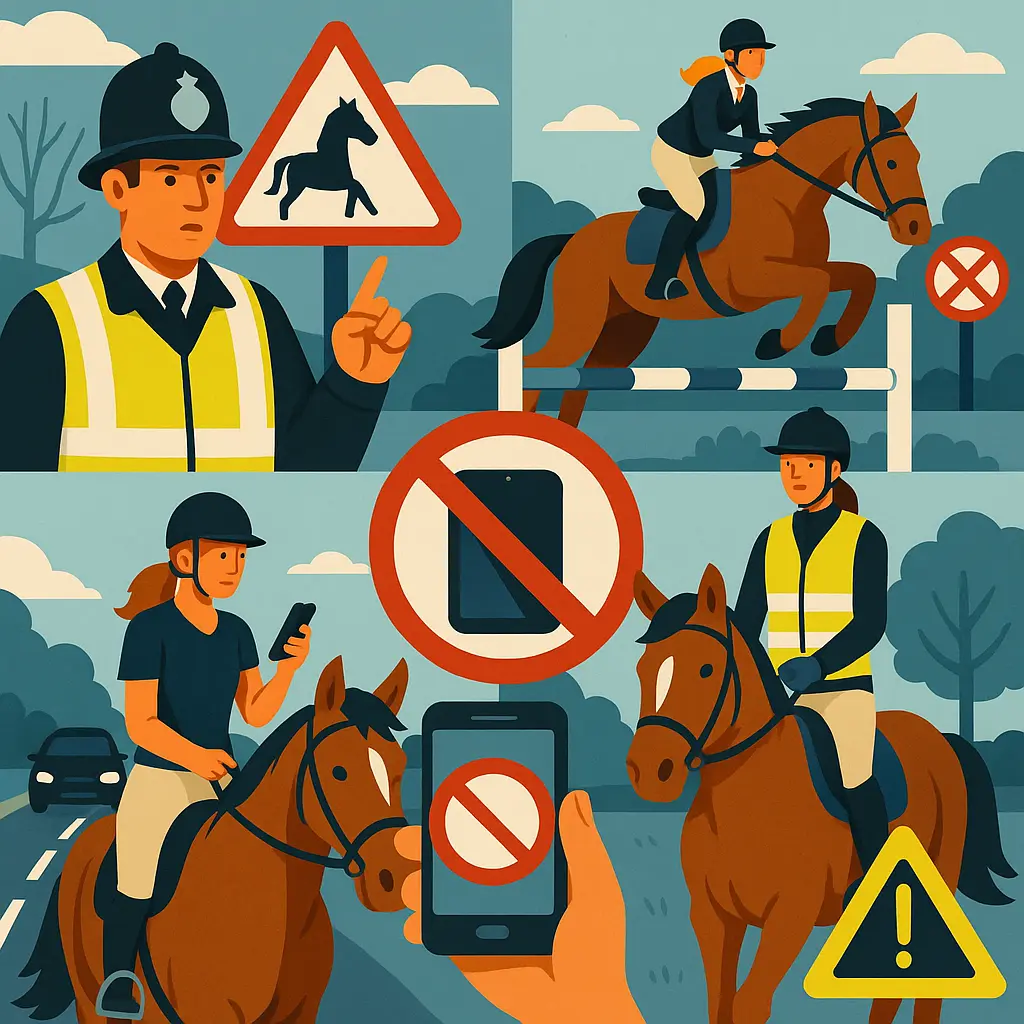
Why riding with a phone in hand is a safety risk
A phone in your hand distracts your eyes, brain and reins, which delays reactions and can unbalance your horse. You lose feel, reduce your ability to shorten or lengthen a stride instantly, and risk missing hazards ahead or behind.
On UK roads, that’s not theoretical. Hacking often means blind bends, tractors, puddles that hide potholes, wet leaves, winter glare, low sun and fast overtakes on narrow lanes. A split-second delay while you glance at a screen can be the moment your horse spooks at a hedge cutter, or a driver misreads your position. In arenas and warm-ups, screens pull your attention away from changes in footing, traffic flow and your horse’s focus — creating avoidable near-misses.
From a welfare perspective, horses read your balance and contact for confidence. If your rein is compromised by a phone, your horse may feel insecure and overreact to noise, movement or unfamiliar objects. Concentration also matters for schooling quality: good rhythm, straightness and transitions rely on consistent aids — not one-handed riding.
Quick tip: even if you’re using a single-ear hands-free for navigation or a coach’s audio, keep the volume low and the other ear free. If an official, steward or police officer believes your device is affecting your control or awareness, you can be asked to remove it or dismount to use the phone safely.
Practical ways to stay connected safely
Dismount, pull off the carriageway or stop in a safe place before using your phone; if contact is essential while mounted, use a single earbud or hands-free only if it can’t compromise control or awareness. This mirrors the emergency exception principle for drivers while recognising Rule 53’s requirement to keep both hands on the reins.
Here’s a safe-connection checklist for UK hacks and schooling:
- Plan the ride. Share your route and ETA before you mount; turn on location sharing so you’re not tempted to check in mid-ride.
- Use one-ear hands-free only. Keep your outside ear free for traffic. Avoid in the competition ring and respect warm-up rules.
- Mount the phone, don’t hold it. Use a secure armband or saddle/withers pouch; never balance it in a pocket you’ll fumble for.
- Stop for messages. If the phone pings, find a gateway, bridleway verge or arena corner, halt, and deal with it off the horse.
- Set Do Not Disturb. Allow only key contacts or emergency numbers to break through alerts.
- Emergency first. If you must call 999 and it’s unsafe to dismount, stop in the safest place you can, keep both hands on the reins where possible, and keep the call brief.
- Boost visibility. If you’re riding with any audio at all, counterbalance with extra conspicuity in low light.
At Just Horse Riders, we recommend doubling down on visibility and head protection any time you ride near traffic or in poor conditions. Choose high-contrast, reflective layers from our hi-vis range for riders, and wear a properly fitted, modern safety helmet from our curated riding helmets collection. For your horse, reflective brushing boots or bandages from our horse boots and bandages selection help drivers see leg movement sooner in dusk or drizzle.
Pro tip: create a pre-ride routine — phone on silent, route shared, hi-vis on, girth checked, then mount. Habits remove temptation.
Kit check: essential gear for safe UK hacks
Prioritise visibility and protection over tech: hi-vis layers, an up-to-standard helmet and secure footwear reduce risk far more than any phone accessory. Comfort matters too — the better your seat and lower leg, the less you rely on a hand for balance.
Build a safety-first kit list:
- Helmet: Choose a current-standard model with good ventilation for all-weather comfort so you’re not fussing with adjustments mid-ride. Browse our tested riding helmets.
- Footwear: A supportive heel and grippy sole prevent slips when you dismount to deal with a call. Explore durable options in our horse riding boots.
- Legwear: Non-slip, well-fitted breeches stop you fiddling with clothing while mounted. See our performance-fit women’s jodhpurs & breeches.
- Hi-vis: Layer up year-round in Britain; cloud cover and hedgerows make summer lanes darker than you think. Pair a bright tabard with reflective hat bands and horse accessories.
- Phone carriage: Use a snug armband, belt pouch or zipped jacket pocket you won’t open while riding. Avoid dangling or loose mounts.
Quick tip: in autumn/winter, add reflective legwear for the horse. Moving reflectors on limbs are picked up by drivers sooner than static panels, especially in drizzle or at dawn/dusk.
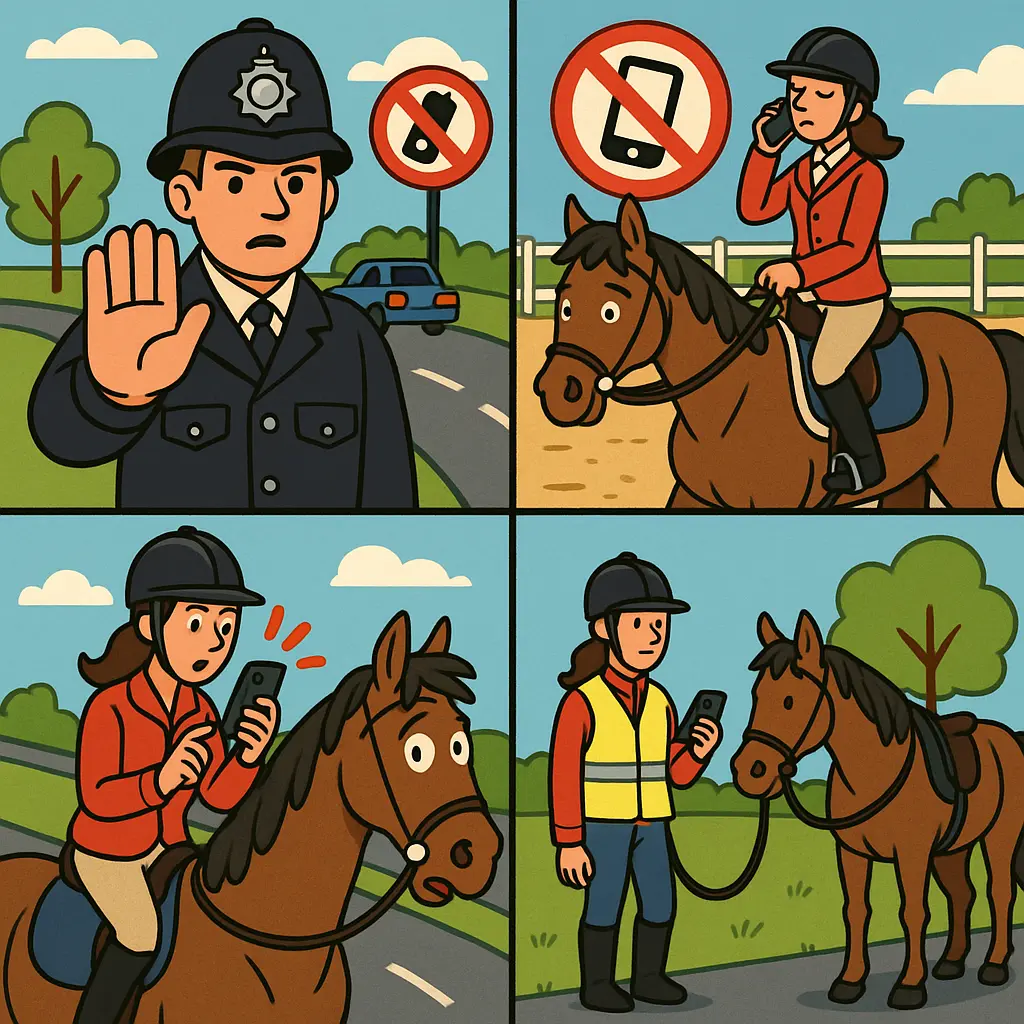
What to do if you see distracted riding on the road
If you spot a rider using a phone unsafely, give them plenty of room, avoid confrontation in traffic, and consider reporting concerns via non-emergency channels if behaviour is repeatedly dangerous. Safety comes first for everyone on the road.
If you’re a yard owner or coach, set a clear “no handheld phones while mounted” rule for hacks and lessons. Modelling best practice matters: it protects your riders, reassures the public and keeps your insurance risks down. The research-backed view is plain — riders should prioritise environmental awareness over device use, and chronic distraction can indicate negligence if an incident occurs.
Pro tip: if you’re riding in a group and someone reaches for their phone, call a halt and let them deal with it off the horse, then restart together.
Summary: the bottom line on phones and horses
Do not use a handheld phone while riding — stop safely first; keep both hands on the reins and full attention on your horse and surroundings. In competition, expect strict enforcement: no earphones or electronic comms in the ring, and no holding or calling on phones in warm-ups from 2025, with only one earphone permitted hands-free if safe.
Equip for visibility and protection, not distraction. When you’re ready to upgrade your safety essentials, explore our hi-vis rider collection, fit a new riding helmet, and refresh footwear with secure-grip riding boots. Your horse will thank you for keeping both hands — and your full focus — exactly where they belong.
FAQs
Treat handheld phone use as off-limits while riding; the answers below cover the most common scenarios UK riders ask about.
Is using a mobile phone while riding a horse on UK roads illegal?
There’s no rider-specific fine, but Highway Code Rule 53 requires both hands on the reins (unless signalling), so using a handheld phone breaches the Code’s safety expectations and can harm any legal case after an incident. See the expert guidance via HorseSolicitor and Horse & Hound (source).
What are the penalties for drivers, and why do they matter to riders?
Drivers get a £200 fine and 6 points for hand-held phone use, with serious cases leading to larger fines or bans. While riders don’t face these exact penalties, the comparison shows how seriously distraction is treated — and phone use can still count against a rider after a collision.
Can I wear headphones or use hands-free at competitions?
In FEI jumping, earphones or electronic comms in the ring mean elimination. From 2025, you must not hold a phone or make calls while mounted in warm-up; one earphone or hands-free is allowed only if it doesn’t compromise safety, and officials may warn riders. More via Horse & Hound and KNHS commentary (source).
Is one earbud acceptable while hacking on the road?
One earbud at low volume may be acceptable if it doesn’t reduce awareness, but on the road you should prioritise hearing traffic and instructions. Keep the non-traffic ear bud in, the traffic-side ear open, and stop to handle any calls.
What if I need to call 999 while I’m riding?
Emergencies are the exception. If possible, stop in a safe place and dismount before calling; if that’s not safe, make the call briefly while halted and keep both hands on the reins where you can.
Does this advice apply off-road or only on public roads?
Rule 53 applies to road riding, but the safety principle holds everywhere: your horse deserves two hands and full attention. Bridleways and fields carry their own risks (gates, dogs, cyclists, uneven ground), so use the same “stop first” approach off-road too.
Could using a phone affect an insurance or legal claim after an accident?
Yes. If you were on the phone when an incident occurred, it could be used as evidence that you were distracted and may weaken your claim, as explained by HorseSolicitor (source).