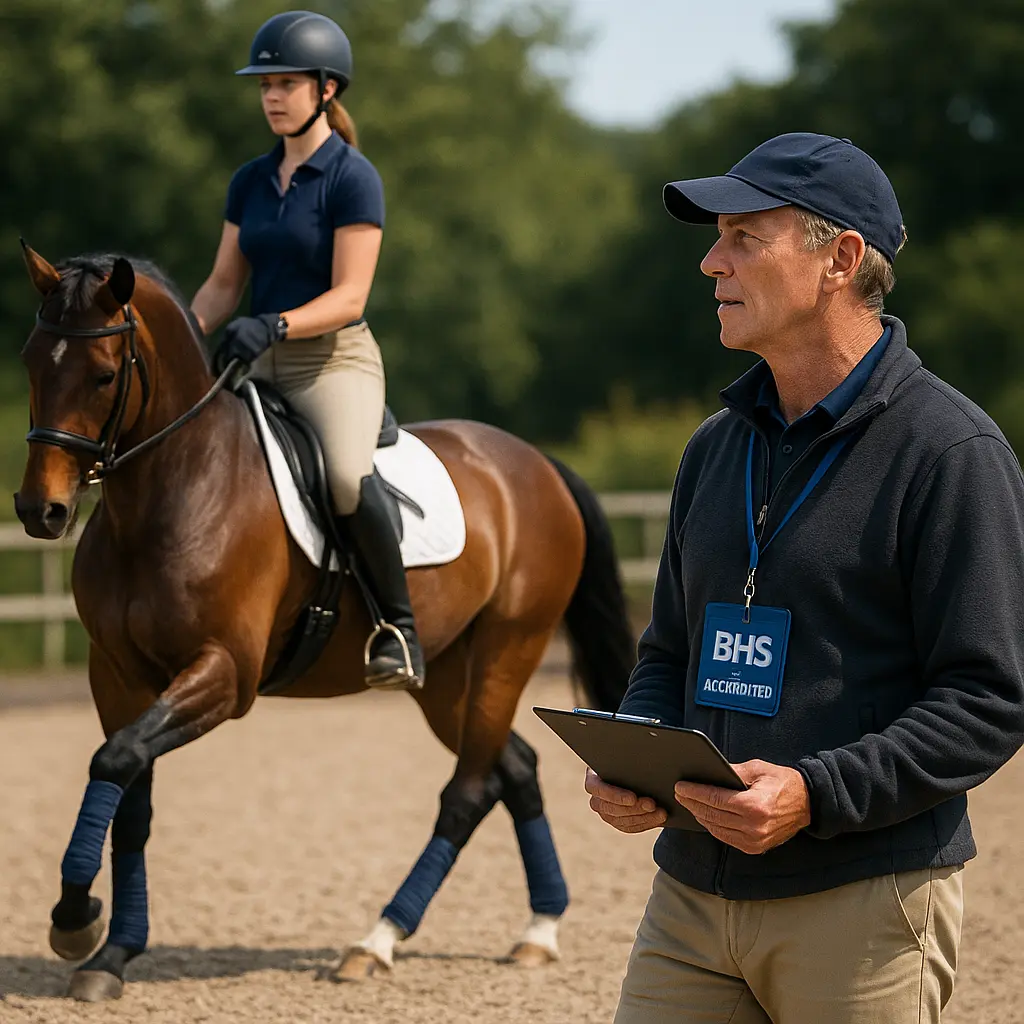
You can ride every movement in the book, but without the right coach your PSG journey will stall. In the UK, “right” means accredited, compliant and proven at the level you’re aiming for.
Key takeaway: For PSG-level dressage in the UK, choose an accredited coach with Level 3+ credentials (e.g., BDCC Level 3 or BHS Stage 5), current first aid, safeguarding and DBS, and a track record coaching Medium/Advanced Medium riders — verify via British Equestrian and BHS directories.
What qualifications should a UK dressage coach have?
For independent coaching, British Equestrian’s baseline is a BHS Stage 3 Coach or Equestrian Coaching Certificate (ECC) Level 2; for PSG, look for Level 3+ such as BDCC Level 3 or BHS Stage 5 with evidence of coaching Medium/Advanced Medium. This ensures your coach can handle the technical demands of half-pass, extensions and collection while building a structured, season-long plan.
British Equestrian states the minimum standard for independent coaching is BHS Stage 3 Coach, ECC Level 2 or an RDA Coach qualification (source). However, PSG sits well beyond Novice, so you should set the bar higher. British Dressage’s own pathway shows BDCC Level 3 prepares coaches to plan, implement, analyse and revise annual programmes at county/regional level (source). The BHS Stage 5 (Performance Coach) is an advanced benchmark recognised across the UK and within the BHS Accredited Professional Coach (APC) framework (source).
At the Stage 3 tier, the BHSQ Level 3 Coach – Dressage Ride qualifies coaches to teach up to Novice with a substantial 770 Total Qualification Time and 77 credits (source). That’s an excellent foundation, but PSG requires deeper technical expertise and experience at Medium/Advanced Medium — look for that evidence explicitly when you shortlist.
“Choosing a coach who’s recognised, accredited or approved by a British Equestrian member body is a good way of ensuring they have the necessary qualifications and compliance in place, and that their coaching practice is of a high standard.” — British Equestrian
How do you verify a coach’s compliance and accreditation?
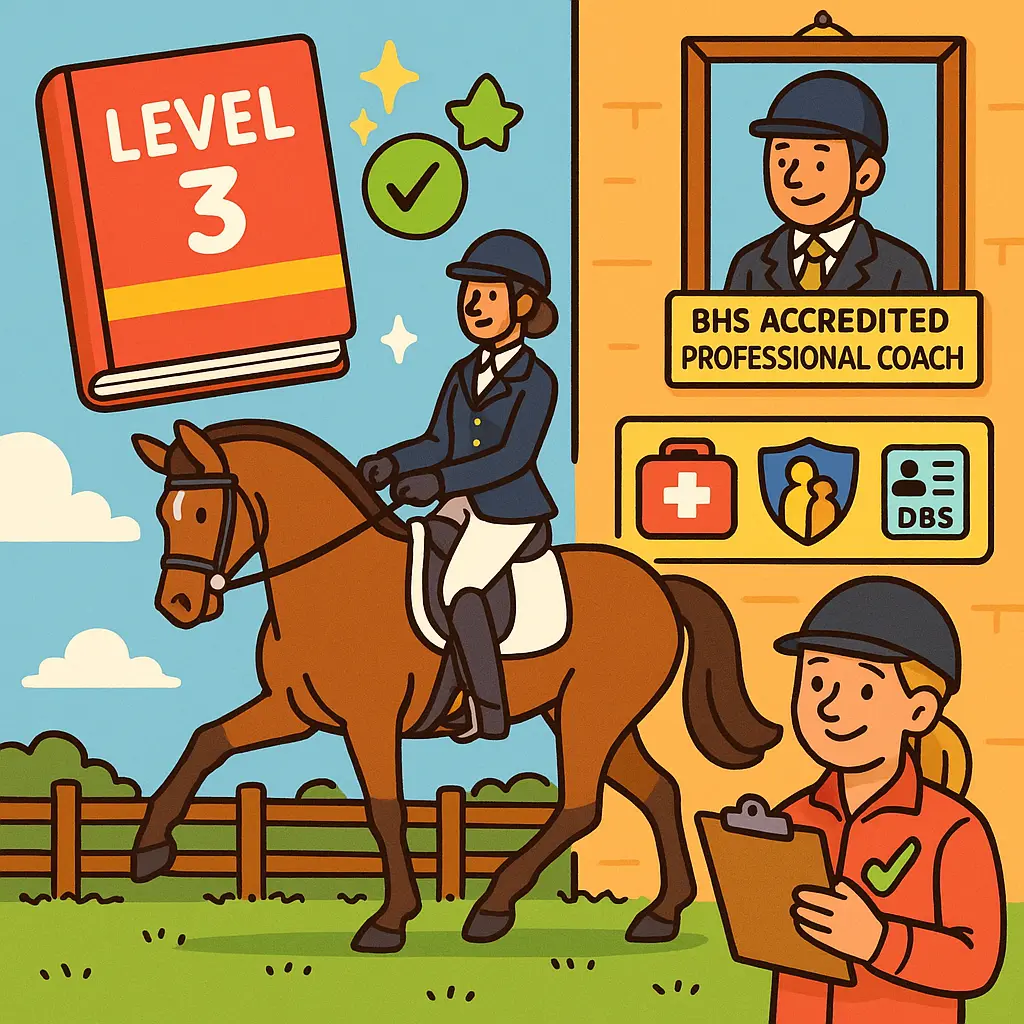
Check for BHS Accredited Professional Coach status or approval by a British Equestrian member body, then confirm current first aid, safeguarding and DBS, plus insurance. These are non-negotiable and should be easy for a professional to evidence.
The BHS APC scheme requires at least BHSQ Stage 3 Coach in Complete Horsemanship (or Stage 3 Coach – Dressage Ride) plus a Level 3 horse care qualification, enhanced DBS, first aid, and safeguarding training; APCs must also maintain CPD, public liability insurance and adhere to the BHS Code of Conduct (source). British Equestrian reinforces that practicing coaches must be up to date with first aid, safeguarding and DBS to operate in the UK (source).
“Practicing coaches should be up to date with their first aid qualification, have an up-to-date safeguarding certificate, and a disclosure and barring service (DBS) check. Together, these are sometimes referred to as ‘compliance’ and are essential to practice.” — British Equestrian
Pro tip: ask to see expiry dates (first aid typically renews every three years), and request a copy of their public liability insurance schedule. Professionals will have these to hand.
What should you expect from BDCC Level 2 and Level 3 coaches?
BDCC Level 2 coaches deliver progressive, well-structured sessions; BDCC Level 3 coaches build, implement and review your annual programme for advanced competition goals. If you’re targeting PSG, Level 3 is the standard to prioritise.
The British Dressage Coaching Certificate (endorsed by UKCC and accredited by 1st4sport) is government recognised and provides a common coaching standard across the UK (source).
“The British Dressage Coaching Certificate (endorsed by UKCC) is a government recognised qualification which is accredited by 1st4sport that provides a recognised stamp of quality coaching across all sports around the UK.” — British Dressage
BDCC Level 2 involves three full-day practical and two half-day online workshops, plus an assessed portfolio including six coaching sessions (with at least four progressive sessions) and case studies of at least two riders you coach regularly at Novice/Elementary (source). That structure ensures Level 2 coaches can plan and deliver consistent training blocks. Level 3 then steps up to planning, implementing, analysing and revising annual programmes at county/regional level — precisely what you need for an advanced campaign (source).
Is BHS Stage 3 enough for advanced dressage?
No — Stage 3 is a strong base for independent coaching and covers dressage up to Novice; PSG requires Level 3+ and a proven record at Medium/Advanced Medium. Use Stage 3 as a minimum filter, then shortlist coaches with higher-level credentials and results.
British Equestrian lists Stage 3 Coach or ECC Level 2 as the minimum for independent coaching (source). The BHSQ Level 3 Coach – Dressage Ride explicitly qualifies up to Novice (770 hours; 77 credits), which is ideal for foundation work but not sufficient on its own for PSG-level planning and refinement (source). At PSG, where the margins are fine, you’ll benefit from BDCC Level 3 or a BHS Stage 5 Performance Coach who can integrate gymnastic development, competition scheduling and periodisation into your programme.
Quick tip: when a coach lists “Stage 3” or “Level 2”, ask what levels they regularly coach and request examples of riders qualified at Medium/Advanced Medium — experience matters as much as the badge.
How do you find and trial the right coach?
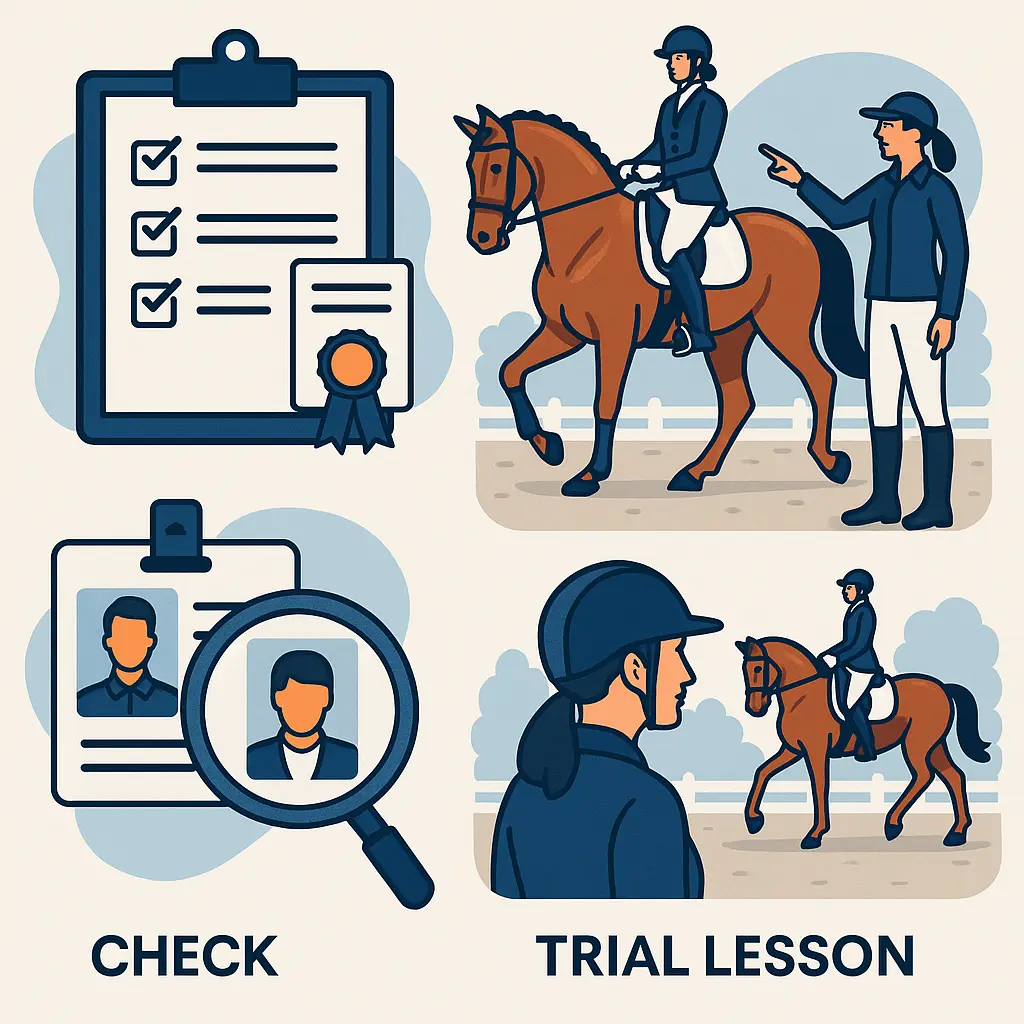
Use the BHS Accredited Professionals directory, British Dressage coach listings and British Equestrian member body directories, then observe a lesson and book a trial session. The right coach will be happy for you to watch, ask questions and discuss your goals.
Start with:
- BHS Accredited Professionals directory — search by discipline and level to find APCs with dressage expertise.
- British Dressage — coaching pathway and contacts for BDCC-qualified coaches.
- British Equestrian — guidance and links to member bodies; in Scotland, check horsescotland listings.
When you observe a session, look for:
- Clear objectives and progressive exercises that build across sessions (a BDCC Level 2 portfolio standard).
- Accurate, encouraging feedback with specific, actionable corrections.
- Horse-first decision-making: sensible breaks, stretching and appropriate progression.
- Evidence of planning toward competition goals, not just standalone “party tricks”.
Pro tip: agree a three-session trial. Session one assesses you and your horse; session two consolidates; session three introduces level-appropriate gymnastic work (e.g., shoulder-in to half-pass, transitions within pace towards extensions). Review progress together at the end.
What UK-specific factors affect your dressage coaching plan?
UK weather, daylight and facilities demand adaptable coaching and reliable kit to keep training consistent year-round. Choose a coach experienced with indoor or weather-adapted outdoor sessions, and kit your horse and yourself for wet, windy winters.
From October to March, rain, mud and short days can derail consistency. Coaches operating to BHS professional standards plan for this with flexible session formats, homework drills and lunge or in-hand gymnastic work on poor-weather days. Keep your horse comfortable and training-ready with the right layers: a robust, well-fitting set of winter turnout rugs for the field and cosy stable rugs for recovery at night. For legs, protect and support with appropriate horse boots and bandages during schooling to reduce knocks as you sharpen lateral work.
For you, secure rein contact is non-negotiable in the cold — winter-friendly gloves, grippy breeches and a secure, safety-rated hat make a real difference. Keep your head protected with current-standard riding helmets, and consider upgrading your wardrobe for clinics and tests with smart, functional competition clothing and warm, performance women’s jodhpurs and breeches that move with you.
Don’t forget the basics that underpin every good session: a tidy, healthy coat and skin help saddles sit correctly and reduce rubs, especially under rugs. Build a quick pre-ride routine with our grooming essentials so your horse’s back and girth areas are clean before you tack up.
What should you budget and prepare for your PSG journey?
Budget for qualified coaching, travel or arena hire, and the equipment and support that keep your horse comfortable, supple and sound. The right investments smooth progress and cut costly setbacks.
A typical PSG pathway blends weekly to fortnightly coaching, homework blocks and periodic clinics. Between sessions, schooling gear helps you reinforce the coach’s programme safely. Dressage whips and schooling whips can refine your aids for half-pass and extensions; used correctly under guidance, training aids like side reins or a Pessoa system can help develop straightness and topline on lunge days. Always introduce any aid under your coach’s supervision and prioritise correct biomechanics over gadgets.
Recovery matters as much as work. Many riders support muscles and joints during intensive schooling blocks with targeted nutrition; explore our curated equine supplements for muscle and joint support and discuss choices with your vet or nutritionist. Consistent warmth and dryness speed recovery and protect muscles, so review your rugging strategy and upgrade worn kit before the weather turns.
For competition readiness, ensure your show-day wardrobe meets current rules and gives you confidence: a well-fitting show jacket, breeches and gloves, plus a current-standard hat for warm-up and tests. A good hat isn’t just compliance — it’s performance peace of mind, and our range of riding helmets covers training days to championship finals.
What red flags and common mistakes should you avoid?
Avoid unaccredited coaches, expired compliance, and “miracle” one-off lessons that ignore progressive planning. PSG success is built on consistent, incremental work with a qualified professional.
- No visible accreditation or refusal to show certificates — British Equestrian member body approval or BHS APC status is the gold standard (source; source).
- Missing or out-of-date DBS, first aid or safeguarding — all are mandatory to practise in the UK (source).
- Only Level 2 qualifications listed with no evidence of coaching Medium/Advanced Medium — Level 2 is designed for delivering sessions; Level 3 is the advanced planning standard (source).
- Non-progressive lessons focused on “tricks” rather than scales of training and gymnastic development.
- No willingness to observe, assess and tailor a programme to your horse’s way of going.
At Just Horse Riders, we recommend you check the BHS or British Equestrian directories first, verify compliance, then commit to a short trial block to confirm coaching style and progress are a match.
Ready to start? Shortlist three accredited coaches, watch them teach, book your trial sessions, and refresh your essentials — from rugs and boots to grooming and supplements — so your horse stays training-ready whatever the UK weather brings.
FAQs
What qualifications mark a coach as suitable for PSG-level dressage?
Look for BDCC Level 3, BHS Stage 5 Performance Coach, or equivalent Level 3+ credentials, plus evidence of coaching riders at Medium/Advanced Medium. These coaches can plan and review annual programmes aligned to advanced goals (source).
Is BHS Stage 3 enough for advanced dressage coaching?
No. Stage 3 qualifies coaches up to Novice and meets the minimum for independent coaching; PSG requires Level 3+ expertise and a track record at higher levels (source; source).
Do coaches need insurance and checks?
Yes. Accredited UK coaches must hold public liability insurance and keep first aid, safeguarding and DBS checks up to date. BHS APCs also commit to CPD and a Code of Conduct (source; source).
How do I find an accredited coach?
Use the BHS Accredited Professionals directory, British Dressage listings and British Equestrian member body directories; in Scotland, check horsescotland resources (BHS; BD; BEF).
What are the entry requirements for BDCC Level 2?
Candidates must hold UKCC/PCCC Level 1 or 2 or BHS Stage 3 Coach (or equivalent), be full BD members, and regularly coach at least two riders at Novice/Elementary for case studies; the course includes three full-day practical and two half-day online workshops with an assessed portfolio of six sessions (source).
Can Level 2 coaches teach PSG?
Level 2 prepares coaches to deliver structured sessions; PSG-level planning and performance support typically require Level 3 (e.g., BDCC Level 3) to design and review annual programmes at advanced level (source).
What kit helps keep training consistent through a UK winter?
Prioritise warm, waterproof layers for the horse and you: quality turnout rugs and stable rugs, protective boots/bandages, a current-standard riding helmet, smart competition clothing, supportive breeches, plus daily grooming and appropriate supplements to aid recovery.