

Ragwort and Rewilding: Navigating the Controversy of a Poisonous Plant in Modern Agriculture
The vibrant yellow flowers of ragwort (Jacobaea vulgaris) may be charming to the eye, but beneath this sunny facade lies a contentious debate in the world of agriculture and conservation. As rewilding becomes a popular trend, promoting the return of land to nature, farmers, conservationists, and policymakers must navigate the balance between ragwort's ecological benefits and its known threats. This blog aims to illuminate the topic from every angle, offering insights and practical advice for a harmonious coexistence.

The Botanic Basics: What Is Ragwort?
Ragwort is a UK-native biennial or perennial, identifiable by its bright yellow flower clusters that bloom from June to November. This plant flourishes in wastelands, pastures, and conservation lands, often growing up to a meter tall and forming denser growth than surrounding vegetation. Despite its classification as a weed in agriculture, ragwort supports over 30 species of pollinators, including the daisy carpenter bee and the cinnabar moth. However, its reputation among farmers is less rosy.
The Poisonous Problem: Why Is Ragwort Feared by Farmers?
All parts of the ragwort plant contain pyrrolizidine alkaloids, toxins notoriously harmful to livestock like horses, cattle, sheep, and goats (Agriculture Victoria). The threat spirals when toxins, accumulated over time, impair the liver, resulting in symptoms such as weight loss, jaundice, sensitiveness to light, and severe cases of death. Unfortunately, even small amounts are lethal if inadvertently mixed into hay.
- Toxicity: Ragwort remains poisonous in both its fresh and dried states.
- Symptoms: Liver failure, photosensitisation, weight loss, and death could occur in extreme cases.
- Livestock Impact: Dairy cattle taint milk when grazed on ragwort, endangering all grazing animals.
- Economic Impact: This weed inhibits pasture productivity, thus reducing agricultural land value.
The Conservation Case: The Ecological Value of Ragwort
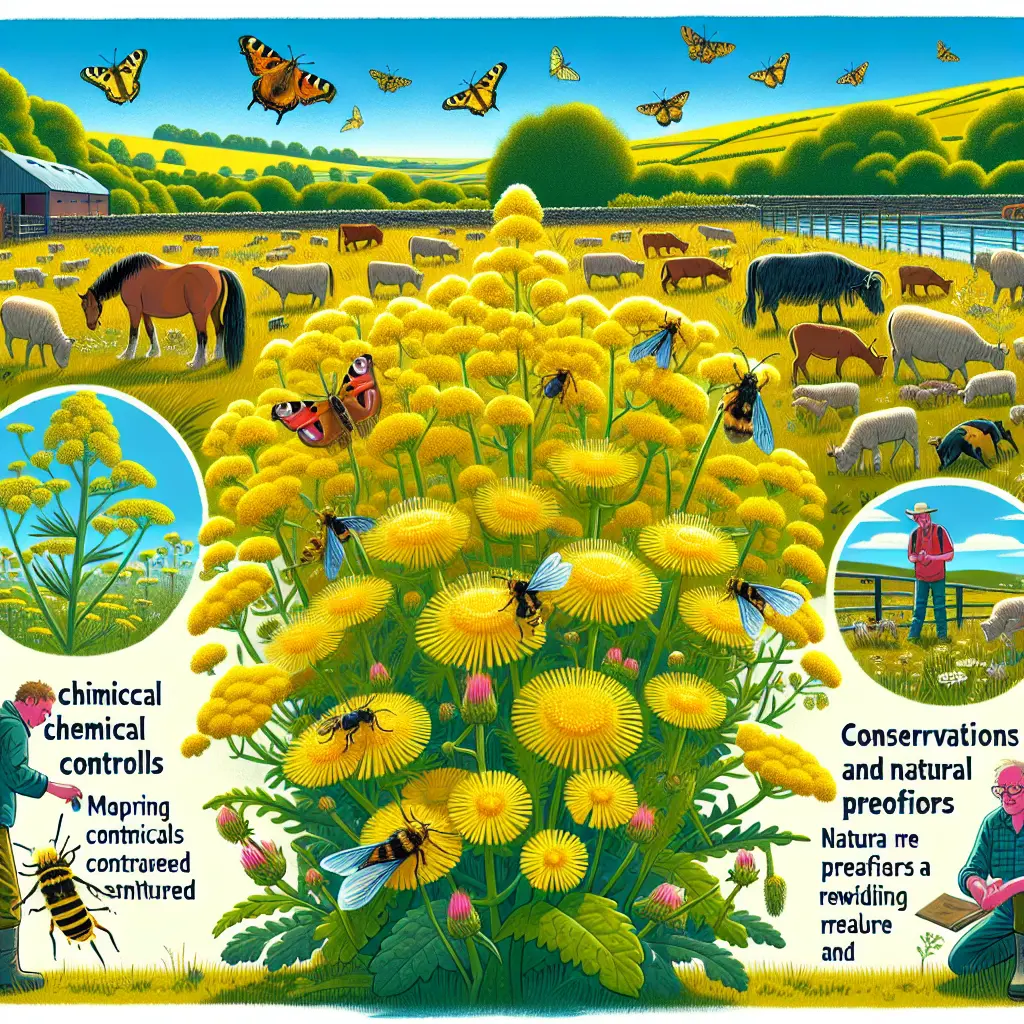
Despite the notoriety, ragwort plays a pivotal role in ecosystems. It is crucial for feeding more than 30 pollinator species, supporting biodiversity. Embraced by bees and butterflies, its seeds spread widely, sustaining wildflower meadows and roadside verges. In rewilding projects, ragwort signifies robust ecosystems, located in areas intended for biodiversity restoration. Nonetheless, its encroachment into farming lands raises concerns for livestock safety.
The Controversy: Managing Risk in a Rewilding Era
The divide between agriculture and rewilding is evident as the ragwort dilemma intensifies. Farmers view it as a persistent danger, prompting strict control measures, while conservationists emphasize its pollinator benefits. In regions like the UK, ragwort represents a native plant valued for its role in nature yet feared for its toxic potential. Even with animals typically avoiding its bitter taste, accidental ingestion (like in hay) results in severe consequences (Wikipedia). Moreover, proven cases of poisoning, though rare, are concerning enough for the farming community.
Practical Solutions: Coexistence and Control
Agriculture-Focused Strategies
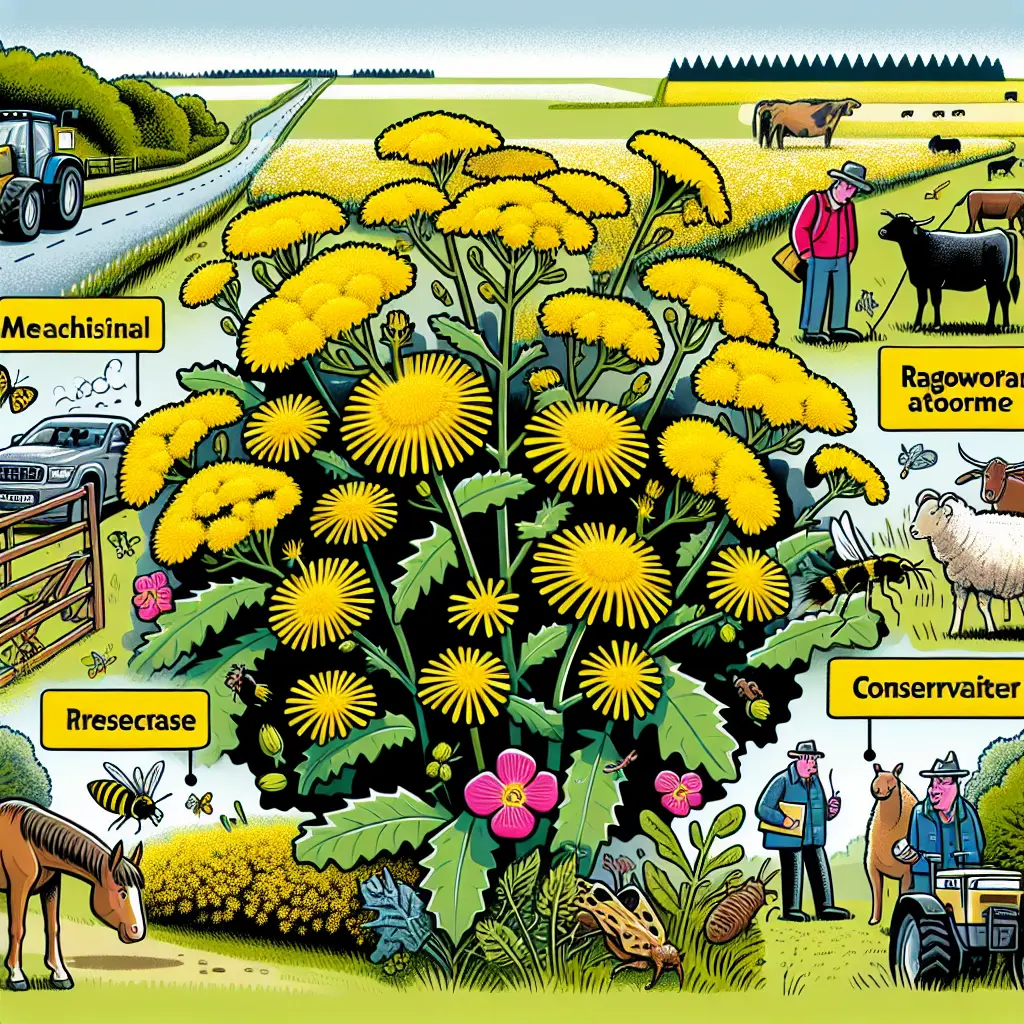
- Mechanical Control: Regular flower removal through mowing or pulling controls seed spread.
- Chemical Control: Herbicides target ragwort but may conflict with organic objectives.
- Pasture Management: Dense, competitive grass growth naturally controls ragwort.
Conservation-Focused Strategies
- Biological Control: Introducing natural ragwort predators, such as the flea beetle, hinders growth. For example, in the US Northwest, this method achieved dedicated control (Oregon State University).
- Zoning: Buffer parcels between rewilded lands and agricultural plots prevent ragwort spread.
- Public Education: Informing communities about ragwort risks and benefits aids in diverse land management decisions.
The Human Factor: Risk Perception and Policy
Public opinion diverges between categorizing ragwort as a threat and praising its ecological value. The way forward lies in balancing both aspects, assessing each situation carefully. Management implementation must preserve animal welfare and biodiversity to foster open dialogue and effective methods.
Conclusion: A Call for Balanced Management
Ragwort embodies a paradox—vital yet venomous. Thus, finding common ground in rewilding and agriculture remains crucial. Science-centered strategies respecting farmers' livelihoods as well as conservation goals promise the best results.
Actionable Takeaways:
- Livestock Owners: Remain vigilant about pasture upkeep and forage quality to stave off accidental ingestion.
- Land Managers: Consider applying biocontrol and habitat zoning measures when feasible.
- All Stakeholders: Engage in discussions for regionally tailored approaches protecting both animals and ecosystems.
Further Reading & Trusted Resources
For deeper dives, explore these authoritative sources:
- Discover Wildlife: Comprehensive insights about ragwort's ecological significance and risks.
- Agriculture Victoria: Detailed account of ragwort's agricultural effects and solutions.
- Oregon State University Extension: Case study on biological control of ragwort.
- Wikipedia: Overview of ragwort's toxicology and environmental role.
- The Donkey Sanctuary: Guide on ragwort poisoning for horse and livestock care.
By grounding management decisions in contemporary research and collaborating across disciplines, the ragwort controversy can be surmounted—protecting both animals and our cherished wild landscapes for future generations.