

How soon can you ride after a hysterectomy?
If you’ve recently had a hysterectomy and you’re itching to get back in the saddle, you’re absolutely not alone. But this is one time when patience really is the best policy. Most medical guidance advises waiting at least 6 weeks before riding again, and that’s a minimum — your own surgeon’s advice always comes first because your surgery, body and healing are unique [1][2][3][4].
That six-week mark isn’t an arbitrary number. Horse riding demands a lot from your core and pelvic floor — the very areas recovering after a hysterectomy — and the bouncing, twisting and stabilising needed to ride can put real stress on healing tissues. Returning too quickly risks complications that could set you back far longer than waiting would [1][4].
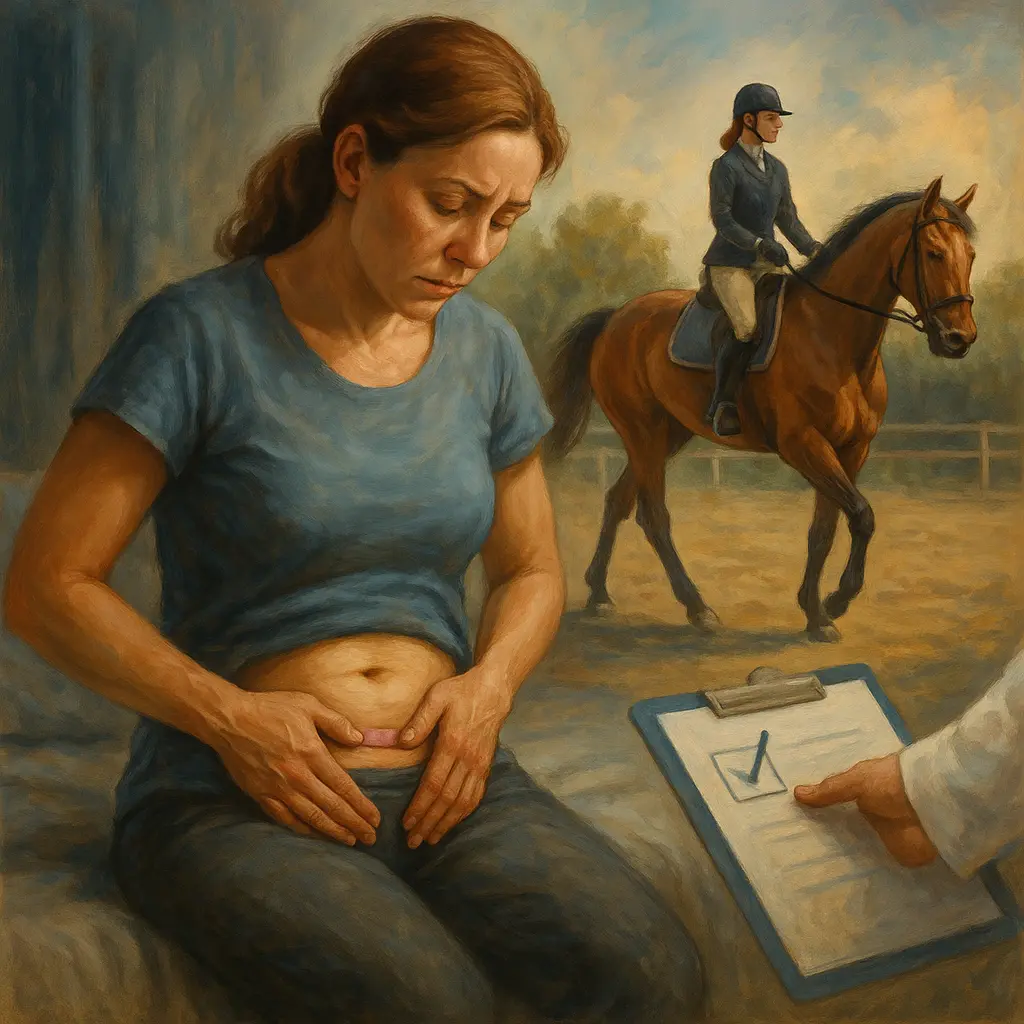
Understanding what a hysterectomy means for riders
A hysterectomy is the surgical removal of the uterus, often recommended for issues like fibroids, heavy bleeding or prolapse. Whether it’s performed via the abdomen or the vagina, it is major surgery affecting deep tissues, the abdominal wall and the pelvic floor. All of these are vital for balance, shock absorption and stability in the saddle [1][4].
Abdominal hysterectomy
This approach uses a larger incision and goes through multiple layers of abdominal tissue. As a result, it carries a higher risk of internal stitches tearing if you return to high-impact activities like riding too early. That could mean internal bleeding, more pain and possibly further procedures — not exactly the hack you had in mind [1].
Vaginal hysterectomy
Although less invasive on the surface, a vaginal hysterectomy still places the pelvic floor under pressure while it heals. High-impact activities — riding included — are typically restricted for around 6 weeks to protect repairs and reduce the risk of problems like prolapse recurring [4][6].
Riding engages your core and pelvic floor in almost every moment: mounting, sitting trot, half-halting, even simply steering on a breezy day. That’s why so many riders and clinicians emphasise waiting. One rider, for instance, held off for the full 6 weeks on her surgeon’s advice. She was cleared to groom her horse a bit sooner, but chose not to mount until she had the all-clear, prioritising long-term health over short-term enthusiasm [3].
Your recovery timeline for getting back in the saddle
Recovery isn’t one-size-fits-all. It depends on the type of hysterectomy, your overall health and fitness, and whether there were any complications. That said, reliable guidance outlines a sensible progression from total rest to gentle movement and, eventually, riding again. A key theme across sources and rider experiences: no riding before 6 weeks, and only with your clinician’s sign-off [1][2][3][4][5].
| Phase | Timeframe | Allowed Activities | Riding Status |
|---|---|---|---|
| Immediate Post-Op (Weeks 1–2) | 0–2 weeks | Short walks, ankle circles, basic pelvic floor exercises if ready. Avoid lifting over 10 pounds (about a gallon of milk). | No riding. No bending, twisting, or bouncing activities like horse riding. |
| Early Recovery (Weeks 3–6) | 3–6 weeks | Gradually increase walking. No heavy lifting (limit to 5–7 kg or 11–15 pounds), vacuuming, or carrying kids/groceries. Pelvic floor exercises OK after 1–2 weeks. | Still prohibited. High-impact exercises including horse riding banned to protect repairs. |
| Return to Riding (Week 6+) | 6+ weeks | Doctor clearance required. Start light grooming/horse play earlier if approved. | Possible at 6 weeks with OK, but ease in slowly. Many riders report full return to normal or improved riding once healed — no more monthly cycle disruptions. |
For further context, some guidance explicitly lists “riding a horse” among bouncing activities to avoid for 4–8 weeks after surgery, depending on the individual [2].
Why waiting matters
Bouncing around before your insides have fully healed isn’t just uncomfortable — it can cause real damage. A few key risks stand out:
- Internal stitch rupture. Deep tissues are cut and stitched during surgery. Riding’s jarring motion can tear those internal layers if you push too soon, potentially causing bleeding or requiring further treatment [1].
- Pelvic floor strain. The pelvic floor is already healing. Riding exerts considerable force through this area, and overdoing it could increase the risk of prolapse recurrence or delay recovery [4][6].
- Core weakness. You’ll likely be told to avoid lifting more than around 10 pounds for several weeks. Riding demands similar core stability — which may be more than your healing body can manage early on [2].
Plenty of equestrians echo the medical advice: “Absolutely no riding for a minimum of 6 weeks” is a common refrain, with riders who waited reporting that they felt safer and more confident when they did get back on [1][3].
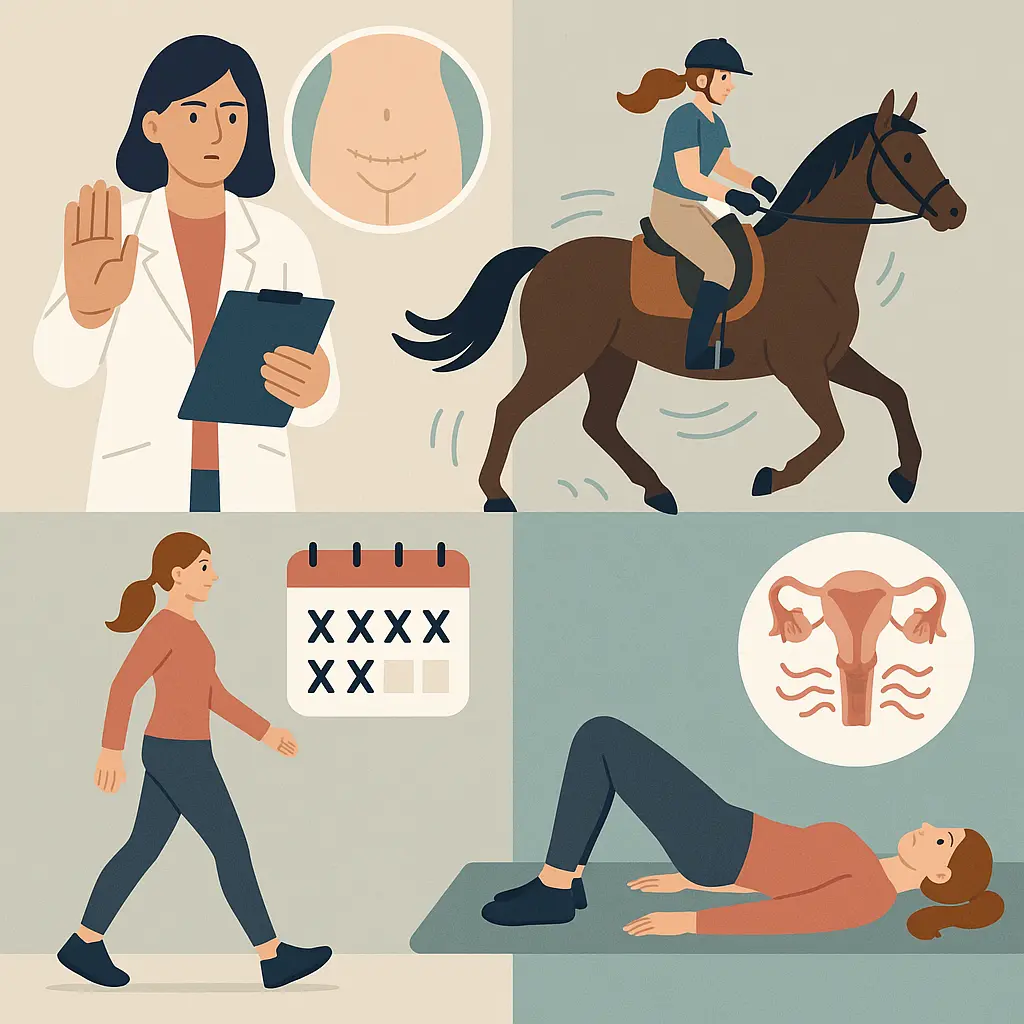
A step-by-step plan to return to riding
Every rider and every surgery is different. Use this as a rider-friendly framework, but make your surgeon the final word at each stage. Feeling “ready” is great — but it isn’t the same as being healed [5].
1) Get personalised clearance
At around six weeks, your clinician may examine your healing (and sometimes use imaging) before advising what’s safe. Don’t skip this step or rely on guesswork. A quiet hack today isn’t worth a setback tomorrow [5].
2) Build gradually
Weeks 1–4: Gentle movement and horse time without strain
- Short, easy walks on foot to keep circulation moving.
- Light horse interaction such as grooming or hand-grazing, if your clinician is happy with it. Keep it short and stop at the first hint of pulling or fatigue [3].
- Begin basic pelvic floor activation after 1–2 weeks if advised — think gentle squeezes rather than heroics [4][6].
Weeks 4–6: Add controlled groundwork
- Short, flat-ground lunging or in-hand work if you feel comfortable and your clinician agrees.
- Keep lifting minimal (generally 5–7 kg), avoid heavy tasks like moving feed sacks or water buckets, and definitely no bouncing activities yet [4][6].
Week 6+: First rides — slow, short, steady
- Only once you have the all-clear, start with 10–15 minute sessions on a calm, familiar horse.
- Stick to walk, then sprinkle in a little trot if everything feels comfortable and pain-free.
- Avoid canter and jumping until 8–12 weeks or until your clinician says it’s safe [2][3].
3) Strengthen safely
Pelvic floor exercises can usually restart 1–2 weeks post-op with your clinician’s blessing. Keep them gentle and consistent. After 6 weeks, low-impact core work such as bridges may be appropriate — again, with permission — to rebuild stability and help you feel more secure in the tack [4][6].
4) Monitor your body’s feedback
Stop the moment you feel pain, pulling, swelling, pressure or unusual fatigue. And no driving until you’re off prescription pain medication, typically after 1–2 weeks, or as instructed by your clinician [2][4].
5) Support your healing day-to-day
- Skip baths and hot tubs until you’re told they’re safe again.
- If you smoke, this is a good time to quit — it can help your tissues heal more efficiently [6].
- Listen, genuinely, to your energy levels. Rest is part of training — and recovery.
What affects your personal timeline?
There’s no universal calendar here. A few factors commonly influence when riders can safely return:
- Surgery type. A vaginal hysterectomy may allow a slightly quicker return than an abdominal one — but both require caution with high-impact movement [4].
- Your baseline fitness. Active equestrians often feel ready sooner, but the 6-week minimum still applies [3].
- Complications. Infection or poor wound healing can extend recovery to 8–12 weeks or beyond [2].
- Age and health. If you’re over 50, or have conditions like obesity or diabetes, your clinician may recommend a slower return [6].
Insurance and post-op instructions can also be surprisingly specific about things like riding and driving — worth double-checking with your team before you plan that first hack [4].
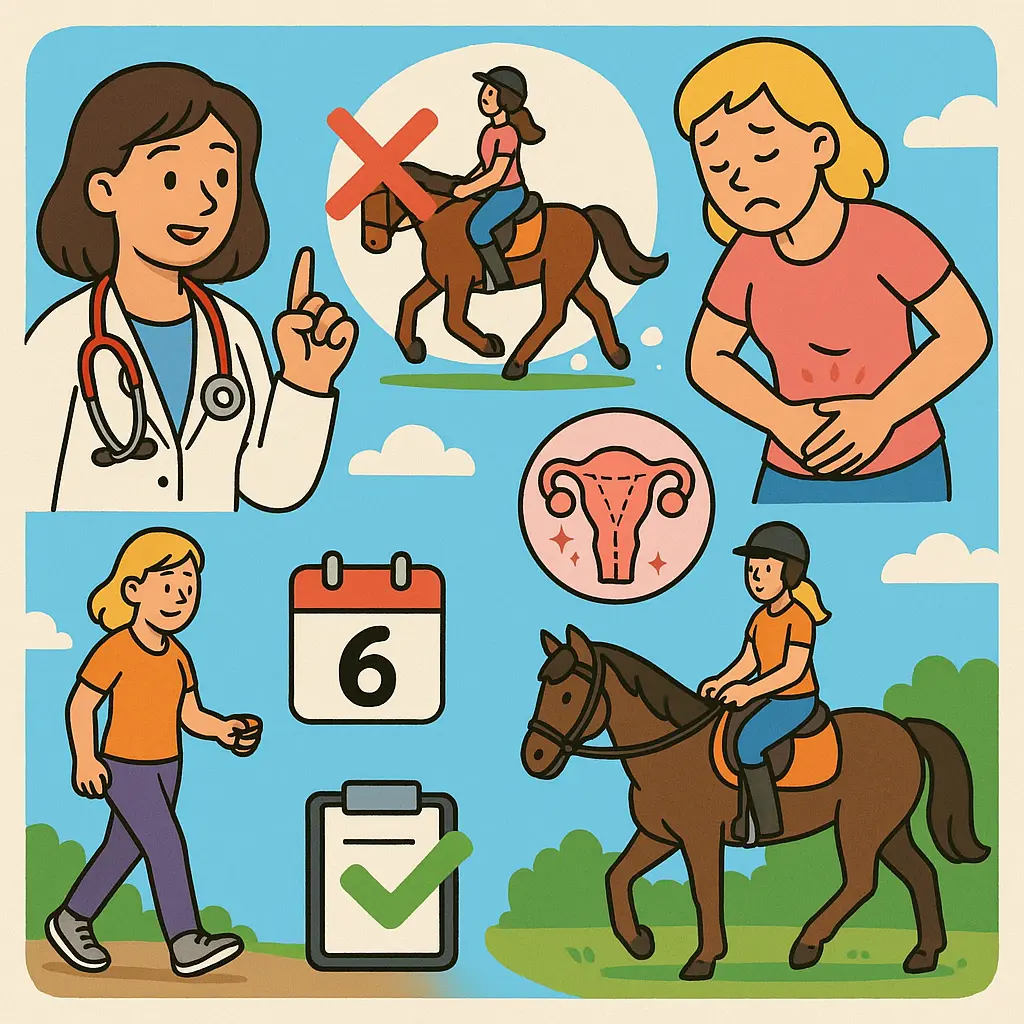
Real riders on waiting, healing and riding again
Sometimes it helps to hear from people who’ve been where you are:
- One rider who had an abdominal hysterectomy followed her surgeon’s “no riding for six weeks” instruction to the letter and felt safe when she finally swung a leg back over [1].
- Another waited the full 6 weeks, used the earlier time to bond with her horse on the ground, and went back to riding feeling both physically ready and mentally calm [3].
- Several riders later shared that, once healed, their riding felt back to normal — and in some cases even better, given the absence of monthly cycle disruptions [7].
These experiences line up with medical guidance: prioritise healing over haste and you’re likely to return feeling stronger, steadier and more confident [2][4][6].
When to ring your doctor
Don’t tough it out. Get prompt medical advice if you experience any of the following after a hysterectomy:
- Fever
- Heavy bleeding
- Severe or increasing pain
- Leg swelling
- Any wound issues (e.g., redness, discharge)
Quick treatment can prevent small problems from becoming big ones.

Practical tips for your first weeks back
When that magic “cleared to ride” moment arrives, keep things simple and conservative. You can always add more later.
- Pick the right horse and environment. Choose a calm, predictable horse you know well in a quiet arena or familiar track. Now is not the time to be a hero on the spicy one.
- Keep sessions short. Ten to fifteen minutes is plenty at first. Stop while everything still feels good — that’s a win.
- Focus on feel. If you sense pulling, pressure or heaviness in your abdomen or pelvis, hop off and call it a day.
- Consider comfort aids. A supportive belt or a soft, shock-absorbing pad can help if your core feels a bit wobbly initially. Use anything your clinician is happy with and that makes you feel safer.
- Tell your trainer. If you ride with a coach, let them know about your recovery plan so they can tailor sessions appropriately.
- Stay consistent with basics. Keep up your pelvic floor and gentle core work as advised — it pays off in the saddle [4][6].
A note on energy, expectations and mindset
Healing isn’t linear. One day you might feel brilliant; the next day your body wants tea and a nap. Listen to that. Quality beats quantity in these early rides. It may also help to focus on what you can do right now: tidy the grooming box, practise in-hand transitions, or enjoy a slow yard stroll with your horse’s muzzle in your pocket. Your partnership doesn’t live only in the saddle.
And remember, many riders say their riding felt normal — or better — once they’d fully recovered, because they weren’t juggling symptoms that led to surgery in the first place [7]. There’s light at the end of the bridle path.
FAQs
Can I ride before six weeks if I feel fine?
No. All guidance and rider reports agree: do not ride for at least six weeks after a hysterectomy, and only start after your clinician has cleared you [1][2][3][4]. Riding is a high-impact, bouncing activity that risks internal stitch rupture and pelvic floor strain if you go too soon [1][4][6].
What can I do with my horse while I’m waiting?
Early on, stick to short walks on foot and light grooming if your clinician agrees. From weeks 4–6, you may be able to add brief in-hand or lunging on flat ground. Keep it gentle, stop at any sign of discomfort, and avoid lifting and strenuous yard jobs until you’re cleared [3][4][6].
When can I canter or jump again?
Build up gradually. Start with short walk sessions post-clearance, then add a little trot if comfortable. Leave canter and jumping until 8–12 weeks or until your clinician specifically okays them [2][3].
How will I know if I’ve overdone it?
Pain, pulling, swelling, pelvic pressure or notable fatigue are signs to stop. If symptoms persist, contact your clinician. Err on the side of caution — you’re better off taking one extra rest day than one extra month off [2][4].
Does being very fit mean I can return sooner?
Not usually. Even very active equestrians are advised to wait the full six weeks because internal healing takes time regardless of fitness. Being fit can help you feel better sooner, but it won’t speed up tissue repair [3].
What if I had complications?
If you had an infection, wound healing issues or other complications, your clinician might extend your timeline to 8–12 weeks or more. Always follow the personalised plan you’re given [2].
Any general lifestyle tips for healing?
Stay hydrated, eat well, rest generously, avoid hot tubs and baths until you’re told they’re safe, and consider smoking cessation to support tissue repair [6]. Keep up with pelvic floor work as advised and stop any activity that causes discomfort [4][6].
References
- [1] Rider forum discussions and surgeon-aligned advice emphasising a minimum of six weeks off riding to prevent internal stitch rupture.
- [2] University-level postoperative guidelines listing “riding a horse” among bouncing activities to avoid for approximately 4–8 weeks; includes lifting and driving cautions.
- [3] Rider/blog experience: cleared at six weeks, focusing on groundwork and bonding earlier; gradual return to ridden work.
- [4] Medical guidance on hysterectomy recovery restrictions, core and pelvic floor considerations, and the importance of clinician clearance.
- [5] Surgeon-specific, personalised clearance recommended rather than relying on how you feel.
- [6] Pelvic floor recovery advice and restrictions after vaginal procedures; guidance on lifting limits and lifestyle tips to aid healing.
- [7] Rider experiences (e.g., equestrian forums/publications) noting return to normal riding and benefits of no menstrual cycle once fully healed.