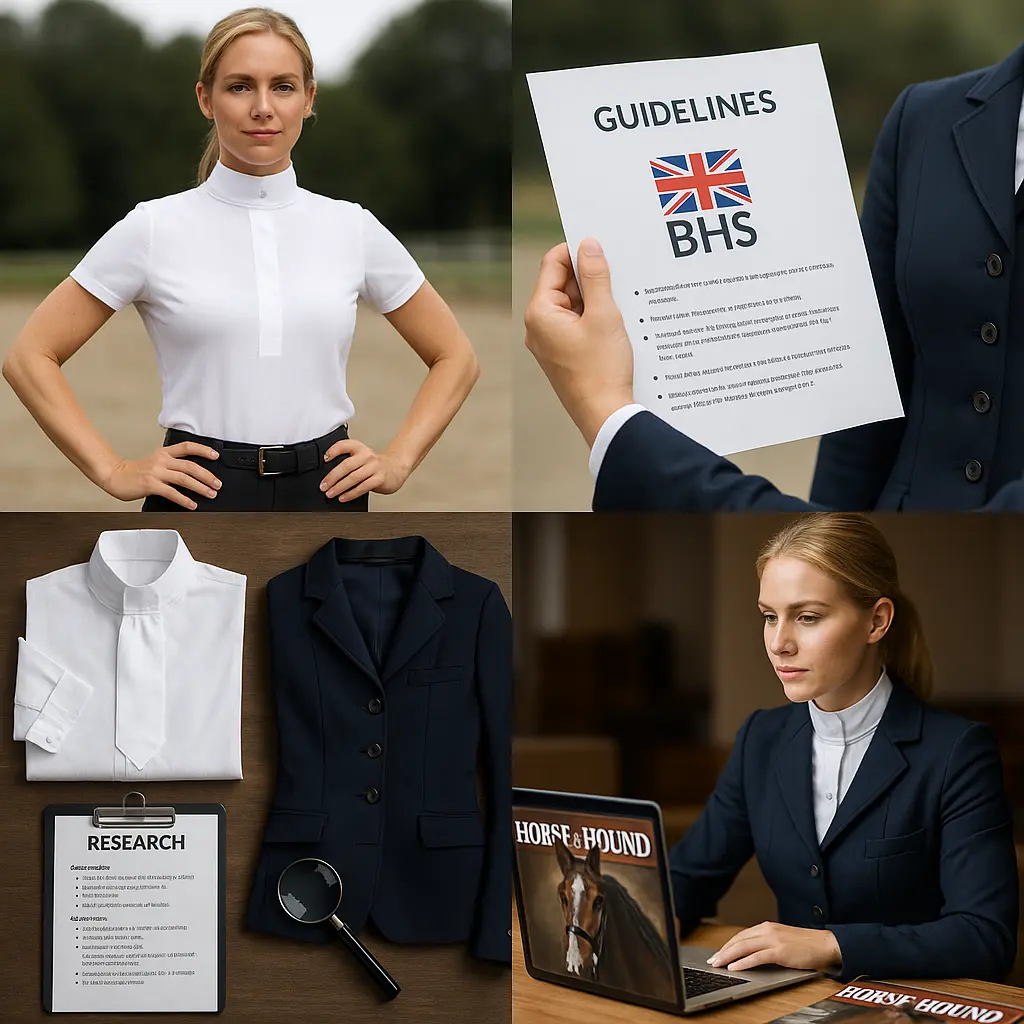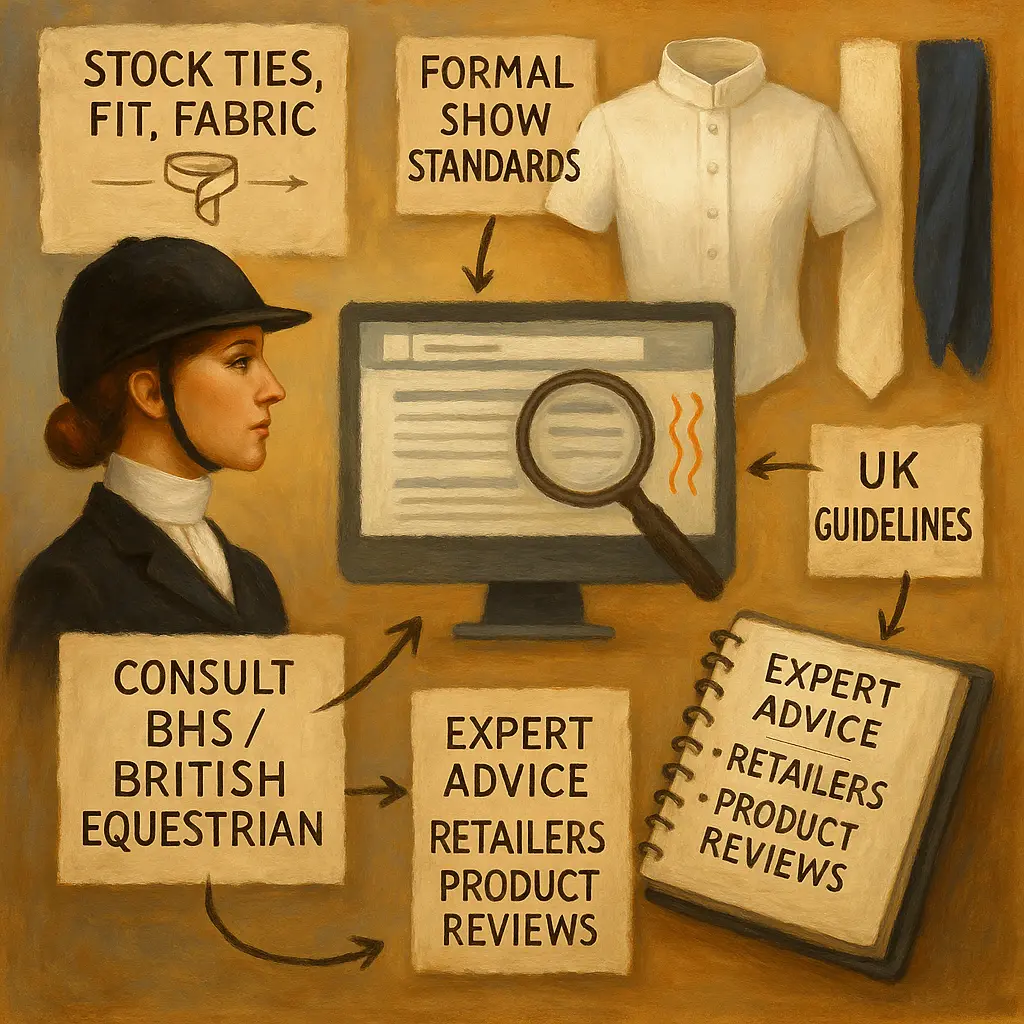
Your show shirt can make or break your ring look: the right fabric and fit keeps you cool, confident and competition-legal; the wrong one clings, shines and distracts. Here’s how to choose a stock or show shirt that flatters, performs and meets UK ring expectations.
Key takeaway: Pick a structured, opaque, breathable shirt that skims (not squeezes) your frame, is long enough to stay tucked, and has the correct collar for your tie or stock — then layer smart for the weather.
Show shirt vs stock shirt: what’s the difference?
A show shirt is any competition top worn under your jacket, while a stock shirt specifically has a stand-up collar designed for a stock tie. Both are used in the UK depending on discipline and class.
Many riders use “show shirt” as the catch-all: short- or long-sleeved, with either a ratcatcher/turn-down collar (for a tie) or a stand-up stock collar. A “stock shirt” usually features a higher, structured collar to support a traditional or ready-tied stock, often seen in dressage, eventing phases and showing. Choose the collar that matches your class requirements, and ensure your shirt presents clean lines beneath your jacket with no bulky seams or gathered fabric at the neckline.
For a polished head-to-toe ring look, pair your shirt with well-fitted breeches and smart footwear. Explore our curated women’s competition clothing, including shirts, jackets and accessories that coordinate cleanly for the show ring.
Which fabrics stop a show shirt clinging?
Choose structured, opaque fabrics such as stretch poplin, piqué or double-knit technical blends; avoid ultra-thin single-jersey that clings and shows sweat. Fabrics with a matte finish and a little body will skim instead of sticking.
Look for these fabric cues if you want a smooth, non-cling silhouette under your jacket:
- Woven stretch poplin or twill (cotton/polyamide with elastane) for a crisp front that resists cling and see-through.
- Piqué knits for subtle texture that lifts fabric off the skin and hides minor creases.
- Modern double-knits (sometimes called ponte) for more structure than lightweight jerseys, so the shirt drapes rather than suctioning.
- Technical microfibres with moisture-wicking and breathable panels placed underarms or down the spine, not across the bust or belly.
- Matte finishes and slightly heavier GSM for opacity — bright ring lights and sunshine are unforgiving on ultra-thin whites.
Construction matters too. A shirt with a woven front panel and stretch-knit back offers a crisp look where it counts with freedom to move. If you prefer full knit, choose one with panel seams that shape the torso rather than a simple tube that can ride and ripple. At Just Horse Riders, we recommend starting with reputable brands known for ring-ready tailoring — browse favourites from LeMieux and Shires in our competition collection.
Quick tip: Sheer white? A nude, seamless, non-shine underlayer instantly fixes transparency and reduces cling by creating a smooth base.
How should a stock/show shirt fit?
It should skim your body without pulling, allow full shoulder rotation, and be long enough to stay tucked when you reach forward to the reins. The collar should admit two fingers comfortably when fastened.
Use this quick fit checklist in the mirror and on the horse:
- Torso: Smooth over the bust and midsection with no horizontal pull lines across buttons. Princess seams or side panels should lie flat.
- Shoulders: You should be able to roll your shoulders, pat your horse’s neck and hold a two-point without the shirt pulling out of your waistband.
- Sleeves: Cuffs meet the wrist bone with a soft bend; no strangle at the elbow when you take a contact.
- Length: Aim for mid-hip or longer. Sit in your saddle, lift both hands as if over a fence — the hem should stay tucked.
- Collar: Fasten it. Two fingers should slide easily between collar and neck. If you wear a stock, check there’s space for the thickness of the stock fabric.
Body shape notes: Curvier riders often do best with shirts that include bust darts or multi-panel shaping; straighter frames may prefer subtle side panels to avoid bagginess. If you’re between sizes, choose the larger for clean drape and tailor the waist if needed. For younger riders, prioritise shoulder freedom and length; a slightly roomier torso is better than strain across the buttons — see our children’s breeches and jodhpurs for age-appropriate fits to pair with their shirts.
Complete the set with correctly fitted legwear and footwear for a streamlined look that helps shirts sit properly all day. Explore women’s breeches that complement your chosen shirt length, and ensure your boots fit snugly at the calf to avoid extra fabric bunching — shop our horse riding boots for show-smart options.

What collars and ties are correct in the UK ring?
Most UK rings accept either a stock tie with a stand-up collar or a tie with a ratcatcher/turn-down collar; always check your class and governing body’s schedule before show day.
As a rule of thumb, traditional or ready-tied stocks pair with stock-collar shirts in many dressage, eventing and showing contexts, while ties on ratcatcher collars are common in show jumping and some showing classes. White or cream collars remain the safest option under a jacket. If jackets are waived due to heat, conservative short-sleeved competition shirts are usually acceptable, but standards vary between organisers and disciplines — check in advance to avoid a last-minute scramble. Keep your collar immaculate and your tie or stock neatly pinned and centred for ring-ready turnout.
Quick tip: Pre-tie your stock or practice your knot the night before; secure with a discreet pin and do a couple of rising-trot “bounce tests” to confirm nothing shifts.
Don’t forget safety gear alignment with your outfit: smart, certified headwear is part of modern show turnout. Explore sleek, competition-suitable options in our riding helmets range.
How do you stay cool and avoid cling in summer?
Pick breathable, moisture-wicking shirts with mesh in heat-zones, and wear a thin, matte base layer or camisole to reduce sweat marks and static. Keep colours light under a jacket to minimise heat absorption.
On warm UK show days, your shirt needs to manage sweat without telegraphing it. A technical knit with targeted ventilation under the arms and along the spine works well; a woven or piqué front panel helps prevent cling across the bust. A nude microfibre camisole adds a glide layer so your outer shirt drapes. Pack a spare shirt if you have multiple classes — changing between classes is often the simplest route to freshness.
Between warm-up and ring time, protect your effort with shade and airflow. If you hack to the collecting ring, add visibility that doesn’t add heat — our lightweight hi-vis rider gear keeps you seen without bulk.
What should you wear under your jacket on cold or wet show days?
Use a thin wicking base layer under your non-cling show shirt, then add warmth and waterproofing between classes — keep the ring outfit sleek and unbulky. Remove outer layers before you’re called to avoid creasing the shirt.
In chilly or damp weather, layer strategically: a breathable base layer next to skin prevents that cold, clingy feel; your show shirt provides structure; your jacket finishes the look. Save insulated coats and waterproofs for waiting around or course-walking. A snug, supportive boot and well-fitted breeches also help your upper body layers sit flat throughout a long day — if you need to refresh your show staples, our riding boots and women’s breeches are competition favourites. Many riders rate performance base layers from trusted brands — browse technical tops in our LeMieux selection for training and warm-up comfort.
Care, sizing and when to replace
Wash technical shirts without fabric softener, air dry, and store on hangers; replace when fabric thins, goes sheer, or loses collar structure. Buy the size that fits now and tailor if needed — a too-tight shirt will always cling.
Care tips to cut static and extend life:
- Wash cool and inside-out; avoid softeners which can impair wicking and increase cling.
- Air dry on a hanger; tumble-drying can create static and shine.
- Lightly steam to refresh woven collars and plackets; avoid heavy ironing on technical knits.
- Use a quick anti-static spray on dry winter days, especially if layering knit over knit.
- Carry a microfibre cloth and lint roller in your ring bag to keep whites camera-ready.
When to replace: if white fabric has turned translucent, the collar no longer stands cleanly, or seams twist after washing, it’s time. If you’re building a show wardrobe on a budget, keep an eye on our rotating bargains in The Secret Tack Room clearance — you’ll often find last-season colours and sizes at excellent prices. And if you’re refreshing core pieces for the season, our buyers hand-pick ring-ready lines from Shires that balance structure with comfort for UK conditions.
FAQs
Is white or cream better for stock/show shirts?
Both are commonly used; white reads crisp and formal, while cream can be softer against some jackets and kinder under bright sun. Match your shirt to your breeches and jacket for a cohesive tone, and keep it opaque with a nude, seamless base layer.
Long sleeve or short sleeve for competition?
Either can work depending on discipline, weather and local norms. Long sleeves create a sleek line under a jacket and hide sweat patches; short sleeves can be cooler if jackets are waived. Check your class guidelines before the day.
What should I wear under a white show shirt so it doesn’t show?
A matte, seamless nude camisole or base layer that matches your skin tone is the least visible. Avoid white (it often shows more) and shiny fabrics that catch the light under thin shirts.
Are ready-tied stocks acceptable?
Ready-tied stocks are widely used for convenience and a consistent knot. As with any turnout detail, ensure it’s neat, centred and appropriate for your class.
How long should a show shirt be to stay tucked?
Mid-hip or longer works for most riders. Test by sitting in your saddle and reaching forward to rein length — if the hem pops out or the front pulls, you need more length or a different cut.
Can I ride without a jacket in hot weather?
Many UK events will waive jackets in hot conditions, in which case a tidy, conservative competition shirt is usually worn. Always check your show’s specific announcement and discipline expectations on the day.
What else should I pair with my shirt for a polished ring look?
Well-fitted breeches, clean tall boots or gaiters, and a correctly fitted helmet complete the picture. Browse our women’s breeches, show boots and helmets to finish your outfit with confidence.
At Just Horse Riders, we’re here to help you feel ring-ready and comfortable from warm-up to prizegiving. If you’d like tailored suggestions for your discipline and budget, start with our latest picks in women’s competition clothing and message our team — we’ll match you to fabrics and fits that perform in UK conditions.