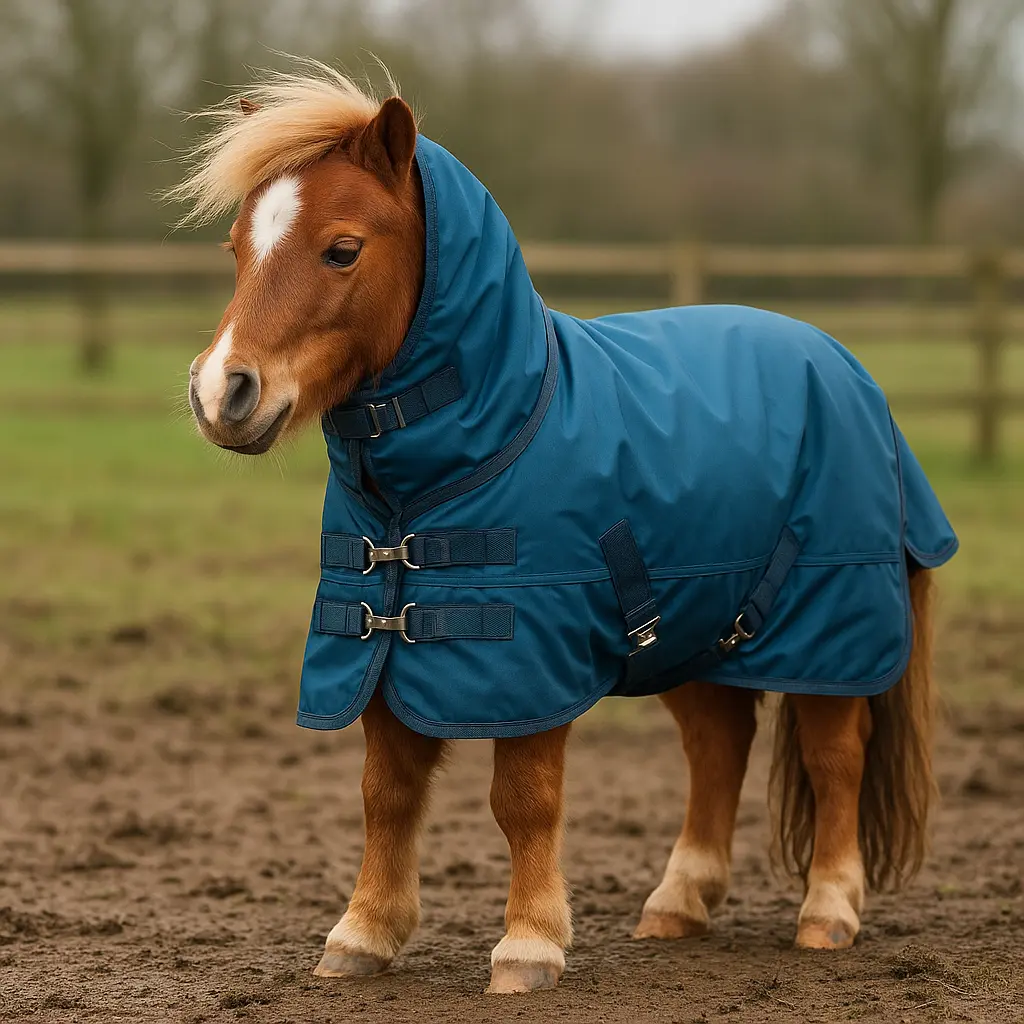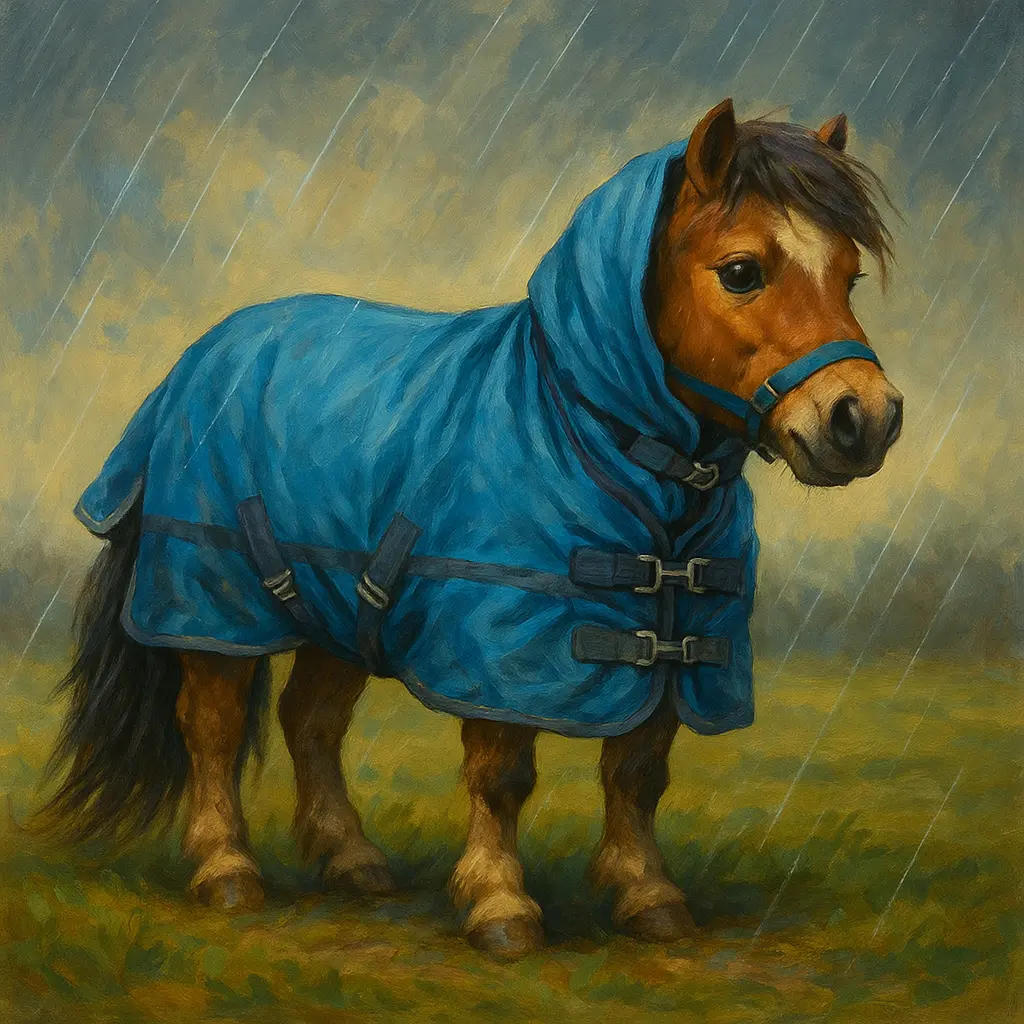
Short backs, deep girths and busy brains — small ponies are brilliant, but they can be tricky to rug well. The right turnout keeps them dry, comfy and free to move; the wrong one rubs shoulders, slips and leaks.
Key takeaway: Small ponies need pony-specific turnout rugs with the right weight (0–300g across UK seasons), robust fabric (600D–1200D ripstop) and secure, adjustable fastenings to prevent rubs and slipping.
Why pony‑specific turnout rugs matter
Pony‑specific turnout rugs use smaller necklines and shorter drops so they don’t hang too deep, pull at the shoulders or restrict movement. A “downsized” horse rug often ends up too long and too low on a pony’s shoulder, which is a recipe for rubs and poor freedom of movement.
Ponies aren’t just shorter horses — their proportions are different. Native types often have wider chests, thicker necks and rounder barrels relative to length. Purpose‑designed pony rugs account for that with:
- Shorter side drop to avoid drowning the legs and tripping risk
- Narrower, lower neckline that sits cleanly in front of the wither
- More accurate chest angle so the rug closes flat without gaping
- Shoulder pleats/gussets that open as your pony walks or grazes
At Just Horse Riders, we recommend choosing from dedicated pony ranges from trusted brands such as WeatherBeeta and Shires rather than trying to “make do” with a horse cut. The better the patterning, the less you’ll battle rubs, slips and leaks.
What weight turnout rug does a small pony need?
In UK winters, most ponies are comfortable in 200–300g turnout rugs once temperatures drop below about 5°C. Lighter 0–100g options suit mild, wet spells when you want waterproofing without extra warmth.
Think in layers and local weather, not dates on the calendar. Small native ponies often run warm thanks to dense coats and efficient metabolisms, while clipped, elderly or underweight ponies may need more help. Use this simple guide:
- 0g (no fill): Mild but wet or windy days; keeps rain off without overheating
- 100–150g (light/transition): Cool, unsettled autumn/spring; good “in-between” option
- 200–250g (medium): Cold snaps and typical UK winter days around 0–5°C
- 300g+ (warmer medium): Prolonged cold, clipped or older ponies that feel the chill
Browse pony‑friendly options in our turnout rugs collection. For stabled ponies overnight, you can pair a turnout by day with a dedicated stable rug to keep things dry and breathable around the clock.
Quick tip: Detachable necks add flexibility. Pop the neck on in driving rain or wind; take it off to prevent overheating when the sun appears an hour later — very British.
How to measure and fit a small pony rug
Measure from the centre of the chest to the point of the buttock (level with the tail), then choose a pony‑specific size with a proportionally shorter drop. A correct fit sits neatly in front of the wither, lies flat across the shoulder and covers the barrel without swallowing little legs.
Use this fit checklist when you try on:
- Neck and chest: Buckles should close without straining; no gaping at the front. T‑bar or buckle/clip systems beat Velcro for long‑term hold.
- Shoulders: Shoulder pleats/gussets should sit at the point of shoulder and open in walk. No drag marks or tightness over the scapula.
- Wither: The rug should clear the wither without pressure; look for wither relief shaping or light padding for comfort.
- Depth: The drop should finish roughly at the elbow and stifle — not mid‑cannon. Too deep = rubs and tripping risk.
- Girth area: Crossed surcingles adjusted to a hand’s breadth under the belly; they should not hang low or dig in.
- Leg/tail straps: Secure but not tight. A full‑width tail flap protects from wind and rain; it mustn’t twist or catch.
Pro tip: Smooth, wicking linings (often branded as “Dermo‑Care” or similar) reduce friction and keep coats sleek — a big win on compact frames where small rubs show fast. After a wet spell, check the coat under the shoulders and along the mane daily and groom through with a soft brush; our grooming range has the tools to make it quick.
Best fabrics and denier for durable pony turnouts
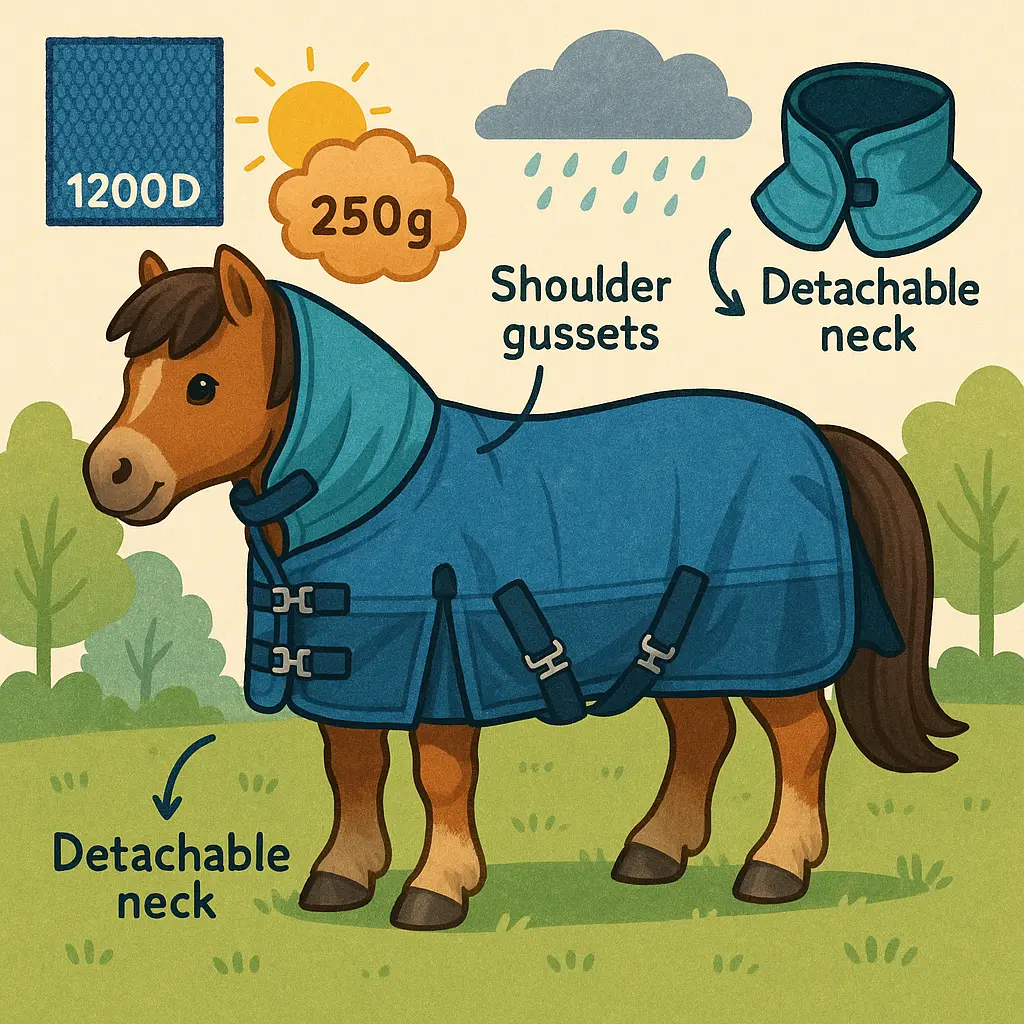
Choose 1200D ripstop polyester for herd life and “rug‑wrecker” ponies, and 600D for lighter use, solo turnout or careful companions. Ripstop weaves add cross‑hatch reinforcement that helps prevent small nicks from turning into big rips.
What “D” means: Denier measures yarn thickness — higher D = tougher outer. Common options include:
- 600D ripstop: Light to medium strength for day turnout, milder weather or careful ponies
- 1200D–1680D: Heavy‑duty outers that shrug off play, hedges and post‑and‑rail scuffles
Combine the right outer with a waterproof, breathable membrane and taped seams for genuine all‑weather performance. Inside, silky anti‑rub or wicking linings help shed hair and moisture while keeping the coat smooth.
Quick tip: If your pony lives in a mixed herd, durability pays for itself. A tough 1200D rug usually lasts longer, looks smarter and is cheaper over the season than replacing a budget option mid‑winter.
Key features that keep small ponies comfy
Secure T‑bar chest fastenings, adjustable crossed surcingles and well‑placed shoulder pleats keep a pony turnout stable and rub‑free. A full‑width tail flap and wicking lining finish the job in wet, windy UK fields.
Look for:
- Chest closures: Metal T‑bars or quick‑clips with multi‑position adjustment; avoid relying on Velcro alone
- Shoulder pleats/gussets: Essential for free movement on compact frames
- Surcingles and leg straps: Adjustable, anti‑slip hardware; check weekly for wear
- Neck options: Detachable necks for changeable weather; fixed combos for full‑time protection
- Lining: Smooth, moisture‑wicking fabric to minimise rubs and help coats dry
- Tail flap: Deep or umbrella‑style flap for wind‑driven rain without restricting the dock
At Just Horse Riders, we favour brands with well‑cut pony patterns and proven hardware. Explore pony favourites across Shires and WeatherBeeta to compare closure systems and neck choices.
A simple seasonal rug wardrobe for small ponies
Build a three‑rug system: a 0g for mild wet spells, a 150–250g for cool transitional weather, and a 200–300g for colder snaps. Add a fly rug for summer midges and sun, and a stable rug if your pony comes in at night.
Here’s a practical UK‑ready setup:
- Spring/autumn wet: 0g waterproof turnout to block rain and wind without extra heat
- Cool spells: 150–200g for those 8–12°C grey days with showers
- Winter: 200–300g once it’s consistently below ~5°C, adjusted for coat, clip and age
- Summer: A breathable fly rug for sweet itch types or strong UV days
- Stabled nights: A cosy, breathable stable rug sized to your pony’s proportions
Quick tip: UK welfare guidance from bodies like the British Horse Society (BHS) and veterinary groups emphasises rugging the individual, not the calendar. Touch under your pony’s rug behind the shoulder: warm and dry is perfect; hot or clammy means drop a weight; cool or shivering means add warmth or a neck.
Care, cleaning and safety checks
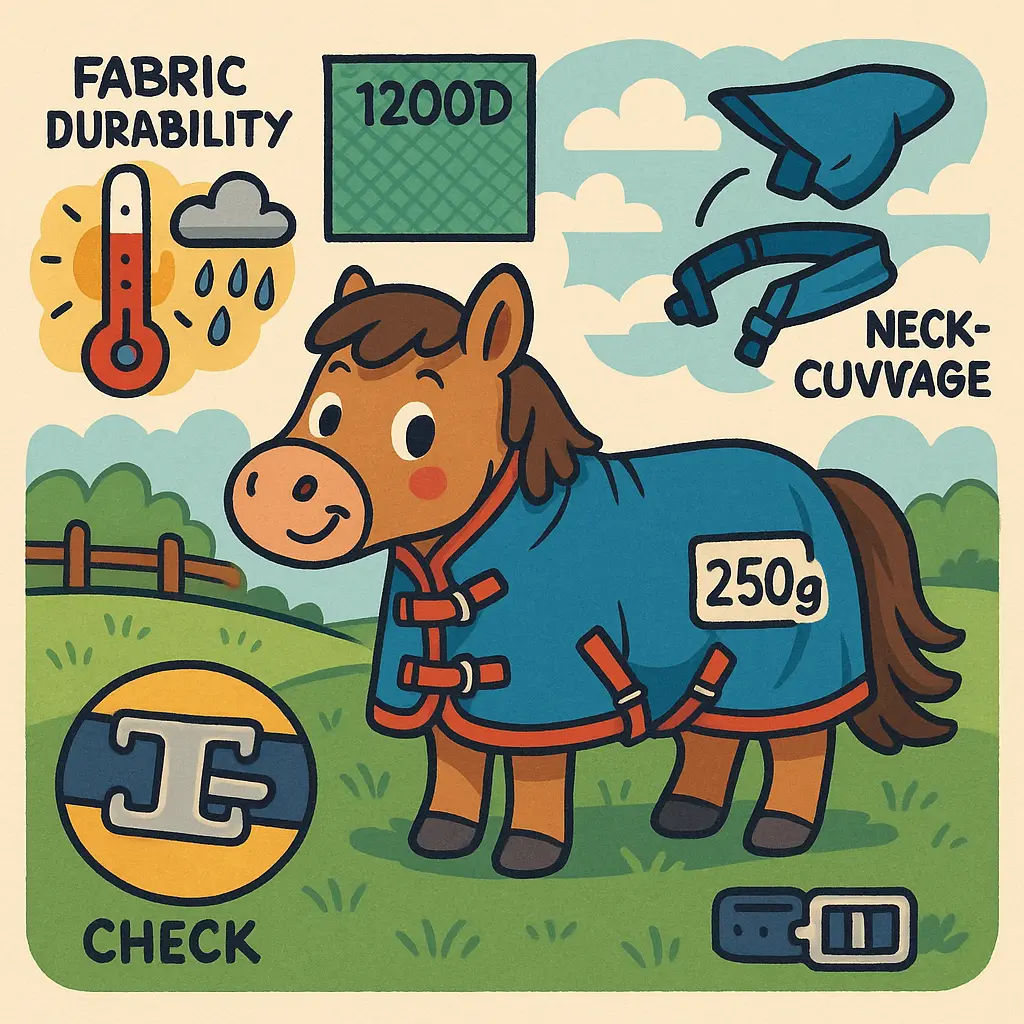
Wash turnouts with technical cleaners, reproof when water stops beading, and check straps, stitching and seams weekly. Clean, reproofed fabric sheds rain better and keeps your pony drier for longer.
Make it routine:
- After heavy rain: Shake off, brush mud once dry, and hang to air thoroughly
- Washing: Use specialist rug wash; avoid fabric softeners which clog breathability
- Reproofing: When water stops beading, reproof to restore the barrier
- Hardware check: Inspect T‑bars, clips, surcingle webbing and leg straps weekly
- Storage: Bone‑dry, folded, and labelled by weight so you can grab and go
Pro tip: Keep a spare turnout on hand so you’re never forced to put a damp rug back on. Our Secret Tack Room clearance often has last‑chance sizes ideal as backups.
If your pony is a serial rug‑tester, upgrade to a higher denier outer, double‑stitching and robust hardware. A well‑fitting, tough rug is safer and more economical than frequent mends.
FAQs
How do I measure a small pony for a turnout rug?
Stand your pony square and measure from the centre of the chest to the point of the buttock. Use that measurement to select a pony‑specific rug size with a shorter drop and smaller neckline. When you try on, ensure flat contact at the chest, free shoulder movement and a drop that reaches the elbow/stifle without hanging lower.
Should small native ponies be rugged at all?
Many native types cope well without rugs in mild, dry conditions thanks to dense coats. Rug when it’s persistently wet or windy, if your pony is clipped, elderly, underweight, or you need to keep a coat dry for work. UK welfare advice stresses assessing the individual: warm and dry under the rug is right; sweaty or shivery means adjust.
Is 200g too heavy for autumn?
On mild autumn days a 0–100g is usually plenty; reserve 200g for colder snaps or leaner, clipped or older ponies. Start light, then step up if you feel coolness behind the shoulder or see your pony getting tucked up in wind and rain.
Detachable neck or fixed combo for a small pony?
Detachable necks offer flexibility in changeable weather and help prevent overheating. Fixed neck combos give full‑time coverage for ponies out 24/7 on exposed yards. For most UK yards, a detachable neck on a well‑cut pony rug is the most versatile choice.
How do I stop shoulder rubs on a small pony?
Pick a pony‑pattern rug with a smaller neckline, correct chest angle and shoulder pleats. Check the drop isn’t too deep, adjust surcingles so the rug can’t shift, and choose smooth, wicking linings. Groom daily under the shoulders to lift grit and loose hair that can cause friction.
What denier should I choose for a playful herd pony?
Go 1200D ripstop (or higher) for durability in group turnout and with “rug‑wreckers.” 600D ripstop suits careful ponies, lighter use or solo turnout. Ripstop weaves help prevent small snags from turning into large tears.
Can I use a horse‑sized rug on my pony if the length measures up?
It’s rarely a good idea. Even if the length seems right, horse rugs are deeper and broader through the shoulder and neckline, which leads to slipping and rubs on small frames. Choose from dedicated pony turnout rugs for safe, comfortable coverage tailored to pony proportions.