Short legs or narrow calves shouldn’t mean compromising on fit or comfort. With the right measurements, drop allowance, and brand-specific sizing, you can get tall riding boots that sit perfectly at the back of your knee and hug your calf securely.
Key takeaway: For a close, comfortable fit, measure seated from floor to knee crease and at the widest calf in your usual riding gear, then add 1–1.5 inches (2.5–4cm) for leather drop before choosing your size.
The right measurements for a perfect tall boot fit
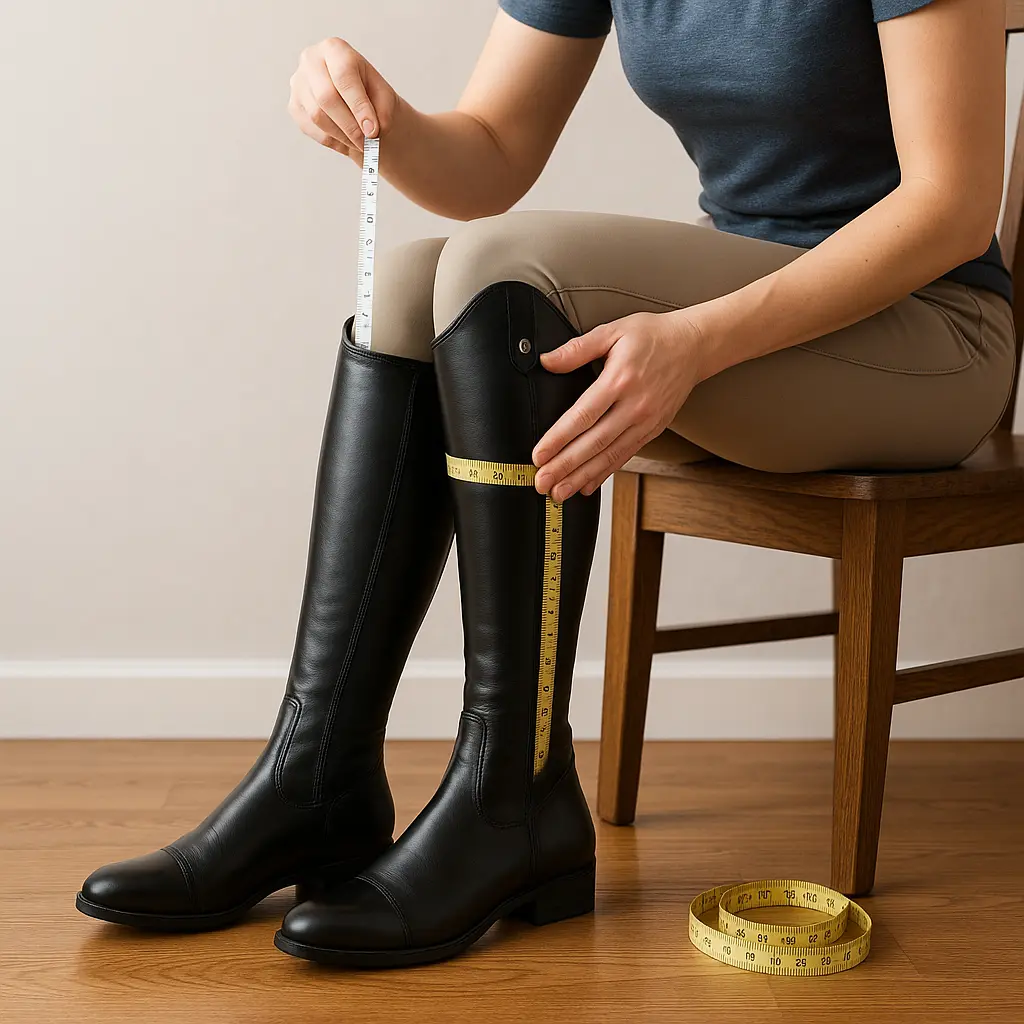
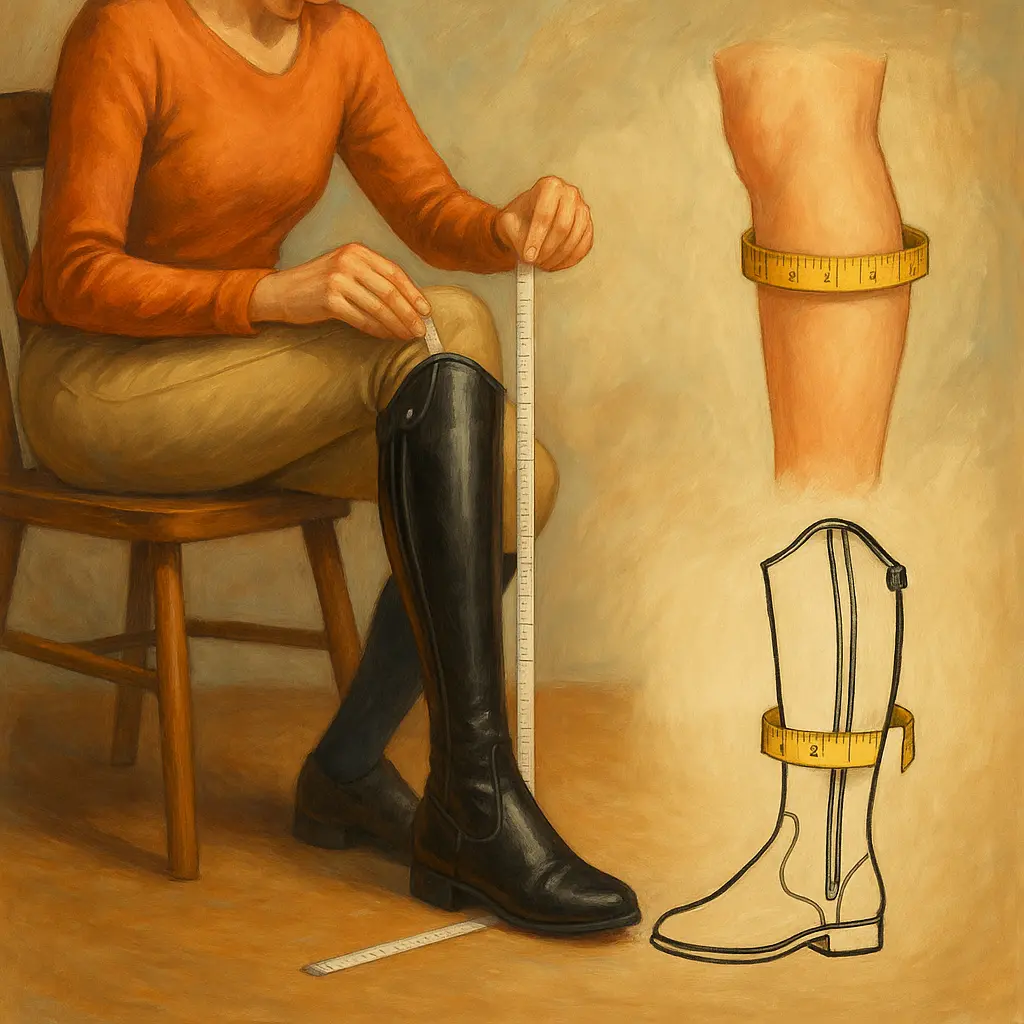
Measure your boot height from the floor to the crease behind your knee while seated at 90°, and your calf at its widest point with a snug tape, wearing your normal riding breeches and socks.
Set yourself up on a straight-backed chair, feet flat, knees bent at 90°, back upright. Wearing the breeches/tights and socks you typically ride in (not jeans or bare legs), take two key measurements:
- Height: From the floor to the back of your knee (the knee crease). This is your knee bend height.
- Calf: Around the widest part of your calf, keeping the tape snug but not tight.
Shires Equestrian’s UK fitting guidance aligns with this method:
"Sit on a chair with your feet flat on the ground and your legs at a 90-degree angle. Then, using a measuring tape, measure from the floor to the back of the knee." — Shires Equestrian Fitting Guide
Record in centimetres and UK foot sizes (for example: Calf: 33cm, Height: 43cm, Foot: UK 5), and measure both calves, using the larger one. For rear-zip boots, pick a calf size close to or slightly above your measurement to avoid zips straining. If you’re shopping, you’ll find UK size charts on our tall riding boots collection, and it helps to measure while wearing your go-to breeches — browse breathable, supportive options in our women’s jodhpurs and breeches range.
Pro tip: Ask a helper to run the tape along the curve of your leg when measuring height — it gives a precise line from knee to floor that tall boots will follow.
How much height to add for leather drop
Add 1–1.5 inches (2.5–4cm) to your knee crease height to allow for leather drop; field boots typically drop 1.5–2 inches and dress boots about 0.75–1 inch, depending on leather stiffness.
All tall leather boots “drop” as they break in, settling down from the back of the knee to a finished height that shouldn’t cut in. Ariat’s UK guidance is clear:
"Wear breeches/tights and socks that are similar to what you ride in... measure up to the bend in your knee. If sizing for Ariat boots, add 1 inch to this number for drop allowance." — Ariat International
Shorter legs often feel tightness initially behind the knee; that’s expected if you’ve added the correct drop. Field boots, with softer leather and laces for flexion, drop more (1.5–2 inches), which helps them settle off the crease. Dress boots, built stiffer for a straighter leg, drop less (0.75–1 inch). Aim for the boot back to sit at the high back of the knee on day one, without digging sharply, knowing it will ease by up to 2 inches depending on style and leather.
Quick tip: If you’re between heights, go taller — boots that start a touch high will soften and drop into a custom fit.
Choosing between field and dressage boots on short or narrow legs
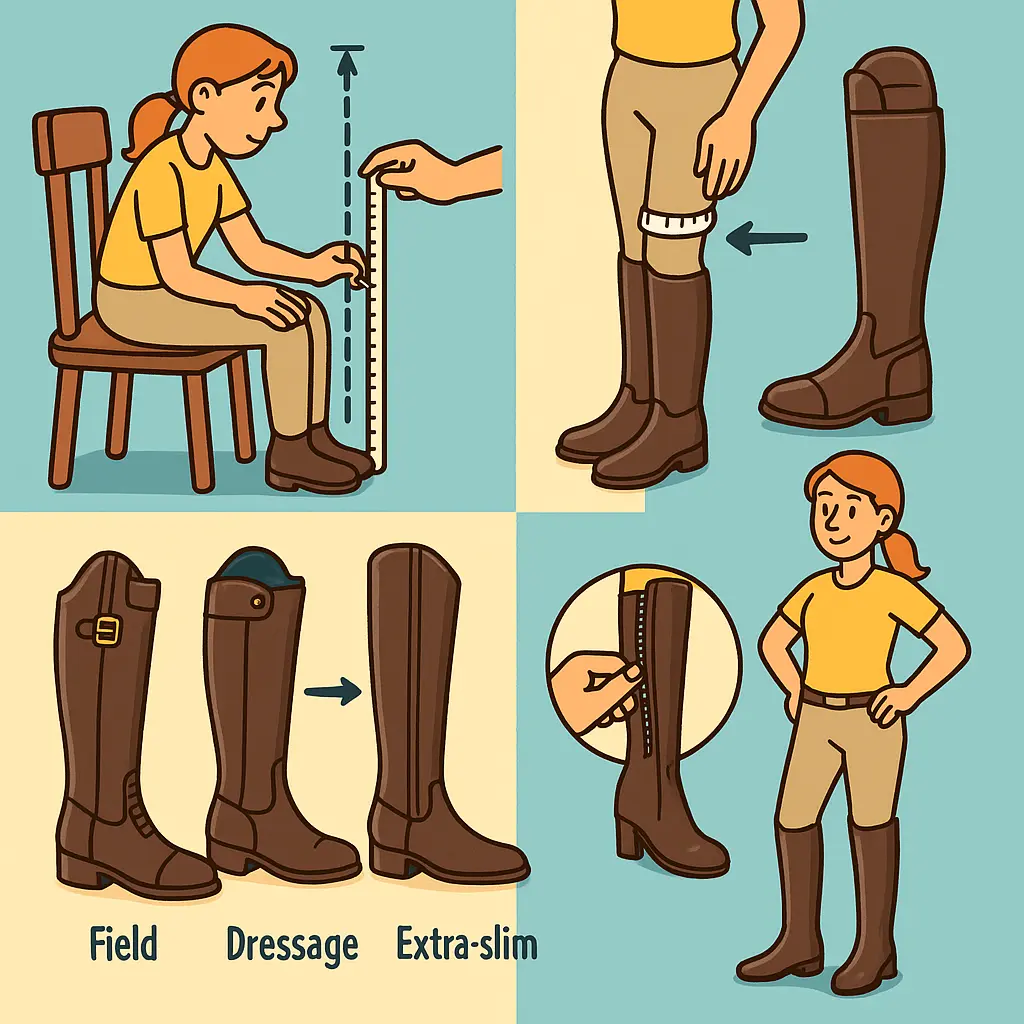
Field boots suit short legs by dropping more for movement and yard-to-field mileage, while dress boots offer a minimal drop and a straighter, supportive leg for arena and dressage work.
If you jump, hack, or spend time in the elements, field boots with their flexible ankle and 1.5–2 inch drop feel forgiving on shorter legs and adapt quickly in the UK’s wet autumn/winter. For indoor schooling and precise lower-leg stability, dressage boots in stiffer leather drop less and hold shape, avoiding excess slouching on narrow calves. For narrow legs, look for extra-slim calf options and rear zips for a very close wrap without gaping. Where legs are both short and slim, some riders consider custom heights; many brands now offer multiple height/calf combinations to dial in a perfect back-of-knee finish without cutting.
At Just Horse Riders, we recommend starting with width first (extra slim, slim, regular, full, wide), then choosing height (short, regular, tall) according to your measured knee height plus drop allowance. You’ll find a wide range of options in our curated tall riding boots selection.
Brand size charts: use them, not guesswork
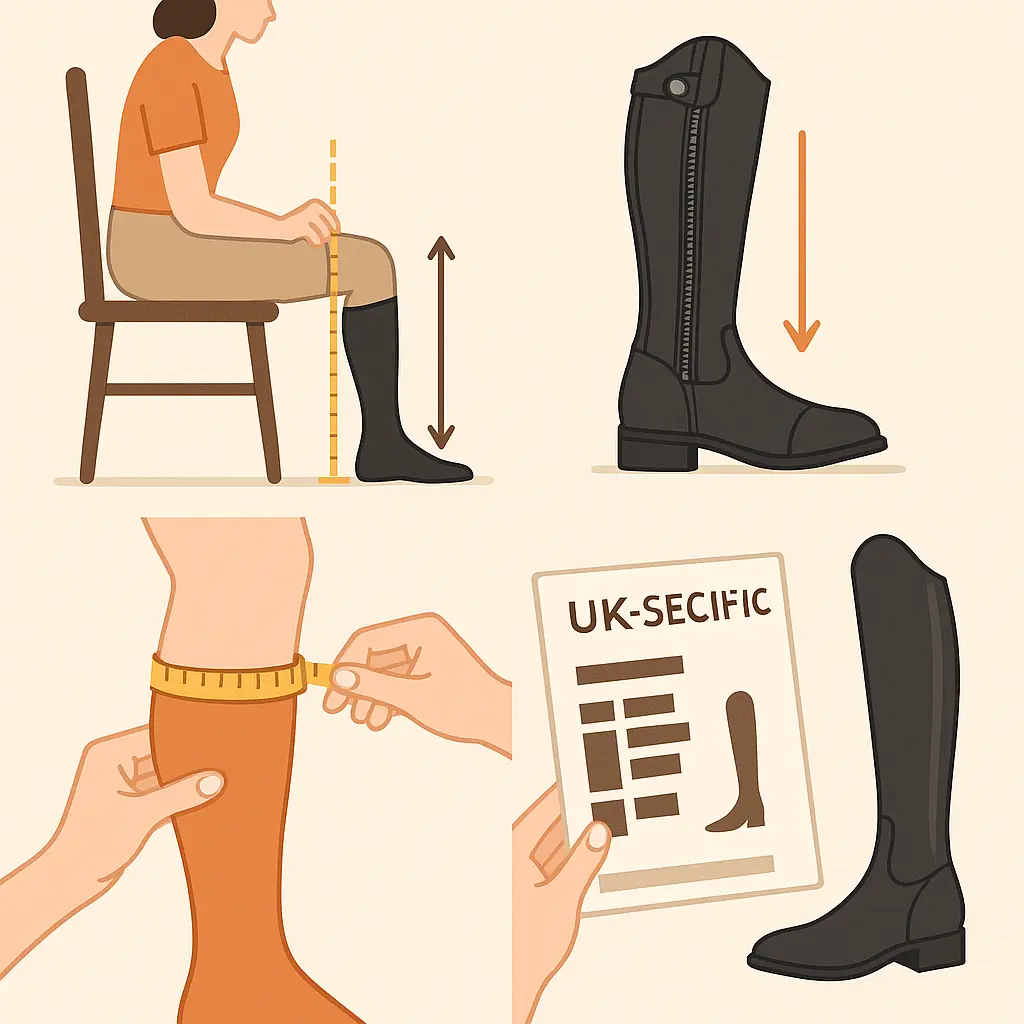
Each boot brand uses its own calf and height chart, so always match your centimetre measurements and UK shoe size to that specific brand’s guide.
Don’t assume “regular” will be the same from brand to brand. Shires, Ariat, and others publish UK-specific charts — follow them exactly. For Ariat tall boots, add 1 inch to your knee bend height before reading the chart; for field versus dress boots, remember the different drop ranges above. If your measurements land between two sizes, choose the smaller calf and taller height for a closer fit that will soften and drop with wear. For rear-zip styles, avoid choosing a calf smaller than your actual measurement to protect the zip in damp UK yard conditions.
Revisit the expert guidance as you compare charts:
- Shires Equestrian: follow the seated 90° method and measure to the knee crease (guide here).
- Ariat International: wear riding gear and add 1 inch to knee height for drop (full instructions).
- Equus: allow an extra inch or two for break-in, as leather stretches (expert tip).
Measure in the clothing you ride in and compare while wearing it. If you need to update your kit, our women’s breeches collection and children’s jodhpurs & breeches include supportive, non-bulky fabrics that won’t skew measurements.
How to break in tall leather boots comfortably
Break in new tall boots by wearing them indoors for short sessions before riding, allowing the leather to soften and drop 1–2 inches without rubbing.
Plan a gentle break-in over several days:
- Wear the boots at home for 20–40 minutes at a time with your regular breeches and socks.
- Use a thin, cushioned insole if the foot feels roomy; thicker socks can help initially on narrow feet.
- Avoid soaking or over-oiling from day one; let the leather mould naturally to your leg shape.
- Start with light yard jobs before your first ride; flex your ankles and walk stairs to ease the drop.
As Equus puts it:
"Allow an extra inch or two of height for the boots to drop and break in, because leather does stretch." — Equus
In the UK’s damp months, keep new leather out of deep mud and rain during the first few wears to avoid waterlogging and stiff salt lines. Once they’re settled, maintain them with gentle cleaning and conditioning — you’ll minimise rubs and keep zips running smoothly.
Quick tip: If the back of the knee feels sharp on day one, a temporary heel lift can reduce pressure until the boot drops.
Common fit problems on short or narrow legs—and fixes
If your boots gape at the calf or bag at the ankle, switch to a narrower calf and ensure you allowed for the correct leather drop and break-in time.
Here’s how to troubleshoot quickly:
- Gaping at the calf: Choose an extra-slim or slim calf. Re-check your measurement in riding breeches. Rear zips can help the boot hug in without straining.
- Cutting behind the knee: Confirm you added 1–1.5 inches of drop. Field boots drop more (1.5–2 inches), which can help short legs settle comfortably.
- Bagging at the ankle (“drop puddle”): Expected in the first days, but excessive bagging suggests too much height or very soft leather; consider a slightly stiffer model or a shorter height next time.
- Zip strain or stuck zip: Never force a zip over a calf smaller than the chart suggests. Select a calf size equal to or just above your measured cm, especially in damp conditions.
- Foot feels roomy: Add a cushioned insole or wear a slightly thicker sock initially; many narrow-calf riders also benefit from a snug footbed.
- One leg tighter than the other: Normal — measure both and size to the larger calf; the other will shape during break-in.
Pro tip: The boot back should sit at the high back of your knee without digging; discomfort that eases after a few wears is typical as leather drops into place.
What to wear and when to shop in the UK
Measure and try on boots in your usual breeches and socks, and buy ahead of the UK’s wet autumn/winter so you can break them in before long, muddy yard days.
Base layers and breeches influence how snugly a tall boot fits. Slim, seam-free riding tights or close-contact breeches offer the most consistent readings. If you update your kit, take new measurements — even a slightly thicker winter sock can change your calf reading by a few millimetres.
Consider your seasonal routine too. For UK riders hacking after work in shorter daylight, rear-zip boots speed up changes at the yard, and good visibility is essential. Team your boots with effective rider hi-vis for dark lanes and dreich evenings, and don’t forget head protection that suits your discipline when you head to schooling or competitions — explore our BHS-standard riding helmets.
Families sizing up fast-growing riders should re-measure each season. Our children’s breeches include stretchy options that sit smoothly under long boots and half chaps.
Recommended gear and help from Just Horse Riders
Choose tall boots with extra-slim calf options, reliable rear zips, and UK-specific size charts, and we’ll help you match your measurements to the right model.
At Just Horse Riders, our customers with short or narrow legs usually succeed fastest when they:
- Pick boots offering multiple calf/height combinations (extra slim to wide; short to tall).
- Allow for brand-specific drop (for example, +1 inch on Ariat charts) and choose the taller option if between heights.
- Break in at home first and keep zips clean and conditioned.
Start your search in our horse riding boots collection, explore UK-favourite brands like Shires, and, if you’re competing, pair your tall boots with polished showwear from our women’s competition clothing. On a budget? Check the latest treasures in our Secret Tack Room clearance — perfect for snagging premium fit options at sharper prices.
Need sizing advice? Send us your measurements (Calf cm, Height cm, Foot UK) and intended use (jumping, hacking, dressage). We’ll recommend the best width/height pairing and share tips to get that made-to-measure feel without the custom price tag.
Conclusion: Get the fit right the first time
Measure seated at 90°, add the correct drop, and use the brand’s UK size chart — that’s the formula for tall boots that love short or narrow legs. Prioritise width first, then height; choose taller/tighter if between sizes; and break in gently before big winter rides. With that, your boots will sit elegantly at the back of the knee, secure and supportive all season.
FAQs
How much extra height should I add for short legs to avoid cutting behind the knee?
Add 1–1.5 inches (2.5–4cm) to your floor-to-knee-crease measurement to allow for leather drop. Field boots usually drop 1.5–2 inches, while dress boots drop about 0.75–1 inch depending on leather stiffness.
Do I measure sitting or standing for tall boots?
Measure seated on a straight-backed chair, feet flat, knees at 90° for both height and calf. If a helper is available, you can also confirm height standing with a slight knee bend, following the leg’s curve to the floor.
What if my calves are very narrow — will standard boots fit?
Yes. Choose extra-slim or slim calf options on the brand chart and measure in your normal riding breeches and socks for accuracy. Rear-zip styles often give the closest wrap on narrow calves.
Why don’t my boots fit despite ordering my usual UK foot size?
Because calf and height dictate the fit of tall boots more than shoe size. Each brand’s chart is unique; match your centimetre calf and height to that brand rather than assuming a generic “regular.”
Should I size up or down if I’m between calf or height sizes?
Choose the smaller calf and taller height for a close, contoured fit that softens and drops with wear. For rear zips, keep the calf at or just above your measurement to avoid zip stress.
How do I break in tall boots without discomfort on narrow legs?
Wear them indoors for short sessions before riding, use thin cushioned insoles or slightly thicker socks if the foot feels roomy, and consider a temporary heel lift to reduce knee-back pressure until they drop.
Can one leg be narrower or shorter than the other — and how do I size for that?
Yes, it’s common. Measure both calves and use the larger one for sizing. Leather will adapt to the smaller leg during break-in; lace or rear-zip models can fine-tune the wrap.