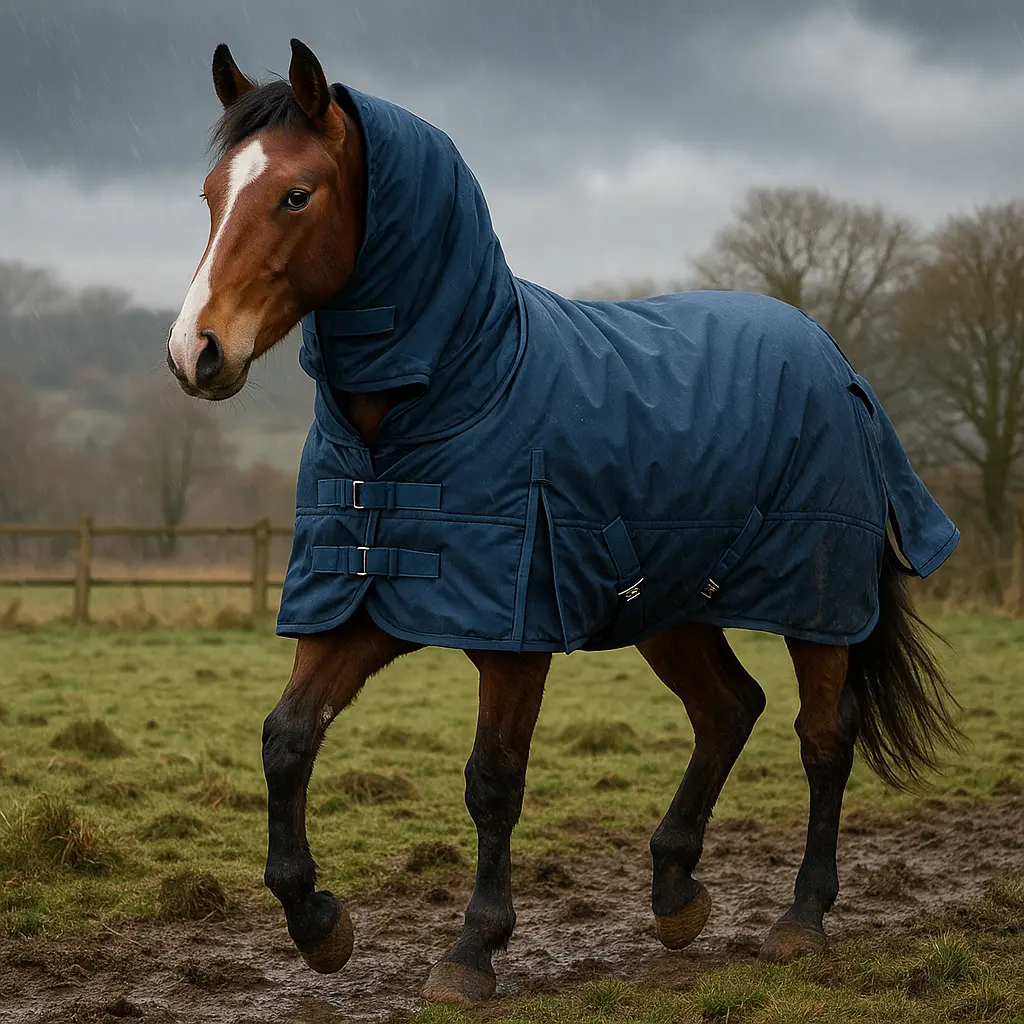
Your youngster can outplay, out-roll and out-rain-dance most adult horses — so their turnout rug has to be tougher, safer and smarter. Get this right and you’ll keep them warm, dry and rub-free without overheating or blowing the rug budget.
Key takeaway: For most UK youngsters, choose a 1200D+ waterproof turnout with a detachable neck and liner system; pick weight by weather (0–100g for wet/mild, 150–250g for spring/autumn swings, 300g+ for freezing, wet, windy snaps), avoid layering stable rugs under turnout, and check fit weekly.
Should you rug your youngster?
Most healthy, unclipped youngsters in the UK don’t need a rug until temperatures drop to around 5–10°C, but cold, wet and windy weather can justify rugging at higher temperatures. Always decide based on the horse’s coat, condition, clipping status, and field shelter.
The British Horse Society (BHS) emphasises that many young, healthy horses cope well without rugs if they have shelter and forage. Their winter coat contains natural oils for waterproofing and insulation, and movement generates warmth. That said, the UK’s hallmark wind-and-wet combination strips heat fast; an unclipped youngster in an exposed, muddy field may need protection even at 8–10°C.
“Horses naturally grow a thick winter coat to keep them warm in the winter months… It isn't always necessary to rug all horses. Many young and healthy horses cope well without rugs so it's important to bear in mind that the decision should be made on an individual basis.” — British Horse Society
At Just Horse Riders, we recommend you assess three things daily before you reach for a rug: weather (wind and rain matter as much as temperature), shelter (hedges, trees, field shelters) and your youngster’s coat/condition. If you do decide to rug, browse our carefully selected turnout rugs designed for British weather.
What turnout rug weight should you use?
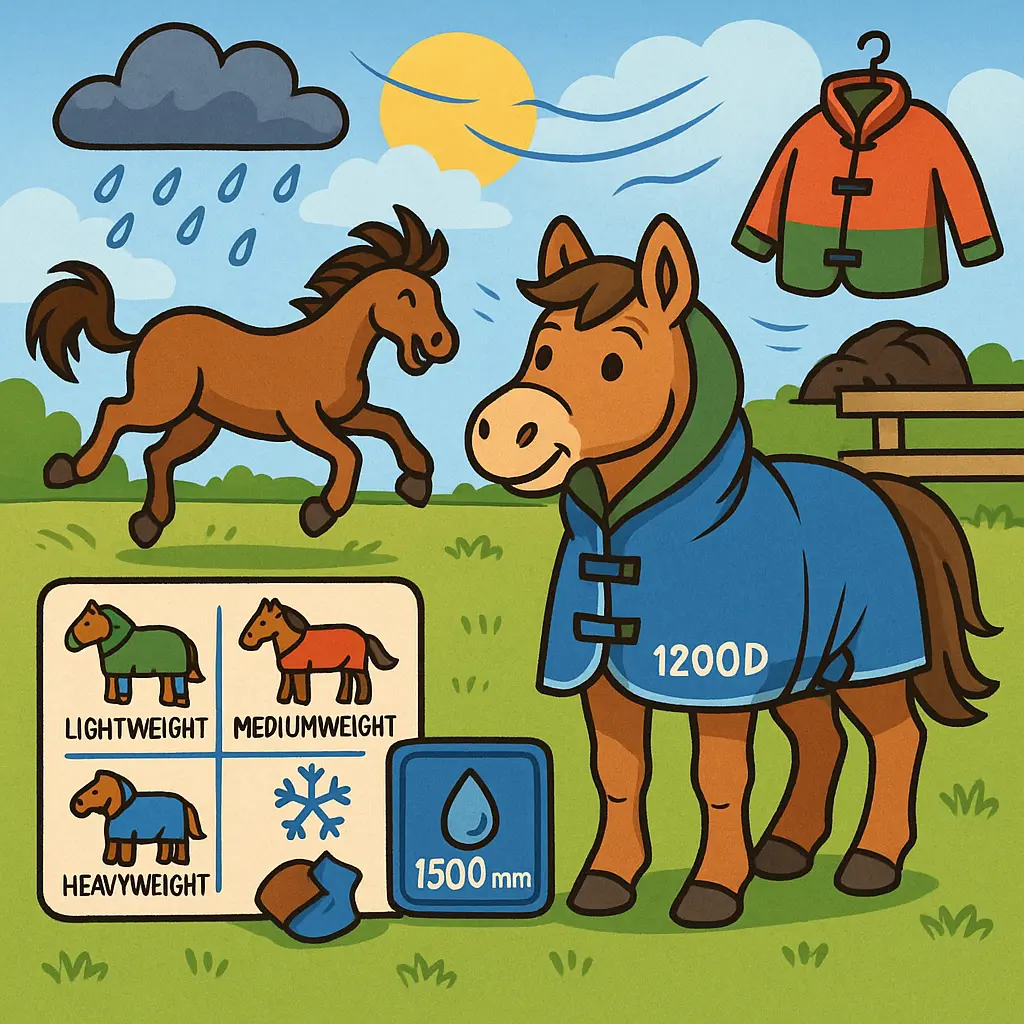
Use lightweight rugs (0–100g) for wet but mild spells, mediumweight (150–250g) for UK spring/autumn transitions, and heavyweight (300g+) for very cold or snowy conditions. Avoid thick fills in inappropriate weather to prevent overheating.
Weight is the fill inside the rug, not the outer fabric; the fill traps warm air. As a rule of thumb for the UK:
- No-fill/50–100g: Rain sheets and light warmth for wet days above ~8–10°C, or for unclipped, good-doing youngsters who run hot.
- 150–250g: The sweet spot for spring and autumn when nights are chilly and days can be blustery; ideal for clipped or fine-coated youngsters.
- 300g+: Deep winter, especially when it’s cold, wet and windy, or for youngsters who have been clipped and are kept in exposed fields.
“If a thick fill rug is used in inappropriate conditions, it will trap a lot of heat… The horse will be continuously trying to cool down which can place a lot of stress on the horse.” — British Horse Society
Don’t pick weight by temperature alone. As Houghton Country notes, factor in exposure, shelter, coat type and clipping. A hardy, native youngster in a sheltered paddock may be fine in a no-fill at 6°C with drizzle, while a fine, clipped youngster on a windy hillside could need 200–250g in the same conditions.
Quick tip: If you need more warmth, use a purpose-made liner that clips to the outer turnout rather than stacking a stable rug underneath. Liners stay put and reduce rub risk.
How tough should a youngster’s turnout be?
For playful, field-proud youngsters, choose 1200 denier or higher for superior tear and abrasion resistance; 600D suits quieter horses with gentle turnout. Denier refers to the outer fabric’s fibre thickness — higher numbers mean stronger fabrics.
Most entry-level turnouts use 600D polyester. That’s fine for leisure use, but it’s rarely youngster-proof. If your young horse likes a good game of bite-tag, or fields are hedged with brambles, move up to 900D or, ideally, 1200D+. You’ll get better puncture and tear resistance, and a fabric that shrugs off rough-and-tumble longer.
Our customers who upgrade to 1200D+ often report fewer repairs and a longer service life, especially on busy livery yards. Explore durable options from trusted brands such as WeatherBeeta, Shires and value-packed Gallop Equestrian in our winter turnout rugs range.
Waterproofing, breathability and warranties explained
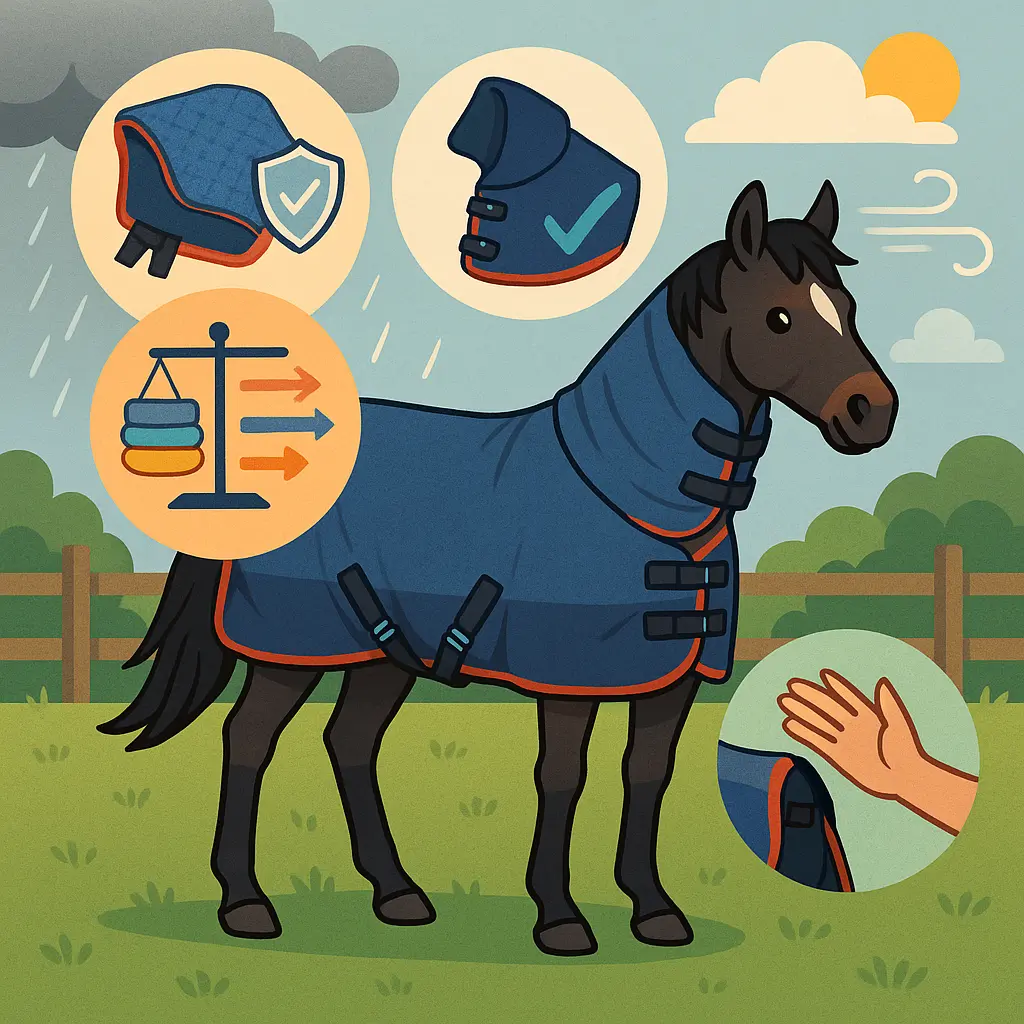
Choose rugs with a minimum hydrostatic head (HH) of 1,500mm to meet the British Standard for waterproofness, and use warranty length as a durability signal: Bucas 2 years, WeatherBeeta 3 years, Rambo (Horseware) up to 10 years on waterproofness, breathability and hardware.
HH measures how much water pressure the fabric can resist before it leaks; 1,500mm is the minimum benchmark for British weather. For persistent rain and rolling, more is better — and breathability matters just as much to let sweat vapour escape during play. Quality membranes and coatings cost more but pay off in comfort and dryness.
Extended warranties show brand confidence and testing rigour. As Red Post Equestrian points out, long guarantees usually reflect higher-grade materials and craftsmanship. Typical coverage varies:
- Standard: 1 year on most rugs
- Bucas: 2 years
- WeatherBeeta: 3 years
- Rambo (Horseware): up to 10 years on key elements
Pro tip: Warranty or not, rinse mud, let rugs dry naturally and store them clean and folded — it protects waterproof coatings and extends life.
Fit and features that keep youngsters comfy
A correctly fitted turnout sits just in front of the wither, clears the shoulder, and remains stable without tightness; check fit weekly on growing horses to prevent rubs and slipping. Poor fit can cause sores, pressure points and even infection.
Key fit checks for youngsters:
- Shoulders: You should be able to slide a flat hand down the front; look for freedom at the point of shoulder and gussets that move well.
- Wither and back: No pressure; the rug should lie smoothly without bridging (too tight) or tenting (too long).
- Chest: Fasten snugly but not tight; two to three fingers’ space is a good guide, and avoid gaps that shift when grazing.
- Belly straps: Crossed, equalised and adjusted so a full hand fits between strap and belly.
- Hind straps/leg straps: Adjust to prevent the rug blowing up without rubbing the inner thighs.
Feature choices that help youngsters:
- Detachable or half necks: Add or remove coverage as the weather swings to prevent overheating.
- Liner systems: Clip-in liners are safer than layering a stable rug under a turnout and allow fine-tuning warmth without bulk.
- Generous tail flaps and good drop: Better rain run-off and coverage for active horses.
- Secure hardware: Wide chest closures, strong surcingles and robust fillet or leg straps are non-negotiable for playground-proofing.
Quick tip: After muddy play, a soft brush and rub-down help spot early rubs. Keep a tidy box from our grooming range handy at the gate so you can check skin and shoulders daily.
A simple seasonal rugging plan for UK fields
In the UK, plan around no-fill/50–100g for wet mild spells, 150–250g for spring/autumn swings, and 300g+ with a neck for freezing, wet and windy winter snaps. Adjust for exposure, shelter and whether your youngster is clipped.
Spring (March–May): Unpredictable. On blustery, showery days, a 50–100g keeps rain off without overheating. Clipped or fine-coated youngsters may need 150–200g when northerlies bite.
Summer (June–August): Most youngsters go unrugged unless heavy rain coincides with a temperature dip. A no-fill rain sheet can help in protracted summer downpours above 10°C; for flies, use purpose-made fly rugs instead of turnouts.
Autumn (September–November): Classic 150–250g territory as nights cool and rain returns. If your fields are exposed, consider a detachable neck for grim, windy days.
Winter (December–February): When it’s dry and still, many unclipped youngsters cope in 100–200g. But when it’s 3–6°C with wind and sleet, step up to 250–300g; drop below freezing with windchill or snow, consider 300–400g plus a neck for clipped or fine types.
As Houghton Country advises, rug by environment and physiology, not just the number on the thermometer. Fields with hedges or shelters cut windchill — a big reason two horses at the same yard may wear different weights.
Safety note for dark evenings: if you’re leading to and from turnout on lanes or shared tracks, wear hi-vis and a secure riding helmet, and choose waterproof yard boots for grip in the mud.
Your youngster-proof turnout kit checklist
For most playful youngsters, a 1200D+ detachable-neck turnout, a liner system, and spare lightweight and medium options will cover 90% of UK weather. Add field-safe extras and routine care to keep them comfortable and the rug intact.
- High-denier outer: 1200D+ turnout with robust hardware from trusted brands like WeatherBeeta and Shires.
- Detachable neck: Flexibility to add/remove coverage as wind or rain picks up.
- Liner system: Clip-in 100–200g liners to scale warmth without stacking full rugs. Keep a spare clean liner for quick swaps.
- Lightweight + medium options: A no-fill/50–100g and a 150–250g will handle most spring/autumn days; add a 300g+ for severe winter.
- Spare turnout: Accidents happen; a backup prevents welfare compromises while one is drying or being repaired.
- Field protection: For exuberant play, consider turnout-safe horse boots and bandages to shield legs.
- Skin and coat care: Regular grooming (grooming kit) supports skin health under rugs; nutrition support via NAF supplements can help overall condition.
- Positive associations: Keep rug changes calm with a few treats to reward standing quietly.
- Budget savers: Check our curated clearance for last-season colours in top-spec rugs.
Pro tip: If your youngster is still growing, prioritise adjustability and schedule weekly fit checks in peak growth periods. A rug that fit last month may rub this month.
FAQs
At what temperature should I start rugging my youngster?
Most horses won’t need a rug until temperatures drop to around 5–10°C, according to the BHS. But always decide individually based on coat, clipping status, shelter and especially wind and rain; cold, wet, windy conditions can justify rugging at higher temperatures.
Can I layer stable rugs under turnout rugs for extra warmth?
It’s not recommended. Layering separate full rugs risks slipping and rubbing. Use dedicated clip-in rug liners instead, or step up to the correct-weight turnout. Browse both outer layers and liners within our turnout rug selection and keep your stable-only rugs for the barn (stable rugs).
How do I know if my youngster is overheating in a rug?
Watch for sweating behind the elbows or under the neck, restlessness, and hot ears or flanks. The BHS cautions that thick rugs in mild conditions trap heat and stress the horse as it struggles to cool down. When in doubt, size down the fill or remove the neck piece.
What denier should I choose for a young, active horse?
Go 1200D or above for durability against boisterous play and hedges. Standard 600D suits quieter turnout but is easier to tear. If your fieldmates are serial rug-nibblers, the jump to 1200D+ usually pays for itself in reduced repairs.
How long will a quality turnout rug last?
Standard warranties are 1 year, with premium options such as Bucas (2 years), WeatherBeeta (3 years) and Rambo (Horseware) offering up to 10-year guarantees on waterproofness, breathability and hardware. Actual lifespan depends on denier, care and how hard your youngster plays. As Red Post Equestrian notes, longer warranties signal stronger construction.
Do all horses need rugs?
No. Many young, healthy horses cope without rugs when they have shelter and forage, per BHS guidance. Rugging should be individualised: consider coat type, body condition, clipping, exposure and weather.
Which features help prevent rubs on youngsters?
Correct fit is paramount, plus freedom at the shoulder (good gussets), smooth linings, detachable necks for temperature control, and clip-in liners to avoid bulky layers. Regular grooming checks help you spot early signs of rubbing so you can adjust promptly.
Ready to youngster-proof your turnout? Explore hard-wearing, UK-ready options in our curated turnout rugs, with trusted choices from WeatherBeeta, Shires and more — and kit yourself out for dark, wet field runs with practical hi-vis and grippy boots. If you’d like tailored advice, our team is here to help you pick the perfect setup for your youngster and yard.