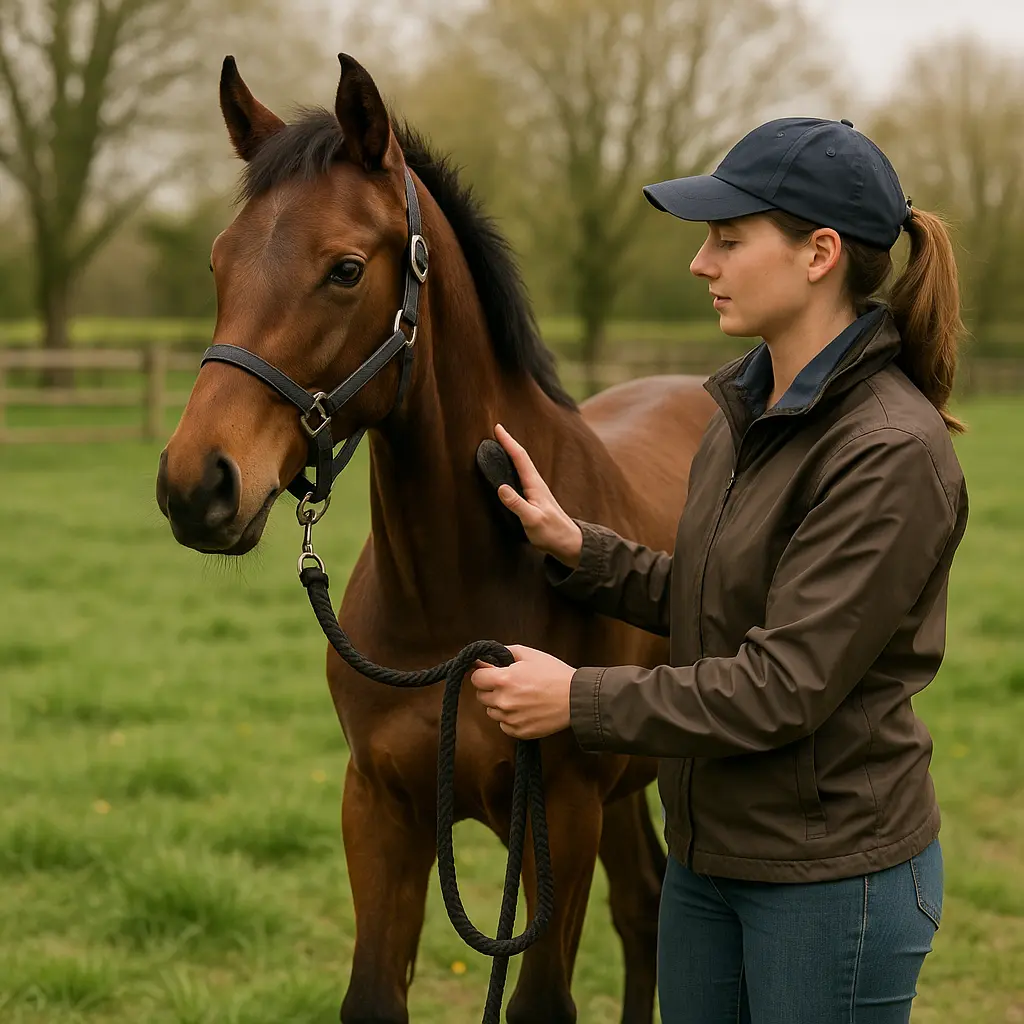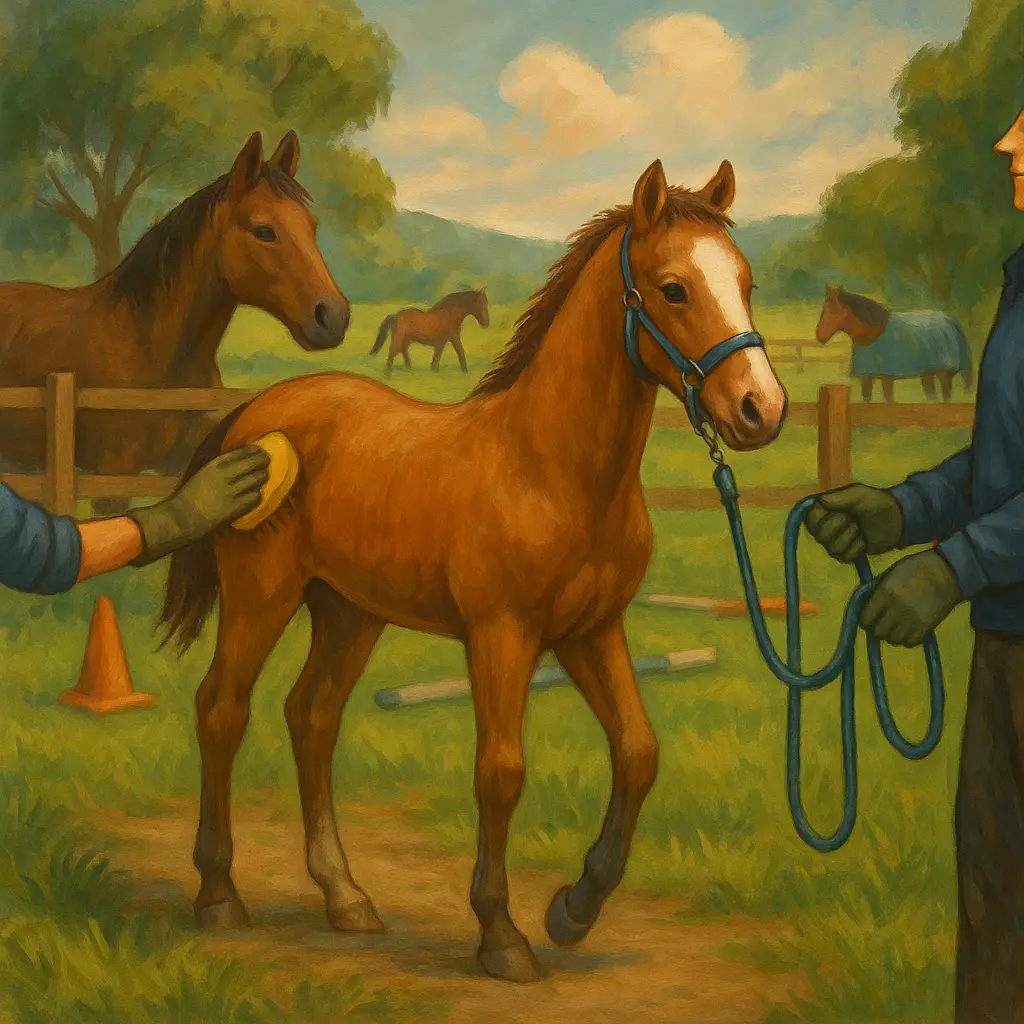
A two-year-old is all legs, curiosity and potential. Get this stage right and you’ll have a safer, happier horse who finds the ridden work ahead easy. Get it wrong and you can create habits that are hard to unpick later.
Key takeaway: Two-year-olds should live out in company, learn calm basics on the ground, and not be ridden; BHS guidance prohibits riding horses under four on showgrounds and prioritises quiet, confident handling.
What should you do with a two-year-old horse?
Turn your two-year-old out 24/7 in a herd, keep handling short and positive, and focus on life skills rather than work. This builds confidence and allows physical and mental development without pressure.
UK owner consensus aligns clearly: “2 year olds should be out 24/7 with company and pretty much left to be a baby and grow” — long reining can wait until at least three years old (Horse & Hound Forum). The British Horse Society (BHS) also stresses that young horses need quiet, confident handling, especially as exciting environments can overwhelm them (BHS Code of Practice for the Welfare of Horses at Events).
Practically, this looks like peaceful daily routines: catching, leading to the field, a brief groom, feet picked out and back with their mates. Save anything more structured for next year when maturity starts to catch up with that fast-growing body.
Pro tip: Keep a simple diary and note 5–10 minute wins (stood quietly tied, loaded to the balance point and back, picked up all four feet). Small, consistent reps build a rock-solid adult horse.
Can you ride or back a two-year-old?
No — do not ride a two-year-old. The BHS prohibits riding horses under four years old on showgrounds, and experienced UK owners recommend delaying backing while prioritising turnout and calm handling.
The welfare focus is absolutely clear. Under the BHS event welfare code, “horses under four years of age should not be ridden on the showground” (BHS Event Welfare Code). UK owner consensus is to let them grow in the field and defer anything like long reining until at least three (Horse & Hound Forum).
What can you do instead? Plenty. Hand-walks to see new places, basic yielding to pressure, loading practice, standing tied, and in-hand obstacle work are all excellent foundations. When your horse is older and you do begin light work, follow BHS feeding safety: avoid riding directly after a bucket feed to reduce the risk of digestive upset (BHS coach guidance).
How much handling does a two-year-old need?
Keep it minimal, calm and consistent: catching, leading, brief grooming, picking up feet and basic desensitisation are enough. Otherwise, let them be a baby at pasture with friends.
Two-year-olds don’t need daily “training” sessions — they need steady, friendly contact. Approach safely and predictably: the BHS recommends approaching from the side, being aware of blind spots, and talking gently as you come in (BHS coach guidance). In the stable, stand to the side rather than directly in front or behind, and avoid trapping yourself against walls or gates.
Short sessions are best. Halter, lead a few steps, stop and breathe together, scratch a favourite spot, pick up a foot and release. End on a success. For nervous or difficult-to-catch youngsters, leaving a headcollar on in the field for a limited period and using a small feed or a few rewards can help while you build trust (this aligns with UK owner experience and the emphasis on quiet handling from the BHS: owner consensus; BHS).
For these gentle sessions, choose soft, non-intimidating tools. Our customers rate gentle grooming kits for building positive associations, and a pocketful of low-key rewards from our training treats selection can speed up “catch me” games without stress.
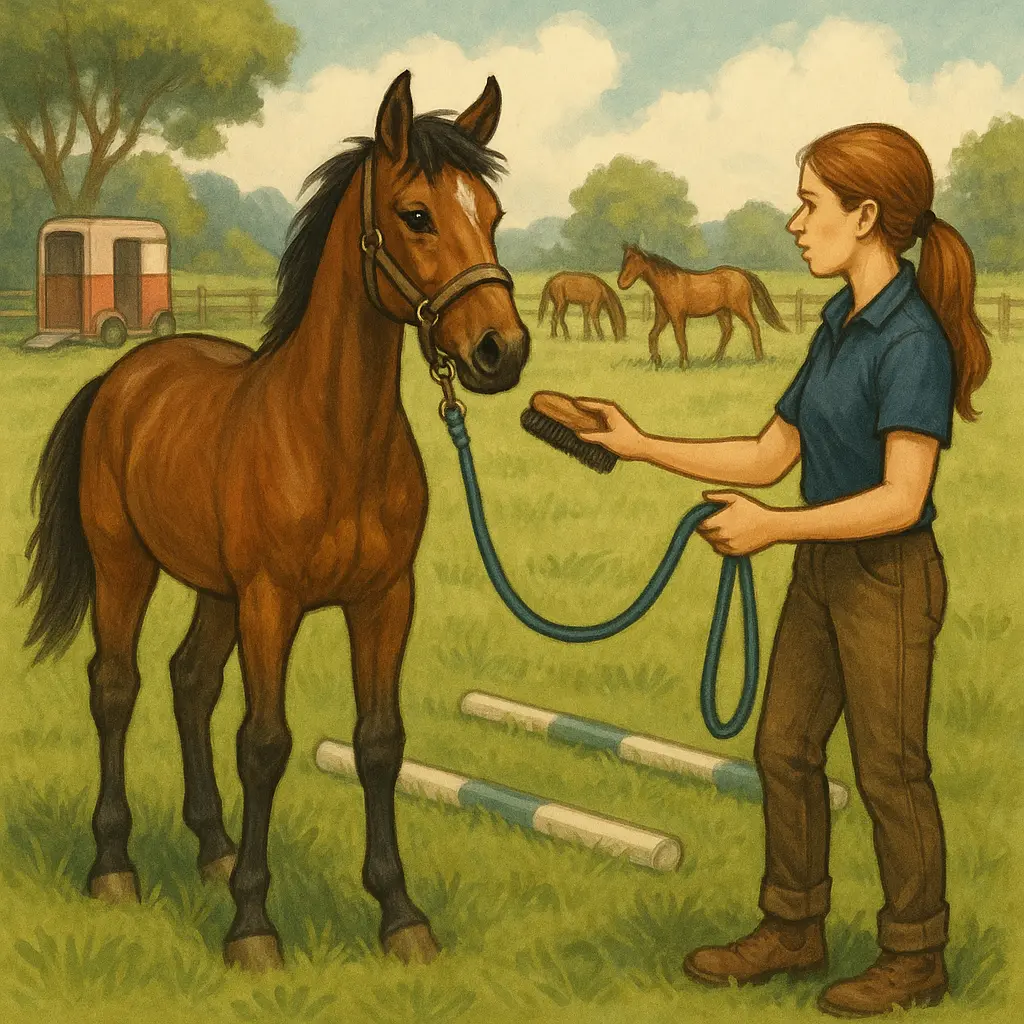
What groundwork is appropriate at two?
Teach leading manners, yielding to pressure, calm tying, and basic loading cues — all in short, positive sessions with immediate release on the right answer. Avoid long reining or tack work until at least three.
The aim is responsiveness without stress. Use pressure-and-release consistently: ask softly, hold steady, and the instant the horse yields, release completely. This prevents the “lean and pull” habit and builds lightness (see a solid demonstration of timing and release in this pressure-release leading video). You’re shaping forward, halt, step-back, and a step over with shoulders or hindquarters — the ABCs your future rider will thank you for.
Before three, set your youngster up with life skills rather than mileage. Helpful milestones include calm tying (start with a safe tie ring/weak link), walking past people and equipment politely, loading up to the balance point and stepping back on cue, and relaxed in-hand poles or “independence walks” to see the world (LagoBallo groundwork milestones). Build farrier tolerance by handling limbs and touching the heels and fetlocks daily, always ending quietly once you get one soft lift.
Quick tip: If you walk out on lanes or bridleway verges, wear high-visibility gear so both of you are seen well before any bend or brow of a hill.
How to manage turnout and winter in the UK
Provide 24/7 herd turnout with shelter, plentiful forage, and weather-appropriate rugging to keep your two-year-old warm and dry through wet, windy British weather. Keep feeding consistent and hay clean and dry.
UK winters are damp and changeable, so plan for mud and chill. A field shelter or good natural cover gives youngsters a choice to get out of wind and rain. Keep forage consistent — the BHS stresses the importance of clean, dry hay and steady routines for young horses (BHS coach guidance). If your youngster struggles to keep weight, review forage quality and quantity first; slow feeders and multiple small piles reduce squabbles and help timid types eat their share.
Rug if your horse needs it based on condition, weather and coat; many two-year-olds appreciate a waterproof layer in prolonged wet. Explore our range of reliable, waterproof winter turnout rugs sized for growing frames, and check fit weekly — growth spurts happen fast. Take rugs off regularly to groom and assess body condition and skin.
On the yard, follow BHS seasonal safety: keep stable doors shut properly, salt icy patches, and use warning signs for kick-prone youngsters in busy areas (BHS winter handling guidance). A few minutes of prevention can avoid slips and spooks on cold mornings.
How to introduce shows and new places (without riding)
Take your youngster in-hand with an older, experienced companion horse, keep first visits short and positive, and never ride on the showground until they are at least four. Prioritise calm handling over “winning the ring.”
The BHS is explicit: young horses should be quietly, confidently handled, and “shouting and hitting the horse in most circumstances will make the situation worse” (BHS Event Welfare Code).
“Young horses will require quiet, confident handling. The show atmosphere may prove to be of great excitement for the young, inexperienced horse.” — British Horse Society
Start with low-key environments: a friend’s yard, a quiet clinic venue or a small show for a wander. Arrive early, walk a lap, watch the warm-up from a distance, and leave before the energy peaks. If you can, bring a sensible older horse — BHS specifically recommends this to help youngsters gain confidence in busy settings (BHS guidance).
Safety first for handlers: wear a hat and visible clothing for in-hand work around vehicles and crowds. Our curated riding helmets and hi-vis essentials keep you seen and protected. Consider protective horse boots and bandages during travel or in-hand sessions on stony ground. Load and unload only within your horse’s comfort zone — the lesson is “walk on and back off calmly,” not “force it today.” A few small wins beat one big battle every time. A couple of pocket-sized rewards from our treats range can help mark the moment you want.
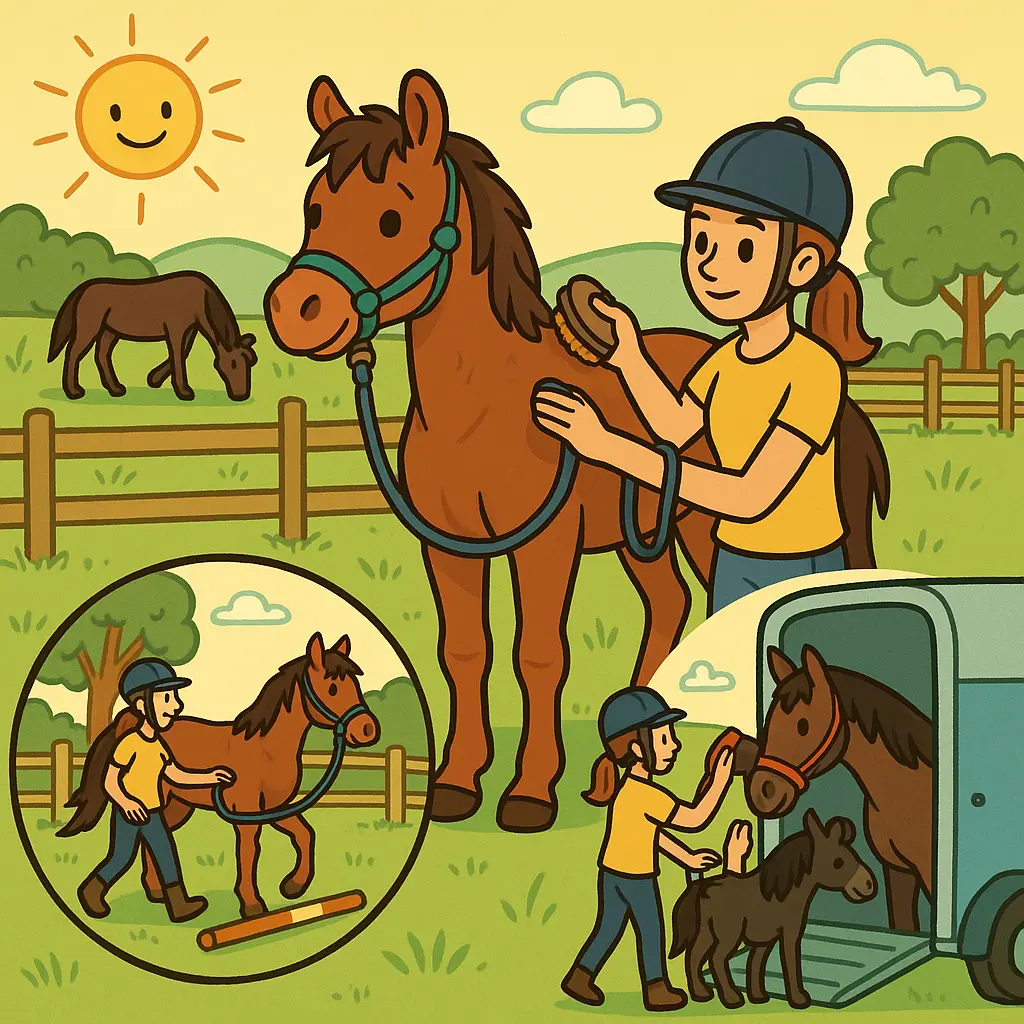
Safety essentials when handling two-year-olds
Approach from the side, speak softly, stand out of kick zones, and never trap yourself between the horse and a fixed object. Good habits now prevent most mishaps later.
The BHS coach framework outlines safe approach and positioning: come from the side, be aware of blind spots, and talk as you walk in; stand to the shoulder or hip rather than in front or directly behind (BHS coach guidance). Keep a short, organised lead rope, and use your body as a boundary — a gentle push to the shoulder or hindquarter (paired with clear voice cues) re-establishes personal space without drama.
On yards, follow common-sense rules the BHS reinforces seasonally: shut doors, don’t lead past a horse tied where you can be pinned, salt icy walkways, and mark kickers clearly (BHS winter handling guidance). If you’re doing slightly more as your horse approaches three, remember BHS feeding safety: do not ride directly after a bucket feed (BHS coach guidance); apply the same caution to any energetic work in-hand.
At Just Horse Riders, we recommend making “calm and clear” your mantra: ask once, hold steady, release instantly when you get the try. Consistency is your safest tool.
Essential kit for your two-year-old
Keep it simple: a well-fitted headcollar and rope, a weather-appropriate turnout rug, soft grooming tools, and safe travel gear cover almost everything you’ll do at two.
- Turnout protection: A reliable waterproof rug helps youngsters through long wet spells. Explore proven, durable options from our turnout rugs collection and trusted brands like WeatherBeeta. Check fit often and adjust as they grow.
- Grooming basics: Soft brushes to desensitise and clean without overwhelming sensitive skin. See our hand-picked grooming essentials.
- In-hand safety: A good lead rope, a rope halter if you’re experienced (for clarity, not force), and optional leg protection for in-hand walks or travel.
- Visibility and head protection for you: When leading near roads, wear hi-vis and consider a helmet for in-hand clinics or busy showgrounds.
- Field comfort: A simple field shelter, clean water, multiple hay stations, and well-maintained fencing are non-negotiables for 24/7 turnout.
- Motivation and marks of “yes”: A few small, healthy treats help you reward the right answers without making food the point of the session.
At Just Horse Riders, we prioritise kit that feels good for young minds: soft, quiet, well-fitted and easy to use. If you’re unsure what size or style to choose, our team is happy to help you select the calmest option for your youngster.
FAQs
Can I ride my two-year-old horse yet?
No. The BHS prohibits riding horses under four on showgrounds, and experienced UK owners recommend turnout and quiet groundwork rather than any ridden work at two (BHS Event Welfare Code; Horse & Hound Forum).
How much handling should a two-year-old get?
Just the basics: calm catching, leading, brief grooming and feet handling. Otherwise, leave them 24/7 at pasture with company to grow and gain confidence (owner consensus).
When should I start groundwork like long reining?
Wait until at least three years old for long reining. At two, focus on yielding to pressure, tying, polite leading and early loading cues (groundwork milestones).
How do I safely approach and handle a youngster in a stable?
Approach from the side, talk gently, stand to the shoulder or hip (not directly in front/behind), and keep the rope short and organised. Be aware of blind spots and never trap yourself against walls or doors (BHS coach guidance).
What if my two-year-old is hard to catch?
Keep sessions calm and short; use a headcollar in the field temporarily and reward small tries. Build trust daily without overloading with shows or busy environments (owner consensus; BHS guidance).
What groundwork method should I use for leading?
Use pressure-and-release: hold steady if they pull, release immediately when they step forward or soften, so they learn that giving to the rope is comfortable (pressure-release demo).
What rug does a two-year-old need in winter?
Choose a waterproof turnout suited to your horse’s condition and the day’s weather. Check fit weekly as they grow and pair with clean, dry forage and shelter for warmth and welfare (BHS feeding and care emphasis). Browse our turnout rugs for reliable coverage.
Raising a two-year-old is about building trust and skills that will last a lifetime. Keep it quiet, keep it kind, and keep it simple — and you’ll have a horse who meets the world with confidence when it’s time to ride.