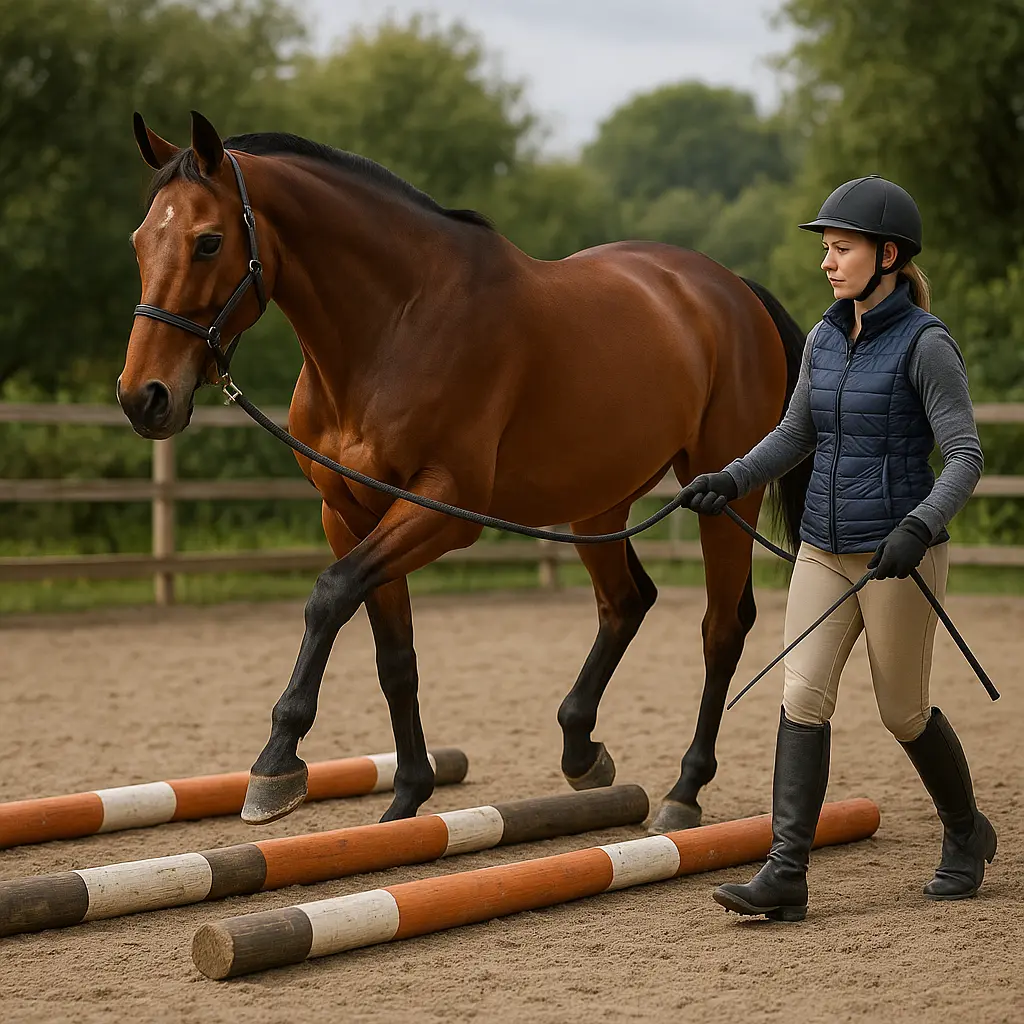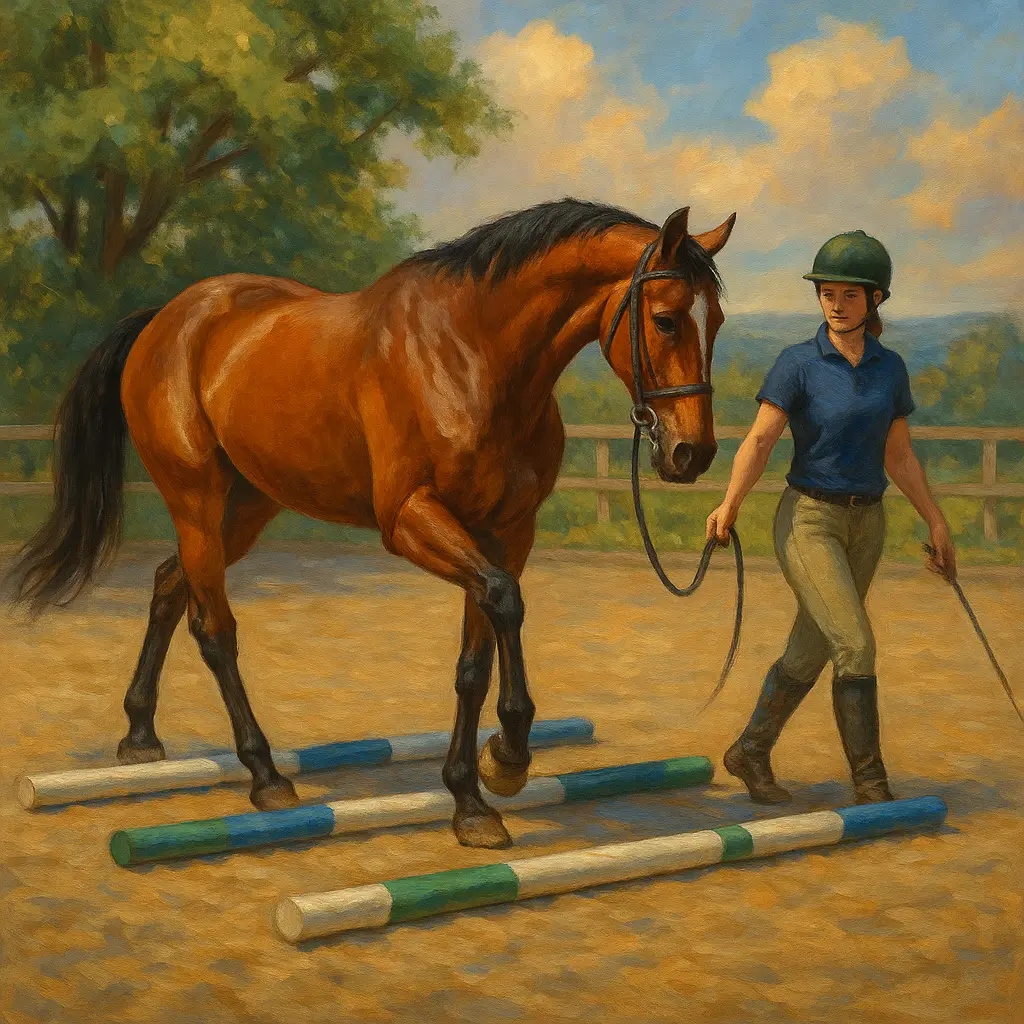
Your ex-racehorse has bravery and heart in spades — now it needs new movement patterns. Polework is the fastest, kindest way to swap “flat-out” for balanced, rideable, show-ring-ready.
Key takeaway: Consistent walk-based polework (5–20 minutes daily) rebuilds rhythm, suppleness, balance and core strength in ex-racehorses — safely, without rushing.
Why polework transforms ex-racehorses
Polework systematically develops rhythm, suppleness, balance and coordination — exactly the areas ex-racehorses need post-racing. It also engages the core and encourages a shorter, lifting frame that’s suitable for ridden careers.
As veterinary physiotherapist Gillian Higgins of Horses Inside Out explains,
“Polework is one of the most versatile and beneficial tools for retraining. It helps with rhythm, suppleness, balance and coordination — all areas that ex-racers often need to develop.” Source
Many ex-racers arrive with an over-long, “stretched out” frame from galloping and a tendency to run through the hand. Polework changes how they use their bodies: lifting the back and shoulders, stepping under with the hindlimb, and softening the neck. That’s why it’s the cornerstone of early retraining — whether your goal is a happy hacker or an RoR show champion.
Where to begin: straight walk poles, then trot (when relaxed)
Start with straight lines of walk poles to encourage careful foot placement and core engagement, and only introduce trot when your horse stays relaxed, rhythmic and confident. Avoid curves until straight lines feel easy and balanced.
Set 4–6 poles in a straight corridor with plenty of approach and exit. In the early days, simply walk through in a calm tempo on a longish, elastic contact. Let your horse look, think and breathe — your aim is rhythm, not speed. When everything feels settled, you can very gradually raise alternate pole ends to increase lift through the limbs and back.
Progression should be systematic. Horses Inside Out emphasises gradual, confidence-led steps so the new movement patterns “stick” without tension. This is especially important for ex-racers who are used to powering forward; you’re rewiring balance, not practising for the Derby anymore. If your horse gets keen, circle away, re-establish a breathing walk, and come again.
Before any polework under saddle, give your ex-racer a foundation in basic manners and voice cues in-hand: halt, stand, step on calmly, and relaxed turns. That calm communication will pay off the first time you ride through poles and feel your horse take a breath rather than a leap.
Quick tip: Wear a well-fitted riding hat for all early in-hand sessions with an OTTB — it’s still training, and your safety matters. Explore our range of certified riding helmets.
Daily in-hand polework: “Pilates” that builds topline
In-hand polework is equine Pilates: 5 minutes a day makes a difference, while 15–20 minutes is ideal, done in walk with heavy poles. Distances don’t need to be exact — if your horse taps a pole, simply carry on.
Your Horse’s training experts describe groundwork polework as “pilates for equines,” and crucially, you don’t need to chase perfection to get results. The focus is calm repetition and correct posture, not fancy footwork. Use 10ft, heavy poles for stability and ask for walk only to begin. Work both reins, and repeat each exercise 2–3 times, with thinking pauses between efforts. If your horse drifts or gets stuck, a light touch with a schooling whip on the shoulder or hindquarter can clarify the request without pulling.
Two simple, high-impact in-hand set-ups:
- Straight corridor of walk poles (4–6 poles). Walk through, halt, breathe, turn away on a big arc, repeat on the other rein.
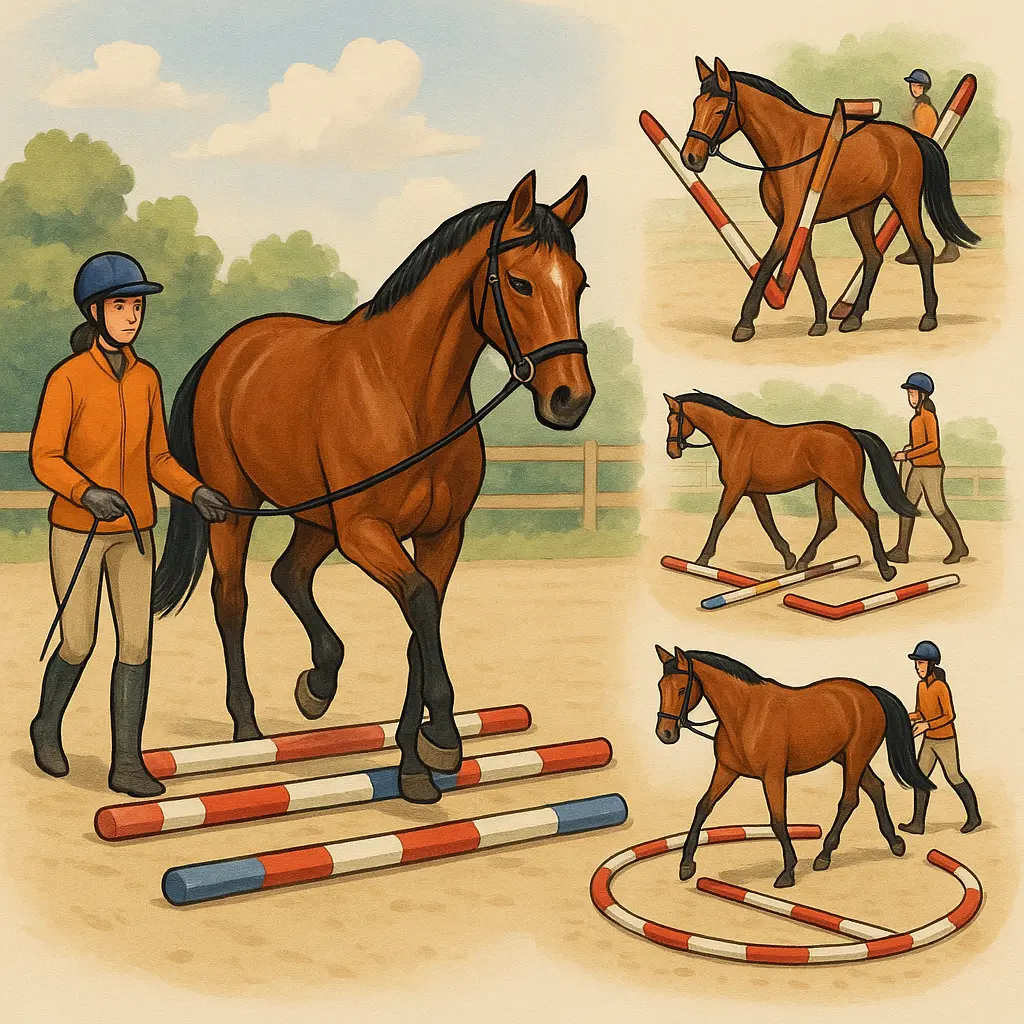
- V-shape: one pole on the ground, two raised to create a narrowing “channel”. Step yourself slightly to the outside as your horse threads the gap. Over sessions, narrow the V to encourage more lift and straightness through shoulder and neck.
Pro tip: Choose good footwear and comfortable, grippy legwear for in-hand sessions on wet UK days. Our yard-proof horse riding boots give you sure footing, and breathable layers keep you focused when the weather doesn’t.
Build bend and balance with curved poles
Use five poles on a 5 m half-circle and walk rhythmically over half the arc, rebalancing on the empty half before repeating. This builds true bend, hindlimb reach and coordination without rushing.
Horses Inside Out recommends placing five poles like a clockface — 12, 1:30, 3:00, 4:30 and 6:00 — on a 5 m diameter semi-circle. Walk from 12 to 6 over the poles, then use the empty half of the circle to breathe, stretch, and reset the rhythm before you repeat. Start with poles on the ground; when your horse is confident, slightly raise the inside ends to encourage more lift through the inside hind and lateral flexion through the ribcage.
Keep sessions short and positive. If your ex-racer rushes, loses rhythm, or bends the neck without moving the ribs (a common “fake bend”), go back to easy straight lines for a set, then try the curve again. Trot over curved poles only when the walk is swinging and the horse maintains balance without leaning.
Quote this to remind yourself to go slowly:
“Retraining racehorses for showing takes time, patience and repetition… sympathetic and well-thought-out training can go a long way.” — Jo Bates, show horse specialist (Horse & Hound)
Fix tight hamstrings and hollow toplines
Ex-racehorses often carry tight, overdeveloped hamstrings and a long, “drawn out” posture; post-exercise stretching plus polework and long reining to encourage hindlimb reach will soften those muscles and lift the topline.
Jessica Limpkin, an Equine Massage Therapist, highlights how racing’s propulsion phase can over-develop the hamstrings, leaving ex-racers tight behind and long through the back and neck — not ideal for a ridden outline. Her programme combined progressive massage to relax the hamstrings with work that encouraged hindlimb reach and back lift. After each session, she stretched the hindlimbs to consolidate the new, longer muscle length, noting how this approach improves comfort and posture over time (case study).
Build that same aftercare into your week:
- Warm up first (in-hand walking, then easy poles), then ride or long-rein.
- Finish with gentle hamstring and hindlimb stretches while the horse is warm.
- Use massage grooming tools to loosen muscles and promote circulation.
- Keep the back warm post-session to avoid tightening as temperatures drop.
At Just Horse Riders, we recommend supportive legwear during early polework: brushing boots or soft bandages protect limbs as your horse learns to place its feet carefully. See our curated horse boots and bandages.
For post-session care, a cosy stable layer helps prevent muscles chilling in UK weather. Browse our breathable stable rugs, and keep your grooming kit stocked with tools that make light work of massage and post-exercise care via our grooming collection.
Pro tip: Improvements in topline take months, not weeks. Consistency wins — little and often — and you’ll see the back lift, the neck soften, and the hindlimbs step further under as the hamstrings relax and the core strengthens.
UK seasons and show goals for ex-racehorses
Use autumn and winter for slow, indoor foundation work; build power and variety in spring/summer and target RoR classes, with key UK finals like Hickstead in July and HOYS in October.
Our weather matters. In wet or icy conditions, prioritise indoor or covered arenas to keep footing safe — especially for a horse rebuilding balance. In winter, progress gradually, keep sessions short, and protect warm muscles with layers before and after work. In spring and summer, add long reining across safe surfaces and more variation in pole heights and patterns to build strength for the outdoor season.
For motivation, set realistic show targets. The UK offers RoR/SEIB-affiliated classes at local and county shows and national championships. Aim at summer highlights like the Hickstead Derby Meeting (July) and autumn’s Horse of the Year Show (HOYS, October), with additional opportunities at the London International Horse Show for amateur and home-produced combinations (Horse & Hound guide). Even if you never leave home, that kind of long-range plan helps you phase training and see progress.
Quick tip: If you’re walking to the arena or long-reining in fading light, add a layer of visibility. Our customer favourites include practical, reflective hi-vis rider gear for gloomy UK afternoons.
For horses living out, a weather-appropriate turnout before and after sessions keeps backs warm so muscles don’t tighten. See our resilient, yard-tested winter turnout rugs.
The kit you’ll need for safe, successful polework
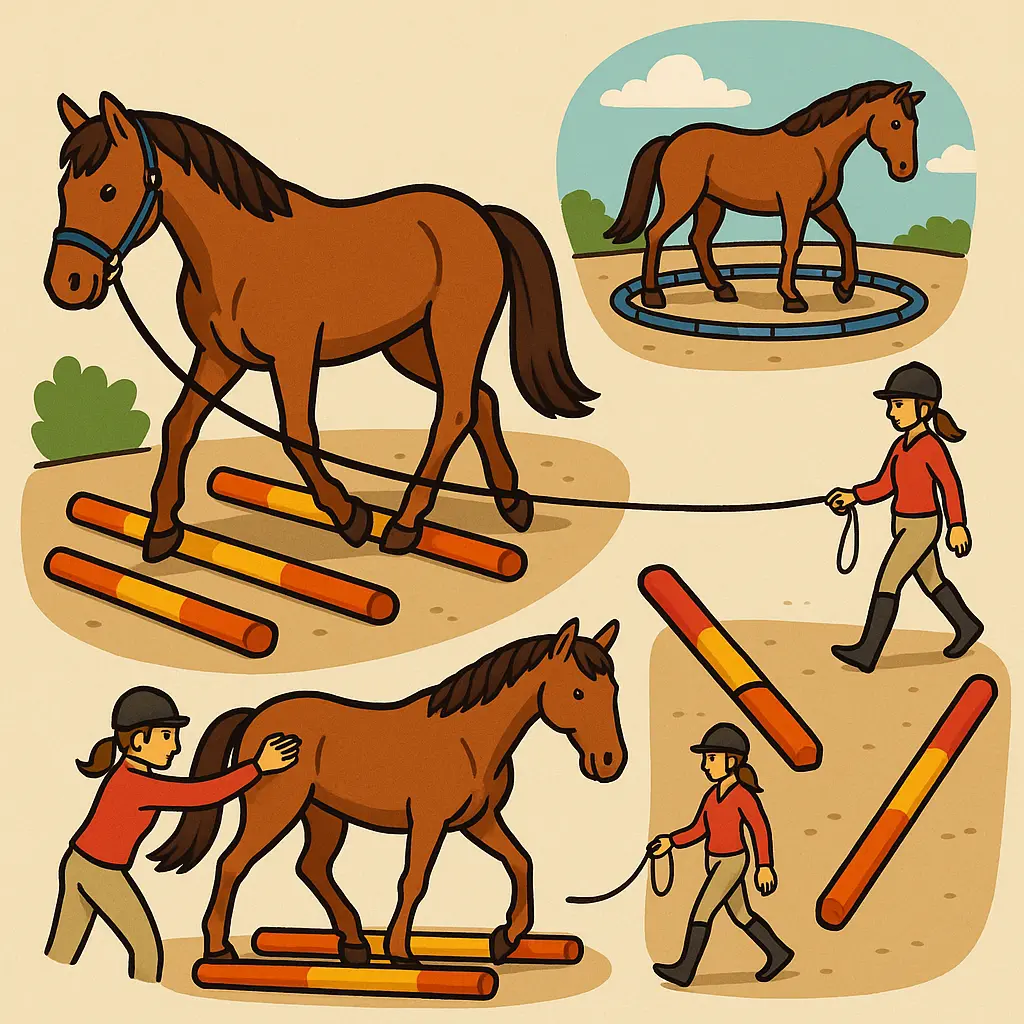
Choose safe, heavy poles or cavalletti, limb protection, and simple yard gear that supports warm muscles and consistent routines. You don’t need fancy gadgets — just reliable basics used well.
- Poles/cavalletti: 10ft and heavy for stability (walk work first). Start flat, then raise ends slightly as confidence builds.
- Limb protection: Brushing or support boots/bandages for schooling, particularly during early “toe-tapping” stages. Explore horse boots and bandages.
- Handler safety gear: A properly fitted hat and gloves for all in-hand sessions. Shop certified riding helmets.
- Footwear for footing: All-weather, grippy riding boots help when poles and arena surfaces are damp.
- Warmth pre/post work: Keep big back muscles supple with well-fitting turnout rugs outdoors and breathable stable rugs indoors.
- Aftercare kit: Massage-friendly brushes and grooming tools to relax hamstrings and back; stock up from our grooming collection.
- Nutrition support: Discuss topline and joint support with your vet and consider targeted options from our supplements range to complement your work.
At Just Horse Riders, we see the biggest wins come from consistency: a safe set-up that makes daily 5–20 minute sessions easy to repeat, even when the British weather tries its best.
FAQs
How often should I do polework with my ex-racehorse?
Short, frequent sessions work best. In-hand polework for 5–20 minutes in walk, daily if possible, builds core strength and topline without fatigue, and pairs well with gentle lunging (Your Horse).
When should I raise the poles?
Only after your horse is calm and confident over straight, flat walk poles. Then raise alternate ends to encourage lift; on curves, you can raise the inside ends slightly to promote bend and engagement (Horses Inside Out).
Do pole distances need to be precise?
No. In groundwork, exact measurements aren’t essential. If your horse taps or even rolls a pole, don’t correct — stay relaxed and keep the rhythm. The focus is posture and tempo, not perfection (Your Horse).
Can polework help a hollow, under-muscled topline?
Yes. Poles engage the core, lift the back and shoulders, and encourage a longer reach behind. Combine them with hamstring stretching and massage after work for best results (Jessica Limpkin case study).
What’s a good first curved-pole exercise?
Place five poles on a 5 m diameter half-circle at “clockface” points (12 to 6). Walk over half the circle, then use the empty half to rebalance before repeating. It reliably improves bend and coordination (Horses Inside Out).
Do I need a professional to retrain my ex-racer?
Sympathetic, expert guidance accelerates progress and helps you avoid common pitfalls, especially with balance and bend. Well-timed schooling sessions or lessons often build confidence faster than going it alone (Fox Equestrian).
How long before I see changes?
Expect gradual change over months. Consistent polework, massage, stretching and thoughtful aftercare — matched to the UK seasons — produce steady topline gains and a more confident, rideable frame (Jessica Limpkin).