
Business travel is back on British calendars — and for equestrians, that means mastering the art of mixing meetings with muck boots. With European spend forecast to rise again in 2026, you can plan smarter trips that grow your business without neglecting your horse’s routine.
Key takeaway: In 2026, prioritise short, high-impact trips (under 3 nights), justify each journey against clear outcomes, and pack dual‑purpose equestrian kit so you can handle the yard and the boardroom in one run.
What UK equestrians should expect in 2026
European business travel spending is projected to hit 389.9 billion euros in 2026 (up 8.2% year-on-year), with Western Europe accounting for 88% of regional spend and the UK a key market. UK inbound visits are forecast at 45.5 million with £35.7 billion spend, supporting a buoyant events calendar.
The headline for horse owners is volume and value: more conferences, training and internal meetings are happening in person again, and the average European overnight business trip lasts 3.1 nights. At the same time, UK trip rates for business remain below 2019 — a continuation of pre‑COVID downward trends due to hybrid work and videoconferencing. So, you’ll see more “worth it” trips in 2026, not just more trips. For equestrian pros (coaches, saddle fitters, mobile farriers) and owners attending CPD, trade fairs or yard visits between client meetings, this selective recovery is good news: you can plan efficient, purposeful travel that justifies time away from the stable.
UK residents are also travelling out more, with 96.977 million outbound trips recorded in 2025–26, underscoring the opportunity to combine European business with equestrian learning or supplier visits. Meanwhile, long‑haul inbound to UK trade shows is still a touch slower than mainland Europe’s recovery — expect international equestrian expos to grow, but gradually.
Is overnight business travel still worth it versus Zoom?
Yes — 83% of European business travellers say trips are worthwhile for achieving objectives, especially for seminars, training, conferences and internal meetings that build relationships faster than video.
For equestrians, put a simple decision framework to work:
- Define the objective: revenue, skills (e.g., CPD workshop), supplier negotiation, or team strategy.
- Score the “in-person premium”: will face-to-face accelerate trust, access equipment demos, or open doors you can’t on Zoom?
- Compare costs and disruption: travel, livery cover, and the impact on your horse’s routine versus a virtual alternative.
- Set a threshold: reserve overnights for meetings or events where expected value beats the virtual ROI by a clear margin.
Average trips run 3.1 nights; aim to cluster meetings, hands‑on demos and CPD to fill that window. For example, book a half‑day conference, a supplier yard visit, and a coaching observation in one trip rather than three separate days. This is where equestrians outperform: practical, in‑person demos of saddles, boots or supplements deliver a tactile advantage screens can’t match.
“Organizations are continuing to invest in business travel as a catalyst for growth, innovation and connection, even in the face of economic and geopolitical uncertainty. At the same time, sustainability and traveller experience are no longer optional—they’re essential.” — Suzanne Neufang, CEO, GBTA (source)
Plan short, productive trips around your horse
Prioritise trips under three nights and time them around training or conference dates to minimise disruption to your horse’s routine.
Here’s how to make a 2–3 night trip work without compromising welfare:
- Lock in yard cover: confirm who feeds, turns out and checks rugs daily; leave clear written instructions with emergency contacts.
- Rug for the weather you’re leaving behind: for cold snaps, line up an appropriate stable layer before you go; check the forecast for changes.
- Pre‑pack spares: lay out a clean turnout and spare liners so your cover never has to guess what to use if the weather turns.
- Batch your agenda: aim to compress seminars, supplier visits and client meetings into one city to avoid extra overnights.
At Just Horse Riders, we recommend building a “travel‑ready” kit at the yard. If winter rain is on the cards, have reliable winter turnout rugs ready for quick changes, and keep a warm layer in reserve from our stable rugs collection for cold nights. It’s the simplest way to keep your horse comfortable while you’re away.
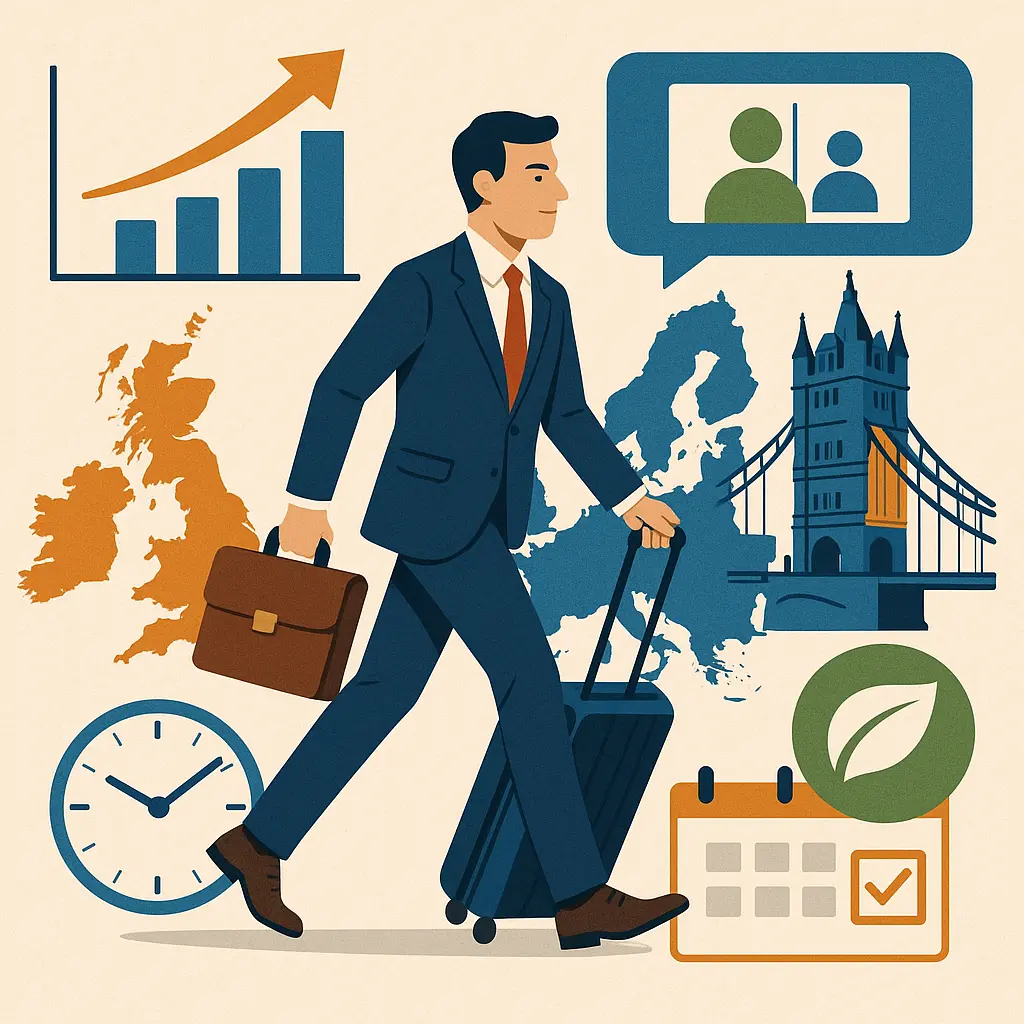
Pack once, ride anywhere: essential kit for hybrid travellers
Build a capsule bag that handles a client lunch, a rainy arena demo and an evening yard check without repacking your car.
Use this compact, proven kit list:
- Weatherproof layer you can smarten up: a technical riding jacket from brands like WeatherBeeta keeps you dry for outdoor demos yet passes muster over office wear.
- Portable grooming kit: a zipped caddy from our grooming range streamlines quick tidy‑ups before photos, vet checks or saddle fits.
- Hard‑wearing footwear: choose smart, wipe‑clean horse riding boots you can drive in and hose off.
- Helmet for ad‑hoc rides: stash a well‑fitting hat from our riding helmets range if you’re likely to hop on for a demo.
- Hi‑vis for road or yard transits: if you’ll hack on public roads at either end, carry rider and horse visibility from our hi‑vis collection; the British Horse Society consistently promotes high-visibility for road safety.
- Luggage organisers: use packing cubes to separate laptop kit from yard gear; reusable pouches live in your boot for lead ropes, gloves and spare socks.
- Insulated water bottle: refill at venues to cut single‑use plastic; our gifts collection is a good place to start.
Quick tip: keep a laminated yard note card in your travel wallet with feed, turnout and emergency details. If travel overruns, you can text a photo to your cover person — no guesswork.
Sustainable and flexible choices that save time and carbon
Opt for rail on domestic legs and flexible fares to reduce emissions and protect your schedule; European travellers now expect responsible journeys as standard.
Rail often beats driving door-to-door when you factor traffic, parking and fatigue — and it helps you arrive sharp for high‑stakes meetings or CPD. Consider this approach:
- Rail for city‑centre meetings; rideshare or yard pickup for peri‑urban stables.
- Car share with colleagues for rural events; split costs and lower emissions.
- Build 30–45 minutes of slack into transfers so a delayed seminar doesn’t force an extra overnight.
GBTA’s European outlook highlights the shift to responsible, productive travel. As CEO Suzanne Neufang notes:
“European companies and business travellers are leading the way in demanding responsible, productive and impactful journeys.” — Suzanne Neufang, CEO, GBTA (source)
For equestrians, responsible also means biosecurity: if you’re visiting multiple yards, follow common‑sense protocols championed by UK veterinary bodies such as BEVA — clean boots, disinfect kit between yards, and avoid nose‑to‑nose contact when moving between premises.
Make your data work: quarterly reviews that improve every trip
Track every trip’s purpose, cost and outcome, then review quarterly to decide which overnights to repeat and which to move online.
Set up a simple sheet with:
- Trip basics: dates, nights away, travel mode, total cost (fares, fuel, livery cover, parking, meals).
- Purpose: training, conference, supplier visit, client pitch, internal meeting.
- Outcomes: revenue won, skills gained, supplier terms improved, new contacts made.
- Horse care log: rugs used, turnout days, feed changes, any stress signs on return.
Review patterns every quarter. If conferences consistently produce leads or CPD value, keep them; if a monthly internal meeting works fine on video, save the time and put the budget into the events that move the dial. This is the hybrid model that successful UK teams are already running in 2026: fewer trips, higher impact.
Pro tip: if your horse gets a little tight after a routine change, pencil in a gentle hack day on return and check limbs. If they’re prone to knocks or stocking up after box rest, keep supportive boots in your car; browse our riding boots for you and pick up stable or travel protection for your horse in the same run. And when you’ve nailed a big meeting, don’t forget a small reward at the yard — our gifts section includes handy travel flasks for you and thoughtful stable treats for your four‑legged colleague.

UK-specific watch‑outs for equestrian professionals
Hybrid work is keeping UK business trip rates below 2019, but inbound growth (45.5 million visits; £35.7 billion spend) supports a strong domestic events scene for 2026.
Here’s what that means if horses are part of your job description:
- Mobile professionals (farriers, physios, instructors): expect steadier local demand with tighter scheduling expectations; allow extra travel slack around peak conference weeks when clients are away.
- Trade shows and CPD: UK‑based events should be lively; the slightly slower long‑haul recovery may trim some overseas exhibitors, but European supplier presence will be strong.
- Budget signals: in early 2026, 20% of UK trading businesses expect a turnover dip in February, 16% expect growth, and 28% of larger firms expect increases — so plan proposals and supplier meetings with a value‑first message.
- Road safety and welfare: if you’re riding on roads to and from meetings or stations, follow BHS best practice — wear hi‑vis, be predictable, and brief your route. Our hi‑vis range makes this simple.
At Just Horse Riders, we also recommend pre‑trip checks of rug fit and fastenings. If you’re leaving the yard in changeable weather, lining up a breathable, waterproof outer from our turnout rugs alongside a dependable stable layer from stable rugs gives your cover person two safe, swap‑ready options.
How to combine business travel with yard visits efficiently
Schedule yard stops at the start or end of your day and keep your car set up with a minimal, clean kit so you never bring mud to a meeting.
Do it like this:
- Start early at the yard in yard‑only clothes; swap into meeting wear and a clean over‑jacket before you drive off.
- Use boot‑liners and two storage crates: one for clean business items, one for equestrian kit. Keep wipes and hand sanitiser in the door pocket.
- Carry a compact grooming bag for quick tidy‑ups; our curated grooming sets are built for grab‑and‑go efficiency.
- If you’re likely to do a quick saddle test or demo, stow a helmet from our riding helmets and a smart pair of riding boots that look good off‑horse.
Quick tip: text your arrival window to the yard 30 minutes out. It reduces missed connections and helps staff have your horse ready, keeping you on your tight travel clock.
Smart rugging when you’re away
Set your horse up with two clear, weather‑appropriate rug options and written switching rules so your cover person can adapt safely without you.
In practice:
- Write a one‑line rule per scenario: “Below 5°C and dry: medium stable rug. Wet and windy: medium turnout.”
- Leave each rug labelled with weight and fit notes; check straps and surcingles for wear before you go.
- Stage rugs in the order you want them used; keep a spare clean liner at the top.
If you need to refresh your setup before a busy travel month, our winter‑ready turnout rugs and cosy stable rugs cover all UK conditions from sleet to sharp frosts, with trusted options from WeatherBeeta for reliable waterproofing and fit.
FAQs
Has business travel fully recovered in the UK?
No. UK business trip rates remain below 2019 levels, extending the pre‑COVID downward trend driven by hybrid work and videoconferencing. However, 77% of European travellers report travelling the same or more in 2025 than in 2019, and spend is rising into 2026, so high‑value in‑person trips are very much back.
How many nights should I plan for a typical UK business trip?
Target under three nights. The European average is 3.1 nights, but you’ll reduce disruption to your horse by clustering meetings, CPD and supplier visits into a tight 1–3 night block.
Is an overnight trip really worth it versus Zoom?
Often, yes. 83% of European travellers say business travel is worthwhile for objectives like training, conferences and internal meetings where relationships and hands‑on learning matter. Use a simple ROI test: if in‑person value clearly beats virtual, go; if not, save the budget.
What should I pack if I’m mixing meetings with yard visits?
Carry a weatherproof jacket (look to technical outerwear brands), a compact grooming kit, smart riding boots, a spare helmet, and an insulated bottle from our gifts. Keep clean and yard gear in separate organisers to stay presentable between stops.
Should I drive or take the train to events?
Choose rail for city‑centre venues and flexible fares to protect your schedule and lower emissions; car‑share for rural yards or multi‑yard days. If you’ll hack on roads at either end, pack rider and horse hi‑vis — aligned with BHS road safety guidance.
Are UK firms cutting travel budgets in 2026?
Signals are mixed but steady: in early 2026, 20% of UK trading businesses expect turnover to fall in February, 16% expect growth, and 28% of larger firms expect increases. The upshot is selectivity — prioritise trips with clear outcomes.
How can I justify attending an equestrian trade show or CPD event?
Use the hybrid test: pre‑set goals (e.g., three supplier meetings, two new demos, one CPD certificate), estimate the “in‑person premium” versus video, and bundle meetings to hit those targets in a single 1–3 night trip. With UK inbound at £35.7 billion in 2026 and European spend rising, the right events will deliver outsized value.
Plan with purpose, pack smart, and keep your horse’s routine front and centre — and 2026’s travel upswing can fuel both your business and your best riding year yet.