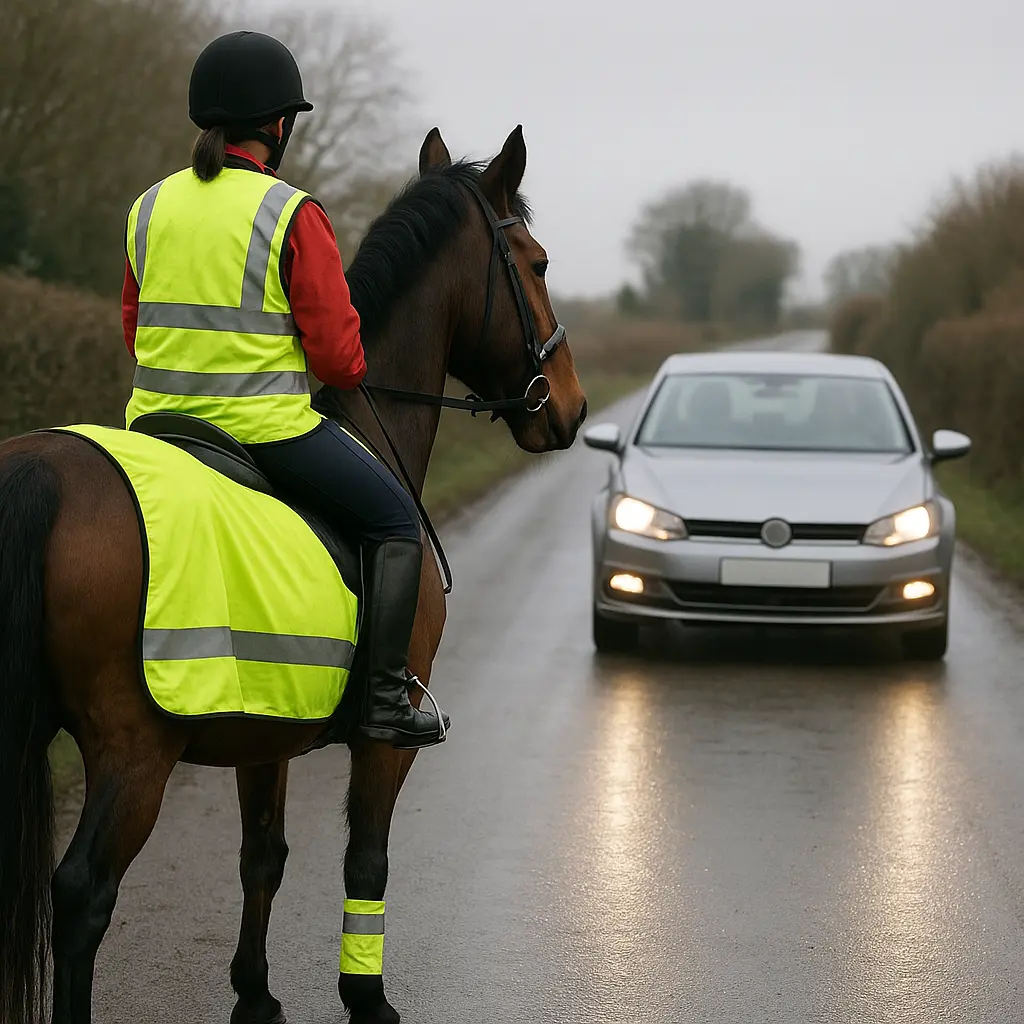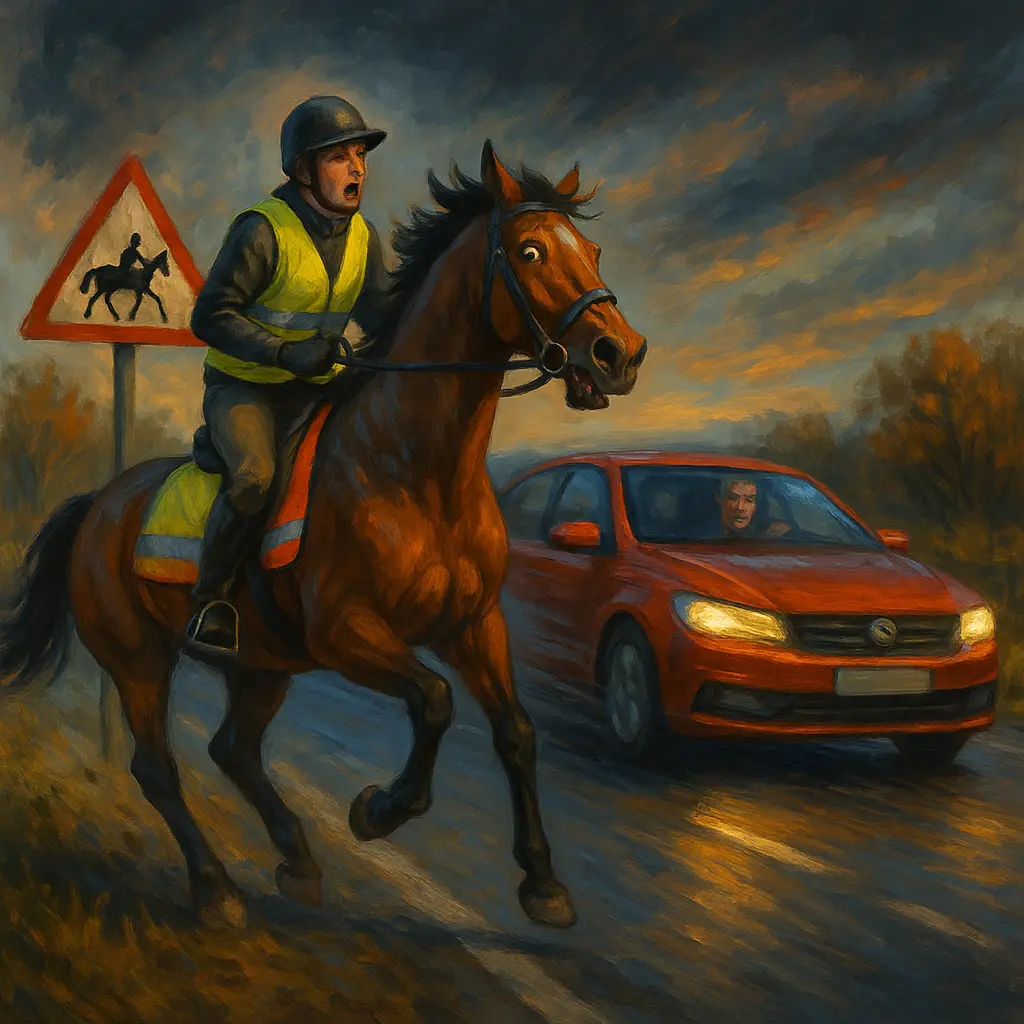
Hacking on UK roads should never feel like a gamble. Yet thousands of near-misses and collisions still happen every year, most because drivers pass too fast and too close. Here’s how to protect yourself and your horse with clear rules, smart planning and the right kit.
Key takeaway: Drivers must pass horses at 10mph or less and at least 2 metres away — and you should ride hi-vis, wear a certified helmet, plan safer routes, and record every incident with the BHS Horse i app.
What the latest UK road safety data shows
In 2024, the British Horse Society recorded 3,118 UK road incidents involving horses, with 58 horses killed, 97 injured, and 80 people injured. Despite an 8% drop from 2023, most incidents (81%) still happened because vehicles passed too closely or too quickly.
These aren’t abstract numbers — they reflect daily risks faced by riders on rural lanes and village roads. The year before, 2023, saw 3,383 incidents with at least one horse fatally injured each week and three equestrians killed, the highest human fatalities since 2018. The pattern is sadly consistent: 81–85% of incidents are triggered by unsafe passing, and almost a quarter involve road rage or abuse.
Across the longer term, BHS data from November 2010 to end-2024 shows 18,683 incidents: 47 human deaths, 697 equine deaths, 1,782 human injuries and 1,625 equine injuries. Under-reporting remains a major issue too. A BHS/Department for Transport-funded study of over 7,000 equestrians found 78% had experienced unreported road incidents, with 4.5% reporting injuries to people or animals in the previous year. This is why reporting every incident is vital to drive change.
“Looking at the 2023 statistics, it is clear that a significant number of drivers are still unaware of the Highway Code and the importance of driving carefully when passing and approaching horses. This is detrimental to the safety of equestrians.” — Alan Hiscox, Director of Safety at the British Horse Society (BHS), source
The Highway Code rule every driver and rider must know
In the UK, drivers must pass horses at 10mph or less and at least 2 metres away; non-compliance risks fines or prosecution under road traffic law. Riders should give clear slow/steady signals and, on narrow single-file lanes, motorists should stop and wait — even turn off the engine if needed — until it’s safe to proceed.
The 2022 Highway Code update classified horse riders as vulnerable road users and set out simple, lifesaving guidance for drivers and riders alike. The BHS recommends aiming for even more space where possible (up to 6m on single-file rural lanes) because horses can move unexpectedly. If a 2m pass isn’t possible, drivers must wait for the rider’s signal; squeezing by is never acceptable.
When you ride, help drivers do the right thing: sit up, look behind regularly, signal clearly with your arm, and use your voice when appropriate. Keep your horse in walk for passes wherever possible. If traffic builds behind you, choose a safe place to pull in and wave drivers through — on your terms, not theirs.
“While we have seen a small reduction in the number of horse fatalities over the last year, which is positive, it is clear that a significant number of drivers are still unaware of the guidance in the Highway Code.” — Alan Hiscox, BHS Director of Safety, source
Essential kit that makes you and your horse unmissable
High-visibility clothing and a certified helmet are non-negotiable on the road; 98% of UK riders already use hi-vis and helmets, but adding hi-vis to your horse and using a camera makes a measurable difference.
Make yourself and your horse conspicuous from every angle and in every season:
- Rider hi-vis: A tabard or jacket over dark layers dramatically improves detection by drivers. Browse our curated rider high-visibility collection for fluorescent and reflective options built for UK weather.
- Certified helmet: Whether you hack daily or weekly, choose an up-to-standard hat from our riding helmets range for proven impact protection.
- Hi-vis for the horse: Use tabard-style gear over exercise sheets, leg bands and breastplates so the horse is visible head-on and from behind. Explore reflective exercise sheets from trusted brands like WeatherBeeta, LeMieux and Shires.
- Reflective rugs: In autumn and winter, swap to weatherproof sheets with reflective piping; our winter turnout rugs include options with built-in hi-vis detailing for low light.
- Riding camera: Only 22% of riders currently use cameras, yet they provide vital evidence for police and insurers. Mount on your helmet or chest and keep batteries charged before you set off.
Pro tip: Drivers look where light and movement draw the eye. Pair a bright hi-vis tabard with reflective leg bands on your horse so every step catches headlights at dawn and dusk.
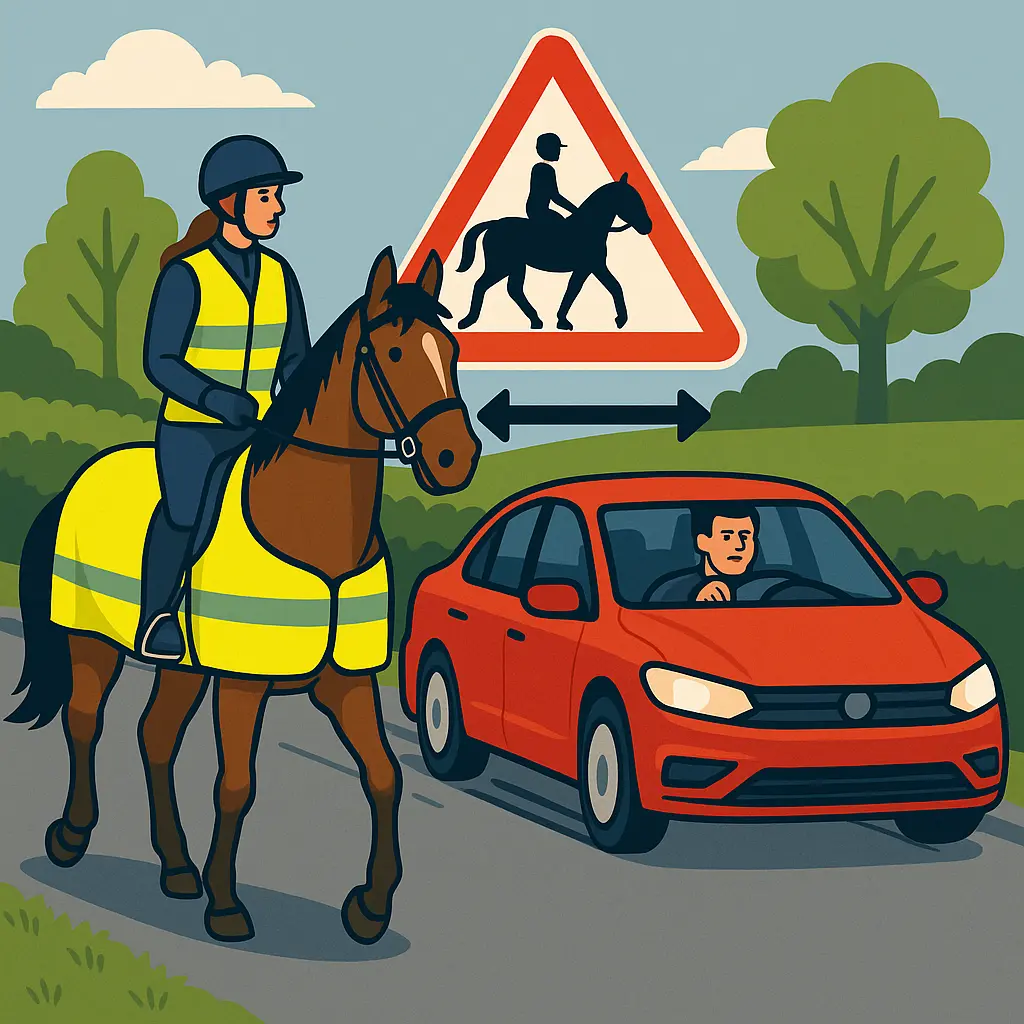
Plan safer hacks with smart timing and routing
Avoid peak traffic and use off-road bridleways wherever possible, planning routes that minimise narrow blind bends and poor sight lines. Choose quieter times of day and adapt your plan for weather, light and road conditions.
Before you tack up:
- Check the forecast: UK winters bring rain, spray and glare; muddy verges reduce your escape options. On wet days, keep routes shorter and simpler.
- Pick your time: Early mid-morning often beats school run and commuter peaks; Sundays can be busier on popular rat-runs.
- Know your outs: Identify wide gateways and lay-bys before you set off — these are your controlled pull-in points when traffic queues behind.
- Favour off-road: Link bridleways and byways to cut road mileage. The BHS regularly maps safer access and highlights Dead Slow hotspots.
Quick tip: On a new loop, walk the most complex sections on foot first to scout visibility, cambers and surfaces. Comfortable footwear from our horse riding boots range makes recce walks far easier, especially in wet verges.
Record every incident with the Horse i app and a camera
Report every near-miss, close pass or aggressive driver using the BHS Horse i app and back it up with camera footage where possible. These reports identify danger hotspots and support police action and policy change.
The BHS’s landmark study found that 78% of equestrians experience unreported incidents — and 4.5% suffer injuries to people or animals in a single year — so every report counts. Submit immediately via smartphone, including photos or video; if you don’t have the app to hand, you can use the online form later that day. Consistent reporting underpins the BHS Dead Slow campaign and strengthens calls for local measures such as warning signage and reduced speed limits.
“We also need more innovation around safety, an increase in the use of cameras, and improvements to highways’ and motoring policies like reduced speed limits, warning signs, more non-slip road surfaces and Highway Code amendments.” — Alan Hiscox, BHS Director of Safety, source
At Just Horse Riders, we strongly recommend adding a lightweight bodycam or helmet cam to your kit. Only 22% currently ride with cameras, yet footage can be the difference between a driver warning and a conviction after an incident.
Train your horse and use clear signals to drivers
A calm, trained horse and a rider who signals early reduce risk each time you meet traffic. Practise your plan at home before you need it on the road.
Build your roadcraft together:
- Desensitise steadily: Work up from bicycles and slow-moving vehicles to faster traffic, rewarding relaxation at every stage. Keep first road sessions short and positive.
- Walk for passes: Slow to walk well before traffic reaches you; don’t trot unless the rider in front and behind can confirm the road is clear, dry and wide.
- Use clear arm signals: Palm down with a slow, repeated lowering motion to request a steady pass; thank cooperative drivers with a clear wave.
- Ride position: On narrow lanes, ride singly and occupy your space; on wider roads, keep a safe distance from the verge to avoid drains and debris.
- Lead when needed: If your horse becomes tense, dismount to lead past a hazard where safe. Good grip from your jodhpurs or breeches and supportive riding boots helps you stay secure on cambered tarmac.
Quick tip: Pre-plan a calm, neutral voice cue (e.g., “Steady, car”) and use it only for passing traffic. Horses learn this rhythm and will start to steady to the cue itself.
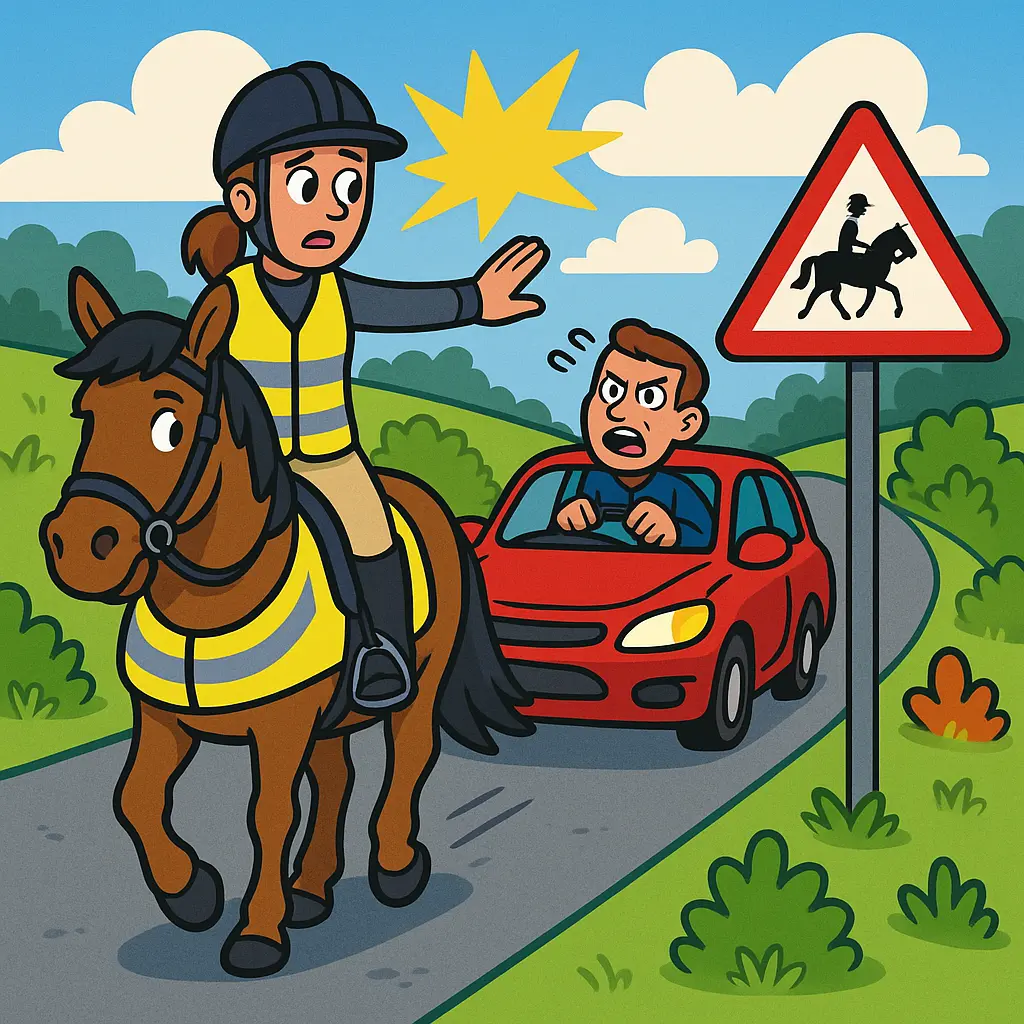
Winter and wet-weather roadcraft for UK lanes
Wet winters and muddy autumn lanes increase slip and spook risk, so slow everything down and boost visibility from nose to tail. Plan shorter hacks, add reflective layers and choose surfaces with grip where possible.
Make winter hacks safer:
- Reflective layering: Choose waterproof, breathable sheets with hi-vis accents so you’re seen in drizzle and low sun; browse our turnout rugs for reflective options suitable for changeable UK weather.
- Leg protection and grip: Consider non-slip shoeing options with your farrier for wet, polished tarmac and back them up with protective gear from our horse boots and bandages collection to guard against knocks.
- Clean legs and hooves: Mud on feathers and soles reduces traction. A quick hose and brush before you ride — plus a rub-down after — pays dividends; keep essentials handy from our grooming range.
- Surface-savvy routes: Avoid steep cambers, mossy edges and shiny tar strips. Where verges are sludgy, stay on the crown of the road and control the pass on your terms.
- Support from within: Good hoof quality underpins grip; discuss diet and supplements with your vet or nutritionist. Explore reputable options in our NAF supplements selection.
Pro tip: Low winter sun plus wet roads equals glare. Max out conspicuity with a bright hi-vis jacket or tabard and reflective leg bands so your movement breaks through dazzled sight lines.
Our Just Horse Riders safety checklist
For UK road hacks, equip yourself and your horse as if a close pass will happen — then ride to prevent it.
- Hi-vis for rider: Tabard, jacket or gilet from our high-visibility collection.
- Certified helmet: Correctly fitted from our riding helmets.
- Hi-vis for horse: Exercise sheet or breastplate from brands like WeatherBeeta or LeMieux.
- Seasonal outerwear: Waterproof, reflective turnout rug for low light and drizzle.
- Leg protection: Brushing or tendon boots from our boots and bandages range.
- Comfort kit: Grippy, weather-ready riding boots and supportive breeches to stay secure in the saddle and on foot.
- Camera: Bodycam or helmet cam, charged and with storage free.
- Reporting: BHS Horse i app installed and ready to submit incidents with photos/video.
At Just Horse Riders, we help UK riders get road-ready with proven kit from trusted brands — and we back the BHS Dead Slow message to make every pass safer.
FAQs
How many horses die on UK roads each year?
In 2024, the BHS recorded 58 horse deaths across 3,118 incidents. In 2023, the average was roughly one equine death per week. Sources: Road Safety GB/BHS 2024 data, Horse & Rider reporting 2023.
What causes most horse-related road incidents?
Unsafe passing by motorists — specifically driving too fast or too close — accounts for 81–85% of reported incidents each year. This pattern held in both 2023 and 2024 BHS statistics. Sources: Horse & Rider (BHS 2023), Road Safety GB (BHS 2024).
Should I report minor road scares with my horse?
Yes. The BHS/DfT study shows 78% of riders experience unreported incidents, and these data gaps slow progress. Use the BHS Horse i app to log every near-miss with photos or video so hotspots can be addressed. Source: BHS study.
What’s the legal passing guidance for drivers near horses?
The Highway Code requires drivers to pass horses at 10mph or less and at least 2 metres away. On narrow lanes where this isn’t possible, drivers should stop and wait — and turn off the engine if needed — until the rider signals it’s safe to proceed. Source: Road Safety GB (BHS 2024).
Is road hacking getting safer for UK riders?
There has been a small improvement — 2024 incidents were down 8% vs 2023 — but under-reporting and driver ignorance persist, and fatalities and injuries remain unacceptably high. Sources: Road Safety GB (BHS 2024), Horse & Rider (BHS 2023).
Why use a camera when riding on roads?
Only 22% of riders currently do, yet cameras provide crucial evidence for police and insurers when reporting close passes, aggression or collisions. The BHS recommends increasing camera use as part of wider safety innovation. Source: BHS study.
What else can I do right now to reduce risk?
Ride in hi-vis, wear a certified helmet, add reflective gear to your horse, avoid peak traffic times, plan routes with off-road links, and report every incident via Horse i. Consider leg protection and discuss non-slip shoeing with your farrier for winter roadwork.