Buying, selling, or teaching riding with horses in the UK comes with clear legal duties — especially if you’re earning money from it. Get those right, and you protect horses, riders, and your business.
Key takeaway: If you hire out horses or give riding instruction as a business in England, Scotland, or Wales, you must hold a local authority riding establishment licence and meet strict welfare and safety standards.
Do you need a licence to hire out horses or teach riding in the UK?
Yes — if you operate commercially (making a profit, earning fees or commission), you must be licensed by your local authority under the Animal Welfare (Licensing of Activities Involving Animals) Regulations 2018.
This applies across England, Scotland, and Wales to any establishment that hires out horses for riding or provides riding instruction as a business. The government’s statutory guidance is explicit about what counts as a business:
“All activities involving hiring out horses for riding, or instruction in riding, need to have a licence if they’re carried out as a commercial business. To decide if an activity is a business... consider if the operator makes any sale or carries out the activity to make a profit [or] earns any commission or fee from the activity.” — UK Government Statutory Guidance
If you’re making an occasional personal sale, lending a horse without any intent to profit, or your trading income is below HMRC’s trading allowance, you generally do not need a licence. But if you’re buying to resell, hiring out, or instructing for payment, you should expect to be licensed and inspected, with veterinary checks and clear welfare requirements to meet.
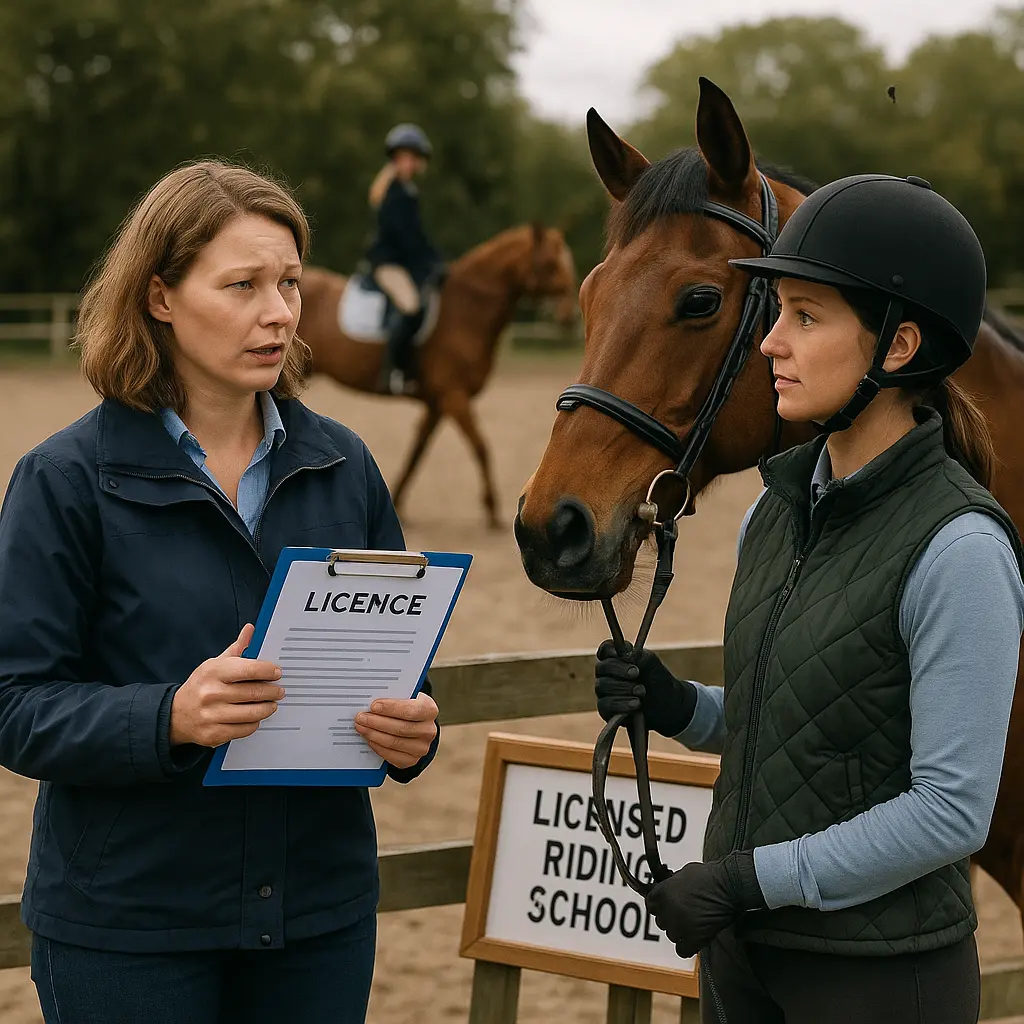
Licensed premises must also make their licence details accessible: the address must be publicly displayed on the premises, and the licence holder’s name/number must appear on any website used for the business.
Who can hold a riding establishment licence?
Licence holders must be over 18, suitably qualified and experienced in horse management, and free from animal welfare disqualifications or relevant bans.
Councils will expect you (and key staff) to show formal knowledge and hands-on experience that match your role. The government guidance sets this out clearly:
“Hold a formal qualification, such as a Level 2 Ofqual regulated qualification appropriate for their role [and] show they have relevant and sufficient knowledge and experience.” — Hiring Out Horses Licensing Guidance (GOV.UK PDF)
Aberdeenshire Council summarises the expectations well:
“You need to prove that you have suitable qualifications and experience of horse management, and that your horses are: in good health and physically fit [and] suitable to be hired out and used for riding.” — Aberdeenshire Council Licensing
There are also mandatory safeguarding rules: no one under 16 can be left in charge of a horse on licensed premises, and young riders must be supervised unless assessed as competent. Applicants with animal welfare convictions, prior licence revocations, or bans from keeping animals will be refused.
Quick tip: When visiting a potential yard (especially when assessing a school for your child), arrive prepared with appropriate PPE. A well-fitted hat is essential — browse our certified riding helmets and visible outerwear such as hi-vis before you go.
How are riding schools inspected and rated?
Licences are granted for 1, 2, or 3 years based on a star rating from inspections, with veterinary checks required at application and renewal.
Your local authority inspector assesses animal welfare standards, premises suitability, staff training, record-keeping, legislative compliance, and prior history. The better your compliance and confidence in sustained standards, the higher your star rating and the longer your licence period. In all cases, horses used for licensed activities must be in appropriate health and fitness for their workload, with the British Horse Society (BHS) setting clear expectations:
“All horses should be in a healthy condition and those in work should have fitness levels appropriate to their workload.” — BHS Approved Centre Criteria
Licensed premises must display the licence where the public can see it and include the holder’s name/number on any website used to promote the business. Expect both scheduled renewals and the possibility of spot checks if concerns arise.

What records and horse standards are legally required?
Every licensed horse must be recorded with its name, unique equine life number (UELN), and microchip number; adding or changing horses requires veterinary certification of fitness and a licence variation.
This documentation underpins traceability and welfare. All horses in the UK must be microchipped by law, with numbers verifiable via the passport. When you add a new horse to a licensed activity, a veterinary surgeon must certify it is fit for the intended work before it’s used for lessons or hire. If your premises also keep horses aged three or under, they must be registered and available for inspection.
Beyond paperwork, inspectors look for robust welfare management — adequate feeding, appropriate turnout and stabling, regular exercise, and safeguards for emergencies such as fire or flood. The standard is simple: horses must be in good health, physically fit, and suitable for the activity they’re being asked to perform.
Pro tip: When viewing horses (especially recently imported cobs or Irish Sport Horses), take a few minutes to check microchip details match the passport and the yard’s records. A handheld scanner helps, but your vet can also confirm this during the pre-purchase exam or arrival check.
How much does a licence cost and how long does it last?
Fees vary by local authority; for example, Aberdeenshire charges £295 plus veterinary fees for a new application, while Bristol lists £92 application + £331 licence + vet fees. Licences last 1–3 years depending on your star rating.
Budget for both the administrative fee and independent veterinary inspection/visit costs. Many councils publish fee schedules online and will advise what supporting documents you’ll need (insurance, training logs, horse lists, emergency plans). Higher star ratings (achieved through strong compliance, excellent care standards, and qualified staff) typically unlock a longer 2–3 year licence period and fewer renewal burdens — though veterinary involvement remains a routine requirement.
Remember: any changes to your operation (e.g., adding horses to the ride list, expanding facilities) may require a licence variation and fresh vet sign-off to keep you compliant.
Buying from Irish dealers: what must UK buyers check?
Verify licensing if the seller or agent is operating commercially in the UK post-purchase, and insist on horse records (name, UELN, microchip) plus veterinary fitness certification.
Cross-border buying is common — especially for sensible cobs and ISH types — but the legal responsibilities still bite once the horse arrives. If you’ll be hiring out the horse, giving paid instruction, or reselling as a business, you fall within the licensing regime and should ensure the operation you’re engaging with is compliant. Before committing, do the following:
- Check the seller/agent’s local authority licence if they’re advertising or trading in the UK; look for publicly displayed licence details and a named licence holder on their website.
- Ask for the horse’s name, UELN, microchip number, and vet fitness certification (licensed yards adding a horse must hold this).
- Verify that the passport and microchip match; UK law requires all horses to be microchipped, including those imported from Ireland.
- Request evidence of relevant qualifications (e.g., Level 2 Ofqual or equivalent) for the agent or instructor you’re using.
- Undertake an initial rider assessment and ask to see risk assessments for equipment and activities, including PPE policies.
- Confirm emergency procedures, supervision of under-16s, and absence of any animal welfare convictions disqualifying the operator.
For transport and arrival, plan practically. Protect legs in transit with travel boots and bandages, and have a basic arrival kit ready: grooming kits for a quick health and coat check post-ferry, and a well-stocked first aid kit for minor knocks. On arrival in a British winter (typically wet and cold from November to March), ensure you have suitable rugging: our winter turnout rugs and stable rugs help keep newly imported horses comfortable as they acclimatise.
At Just Horse Riders, we see many customers choose well-cut, waterproof brands known for UK weather. Explore WeatherBeeta rugs for reliable coverage while your new cob or ISH settles into British conditions.
Quick tip: If you’re visiting a busy yard or port to view or collect, wear a modern hat and visible layers — our riding helmets and hi-vis make it easy to stay safe around moving horses and vehicles.
Practical compliance checklist you can use today
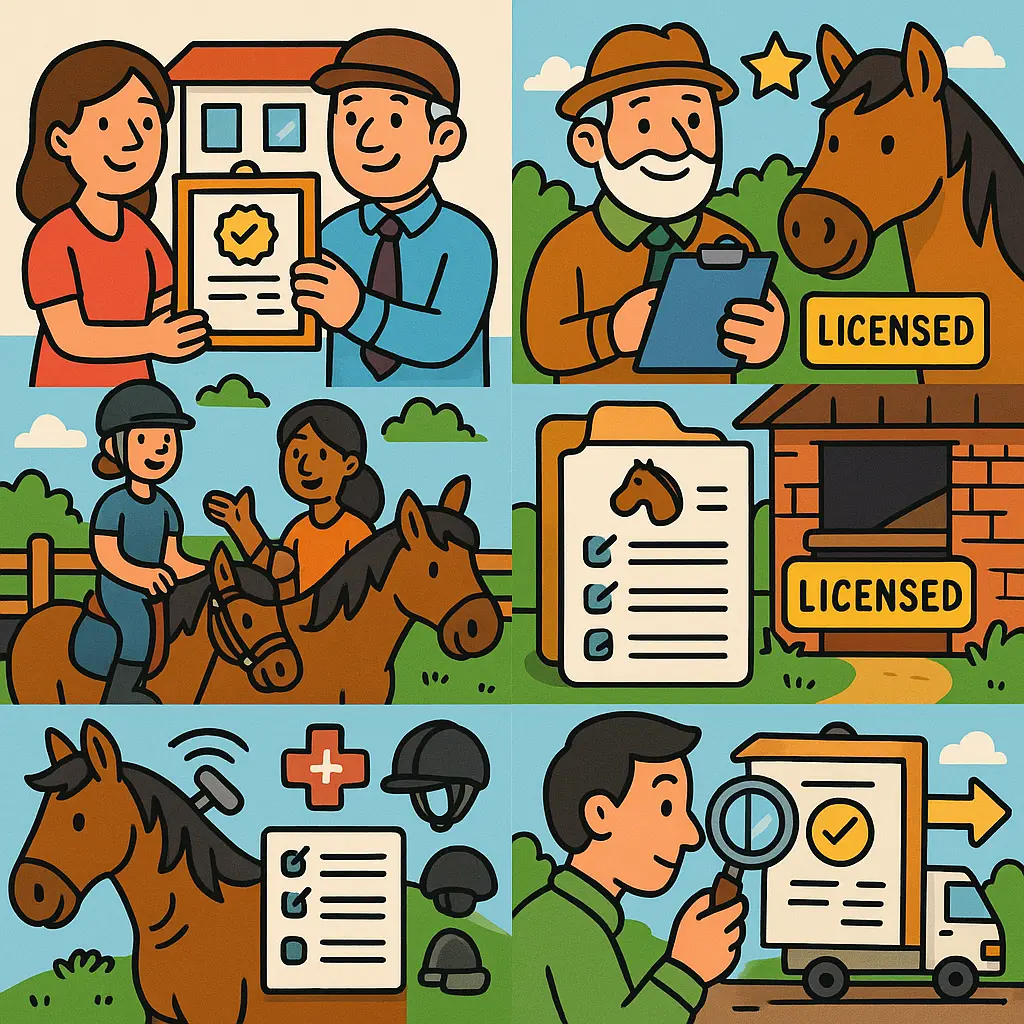
Use this 10-step checklist to audit any riding establishment or agent before you buy, book, or bring a horse home.
- Confirm business status: If hire/lessons/sales are for profit or involve fees/commission, expect licensing under the 2018 Regulations.
- See the licence: Check the licence is current, publicly displayed on site, and that the holder’s name/number appears on their website.
- Check inspections: Ask for the latest star rating and inspection notes; confirm that vet checks are up to date.
- Verify staff credentials: Look for Level 2 Ofqual-regulated qualifications or equivalent, plus evidence of ongoing training.
- Review risk assessments: There should be documented assessments for riding activities and equipment, with clear PPE requirements for riders.
- Assess welfare standards: Horses should be in healthy condition, correctly fed, with fitness appropriate to workload (as per BHS criteria).
- Match the paperwork: For each working horse, confirm the name, UELN, and microchip number against the passport; changes should have vet fitness certification and a licence variation.
- Safeguarding: Under-16s must not be left in charge; ensure young riders are supervised unless deemed competent.
- Emergency planning: Ask about fire, evacuation, and veterinary emergency procedures; look for clear signage and trained staff.
- Prepare your kit: If you’re transporting or trialling, pack travel boots, a simple grooming kit for arrival checks, and season-appropriate turnout rugs for UK weather.
Pro tip: Keep a simple photo log of licence displays, horse ID pages, and microchip confirmations during your visit. It helps you compare yards later and creates an audit trail if you need to raise concerns.
FAQs
Do I need to check if an Irish horse dealer is UK-licensed when buying a cob?
Yes — if they are operating commercially in the UK (for example, reselling or hiring out post-import), they require a local authority licence under the 2018 Regulations. You can ask to see their licence and confirm details with the relevant council.
What records must a trustworthy agent provide?
The horse’s name, unique equine life number (UELN), microchip number, and a veterinary fitness certification if the horse is being added to a licensed activity. Always cross-check the microchip with the passport.
Can I buy a horse without a licence if I’m not running a business?
Yes. Personal purchases don’t require a licence. A licence is needed when you’re hiring out horses or giving riding instruction commercially, or reselling as a business (unless your trading income is below HMRC’s trading allowance).
How often are licensed premises inspected?
There’s an initial inspection for a new licence, veterinary involvement at application and renewal, and ongoing inspections tied to your star rating and licence term (1–3 years). Councils may also conduct spot checks.
What disqualifies someone from getting a licence?
Animal welfare convictions, prior licence revocations, or bans from keeping animals will typically disqualify an applicant. Councils will check background and compliance history.
Do all horses need to be microchipped for UK import and use?
Yes. All horses must be microchipped, with the number verifiable via the passport. Licensed yards must record each working horse’s microchip and UELN, and update records when horses change.
What should I bring when viewing or collecting a horse in winter?
Wear appropriate PPE (a well-fitted riding hat and visible layers), and bring essentials for transport and arrival: travel boots, a compact grooming kit, and weather-appropriate stable rugs or turnout rugs so your new horse can settle comfortably in UK conditions.
At Just Horse Riders, we’re here to support the welfare-first approach that licensing is designed to uphold. If you need help choosing fit-for-purpose equipment — from turnout rugs to WeatherBeeta rugs — our team is on hand, and our 13,500+ verified reviews speak for themselves.