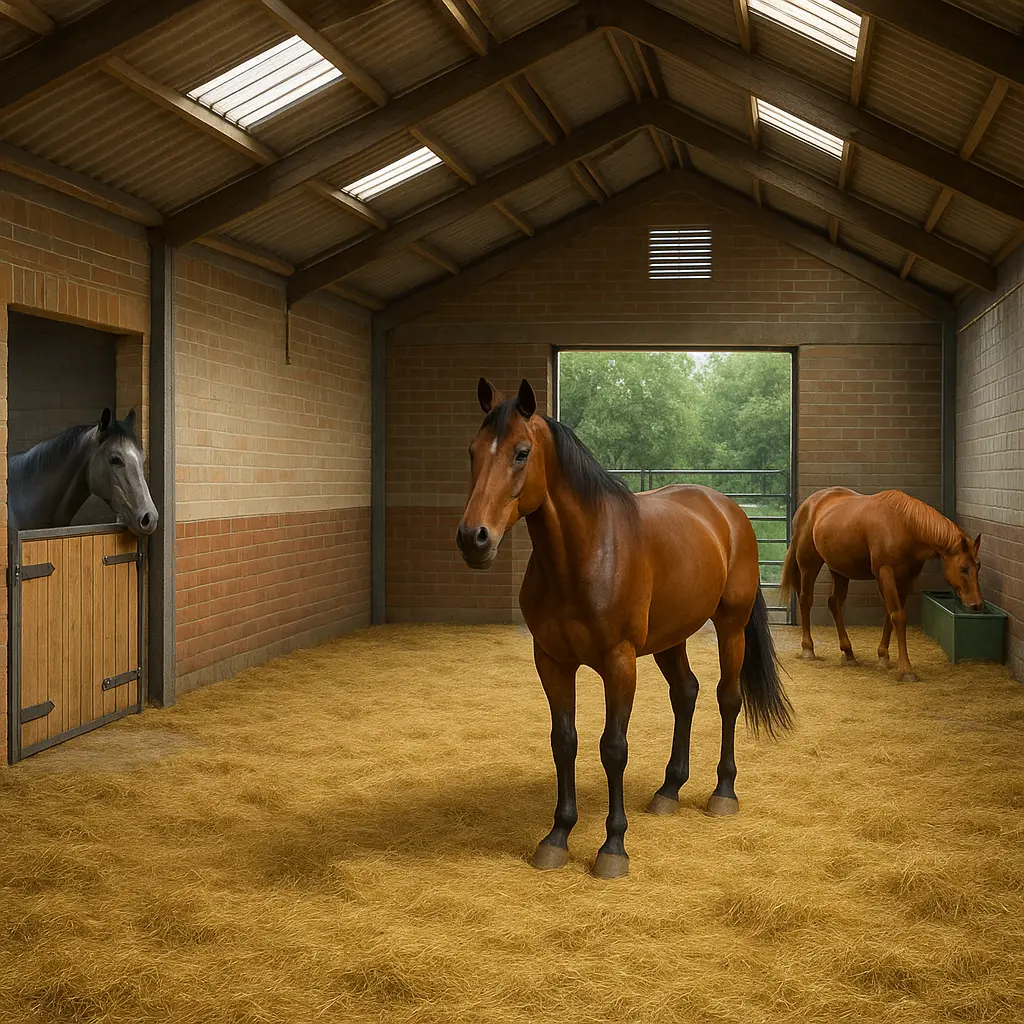
Stable size isn’t just a comfort issue — in the UK’s wet, muddy climate, the right dimensions, roof height and ventilation directly affect your horse’s health, behaviour and safety. Get these right now and you’ll prevent injuries, respiratory flare-ups and yard stress all winter long.
Key takeaway: In the UK, follow the British Horse Society minimums (12ft x 12ft for most horses, 12ft x 14ft for 17hh+), ensure 9–11ft roof height with ridge ventilation, and scale up space for communal housing (8–12m² per horse) to keep horses healthy and calm.
Minimum stable sizes in the UK: the BHS numbers
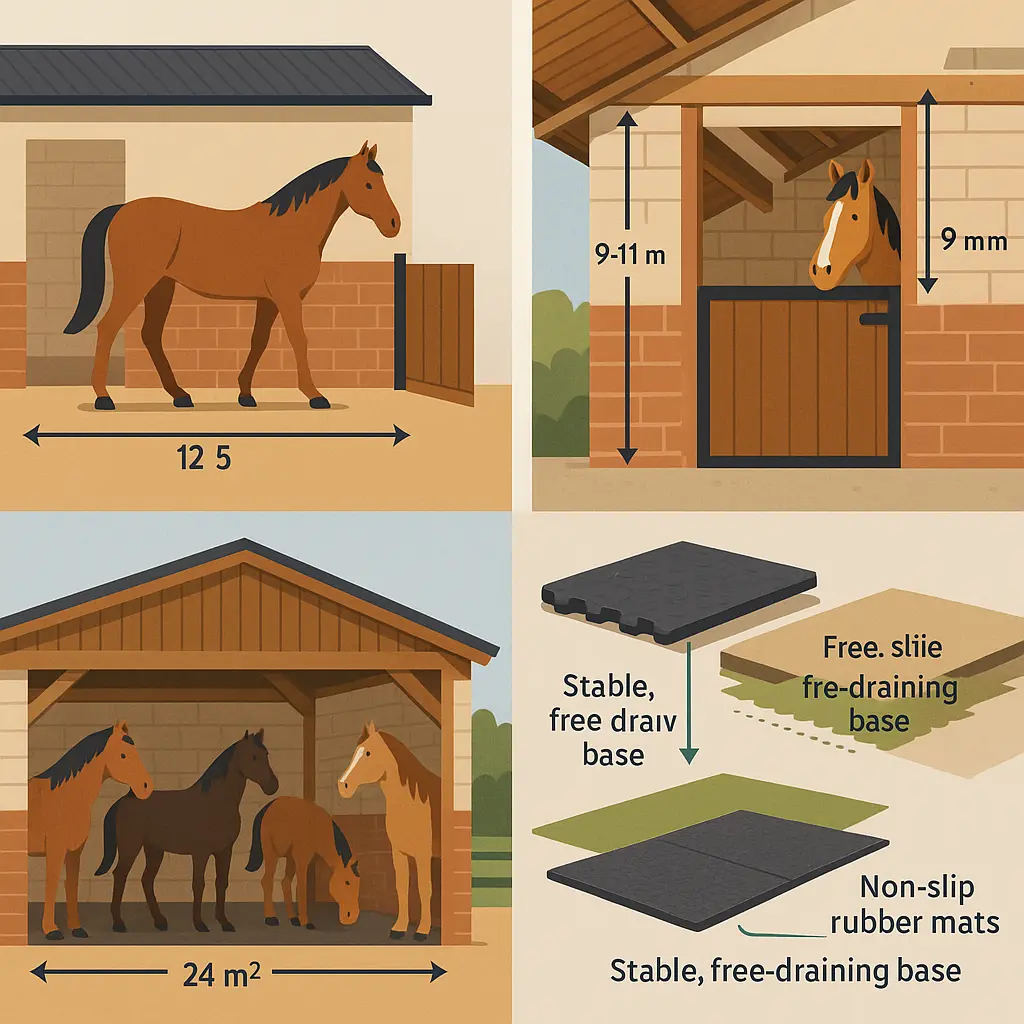
The BHS states a minimum 3.65m x 3.65m (12ft x 12ft) for most horses; 3.65m x 4.25m (12ft x 14ft) for large horses (17hh+); 3.05m x 3.05m (10ft x 10ft) for ponies; 3.05m x 3.65m (10ft x 12ft) for large ponies; and 4.25m x 4.25m (14ft x 14ft) for a foaling box.
These are welfare-led measurements from the UK’s equestrian authority, the British Horse Society (BHS). They’re designed to allow a horse to turn, lie down and get up safely — the absolute baseline for good management under the Animal Welfare Act 2006. As the BHS puts it:
“As a minimum, stables must be big enough to allow your horse to turn around and lie down and get up comfortably. All passageways should provide sufficient room to enable horses to be led safely past others.” — BHS Stable Safety
Many horses will benefit from more than the minimum, especially broader, longer-backed types or highly active individuals. A simple rule of thumb is to add 10–20% to the footprint if your horse regularly scuffs bedding, struggles to turn, or is coming back into work and likely to be exuberant.
Quick tip: Measure the internal usable space, not the external wall-to-wall footprint. Allow room for drinkers, hay bars and mangers that eat into standing area.
Roof heights, doors, and passageways: what’s safe?
Set roof height at 2.7–3.3m (9–11ft), with at least 0.9m (3ft) clearance above the horse’s ears when standing; fit doors at least 1.2m (4ft) wide and 2.3m (7.5ft) high, with a 1.2m high bottom door.
Roof height isn’t only about headroom — it’s your first line of defence against condensation and respiratory irritation. The BHS highlights adequate ventilation and air circulation as essential for welfare, recommending eaves and ridge openings to move moist air out of the building. In UK winters (typically October to March), when humidity and mud are at their worst, this airflow helps dry bedding and reduce ammonia build-up. Door and passage sizing matters just as much for safe daily handling. The New Forest National Park Authority guidelines (citing the BHS) specify a minimum stable door of 1.2m wide and 2.3m high to prevent bangs and scrapes when turning a horse in or out.
Pro tip: Aim for a roof overhang of 1.2m+ to keep rain off the doorway and reduce the muddy “gateway trap” that forms on clay yards.
Communal barns and loose housing: how much space per horse?
Allow 8–12m² per adult horse in loose housing and at least twice the single loose box area per horse in communal barns to permit free movement and reduce bullying.
If you’re running a group system, two respected UK/IE guidance points align on minimum space:
- TEAGASC stable building guidance: 8–12m² per adult horse for loose housing.
- Blue Cross: in shared barns, allocate at least double the single box area per horse (e.g., 24m² for a standard horse) to minimise conflict and allow escape routes.
For three standard horses, that means 24–36m² total at the absolute minimum, with multiple access points so lower-ranking horses aren’t trapped. If your group includes a big 17hh+ type, scale up accordingly and keep feeding passages at 1m+ wide to avoid flashpoints at hay or feed areas.
For field shelters, UK manufacturers recommend a 7.2m x 3.6m unit with dual 2.1m openings for a three-horse group so there’s always an exit for the subordinate horse — see Prime Stables for typical specifications.
UK weather: ventilation and drainage matter most
In damp UK winters, prioritise high, ventilated roofs (9–11ft with ridge vents) and good drainage — they dry wet bedding faster and cut respiratory risk.
The BHS stresses that “roofs should be high enough to provide adequate ventilation including good air circulation,” and that some horses will need more than the minimum space to stay healthy in their environment. Add the UK weather reality — long, wet spells and heavy clay in many regions — and you have a clear design brief: move moist air up and out, and keep surface water away from entrances.
Practical upgrades that pay off in winter:
- Fit ridge vents or ventilation grilles to maintain a steady airflow path from eaves to ridge — budget £50–£200 per stable for hardware.
- Use non-slip rubber mats over a free-draining base (well-compacted hardcore or porous concrete). Interlocking 4ft x 6ft mats (12–18mm) typically cost £40–£80 each and quickly improve hygiene and joint comfort.
- Build in a 1.2m+ roof overhang to shed rain from the doorway and protect bedding.
- Site buildings to catch prevailing breezes and avoid pooling water — especially critical on clay, which holds moisture and mud.
Quick tip: On clay-heavy yards, add an extra mat width beyond the threshold and a hardcore apron outside the door to stop mud tracking in and saturating bedding.
When to go bigger: signs your horse needs more space
Upgrade if your horse can’t turn smoothly, lies down reluctantly, paces, or shows scuff marks and rubs — these are red flags the box is too small.
The BHS reminds us that “all horses are individual, and therefore may need a larger stable size above the minimum recommendations.” Behaviour often tells you before measurements do. Watch for:
- Reluctance to lie down or struggling to rise (risking hock or hip knocks).
- Repeated bedding disturbance and wall scuffs at shoulder or hip height.
- Pacing, head tossing or aggression at the door, especially at busy times.
- Thin tail/rump rubs from tight turns.
“A cramped or small stable can lead to health issues and behavioural problems. Ideally, a horse should be able to stand, lie down, and turn around comfortably within its stall.” — Hunter Stables
For 17hh+ horses, move from 12ft x 12ft to 12ft x 14ft as a baseline. If your horse is particularly wide or active, add 10–20% floor area to reduce slips when turning and strain when getting up. Better sizing also helps keep bedding drier and reduces the impact of muddy legs dripping off after turnout.
Planning permission and yard layout: what to allow for
Most UK stables require planning permission; some units under 200m² can qualify as permitted development, but always check locally and allow at least two months.
UK planning is nuanced, especially in protected areas and AONBs. As a guide, structures under 200m² gross floor space may be permitted within farmyard limits (overall <300m²), but local policy varies — consult your council early and get written advice. The TEAGASC guidance (applied to the UK by Yard Owner Hub) offers sensible build standards, and the New Forest SPD gives a flavour of dimensions planners expect to see.
Layout priorities for welfare and ease of use:
- Passageways wide enough to lead safely past other boxes; keep corners open for visibility and safer turns.
- Drainage falls away from doors, with a hardstanding apron to combat mud build-up.
- Multiple access points for communal housing to prevent trapping and bullying.
- Roof overhangs and guttering to protect entrances and water away to soakaways.
Pro tip: Plan expansion now. If you expect to add boxes or a field shelter, safeguard vehicle access, drainage routes and power/water runs so you don’t have to rework the whole yard later.
Practical shopping checklist to get your stable working
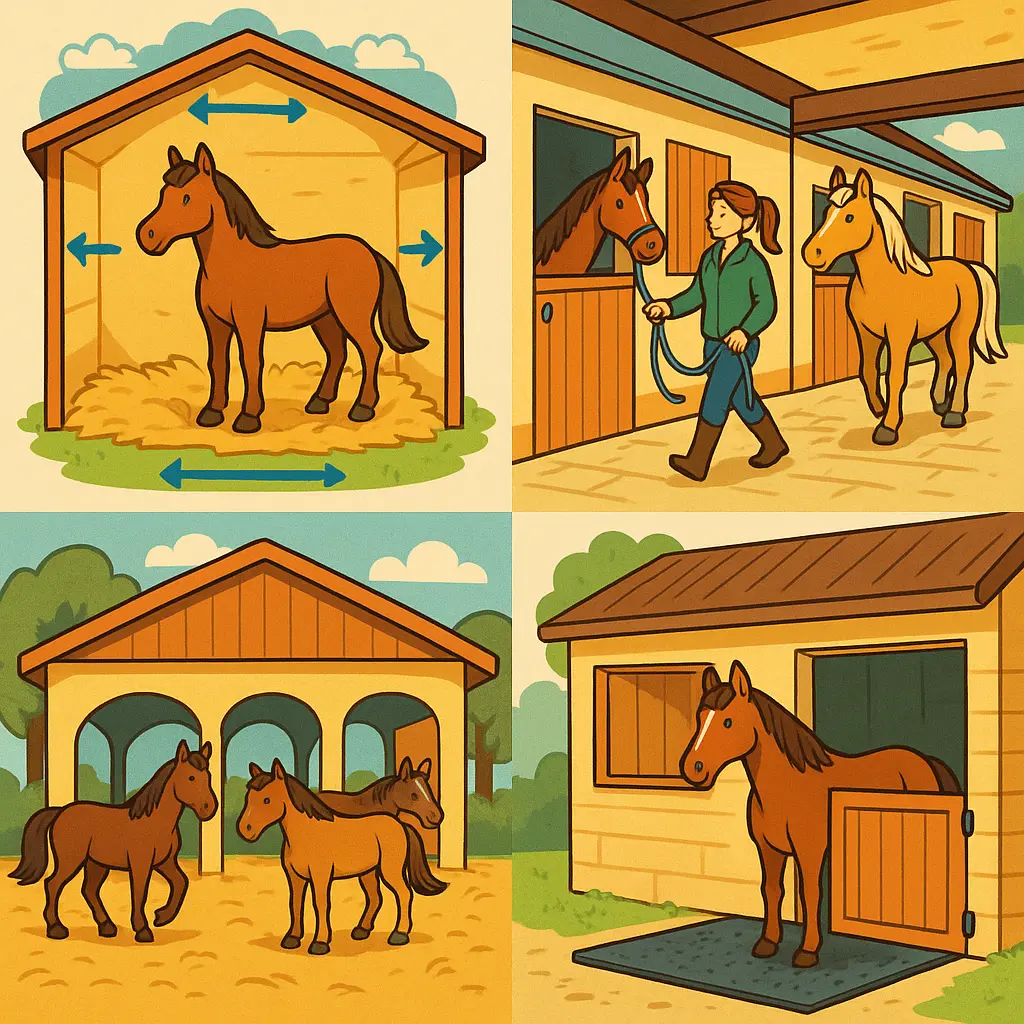
Rubber mats, dust-extracted bedding, ridge vents and safe doors are the quickest, highest-impact welfare upgrades for most UK yards.
At Just Horse Riders, we see the same kit delivering the biggest day-to-day improvements in winter comfort and yard safety:
- Stable flooring: Interlocking rubber mats (12–18mm) over a draining base to cut slips and bedding use. Mats typically cost £40–£80 each; you’ll need 6–8 for a 12ft x 12ft box.
- Bedding: Dust-extracted shavings to protect airways; plan 1–2 bales per horse per week (£10–£20/bale) depending on turnout and mucking routine.
- Ventilation: Ridge vents or grilles (£50–£200) to sustain airflow in wet weather when doors are shut.
- Rugs: In cold, wet spells, keep horses warm and dry to reduce wet bedding and steaming coats. Browse our curated winter turnout rugs and breathable stable rugs, including trusted lines from WeatherBeeta and Shires.
- Grooming and hoof care: Daily mud removal limits bedding contamination and thrush risk. Stock up on yard-favourite grooming tools and hoof picks; add targeted hoof and respiratory supplements for horses prone to winter niggles.
- Field shelters: For three shared horses, look for 7.2m x 3.6m units with dual 2.1m openings (typical UK spec) and lay a hardcore apron to beat mud at the threshold.
- Handling safety: Winter means dark mornings and evenings — pair grippy yard-safe riding boots with hi-vis layers from our hi-vis collection for leading on lanes or between fields.
- Protection when handling: If you’re moving horses through narrower passages, brushing or overreach protection can prevent knocks — see our horse boots and bandages.
Quick tip: Keep a lightweight fleece or liner handy under your rug system to manage temperature swings without overloading the stable with damp gear. Brands like LeMieux offer breathable kit that dries quickly between uses.
FAQs
Most UK horses need at least 12ft x 12ft with 9–11ft roof height; group housing works at 8–12m² per horse with multiple exits and good ventilation.
What is the minimum space for three horses sharing a loose box or barn?
Allow 24–36m² in total (8–12m² per adult horse), with separate access points to avoid bullying. In communal barns, the Blue Cross advises at least twice the single box area per horse to allow free movement and safe escape routes (Blue Cross; TEAGASC).
Do larger horses need more than 12ft x 12ft, especially on clay-heavy yards?
Yes. The BHS minimum for 17hh+ is 12ft x 14ft (3.65m x 4.25m). On clay yards where mud tracks into bedding, go bigger if possible and add rubber mats to protect joints and improve drainage (BHS).
How does UK weather affect stable sizing and design?
Damp, humid winters demand generous ventilation (0.9m+ ear clearance, ridge vents) and drainage to dry bedding and reduce respiratory risk. A 1.2m+ roof overhang helps keep thresholds mud-free (BHS; Blue Cross).
Can I build stables without planning permission?
Sometimes. Units under 200m² can qualify as permitted development within certain farmyard limits (<300m² total), but rules vary — always consult your local authority and allow two months for decisions (TEAGASC via Yard Owner Hub).
What’s the right roof height for ventilation and mud management?
Set roofs at 2.7–3.3m (9–11ft) with at least 0.9m clear above your horse’s ears, and include ridge ventilation so warm, moist air can escape — crucial in the UK’s wet season (BHS).
My horse seems cramped — what should I do first?
Check against BHS minima and upgrade to the next box size if needed (e.g., from 12ft x 12ft to 12ft x 14ft). Watch for reluctance to lie down, pacing, and rubs — all signs the space is too tight (Hunter Stables; BHS).
What door size is safest for everyday handling?
At least 1.2m (4ft) wide and 2.3m (7.5ft) high, with a 1.2m high bottom door, so you can turn horses safely without catching hips or stirrups on the frame (New Forest SPD citing BHS).
At Just Horse Riders, we’re here to help you size and kit out your yard for a safer, calmer winter. If you’re weighing up box sizes or field shelter layouts, start with the BHS minima, add ventilation and drainage, and scale up where your horse’s behaviour suggests they need more room. Then finish the job with the right flooring, bedding and winter kit so your stable works with the weather, not against it.