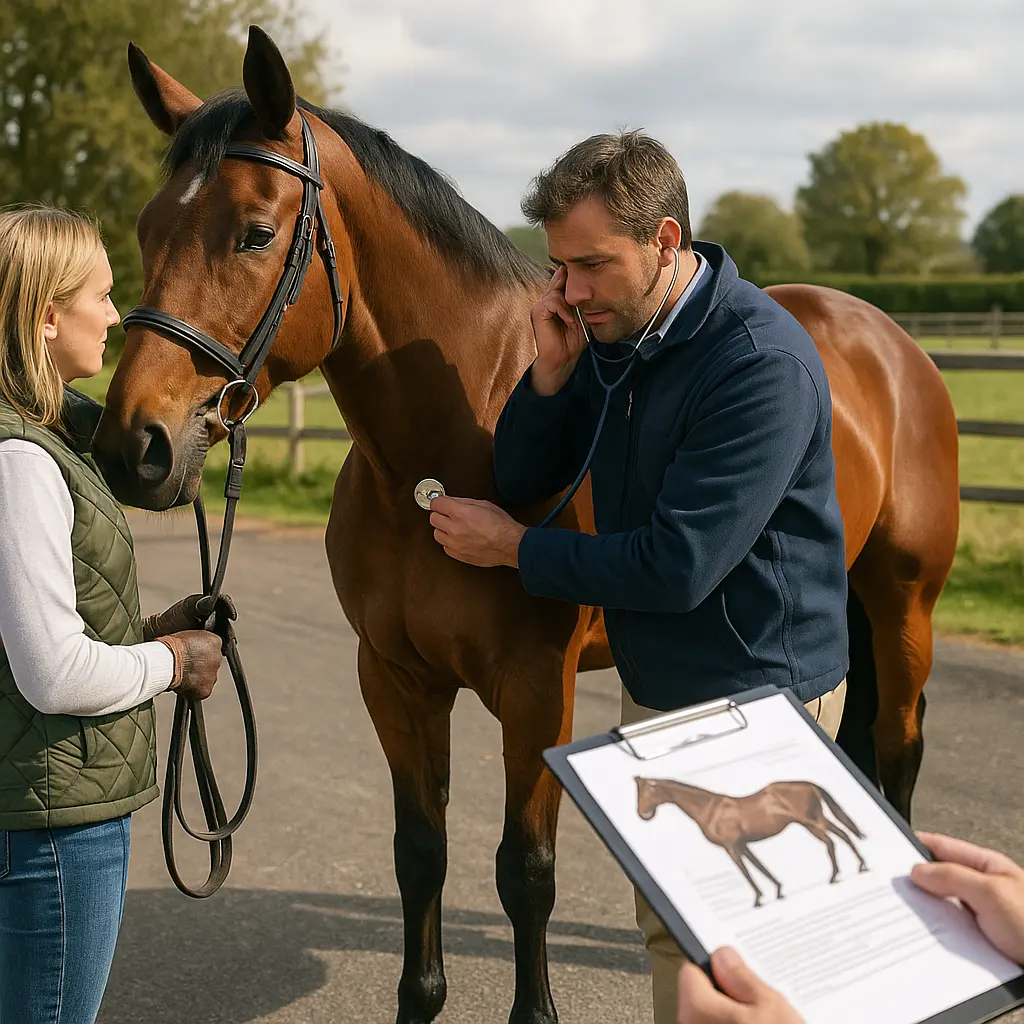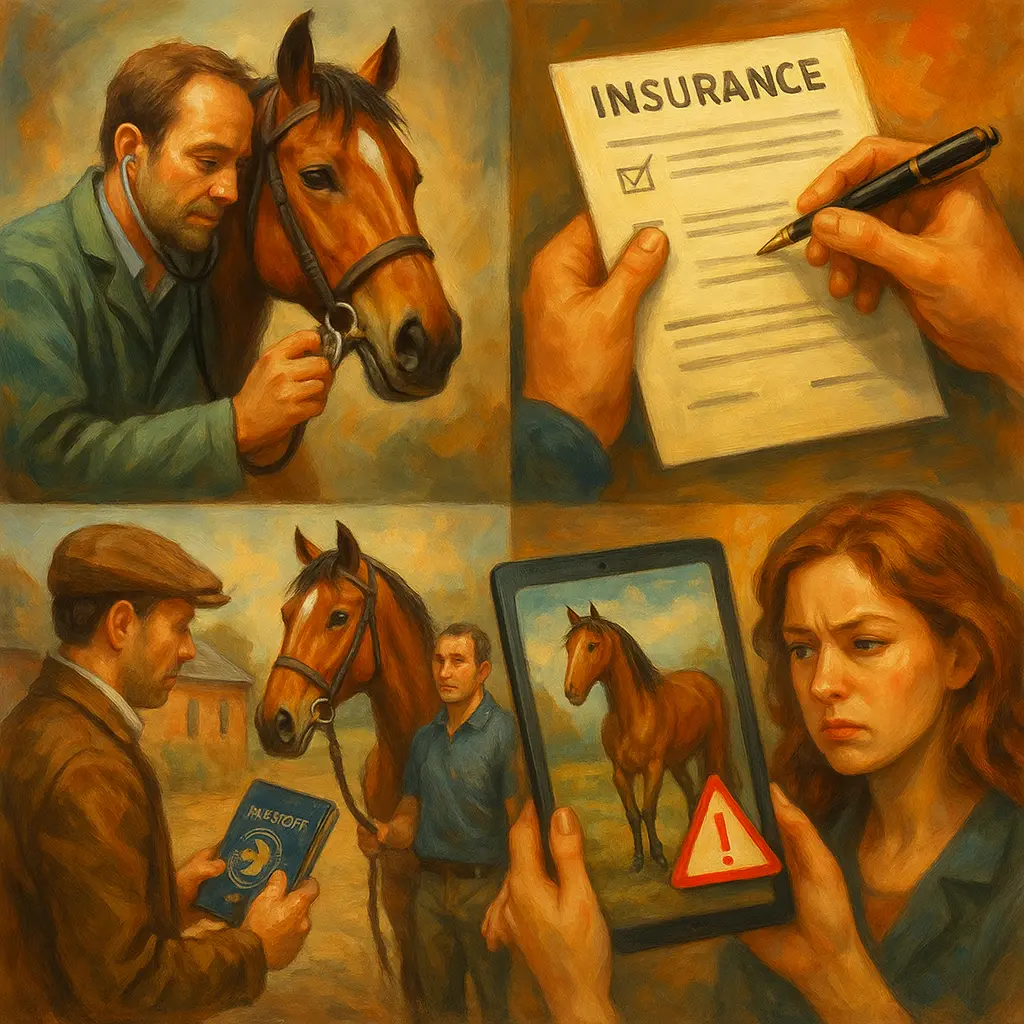
You’re about to make one of the biggest decisions in horse ownership — and the right pre‑purchase vetting can save you heartache, time and money. Here’s exactly how UK vettings work, what to expect on the day, and how to spot red flags in online adverts before you book.
Key takeaway: In the UK, choose a 5‑stage vetting for a thorough assessment of health, soundness and suitability (including exercise and a blood sample); use an independent vet, and remember vets give a suitability opinion — not a pass/fail.
What is a UK pre‑purchase vetting?
A UK pre‑purchase vetting is a veterinary examination to assess a horse’s health, soundness and suitability for your intended use; it’s typically done as a 2‑stage (basic) or 5‑stage (full) exam. During vetting, identity is confirmed via passport markings and microchip, which has been mandatory for all UK equines since October 2020.
The aim is straightforward: reduce your risk. A vetting cannot guarantee the future, but it does provide an expert, structured assessment on the day. Importantly, UK vets no longer “pass” or “fail” a horse; instead, you’ll receive a written opinion framed as: “In my opinion, on the balance of probabilities, the conditions reported do/do not prejudice this horse’s suitability for purchase to be used for…”. This focuses on your intended purpose — from low‑key hacking to affiliated sport.
Identity checks matter. The vet will verify the horse’s passport and microchip number against its markings; you can also take your own microchip scanner to viewings for peace of mind. When buying from photos or videos, this step helps you ensure the horse being examined is the horse advertised.
2‑stage vs 5‑stage: which should you choose?
Choose a 5‑stage vetting for any ridden performance horse or higher‑value purchase; a 2‑stage suits basic screening for unbroken youngsters or when a ridden assessment isn’t needed. The 2‑stage covers a detailed exam at rest and a basic walk/trot in hand; the 5‑stage adds exercise, recovery evaluation, re‑examination, identity checks and a blood sample stored for six months.
The British Horse Society underscores that a vetting is a point‑in‑time assessment that can still flag major issues you might otherwise miss.
“The vet can only assess the condition of the horse on the day of the vetting. However, the vetting is likely to flag up any major issues that you might otherwise miss.” — British Horse Society
Many insurers require a Stage 2 or 5 certificate within a set timeframe after you start a policy, with the level often linked to purchase price. If you plan to compete or need a deeper risk picture (e.g., previous injuries, subtle lameness, or temperament under saddle), go straight to the 5‑stage. For an unhandled youngster, the 2‑stage can be proportionate — but you’ll miss ridden findings, recovery data and the security of an accompanying blood sample.
As Horse & Hound’s vet library puts it, expect findings; the question is how much risk you’re comfortable accepting.
“In most cases the vet will find one or more issues and will then grade the degree of risk so the buyers can decide whether or not to go ahead with the purchase.” — Horse & Hound Vet Library
What happens in a 5‑stage vetting?
A 5‑stage vetting examines the horse at rest, in hand and under saddle, assesses recovery after exercise, re‑checks for changes, confirms identity (passport and microchip), and collects a blood sample stored for six months. X‑rays are not standard in Stage 5 but can be arranged separately.
Here’s the typical flow you can expect in the UK:
- Stage 1: Preliminary exam at rest — heart, lungs, eyes, limbs and skin; conformation; feet and shoes; flexion of joints and palpation. Teeth are checked only to confirm approximate age; ask specifically if you want a dental assessment.
- Stage 2: Walk and trot in hand — straight lines and circles; flexion tests; often lunging on hard/soft surfaces to reveal subtle inconsistencies.
- Stage 3: Exercise — usually ridden (or on the lunge if not backed). The vet looks for soundness under saddle, behaviour, and how the heart and breathing respond to work suitable for the stated intended use.
- Stage 4: Recovery period — rest, then re‑check heart, lungs and any areas of concern as the horse cools down.
- Stage 5: Final trot‑up and re‑examination — looking for changes revealed by exercise and recovery.
- Identity check — passport markings and microchip verification (mandatory for all UK equines since October 2020).
- Blood sample — taken and stored for six months to enable testing later if there’s concern that substances were used to mask health or temperament issues.
Quick tip: If flexion tests or lunging highlight mild sensitivities, plan your aftercare. Supportive bandaging and careful return to work can be helpful after purchase — and you’ll find suitable options in our horse boots and bandages collection.
Who should arrange the vetting — and how?
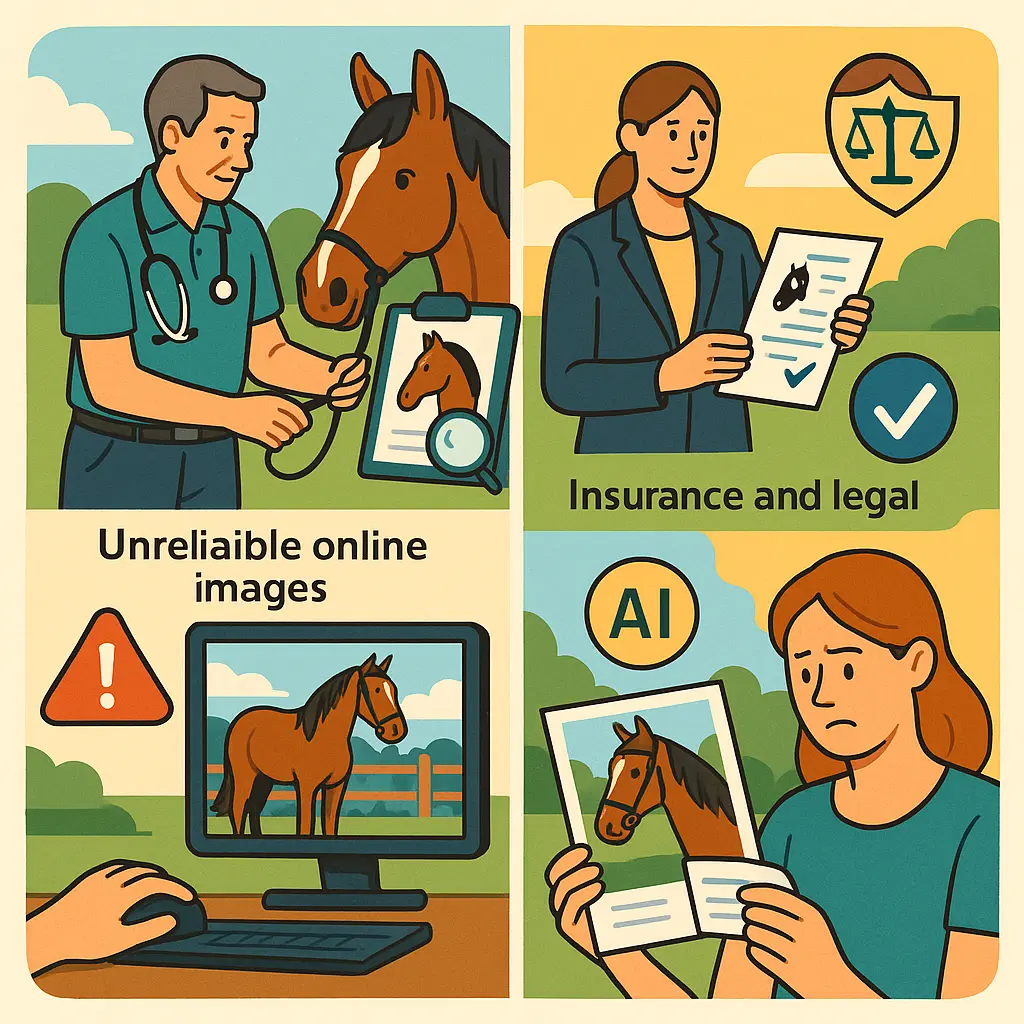
The buyer should arrange the vetting with an independent vet who does not have a relationship with the seller; use the RCVS Find a Vet tool to locate an experienced equine practitioner near the horse. Tell the vet exactly how you intend to use the horse so their opinion is tailored to that purpose.
Independence is key. An unbiased examiner protects both parties and ensures clear documentation. The British Equine Veterinary Association (BEVA) recommends requesting a seller’s declaration before the exam, which records known history and recent medication. This sits alongside the vet’s clinical findings from the day and helps insurers understand any pre‑existing issues.
Horse & Country’s guidance is crystal clear on choosing the right professional:
“It’s essential to choose an experienced and independent veterinarian to perform the 5‑stage vetting to ensure an unbiased evaluation of the horse’s condition. You can do this by asking for referrals or using a resource like RCVS Find a Vet.” — Horse & Country TV Guide
Pro tip: When booking, confirm facilities in advance — a safe arena, access to a firm surface for trot‑ups, and a quiet area for the exam. Share any specific concerns (e.g., “please examine the mouth thoroughly” or “we’d like to see the horse canter in a light contact”).
How do vettings affect insurance and your decision?
Insurers typically require a Stage 2 or 5 certificate within a set window after policy inception, and any issues noted may be excluded from cover; always share the full certificate with your insurer before purchase. Vets give a suitability opinion — not a pass/fail — so expect to weigh minor findings against your goals and budget.
Because the opinion is specific to use, a horse that’s a sound candidate for hacking may not be advised for advanced competition. A stored blood sample (kept for six months) provides recourse if you later suspect a substance masked a problem on the day. If you want extra reassurance about particular joints or feet, consider targeted radiographs — they’re not included in standard 2‑ or 5‑stage exams and should be agreed separately with the seller and vet.
Quick tip: If you’re on a timeline to activate insurance (for example, wanting cover to start on the day of purchase), book the vetting early and ask how quickly the report will be supplied. Share it promptly with your insurer to avoid gaps in protection.
Can photos or videos replace a vetting?
No — online photos and videos cannot replicate a clinical exam, ridden assessment or recovery checks; always verify with an in‑person 5‑stage vetting for ridden purchases. Even genuine images can’t show how a horse moves on different surfaces, responds to work, or recovers after exercise.
Beware AI and copyright pitfalls. AI‑generated horse images are increasingly common in online listings and can look convincing at first glance. Equine photographer Shelley Paulson points out a consistent giveaway:
“To me, this is the biggest tell. The hair patterns in horse’s coats and manes are random. With AI images, you will see a lot of repetition in coat hair patterns, and the mane will be too soft and unreal‑looking.” — Shelley Paulson
Other AI tells include incorrect or impossible tack fit, inconsistent shadows, and background depth that doesn’t match the horse. Also note that copyright theft of equestrian photos can lead to financial penalties — fines up to £50,000 are possible, although smaller claims for the cost of the image are more common. If an advert looks too polished or strangely generic, ask for:
- Unedited, continuous‑shot videos (including transitions and turns) on hard and soft ground
- Close‑ups of legs and feet; clear dental and eye shots
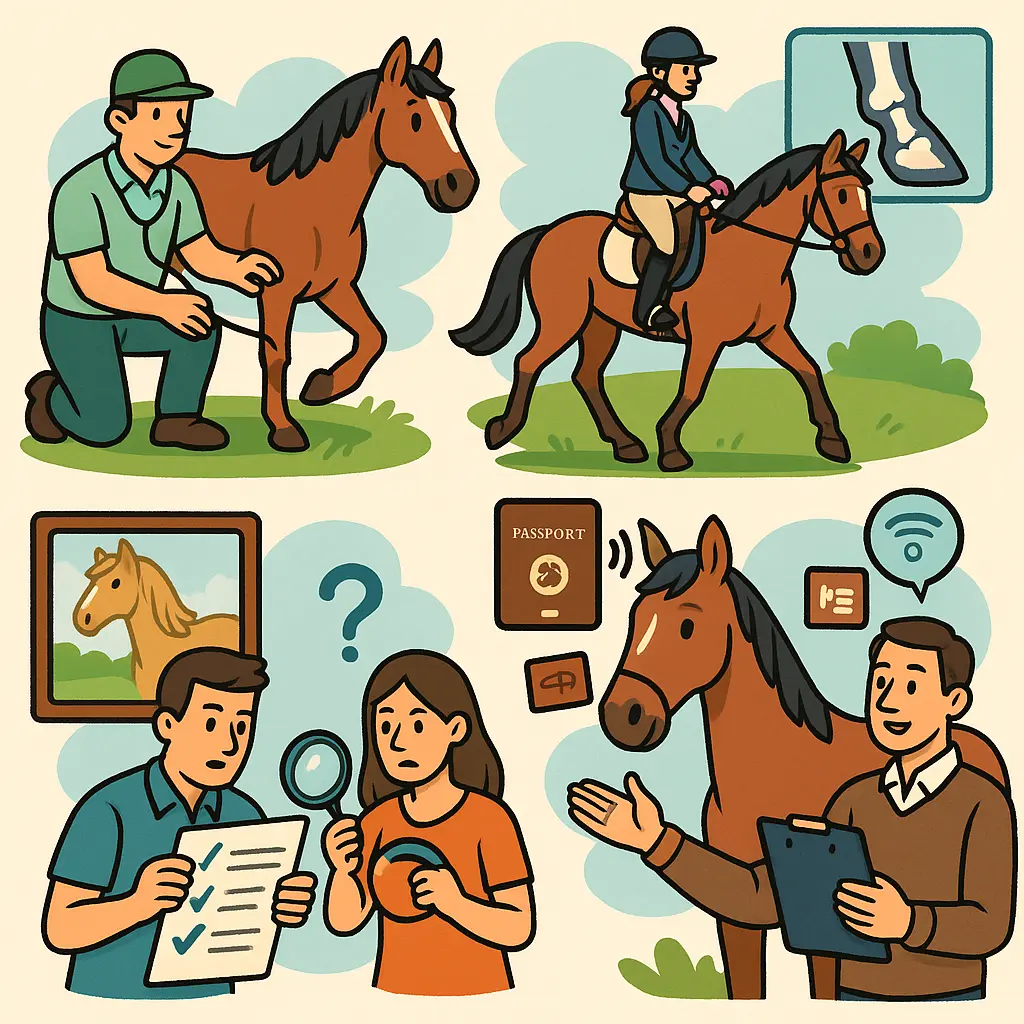
- A live video call at the yard, showing the passport and microchip scan
- Details of shoeing, management and recent workload
But remember: none of that replaces a vet in person. As the BHS stresses, the vet’s role is to assess the horse on the day under suitable conditions, flagging issues you might not see online.
UK‑specific suitability checks not to skip
Ask your vet to assess the horse on firm and soft surfaces, in tack, and with work appropriate to UK hacking and competition, then review recovery; these conditions often reveal issues missed in static photos. British weather and footing vary widely — think wet, windy hacks and grass arenas in spring and autumn — so your vet’s plan should match real‑world use.
Practical points to consider:
- Surfaces: Trotting on a firm track may expose subtle lameness not seen on a surface; schooling on grass is relevant for most UK riders.
- Weather and legs: Repeated wet ground can bring up wind puffs and fill; ensure limbs are palpated before and after exercise.
- Feet: Discuss shoeing history; review hoof balance and any cracks or flares that might worsen on grass.
- Back and saddle area: Even in a pre‑purchase setting, a ridden stage helps identify back sensitivity that only shows under tack.
- Teeth: Standard vetting confirms approximate age; if you’re concerned about mouth comfort or bitting, ask for a specific dental check during Stage 1.
- Further imaging: If the horse is for higher‑level sport, targeted radiographs can complement a clean 5‑stage to manage long‑term risk.
Pro tip: If your vetting happens in summer but you’ll be winter hacking, plan ahead with appropriate protection. Browse our winter turnout rugs — popular options from brands like WeatherBeeta help keep coats healthy when the weather turns.
What to prepare and buy before and after vetting
Prepare safe facilities for trot‑ups, a suitable area for ridden work, the passport, and someone experienced to handle and ride (if appropriate); after the vetting, plan management and kit based on the report. Small adjustments after purchase — from conditioning to limb support — can make a big difference.
Useful kit and preparation ideas:
- Rider safety and comfort for the ridden stage: a well‑fitting riding helmet and comfortable, grippy jodhpurs or breeches help you ride accurately so the vet sees a true picture.
- Leg care and support: If the vet notes sensitivity on flexion or minor wind puffs, plan a phased workload and consider appropriate boots and bandages for schooling and travel.
- Coat and skin: Vettings sometimes uncover skin or coat niggles hidden by season or clipping; a solid grooming routine and considered rugging strategy will help you manage them.
- Nutrition and recovery: Where appropriate, supportive products from trusted brands like NAF can form part of a wider management plan discussed with your vet.
- Rugging for the season: If your purchase goes ahead heading into colder months, line up fit‑for‑purpose outerwear — our curated range of turnout rugs keeps horses dry and comfortable when the UK weather gets lively.
Pro tip: Bring a simple first‑aid kit to the viewing and vetting (saline, gauze, thermometer) and have a head torch handy if light fades — British afternoons don’t last long in winter. A portable microchip scanner can also give you confidence at first viewing before the formal ID check in the vetting.
FAQs
What’s the difference between a 2‑stage and a 5‑stage vetting?
A 2‑stage covers a thorough examination at rest plus a walk/trot in hand; a 5‑stage adds ridden (or lunge) exercise, a recovery period with re‑checks, identity verification (passport and microchip), and a blood sample stored for six months. X‑rays are not included in either and must be arranged separately if desired.
Do horses pass or fail a vetting?
No. UK vets provide a written opinion on suitability “on the balance of probabilities” for your stated purpose, noting any issues and the degree of risk; it’s then your decision whether to proceed.
How long is the vetting blood sample kept?
Six months. This allows testing later if there’s concern that substances were used to mask health or temperament issues on the day of the vetting.
Should I use the seller’s vet for the pre‑purchase exam?
No. Arrange an independent vet with no connection to the seller to avoid conflicts of interest; the RCVS Find a Vet tool can help you locate an equine practitioner nearby.
Can online photos and videos replace a vetting?
No. Photos and videos cannot assess soundness under saddle, recovery after exercise, or clinical findings; in addition, AI‑generated or stolen images can mislead. Always verify with an in‑person exam.
Are X‑rays included in a standard vetting?
No. Radiographs are not part of standard Stage 2 or 5 exams but can be commissioned separately if you and your vet feel they’re warranted for risk management.
Will the vet check my horse’s teeth in detail?
Only to confirm approximate age as standard. If you have specific dental concerns (comfort in the mouth, sharp points, or bitting plans), ask the vet to perform an additional dental check during Stage 1.
At Just Horse Riders, we see the difference a well‑planned vetting makes to long‑term success. Book an independent vet, be clear about your goals, share the full certificate with your insurer, and set your new partnership up with the right essentials — from supportive legwear to weather‑ready rugs — so you can get on with the fun part: enjoying the ride.