Winter is when your livery decision matters most: costs rise, workloads increase, and young horses need consistent, careful management. If you’re weighing up grass, part or full livery for a two-year-old, here’s what to expect in the UK this season — with real prices, inclusions, and practical ways to budget.
Key takeaway: For UK winters, expect £150–£175 per week for full stabled livery with haylage, bedding and daily care; hardy youngstock can manage on winter grass livery at £44–£48 per week if you commit to regular checks and appropriate rugging.
What does winter livery cost in the UK for 2024/25?
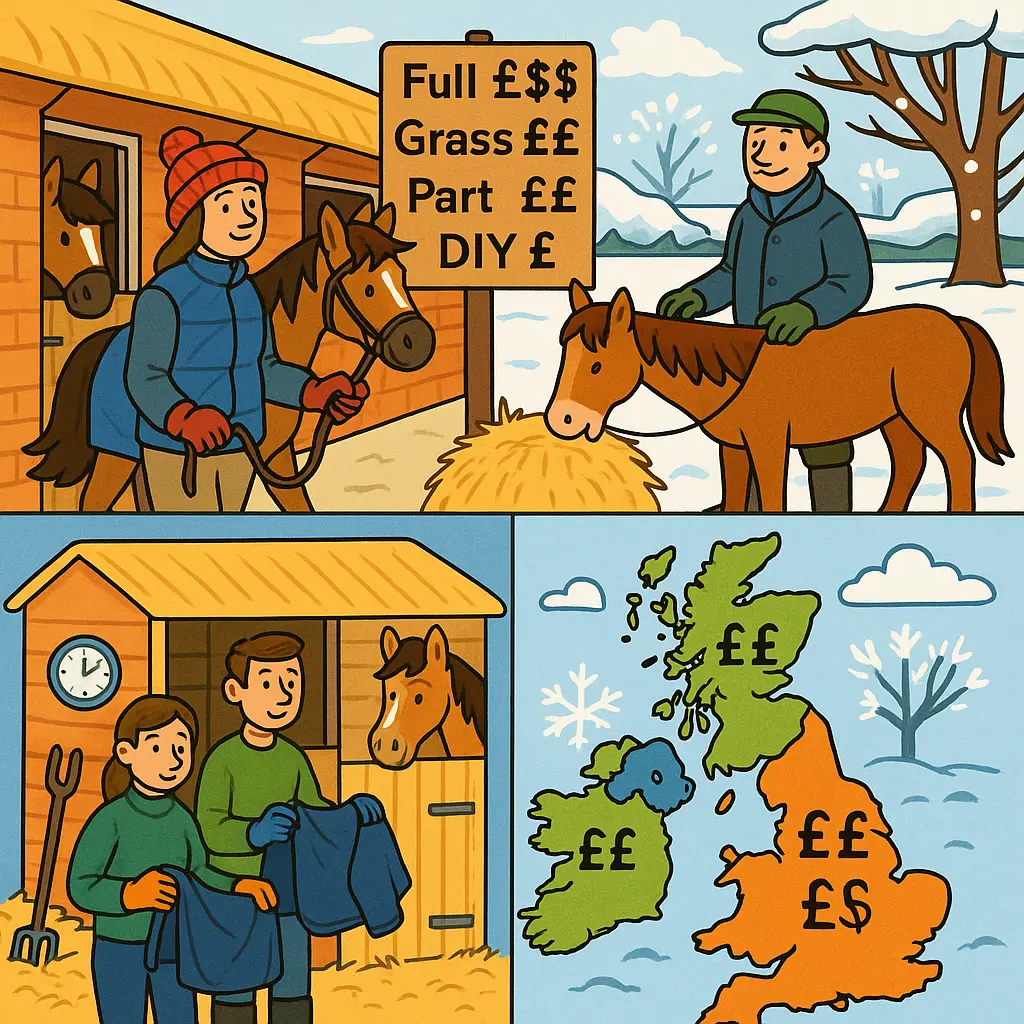
Full winter livery for youngstock commonly sits around £150–£175 per week, while winter grass livery averages £44–£48 per week at example UK yards. Nationally, a 2026 survey reports higher averages across the board: full stabled livery £695 per week (range £303–£1,550), full grass livery £325 per week (range £108–£953), 5‑day part livery £516 per week, and full ridden livery £1,176 per week (Yard Owner Hub 2026 Livery Pricing Survey).
Real‑world yard examples give a practical benchmark for winter 2024/25:
- Full winter livery at Gamston Wood is £165 per week, including daily turnout, twice‑daily feet checks, wood pellet bedding, haylage/hay, basic hard feed and a late‑night check (Gamston Wood Livery).
- 7‑day full livery at Newbold Verdon Equestrian Centre is £175 per week, including bedding (one bale shavings or two mixed), ~8kg hay/haylage daily, mucking out, rug changes and late checks (Newbold Verdon Equestrian Centre).
- Winter grass livery at Alton Riding School is £44 per week for ponies and £48 for horses (summer rates £32/£34) (Alton Riding School).
- DIY with hay/haylage at Cliff Farm is £230 per month for horses (~£53 per week) or £215 for ponies under 13.2hh, including stable, field and facilities (Cliff Farm Livery).
Regional patterns matter: prices are generally higher in England than in Wales (often ~17% lower) or Scotland, and packages vary by what’s included and the yard’s standards (BHS‑approved yards may charge for premium turnout management).
Why does winter livery cost more — and what should be included?
Winter livery costs 20–50% more than summer because of extra forage, bedding, daily turnout/fetching and weather management; good winter packages include haylage/hay, bedding, turnout/fetching, rug changing and at least twice‑daily checks. That uplift aligns with the Yard Owner Hub survey’s findings on seasonal increases (2026 survey).
In practice, a solid winter package looks like this:
- Forage and bedding: ad‑lib or measured hay/haylage plus a suitable bedding (wood pellets or shavings). Gamston Wood includes wood pellet bedding and haylage/hay at £165 per week.
- Turnout routine: daily turnout/fetching, appropriate grouping and management of muddy gateways and shelter.
- Rugging and checks: rug changes as needed, twice‑daily checks and a late‑night check in poor weather.
- Stable care: mucking out, waters, and safe stabling when the weather turns.
- Handling and feet: regular feet picking and safe handling for farrier/vet visits (often included, sometimes charged).
Remember UK winter norms: October–March often brings 2–7°C, persistent rain and heavy mud, which is why stabling, forage and sensible rugging become essential. If your horse is living out, robust waterproof winter turnout rugs and a spare are non‑negotiable; if stabled, add an appropriate stable rug to stay comfortable overnight.
Choosing the right type of livery for a two-year-old
Hardy youngstock usually do well on grass livery (£44–£48 per week in winter) provided you manage checks and rugging, while full stabled livery (£150–£175 per week at typical yards) suits youngsters needing closer supervision. Your choice hinges on temperament, body condition, and your time.
Grass livery pros: freedom to move, social development, and lower cost. Cons: you shoulder more checks, rug changes and field care; in very wet winters, poaching and limited grazing mean higher haylage use. Full livery pros: consistent routines, professional oversight and rapid response in bad weather; cons: higher weekly cost and potentially less field time at some yards.
For a two‑year‑old, prioritise turnout and routine over ridden work. Full ridden livery (averaging £1,176 per week in the 2026 survey) includes exercise that young bones don’t need; instead, focus on calm handling, grooming and leading skills. If you’re developing manners, allow budget for occasional schooling or lunging support (£15–£25 where available) and use supportive kit such as leg boots and bandages for safe handling on slippery surfaces.
Quick tip: Keep grooming regular even on grass livery — a thorough weekly session with quality grooming tools helps you spot weight changes, skin issues and rug rubs early.
How to assess a yard in winter
Choose yards that guarantee daily turnout, safe groupings and twice‑daily checks with a late‑night check in severe weather. These are the foundations of reliable winter care for youngsters.
When you visit, look for:
- Turnout certainty: clear winter turnout policy even in heavy rain, with safe fencing, adequate space and thought‑through grouping for young horses.
- Forage provision: how much hay/haylage is included, how it’s fed (nets, feeders, in‑field stations) and whether there’s a plan when grass is scarce.
- Ground management: well‑managed gateways, tracks or hardstanding to reduce mud and slips.
- Checks and cover: twice‑daily checks, emergency cover, and late‑night checks in bad weather (explicitly included at some yards like Gamston Wood).
- Staffing and standards: consistency, BHS‑approved yard credentials where relevant, and safe handling for young or green horses.
Trial before you commit: many yards offer short‑term or holiday livery — e.g. winter holiday livery at around £26 per night in some examples — which is a smart way to test routines and fit before moving your horse long‑term.
Budgeting checklist: fees, extras and where to save
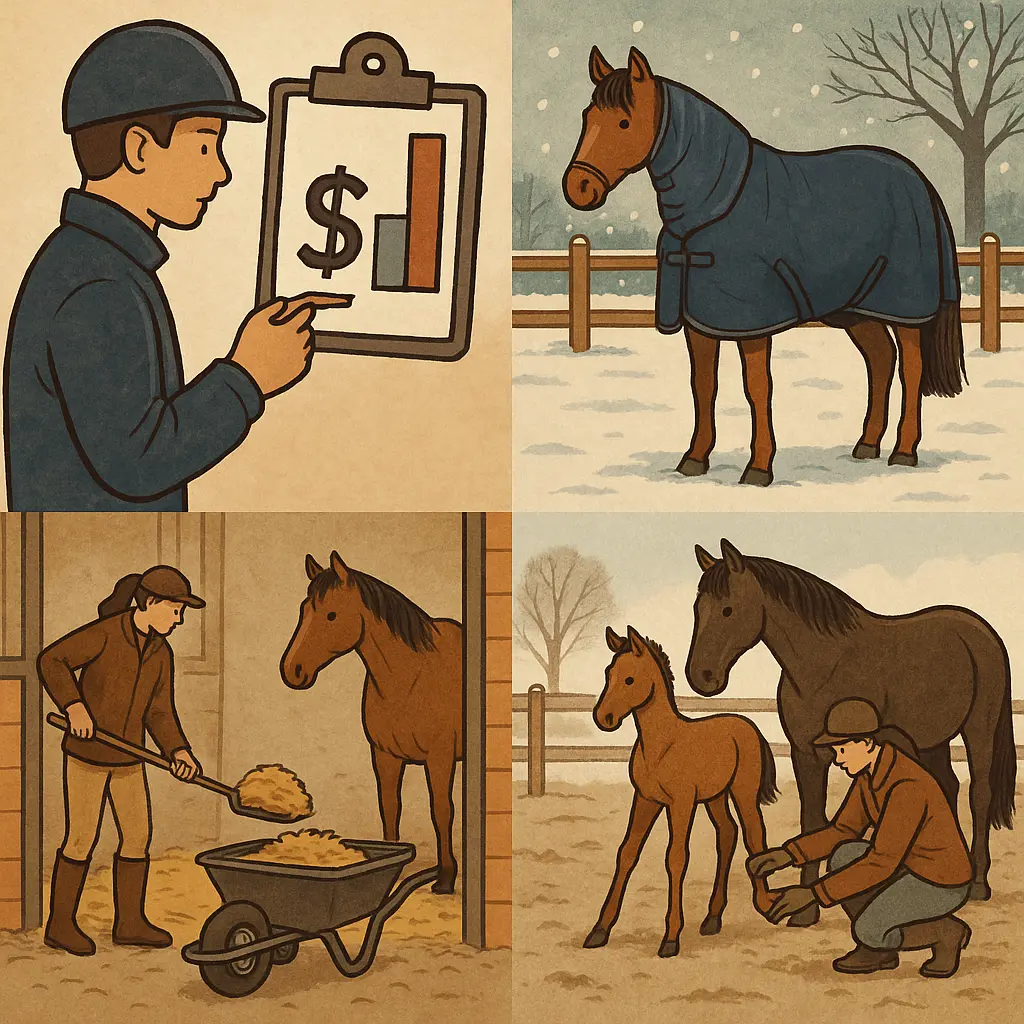
Budget a 20–50% winter uplift and plan for common extras like rug changes (£1–£2.50), turnout/fetching (£3.50–£6) and extra bedding (~£10 per bag). Track what’s included so small charges don’t surprise you in January.
Typical winter add‑ons and how to control them:
- Rug changes and handling: some full packages include daily changes; others charge per change or per service. Good rug hardware (secure fastenings, spare clips and surcingles) speeds yard routines and reduces wear.
- Bedding and forage: assess whether “ad‑lib” is truly ad‑lib and what “one bale” means in practice; add a contingency for extra pellets or shavings when temperatures drop.
- Schooling/lunging: budget £15–£25 if you want occasional groundwork support for your two‑year‑old.
- Clipping and grooming: expect £35–£60 for a clip if needed; frequent grooming helps manage coats without over‑clipping the young horse.
- DIY value: owner feedback suggests £55–£60 per week for DIY including ad‑lib hay/haylage, stables and facilities is competitive (see forum discussions: H&H DIY prices), but factor your time and transport.
At Just Horse Riders, we recommend two sensible places to save without compromising welfare: choose durable, weather‑proof WeatherBeeta rugs or proven yard staples from Shires that last more than one season, and watch our Secret Tack Room clearance for winter essentials before the coldest months bite.
Turnout and mixing ages: keeping youngstock safe
Two‑year‑olds can share fields with older horses if groups are well matched; monitor for hierarchy, nips or chasing, and re‑group if needed. Compatible groupings and plenty of space matter far more than age alone.
While there are no specific BHS or BEVA rules on mixing ages in the sources cited, experienced yard managers aim for balanced herds with adequate forage points to reduce squabbles. Practical safeguards include:
- Ad‑lib forage in multiple stations to discourage guarding.
- Introducing new field‑mates gradually and supervising early sessions.
- Using protective gear like turnout boots or brushing boots during introductions if appropriate.
- Checking legs and feet daily (twice‑daily foot checks are included at some yards) and managing any nicks promptly with your grooming and first‑aid kit.
Pro tip: Youngsters grow fast — keep body condition steady with forage first, and consider targeted supplements only if advised by your vet, farrier or nutritionist to support coat, feet or gut health through winter.
Winter kit list for young horses
Most young horses need a waterproof turnout rug, a stable rug if stabled, and safe handling gear for daily turnout in UK winters. Prioritise fit, freedom of movement and reliable fastenings that stand up to field play.
Your winter essentials checklist:
- Two turnout rugs (one on, one drying) with robust hardware — consider established brands such as WeatherBeeta or style‑led durability from LeMieux.
- Stable rug(s) if your youngster is in at night or during storms: browse our stable rugs.
- Rug spares: replacement clips, leg straps and surcingles for quick fixes in the yard.
- Leg protection for handling and light groundwork: see our boots and bandages.
- Grooming kit to manage mud, skin and rubs: shop proven grooming essentials.
- Optional support: winter conditioning or hoof support from trusted names like NAF in our supplements range.
Quick tip: Label rugs clearly and keep a simple yard‑door checklist (AM/PM turnout, rugs, feed) so anyone handling your youngster follows the same routine.
Regional price notes and how to negotiate
Prices tend to be higher in England and lower in Wales and parts of Scotland; negotiate pony/youngstock rates, multi‑horse discounts and clarify inclusions in writing. Yard Owner Hub’s 2026 data shows Wales around 17% lower on average, with some Scottish pricing moving modestly from previous years (survey).
Negotiation pointers that work:
- Under‑14.3hh often qualifies for a lower rate — many yards list £10–£15 per week less for ponies or small youngstock.
- Ask for a fixed winter package (no refunds for summer turnout) to smooth your budget across the year — forum discussions indicate this is common for part livery at ~£100 per week even with 24/7 turnout April–November (H&H part livery prices).
- Confirm exactly what “included” means (number of bales, kg of haylage, turnout days, rug changes) and put it in the contract.
- If you’re flexible, consider grass livery for winter‑hardy types and redirect savings into quality rugs — our curated range from Shires and WeatherBeeta lasts.
If you’re equipping a youngster from scratch, check our seasonal offers in the Secret Tack Room clearance before the first cold snap.
Conclusion: make winter livery work for you and your youngster
Set your budget around £150–£175 per week for full winter care or £44–£48 per week for grass livery at example yards, then fine‑tune by what’s included and your youngster’s needs. Prioritise turnout, consistent checks and reliable kit, and you’ll ride out the UK winter with a healthy, well‑mannered two‑year‑old ready for spring.
Need to upgrade your winter kit? Explore weatherproof turnout rugs, warm stable rugs and durable boots and bandages — all curated for UK conditions.
FAQs
What is a fair price for full winter livery for youngstock in 2024/25?
£150–£175 per week is typical for 7‑day full winter packages with haylage, bedding, rugging and daily checks, with national survey averages higher at £695 per week for full stabled livery (Yard Owner Hub 2026; examples: Gamston Wood, Newbold Verdon).
Why are winter livery rates higher than summer?
Winter adds forage, bedding, daily turnout/fetching and weather management, which push costs up by roughly 20–50%; some yards list explicit seasonal differences (e.g. Gamston Wood’s winter full livery £165 per week vs lower summer services) (survey, yard example).
Is £60 per week for DIY with hay reasonable?
Yes — owner discussions suggest £55–£60 per week for DIY including ad‑lib hay/haylage, stable and facilities is competitive (H&H DIY prices). For a concrete example, Cliff Farm lists about £53 per week for horses with hay/haylage included (Cliff Farm).
Should a two‑year‑old share fields with older horses?
Yes, if groups are well matched and monitored. Prioritise compatible temperaments, adequate space and multiple forage points; re‑group at the first sign of bullying or repeated chasing. Protective leg boots can help during introductions.
What extras should I expect in winter youngstock livery?
Common extras include rug changes (£1–£2.50), turnout/fetching (£3.50–£6), extra bedding (~£10 per bag), occasional schooling/lunging (£15–£25) and clipping (£35–£60). Some full packages include many of these — confirm in writing.
How do prices vary by horse size or age?
Ponies under 14.3hh often pay £10–£15 less per week; some yards offer youngstock or grass/retirement rates. For reference, winter grass livery examples are £44–£48 per week, and the survey lists grass livery averaging £325 per week nationally.
What kit should I prioritise for a youngster on winter grass livery?
A waterproof, well‑fitting turnout rug (plus a spare), safe halter/lead, grooming kit, and optional boots for handling. If stabled part‑time, add an appropriate stable rug and keep spares handy.