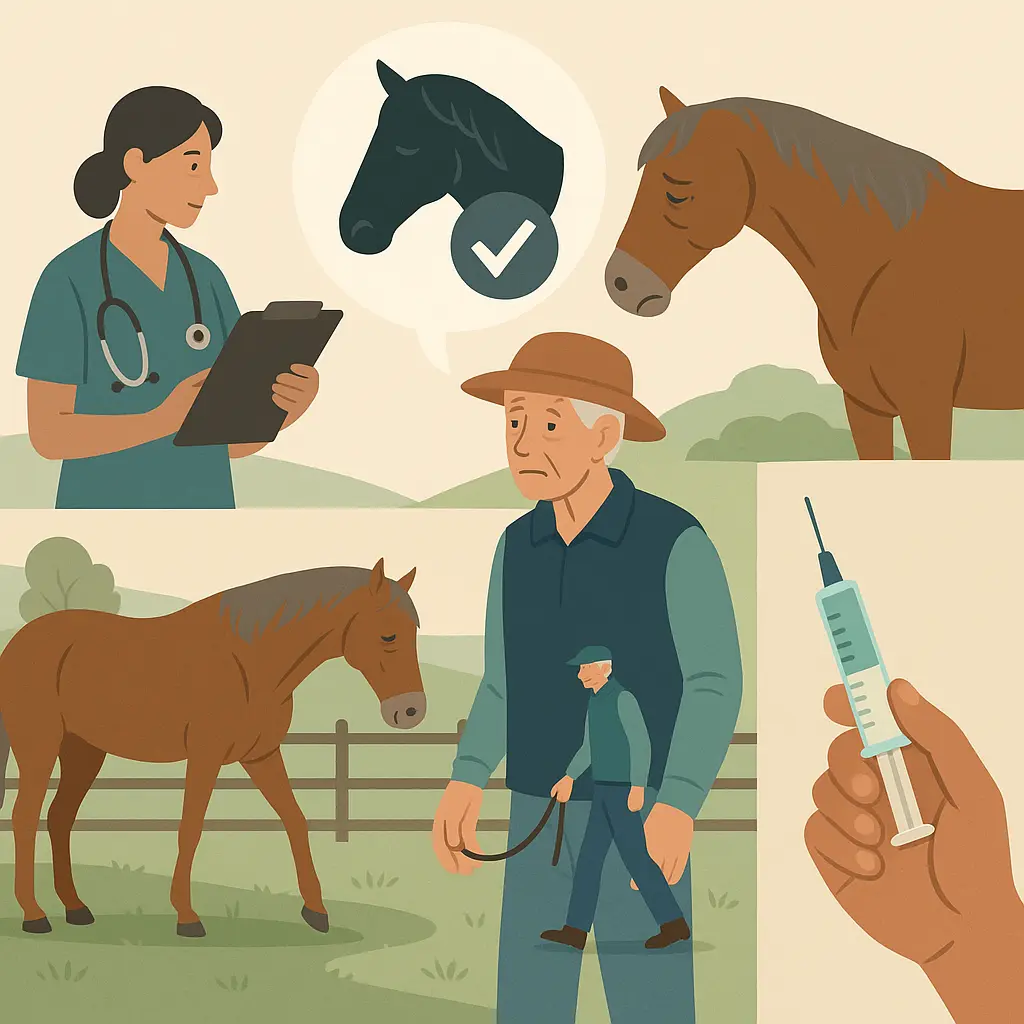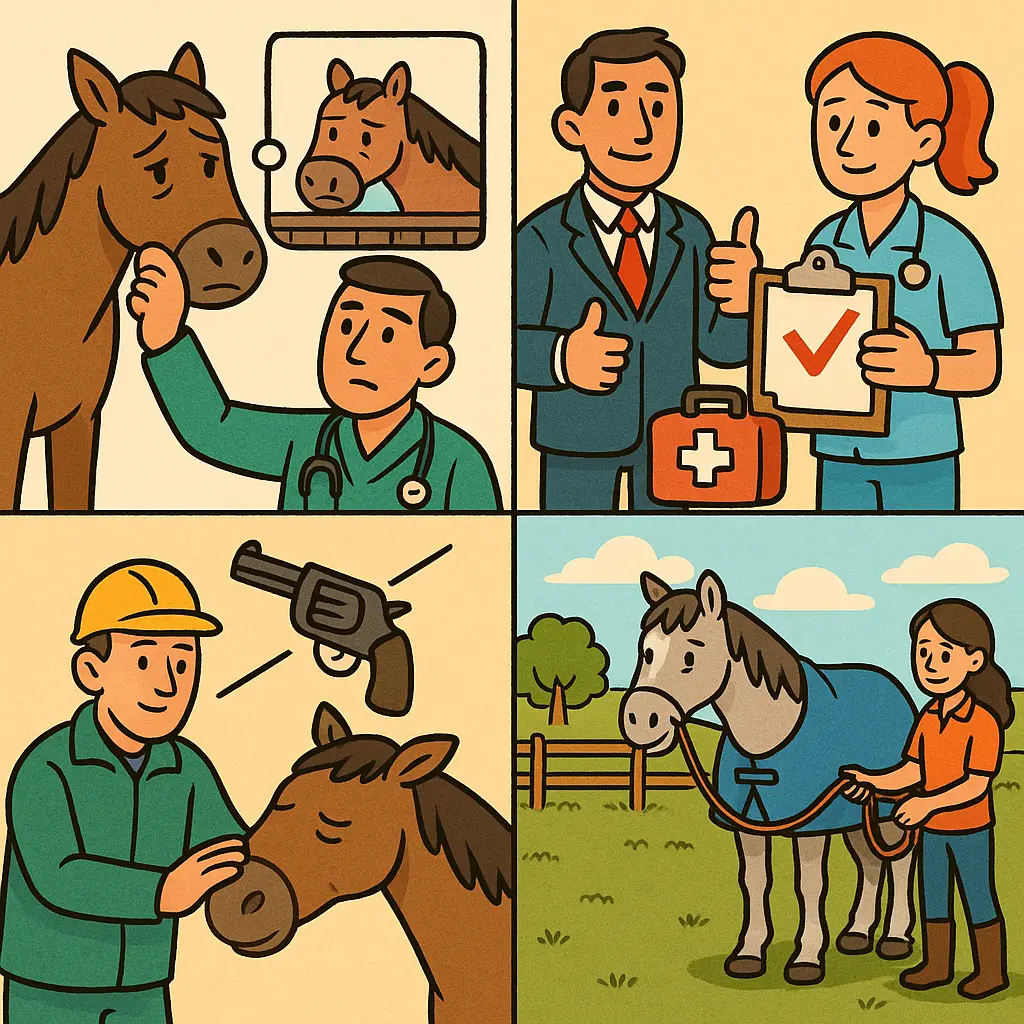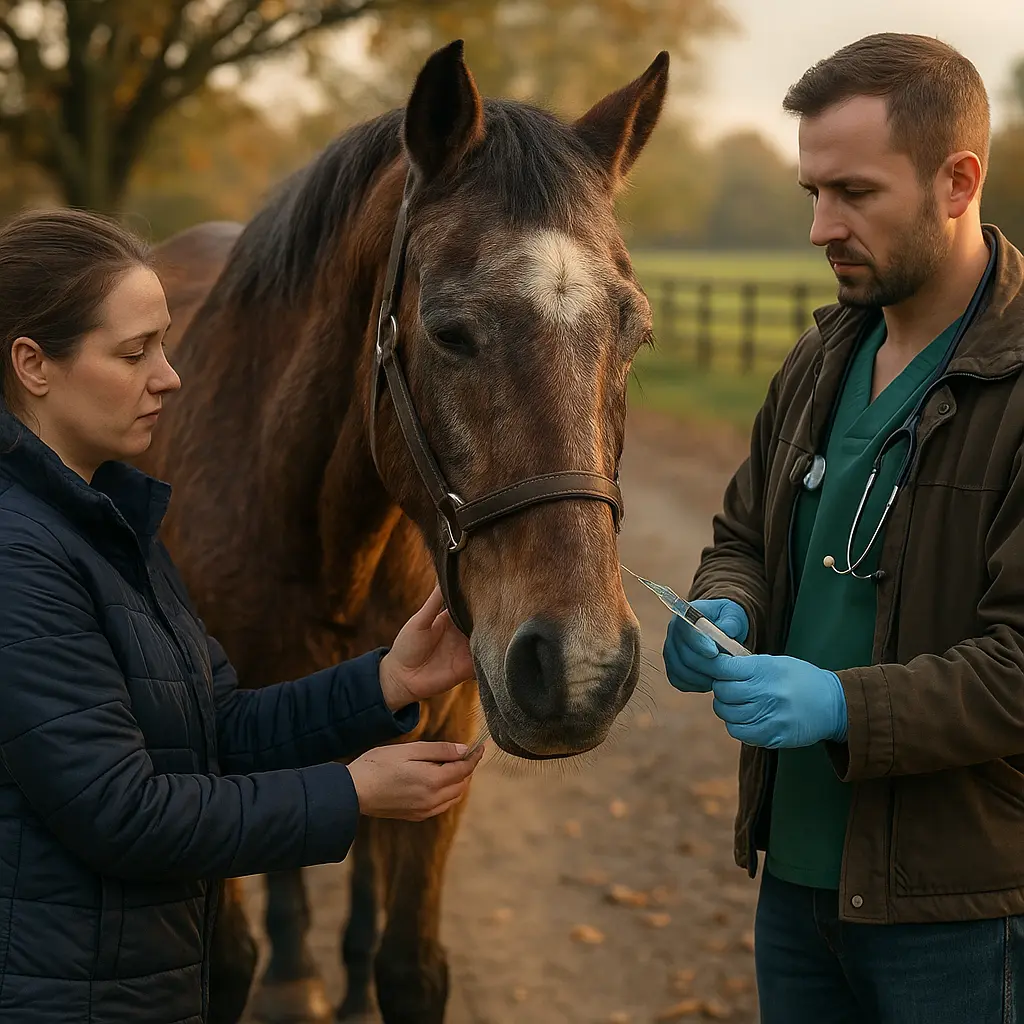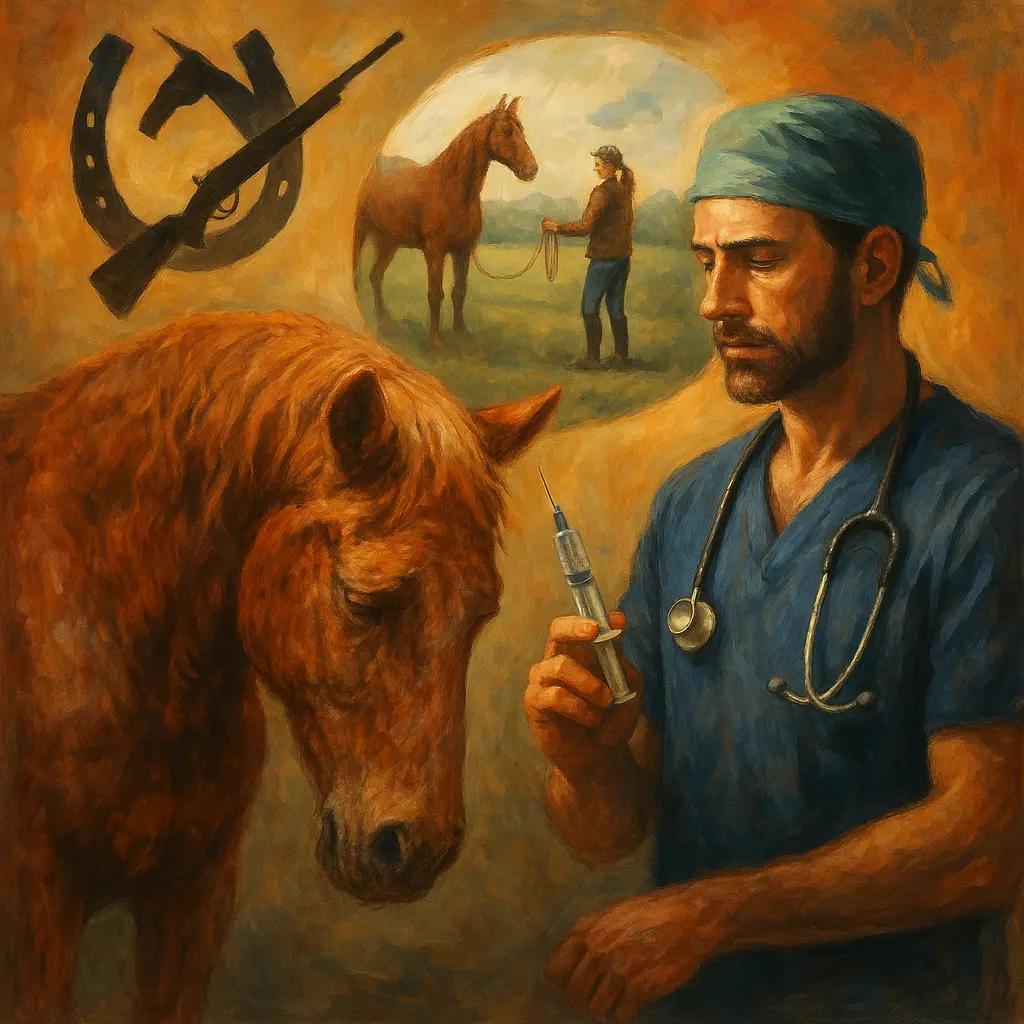
Deciding when to retire, rehabilitate, or euthanise an elderly horse is one of the hardest responsibilities you’ll face. Clear welfare criteria exist in the UK to guide you with your vet, so you can act confidently in your horse’s best interests.
Key takeaway: Euthanasia is justified when a horse faces continuous, unmanageable pain with a hopeless prognosis or would require lifetime confinement or analgesia; your attending vet leads this decision on welfare grounds, regardless of insurance criteria.
When is euthanasia the kindest choice?
Euthanasia is the kindest choice when a horse endures continuous, unmanageable pain with a hopeless prognosis, or would need lifelong box confinement or analgesia to avoid suffering. This is set out clearly in the British Horseracing Authority (BHA) guidance and supported by BEVA principles.
The BHA’s Horse Welfare Board states that continuous, unmanageable pain in the presence of a hopeless prognosis, or conditions requiring lifetime confinement, are grounds for humane destruction. It also stresses that horses should not endure a lifetime of box rest simply to manage pain. See the BHA euthanasia decision tree and principles here: BHA Euthanasia Guidelines.
“Elective euthanasia of a horse should only be carried out when those who have responsibility for its welfare… have considered all available options and decided that it is in the best interests of the horse, considering both current and future circumstances.” — Horse Welfare Board (via BHA)
In practice, this means weighing up:
- Whether pain is persistent despite appropriate treatment.
- Whether the prognosis for meaningful recovery is hopeless.
- Whether keeping the horse pain-free requires permanent confinement or lifetime analgesia.
- Age, comorbidities, likely complications, and seasonal pressures (e.g., hard UK winters with limited turnout).
When further veterinary treatment is rendered hopeless, BHA guidance advises that euthanasia should be considered to prevent ongoing suffering. For acute trauma or catastrophic injuries, the decision may need to be immediate to relieve incurable and excessive pain.
Who makes the decision, and what about insurance?
The attending veterinary surgeon leads the recommendation based on clinical signs, and horse welfare must come first regardless of insurance. Insurance follows BEVA criteria, but it cannot override the vet’s welfare-led judgement.
BEVA’s position is unequivocal:
“The decision to advise an owner to destroy a horse on humane grounds must be the responsibility of the attending veterinary surgeon, based on his assessment of the clinical signs at the time of the examination, regardless of whether or not the horse is insured.” — British Equine Veterinary Association
For insurance claims under “destruction on humane grounds”, BEVA-aligned policies usually require that an injury or illness is so severe as to warrant immediate destruction to relieve incurable and excessive pain, with no other treatment options available at that time. See BEVA-aligned summaries from Julie Andrews Horse Insurance Services and Kent Equine Hospital.
In chronic or deteriorating cases (for example, progressive arthritis or laminitis), your insurer typically expects ongoing updates, exploration of reasonable treatments, and may ask for a second opinion before authorising claims. Petplan Equine outlines this process here: Petplan Equine – BEVA.
Pro tip: Keep a shared note with your vet logging pain scores, flare-ups, responses to treatment, and photos/video. If the condition becomes hopeless, this record supports a timely, compassionate decision—and smooths insurer conversations.
How to support an elderly horse before this point
You can often prolong quality of life by reducing workload, increasing turnout, and focusing management on comfort and mobility. The British Horse Society (BHS) recommends regular reviews of exercise and more turnout, avoiding long stabled periods where possible.
The BHS advises adding gentle, regular activity—such as daily in-hand walks—especially over the UK winter when turnout is limited. For older horses, Nicolas de Brauwere MRCVS of Redwings notes:
“They need more care and attention—or at least more focused attention to their welfare.” — Nicolas de Brauwere, MRCVS, Redwings Horse Sanctuary
Practical ways to help your veteran:
- Increase turnout with compatible companions to maintain movement and mental wellbeing.
- Swap intense ridden work for low-impact exercise: in-hand walking, short hacks on good going, or safe arena time.
- Keep them warm and dry in cold, wet weather; adequate rugging supports comfort and reduces energy demands.
- Review dentistry and nutrition; senior feeds and soaked fibre can help when chewing is difficult.
- Discuss targeted pain management for flare-ups with your vet, avoiding a plan that relies on lifetime analgesia as a permanent solution.
At Just Horse Riders, we recommend simple, high-impact tweaks first. Browse winter-friendly turnout rugs to keep your older horse warm during longer outdoor periods, and consider a cosy stable rug if stabling overnight. Joint comfort can be supported with evidence-led products in our supplements range, including options from trusted brands like NAF. For legs that need extra support, see horse boots and bandages for turnout or in-hand exercise.
Quick tip: Winter in-hand walks are safer with visibility. Keep yourself seen on dark lanes with our hi-vis rider gear, and always pick safe, gritted routes in icy conditions.
What happens on the day: humane methods and setting
In the UK, euthanasia must be carried out humanely by a veterinary surgeon or, in specific licensed contexts, by a competent person using a licensed method; where possible, it should be done at home or suitable surroundings, avoiding transport of a horse in acute pain.
The BHA outlines two accepted methods: lethal injection or a licensed firearm, both administered by qualified individuals. Where a horse is in severe pain, transporting them is discouraged; making arrangements on the yard or in a quiet field reduces stress and risk (BHA Guidelines).
The Royal College of Veterinary Surgeons (RCVS) notes that non-vets may perform euthanasia only where legally permitted and competent, and methods must be humane and justified by welfare. Veterinary surgeons use clinical judgement within UK animal welfare legislation (RCVS Standards and Advice).
To prepare sensitively:
- Discuss the plan with your vet in advance, including location, companions, sedation, and aftercare.
- Choose a calm, familiar spot with good footing. Remove distractions and ensure handlers are experienced.
- Have a comfortable headcollar and lead rope ready; keep the horse appropriately rugged for the weather until the vet arrives. Our WeatherBeeta and Shires ranges include reliable, well-fitted options for the final days and weeks.
- Plan safe access for vehicles if needed for aftercare, and brief your yard team so everyone understands their role.
However prepared you are, this is an emotional day. Keeping the process quiet, swift, and familiar is the greatest kindness.
Retiring a racehorse the correct way
To retire a racehorse in Britain, the owner or trainer must notify the BHA online; after 14 days, the horse is ineligible to race. You will record the reason for retirement, new keeper details, and can add a non-racing agreement.
The Racehorse Owners Association summarises the process here: ROA – Horse Welfare. This supports the BHA’s “A Life Well Lived” strategy for full traceability from birth to end of life and beyond racing (BHA – Life After Racing). Vets, retraining centres, and aftercare charities can help plan a suitable future, whether that is hacking, companion life, or specialist rehoming.
If a racehorse’s condition deteriorates and rehabilitation is not humane, the same welfare-first euthanasia principles apply as to any horse.
Quality-of-life checkpoints you can use today
Use the BHA decision tree and speak with your vet if your horse has unmanageable pain, severe deformity, repeated injuries, or would require lifelong confinement or analgesia. These are clear red flags that quality of life is no longer acceptable.
Simple checkpoints you can monitor weekly:
- Pain: Is it frequent or constant despite appropriate care?
- Mobility: Can your horse rise, lie down, and move comfortably to field, water, and shelter?
- Appetite and weight: Are they eating well and maintaining condition?
- Behaviour: Are they still engaged with their environment and companions?
- Management burden: Is humane comfort only possible with lifetime box rest or continuous analgesia?
Where answers point to sustained suffering or a hopeless prognosis, humane euthanasia prevents further decline. Keep the BHA document handy for structured decisions: BHA Euthanasia Guidelines.
What to organise in advance to make a hard day easier
Speak to your vet early, keep your insurer informed in chronic cases, and plan a quiet, familiar location with experienced handlers and clear access. These steps reduce stress for the horse and for you.
Helpful essentials and gentle routines:
- Regular grooming can be calming; keep to a soothing routine with quality brushes from our grooming collection.
- Comfortable, clean rugs appropriate to the weather—see our winter turnout rugs for wet, cold days and stable rugs for overnight stabling.
- Supportive leg protection for in-hand walks or gentle turnout: explore boots and bandages.
- Joint and senior support from our curated supplements range, including options from NAF.
- A few favourite treats for positive associations during quiet time together.
If euthanasia becomes necessary, ensure everyone on the yard knows the plan for the day, and that you have privacy and support. Aftercare decisions can be discussed with your vet beforehand to avoid rushed choices.
You’re not alone: professional support and trusted resources
Lean on your vet first—they are responsible for advising you and safeguarding your horse’s welfare. Reputable guidance from the BHA, BEVA, the RCVS, and the BHS will keep you aligned with UK best practice and law.
Key resources:
- BHA – Euthanasia Guidelines and Decision Tree
- BEVA – Destruction of Horses Guidelines
- BHS – Care of the Elderly Horse
- RCVS – Standards and Advice Update
- ROA – Retirement of Racehorses
At Just Horse Riders, we recommend agreeing a review schedule with your vet—particularly through autumn and winter—so you can adjust care promptly and make dignified decisions at the right time.
When you need practical kit that supports comfort and safety, our team can help you select the right rug weight, leg protection, and joint supplements for older horses living out more.
FAQs
When is euthanasia justified for an elderly horse?
Euthanasia is justified when a horse is in continuous, unmanageable pain with a hopeless prognosis, or would require lifetime confinement or analgesia to avoid suffering. The BHA decision tree and your attending vet’s clinical assessment guide this decision, always prioritising welfare. See: BHA Euthanasia Guidelines.
Who decides if a horse should be euthanised?
The attending veterinary surgeon advises and leads the decision based on clinical signs, and must prioritise the horse’s welfare regardless of insurance considerations. Owners are consulted, but the vet’s professional judgement is central. Reference: BEVA.
What are the BEVA insurance criteria for humane destruction claims?
BEVA-aligned policies require that the horse has an injury or illness so severe it warrants immediate destruction to relieve incurable and excessive pain, with no viable treatment options at that time. Chronic cases often require insurer notification and may need a second opinion. See Petplan Equine.
How can I support an older horse’s mobility through winter?
Increase gentle exercise (e.g., daily in-hand walks), maximise safe turnout, and keep them warm and dry. Consider joint support from our supplements range and weather-appropriate turnout rugs for wet, cold UK conditions. The BHS has further guidance for elderly horse care in winter.
Can a non-vet euthanise a horse in the UK?
In limited, legally defined circumstances, a competent and experienced non-vet may euthanise using humane methods; however, veterinary surgeons typically carry out the procedure and apply clinical judgement. Always prioritise welfare and legality. See the RCVS standards update.
How do I retire a racehorse officially?
The owner or trainer completes the BHA’s online retirement notification. After a 14-day period, the horse becomes ineligible to race. You’ll provide reasons for retirement, new keeper details, and can add a non-racing agreement. Details: ROA – Horse Welfare.
What signs suggest my horse’s quality of life is declining?
Persistent pain, difficulty moving or rising, poor appetite or condition, withdrawn behaviour, repeated injuries, and the need for permanent box rest or continuous analgesia are red flags. Discuss these promptly with your vet and use the BHA decision tree to guide next steps.