Short days, frozen ground and muddy gateways don’t have to derail your horse’s welfare or your winter riding. With a clear plan for turnout, hydration, footing and visibility, you can keep your horse healthy, fit and safe right through to spring.
Key takeaway: Transition to winter over 10–14 days, ensure 20–70 litres of fresh water daily, avoid icy or hard-frozen footing, and use hi-viz and lights on the roads.
When to switch to winter stabling
Make the change from summer turnout to winter stabling over 10–14 days to reduce colic risk. Gradually reduce grazing time, introduce more hay, and keep routines consistent as daylight shortens.
The British Horse Society (BHS) advises that turning out all summer and housing through winter is common in the UK, but your horse’s gut needs time to adapt. Mix hay with diminishing grass and step down turnout daily so the digestive system adjusts smoothly to higher-forage stabled diets. Daily outdoor time remains important: movement and access to forage support gut motility and mental wellbeing.
Spending long hours in the stable can limit natural behaviours like roaming, foraging and socialising. As the BHS puts it, prolonged stabling “can lead to boredom, stress and even unwanted habits.” Consider small paddocks, a surfaced turnout pen, or in-hand grazing to preserve fields while meeting welfare needs.
Pro tip: Keep a simple diary of turnout hours, hay fed, droppings quality and any behaviour changes. Small, steady changes beat sudden routine shifts every time.
Keep your horse hydrated and colic-safe
Horses need 20–70 litres of fresh water per day in winter (around 10 litres per 100 kg body weight) and often drink less in cold weather. Check and break ice on troughs and buckets at least twice daily, and offer slightly warmed water to encourage drinking.
Frozen troughs are a colic risk. The RSPCA stresses constant access to fresh water, plus plenty of forage and regular movement to keep the gut active. Add an extra bucket in the stable, insulate outdoor containers, and position buckets away from draughts. If your horse is reluctant to drink, try flavouring with a splash of soaked hay water or a vet-approved electrolyte from our NAF supplements range to stimulate thirst.
Quick tip: Keep a measuring jug by the tap and log how much your horse drinks daily. A sudden drop in intake is an early warning to investigate.
Exercising safely on winter footing
Avoid riding on icy or hard-frozen ground; warm up and cool down gradually, keeping sessions shorter if fitness is lower. Choose work to suit your horse’s temperament and the day’s conditions.
The BHS is clear: don’t ride in slippery conditions or poor visibility. When the ground is frozen, concussion risk rises, so opt for a softer surface or a walk-focused session. Petplan Equine adds that you should “warm your horse up gradually and cool down slowly, especially if they’re clipped,” suggesting a quarter sheet for exercise and a cooler rug after work to avoid chills.
“Don’t ride out in slippery conditions or when visibility is poor… Freezing conditions can also cause the ground… to become very hard so you may need to find a softer surface to ride on. Alternatively, you can work at a slower pace (mostly walk) to avoid excessive concussion.” — British Horse Society
“Warm your horse up gradually and cool down slowly, especially if they’re clipped. Consider riding with a quarter sheet and use a cooler rug after exercise to avoid chills.” — Petplan Equine
At Just Horse Riders, we recommend having both a breathable stable layer and a waterproof outer ready so you can adapt to sudden showers or cold snaps. Explore winter-ready turnout rugs for wet days and insulating stable rugs for cosy nights. You’ll also find proven winter designs from WeatherBeeta built for British conditions.
Road hacking: visibility and risk reduction
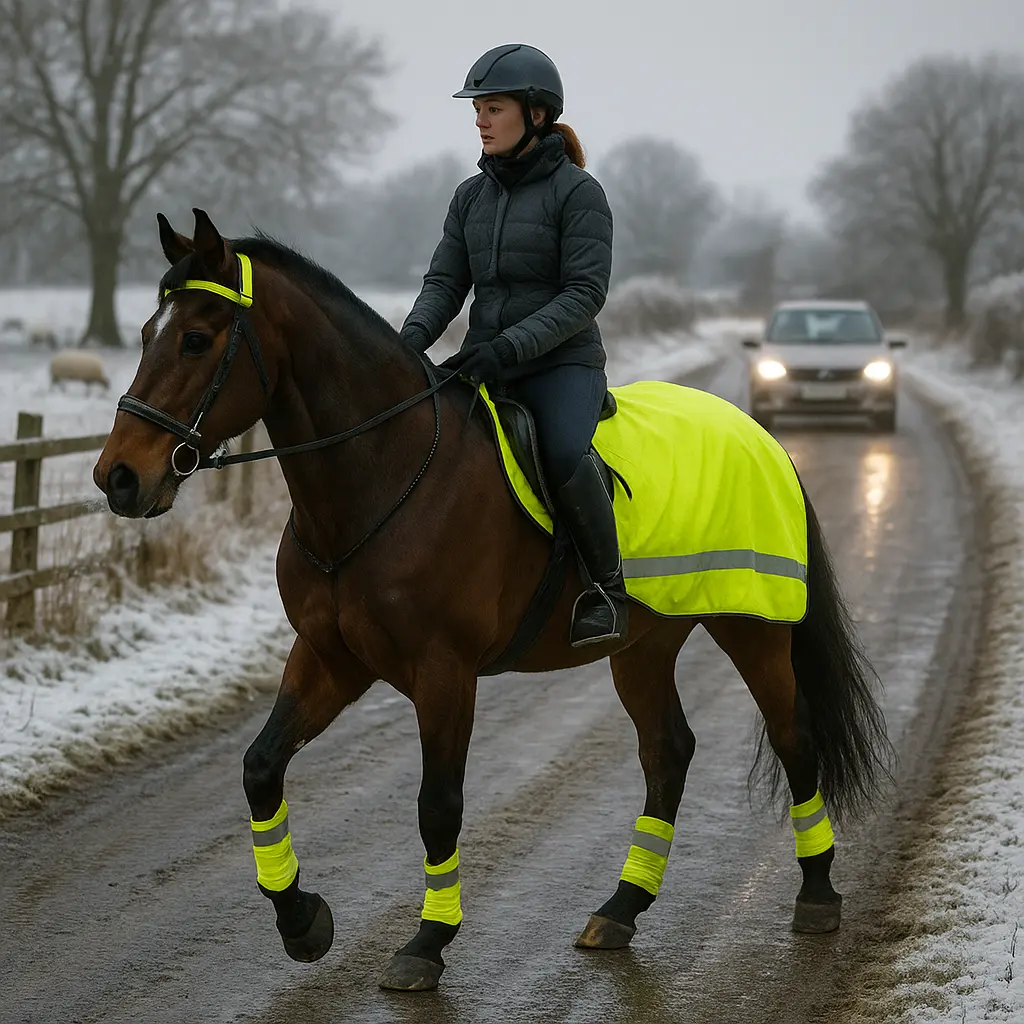
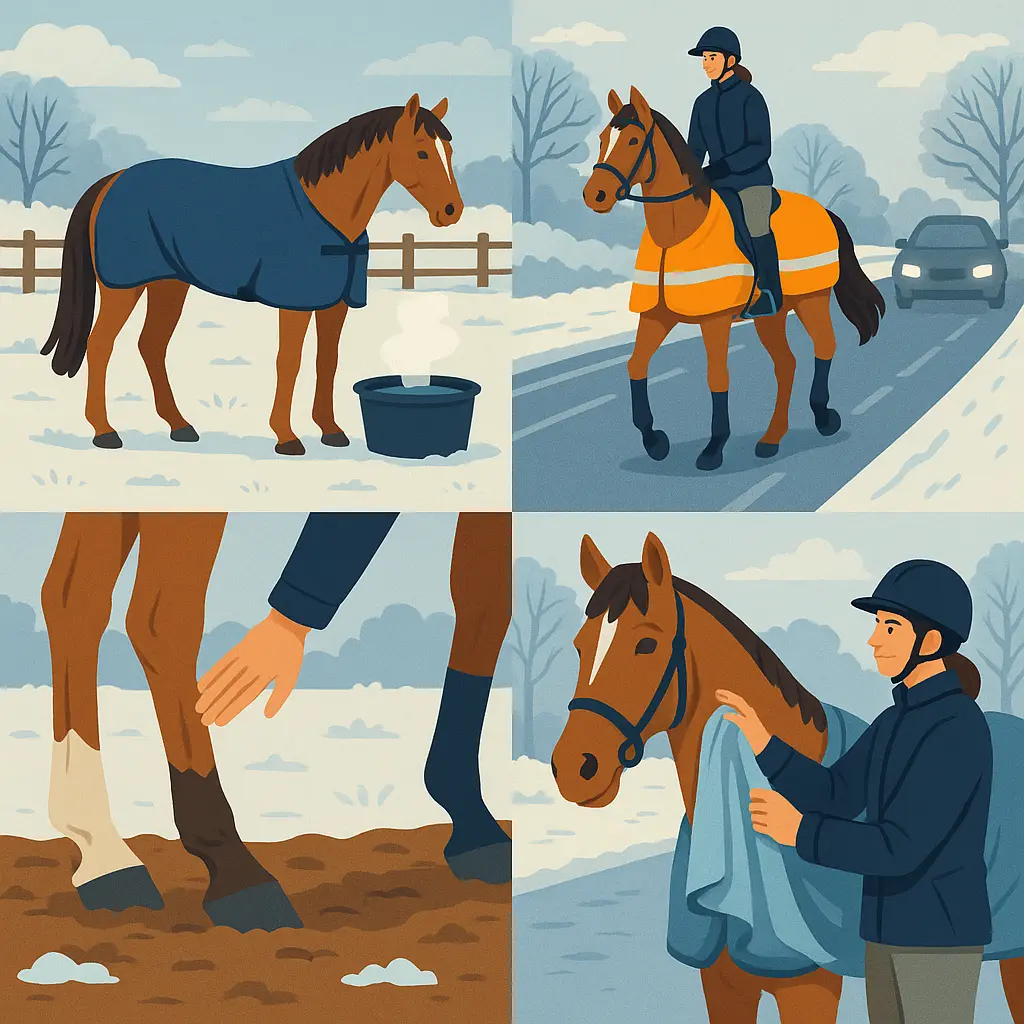
Winter road hacking carries higher risk: the BHS recorded 3,383 horse-related road incidents in 2023, so wear hi-viz, use lights and avoid poor visibility. Lights are associated with fewer near-misses, and younger riders face higher risk.
According to a 2023–2024 study via Aberystwyth University, 66.2% of UK equestrian road users reported near-misses, with lighting linked to fewer incidents. Shorter daylight and wet, reflective roads make you harder to see, and rural single-lane roads often have 60 mph limits with hidden bends. Build your safety stack each ride:
- Wear high-visibility kit and add lights front and back. Our hi-viz collection includes rider wear and accessories designed for low-light hacks.
- Always ride with a properly fitted helmet. While the UK Highway Code mandates helmets only for under-14s on roads, 95% of riders wear them voluntarily. See our certified riding helmets.
- Choose routes with verges, good sightlines and minimal fast traffic; avoid dawn and dusk when glare and visibility are worst.
- Keep to walk where surfaces are slick, and dismount if conditions deteriorate.
Quick tip: Pair hi-viz with reflective leg bands for extra movement-based visibility, and make sure your own footwear has good grip. Our winter-friendly horse riding boots help on frosty yards and verges.
For more data and guidance, read the BHS advice on winter care and road safety, and the Aberystwyth analysis of UK equestrian road risk: BHS Winter Care and Aberystwyth University study.
Daily winter checks: legs, skin, rugs and weight
Check legs and skin every day for heat, swelling and mud fever; lift rugs fully to assess coat and body condition. Early action avoids bigger problems and vet bills later.
Mud, reduced turnout and heavier rugs can hide developing issues. Run your hands over the limbs to find heat or scabs, and scan for stocking up after time in. Manage heels carefully in wet, poached gateways to reduce mud fever risk, and dry legs gently after hosing. Keep grooming regular even when clipped or rugged; it’s your daily health audit as much as a clean-up. Our grooming range has hardy mud brushes and mitts that make quick work of winter coats.
Support vulnerable legs with appropriate protection when schooling or hacking, and stable wraps if recommended by your vet for swelling. See horse boots and bandages for protective options. Monitor weight weekly with a tape and adjust forage as needed; if your horse is dropping condition, consider veterinary advice and targeted support from our NAF supplements.
Yard and field management when frost and mud bite
Grit concrete and yard areas to prevent slips, and protect fields by reducing turnout during wet spells. Avoid riding on icy routes and hard-frozen ground to prevent falls and concussion.
The BHS advises gritting yard walkways and gateways to keep handling safe in frost. In fields, rotate turnout, use sacrificial areas and add hardcore in high-traffic gateways to protect pasture. Climate volatility means you may face a freeze one week and waterlogged ground the next, so have an indoor schooling plan ready. On frozen days, prioritise in-hand work, walking hacks on safe surfaces, or a rest day with enrichment.
Quick tip: Keep a winter tools stack by the stable door—grit, shovel, head torch, spare headcollar and a small first-aid kit. Check our seasonal savings for winter essentials in The Secret Tack Room (clearance).
Keep fitness and minds active with limited turnout
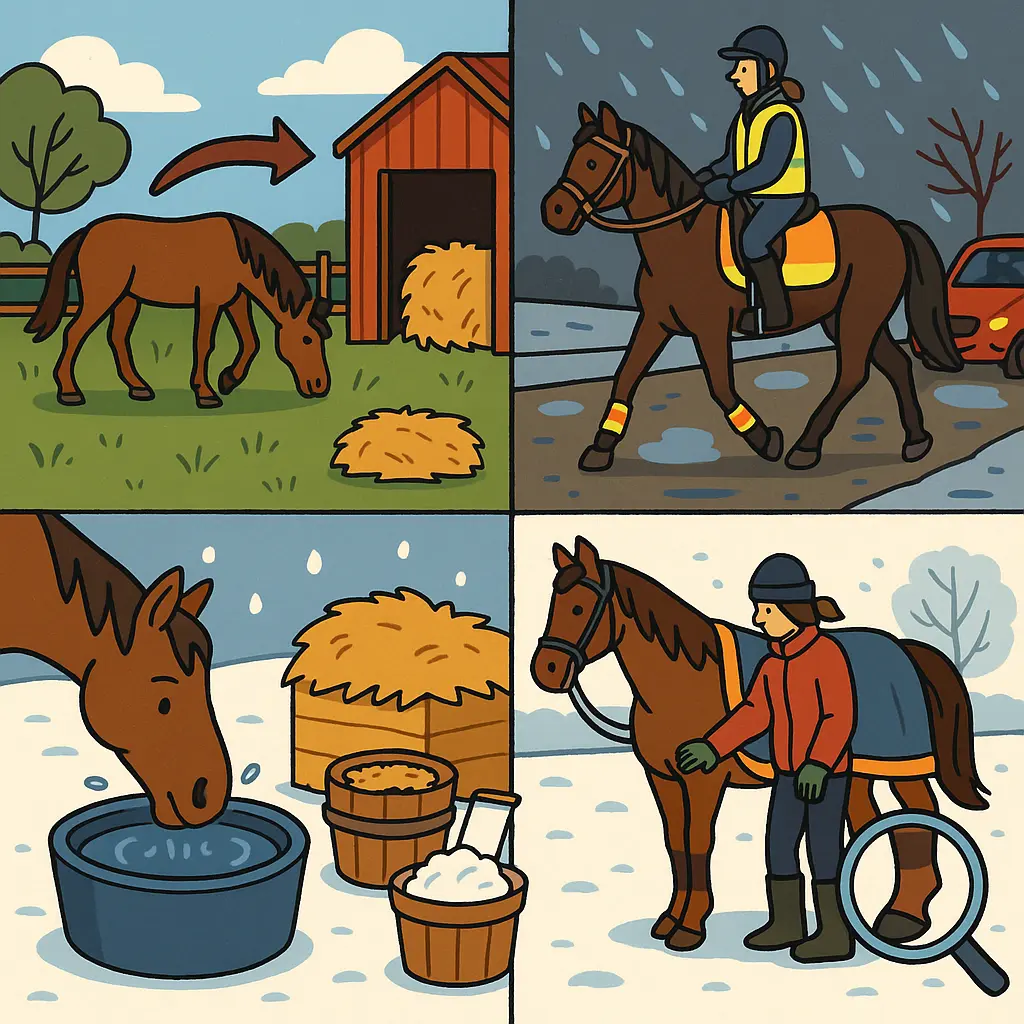
Maintain daily outdoor time and use indoor schooling, groundwork and walk-based hacks to prevent boredom and stress. Even 20–30 minutes of purposeful movement supports digestion, joints and behaviour.
When fields are fragile or daylight is scarce, swap one longer schooling session for several short activities across the week. Ideas include:
- In-hand polework and lateral exercises for core strength and focus
- Long-reining to build straightness and balance without heavy concussion
- Hill walking in-hand on safe surfaces to maintain topline
- Walk-only hacks on soft tracks for exposure and relaxation
Back off intensity if your horse’s fitness has dipped—short and regular beats long and sporadic. Always include a proper warm-up and cool-down and avoid over-sweating, especially in clipped horses, to prevent chills.
What to kit out with for safer, easier winters
Equip for winter with suitable rugs, hi-viz and lights, leg protection, grooming tools, and water management. The right kit keeps work efficient and your horse comfortable when the weather turns.
- Rugs for work and rest: Waterproof, breathable turnout rugs for wet days and insulating stable rugs for nights. Look for quick-dry linings and secure fastenings; see proven designs from WeatherBeeta.
- Visibility: Rider and horse hi-viz with LEDs or clip-on lights—start with our hi-viz collection.
- Safety headwear: A properly fitted, up-to-standard riding helmet is non-negotiable year-round.
- Footwear: Winter-grip riding boots for frosty yards and slick verges.
- Leg care: Protective boots and bandages for work; consider stable wraps if advised.
- Grooming and checks: Tough grooming tools to manage mud and spot early skin issues.
- Hydration support: Insulate buckets, break ice twice daily, and use vet-approved electrolytes from NAF if appropriate to encourage drinking.
Pro tip: Keep a “wet kit” drying zone ready—quarter sheet, cooler rug, towels and spare gloves—so you can turn work around fast between showers and sleet.
The bottom line
Plan a 10–14 day transition, prioritise hydration, footing and visibility, and check your horse daily to keep winter safe. Combine steady routines with flexible exercise and you’ll protect health, behaviour and performance until spring.
If you’d like help choosing winter essentials, our team at Just Horse Riders is here with practical, UK-focused advice and fast delivery on trusted brands.
FAQs
How do I reduce colic risk when moving to winter stabling?
Change over 10–14 days: reduce grazing time bit by bit, introduce more hay, and keep water freely available at all times. The BHS recommends gradual routine shifts, and the RSPCA highlights that movement, forage and hydration are key gut protectors. Break ice twice daily and consider offering slightly warmed water to maintain intake.
Is it safe to ride when the ground is frozen?
No—avoid hard-frozen or icy footing to prevent slips and concussion. The BHS advises either finding a softer surface or working mainly at walk. Use a thorough warm-up and cool-down, add an exercise quarter sheet if your horse is clipped, and keep sessions shorter if fitness is down. See guidance from the BHS and Petplan Equine.
How much should my horse drink in winter?
Plan for 20–70 litres per day (about 10 litres per 100 kg body weight). Horses often drink less in cold weather, so check and break ice at least twice daily, add extra buckets, and consider slightly warmed water to encourage drinking. Source: RSPCA.
What’s the safest way to hack on roads in winter?
Wear hi-viz and use lights front and back, avoid poor visibility and slippery roads, and choose routes with good sightlines. In 2023 the BHS recorded 3,383 road incidents, and research shows lights are associated with fewer near-misses. A properly fitted helmet is essential—explore our hi-viz gear and helmets to stack the odds in your favour.
How can I keep my horse fit when turnout is limited?
Ensure some daily outdoor time and mix in indoor schooling, groundwork, long-reining and walk-based hacks on safe surfaces. Aim for frequent, shorter sessions with careful warm-ups and cool-downs. This supports gut movement, joints and behaviour when fields are too wet to use.
What daily checks matter most in winter?
Hands-on checks for leg heat and swelling, mud fever scabs, rug rubs and body condition. Lift rugs fully every day, examine heels and pasterns after turnout, and keep grooming regular for early detection. Use appropriate protective gear from our boots and bandages and stock up on robust grooming tools.
When should I call the vet?
Call immediately if you see signs of colic (pawing, rolling, flank-watching, reduced gut sounds), worsening mud fever with swelling or lameness, or unexplained weight loss despite adequate forage. Register with an equine vet and keep emergency numbers in the tack room. Expert guidance: RSPCA, Petplan Equine.