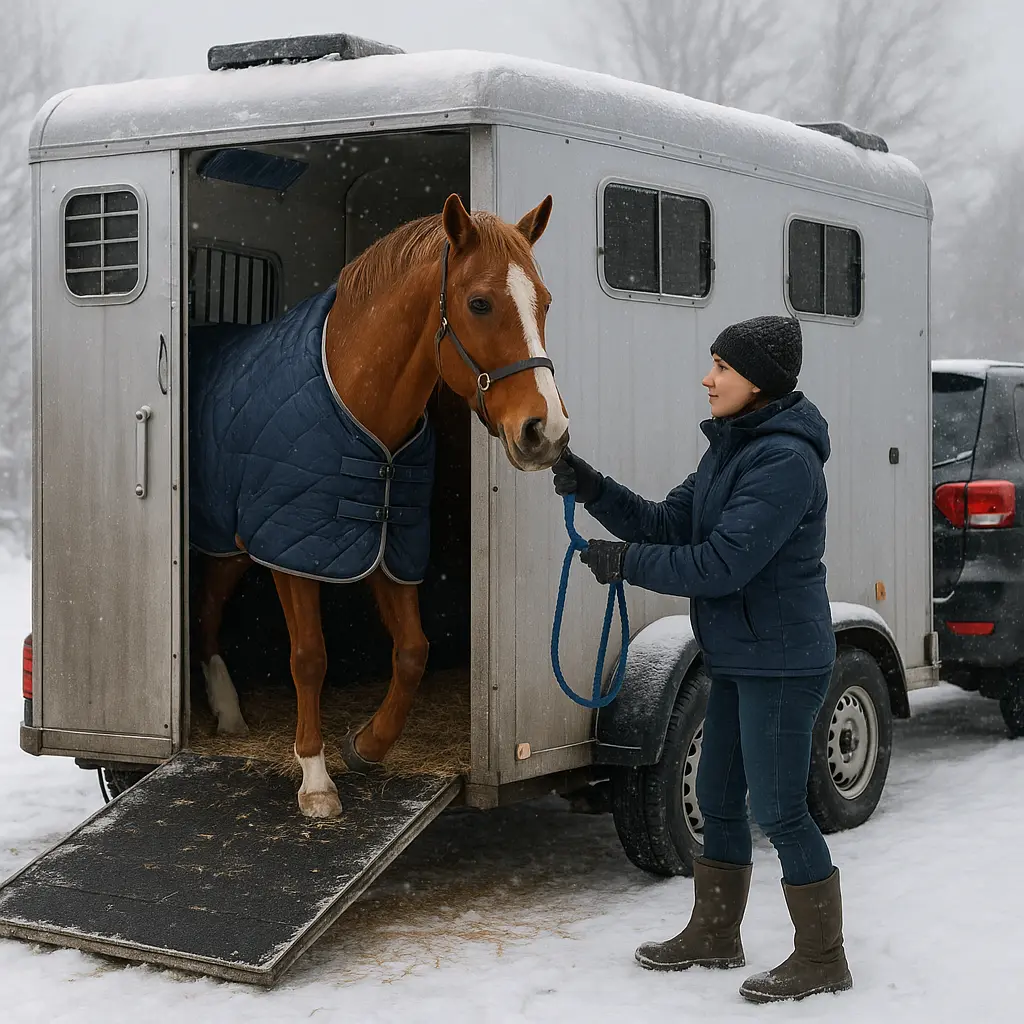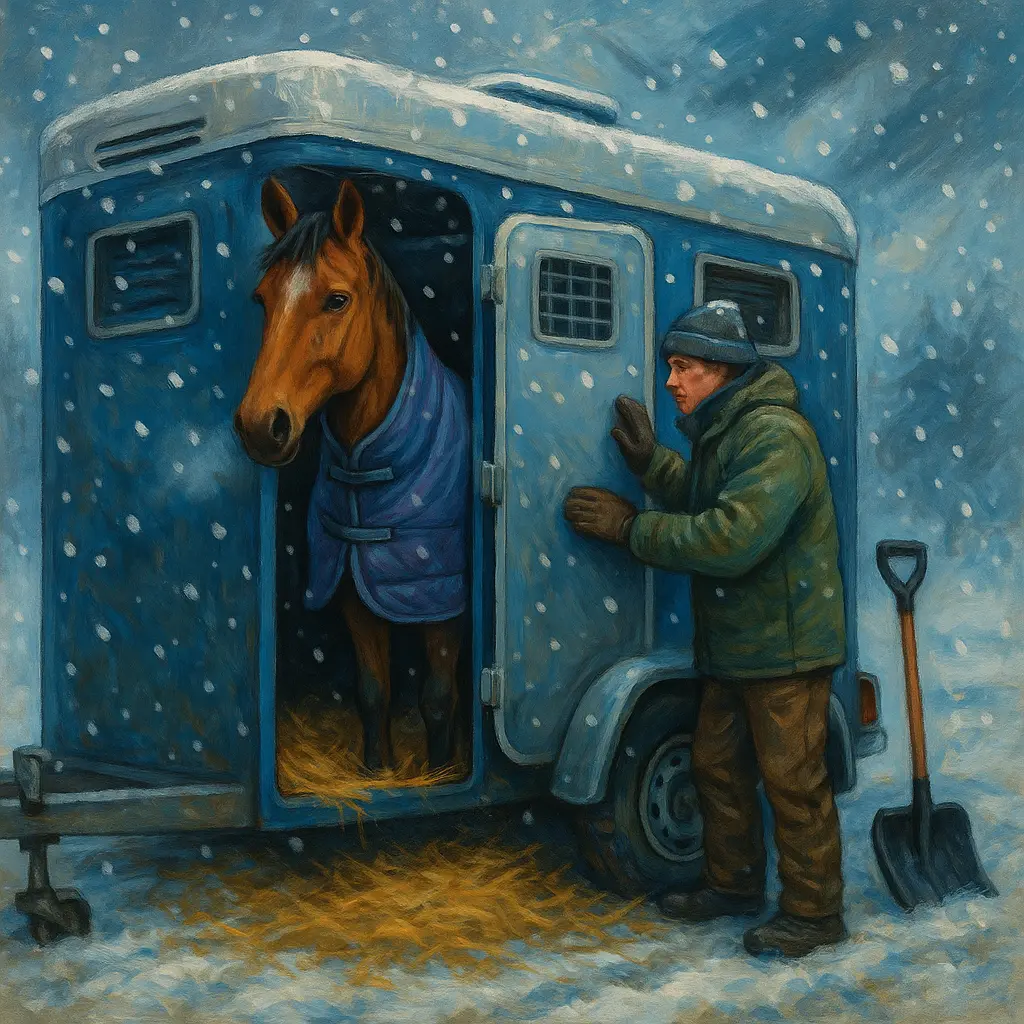
Frozen mornings, steamy breath, and a full trailer: winter travel can be tough on horses if you get the ventilation and rugging wrong. The good news? A few precise adjustments keep your horse warm, comfortable, and breathing easy from yard to destination.
Key takeaway: Keep roof vents open (reversed to the rear), crack screened windows for airflow, aim for 10–15°C inside the trailer, and rug lightly (sheet/fleece or a 200–220gsm stable rug) to avoid sweating.
Winter trailer ventilation: open, but control the draft
Keep roof vents open (reversed to the rear) and crack screened windows 1–2 inches to prevent condensation and respiratory issues, adjusting openings to minimise wind chill. This balances fresh air with protection from direct, chilling draughts, as advised in GOV.UK winter welfare guidance.
In cold snaps, many owners are tempted to shut everything tight. Don’t. Condensation builds rapidly in a closed trailer, and damp, stale air is a fast track to respiratory irritation. UK Government guidance is clear: adjust openings to reduce wind chill but keep ventilation working, and check animals more often for signs of cold stress such as shivering, lethargy, or huddling. If you’re travelling multiple horses, reducing stocking density by at least 30% and increasing headroom further improves airflow in extreme weather.
“Run the roof vents in reverse (opening to the rear) so they will draw all that steamy, dead air off the horses… Leave the windows open and reverse the vents.” — Dave Dalzelle, Jamco Trailers expert (USRider)
“Good ventilation inside the trailer can help keep horses from overheating. This is a must whether you are hauling in winter or summer. Air should circulate, but the trailer should not be drafty with wind blowing directly onto the horse.” — Jensen, safety expert (USRider)
Pro tip: Position roof vents to scoop from the rear, and angle window openings away from the horse’s face. If you have solid windows, leave the top back door slightly ajar for airflow in dry weather and monitor interior temperature closely.
The temperature to aim for inside the trailer
Target an interior of 10–15°C (50–60°F) in winter; remember the trailer typically runs 5–8°C warmer than outside due to body heat. Adjust ventilation and rugging to stay in that zone and avoid sweating or chill.
Even when the UK forecast shows 2–4°C, two horses can raise the trailer to 7–12°C within an hour. That’s ideal: warm enough for comfort, not so warm that perspiration soaks a heavy rug. On milder winter days (8–10°C outside), you may easily exceed the 15°C upper limit unless you increase ventilation or step down to a lighter rug.
These targets are supported by winter haulage guidance that recommends a 10–15°C interior (Formula 707) and research noting the 5–8°C warming effect inside trailers (Equus Magazine). In very cold conditions, you won’t always reach 10°C, but you should still prioritise airflow over sealing the box; use a suitable lightweight rug and extra bedding to prevent chill while keeping the air moving.
Quick tip: Hang a small, shatterproof thermometer at horse head height. If the trailer climbs past 15°C, crack windows a notch more or reverse vents further; if the horse feels cool to the touch behind the elbow, add a fleece liner or swap to a 200–220gsm stable rug.
Best rugs for winter travel (and what to avoid)
Use a lightweight sheet or fleece, or a low-weight 200–220gsm stable rug for most unclipped horses; avoid heavy field rugs, which often cause sweating once the trailer warms up. Check for dampness at each stop and adjust as needed.
Thanks to body heat and limited movement, horses generate warmth quickly in transit. A lighter rug prevents sweating—which is crucial because a damp, hot horse stepping into cold UK air is at risk of chill. For plump, unclipped horses, a stable sheet or 200–220gsm option provides the sweet spot in typical British winter conditions. For a fine-coated horse that tends to run cool, you can step up to a light fleece plus a neck if the interior sits nearer the lower end of the 10–15°C range.
At Just Horse Riders, we recommend packing two options—one lighter, one 200–220gsm—so you can swap if conditions change. Explore breathable, travel-friendly choices in our stable rugs collection, and protect legs and tails with well-fitted travel boots from our horse boots and bandages range.
Pro tip: At every stop, slide a hand under the rug at the girth line. If it’s clammy or hot, ventilate more and downgrade the rug. If the skin feels cool, up the weight slightly and add extra bedding on the floor.
Stops, water, and feeding: the winter schedule
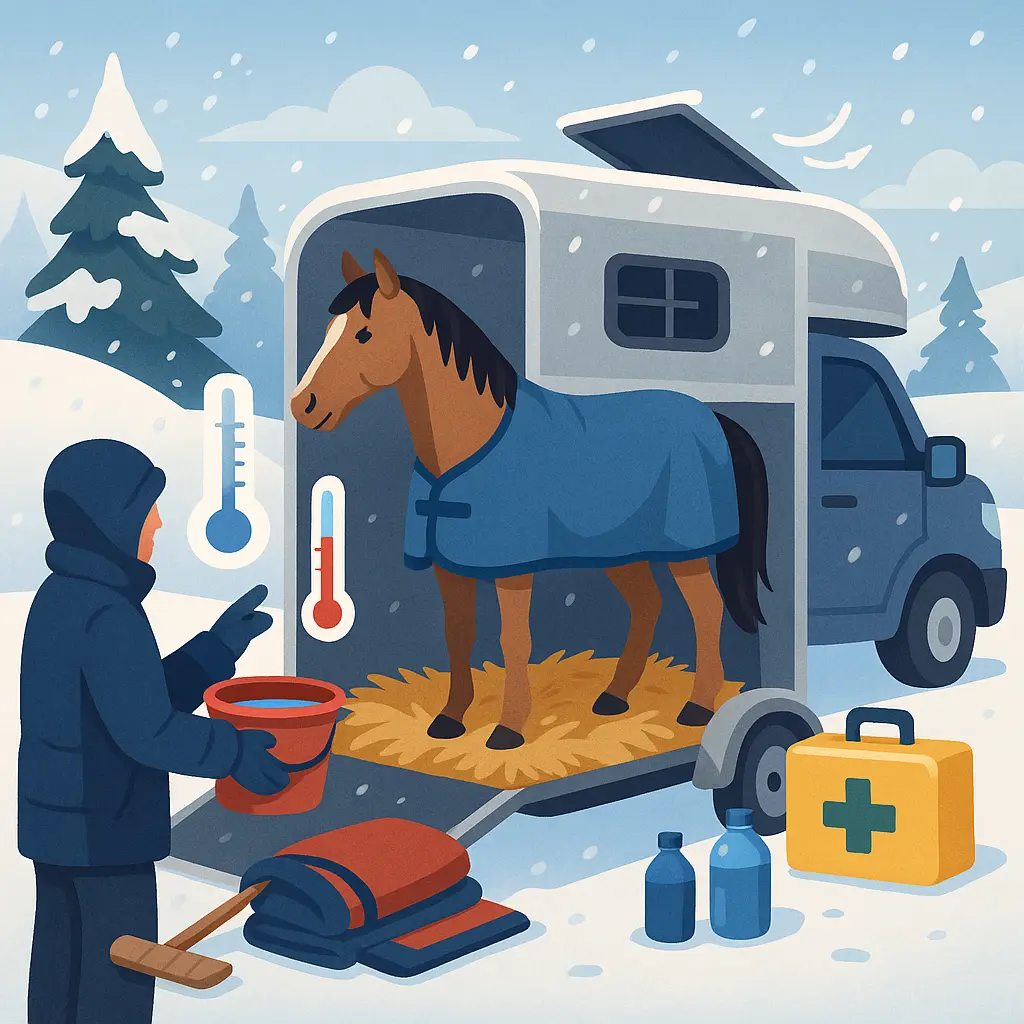
Stop every 2–4 hours to offer fresh or warmed water, check for sweating or shivering, and top up forage; add electrolytes if the horse is sweating to maintain hydration. Frequent checks matter more in cold snaps when dehydration and cold stress can creep up unnoticed.
Horses often drink less in winter, especially when water is cold. Carry familiar water from home when possible and offer it warmed (not hot) to encourage intake. If the inside of the trailer sits near or above 15°C and you find sweat under the rug, support hydration with electrolytes at your next stop.
Practical routine:
- Every 2–4 hours: park safely, open doors for fresh air, offer warmed water, and check rugs, legs, and tail guard.
- Replace any damp haynets; keep forage in front of the horse to buffer stomach acid and reduce stress.
- If sweating occurs, offer electrolytes and lighten the rug; if shivering, increase rug weight and bedding, and adjust vents to reduce draughts.
To make this easy on the road, stock up on proven electrolyte options in our horse supplements collection, and use high-value treats to encourage wary drinkers to sip between stops.
Bedding and trailer prep in sub-zero conditions
Yes—add extra bedding in freezing weather to insulate the floor and protect against frostbite and hypothermia, and always check for ice on floors and ramps. Bedding is a legal requirement for transported livestock and supports welfare in cold UK winters.
In sub-zero spells, the trailer floor leaches heat from legs and hoof soles. Deep shavings or straw provide vital insulation and help absorb melt and condensation. This isn’t just comfort: extra bedding is singled out as essential winter prep for trailers and is in line with UK welfare expectations around providing appropriate bedding for animals in transit (Horse Journals; GOV.UK).
Before you go:
- Inspect and lubricate roof vents and window catches so you can fine-tune airflow on the move.
- Check ramp, mats, and floorboards for ice and grip—salt lightly or brush off before loading.
- Pack spare dry bedding; if a horse urinates early in the journey, top up for insulation.
- In damp UK winters, use moisture traps or dehumidifying crystals when storing trailers to prevent mould and corrosion around vents and window seals.
Quick tip: Keep a dedicated “winter broom” and a tub of grit in the trailer so you can de-ice the ramp and parking spot before unloading on frosty showgrounds.
UK legal and safety requirements you must know
For journeys over 8 hours, use a DEFRA-inspected vehicle that meets ventilation, safety, and temperature monitoring standards; over 3.5 tonnes requires an Operator’s Licence and a tachograph; and drivers/attendants may need a Certificate of Competence for handling and transport. Welfare systems (watering/ventilation) must be functional—do not transport if they fail.
The British Horse Society summarises the core transport requirements clearly: long-haul journeys need DEFRA approval, including standards on ventilation and temperature, and horseboxes over 3.5 tonnes must display an Operator’s Licence disc and run a tachograph (BHS guidance). Handlers and drivers often require a Certificate of Competence, which includes an online test for safe loading and transport best practice.
From a welfare perspective, UK Government advice further stresses the importance of functioning watering and ventilation systems in cold conditions, alongside more frequent checks for cold stress. It also recommends reducing stocking density by at least 30% and increasing headroom in extreme weather, to maximise airflow and animal comfort (GOV.UK extreme weather welfare).
Bottom line: Stay on the right side of welfare and road law, plan your stops, and ensure your equipment (from vents to thermometers) is in good working order before you load.
Journey planning and your winter emergency kit
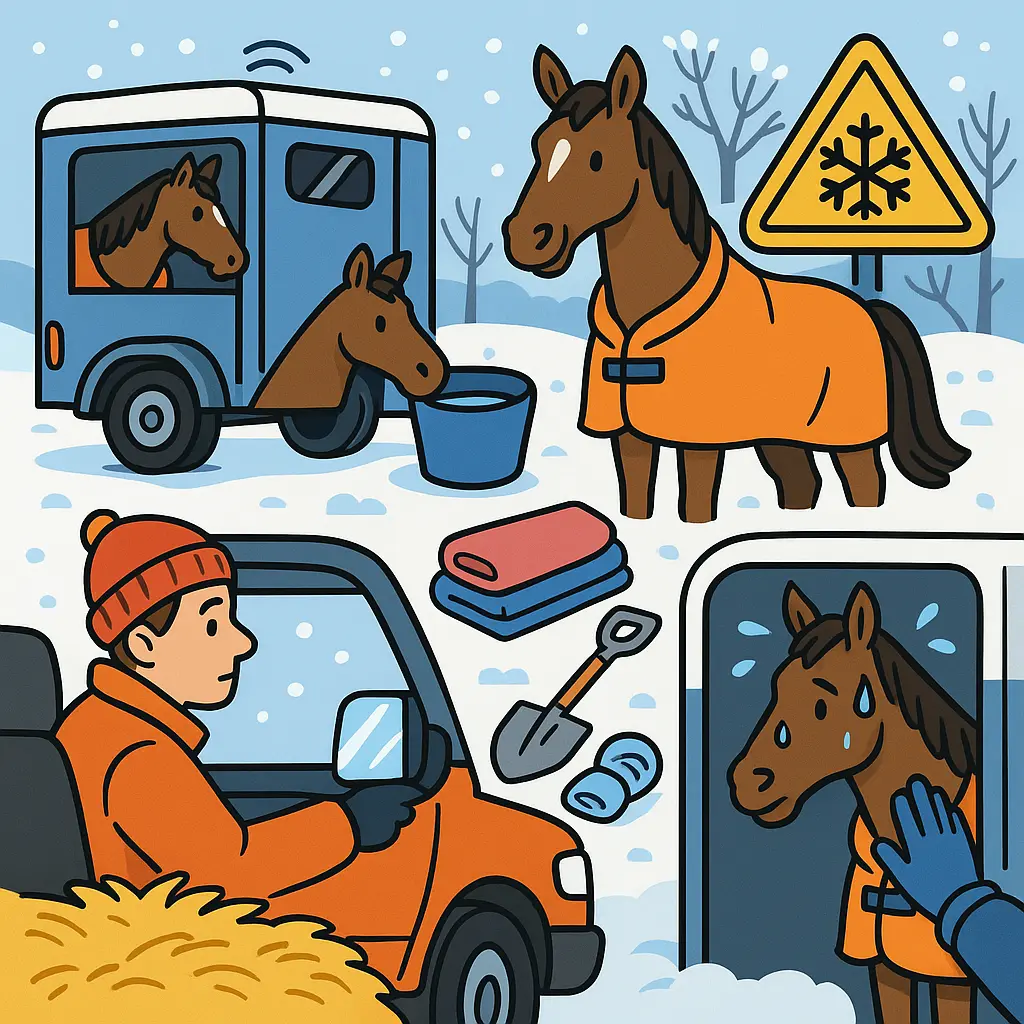
Plan around UK weather windows, travel early when roads are quieter, and carry a winter kit that covers warmth, traction, hydration, and visibility. Build contingencies for snow or closures, including safe lay-by options and alternative routes.
Winter journeys demand flexibility. Check Met Office warnings and traffic updates before you leave, and allow extra time to drive smoothly and reduce wind chill inside the trailer. If a cold front or snow band is due, reschedule where possible—your horse’s welfare takes priority.
Your winter trailer kit should include:
- Spare lightweight and 200–220gsm rugs (dry, bagged), plus a fleece cooler.
- Extra bedding, water containers, buckets, and a kettle/thermos for warming water.
- Electrolytes, spare haynets, and a basic first-aid kit.
- De-icer, shovel, grit, head torch, and blankets for you and any passengers.
- Hi-vis and safety gear for roadside stops: choose from our rider high-visibility range and protect your head when handling on verges with one of our certified riding helmets.
- Rope, knife/multi-tool, jump leads, and a charged power bank.
For arrivals at cold, wet venues, pack a waterproof layer for turn out after travel if needed—see our latest turnout rugs for breathable, weatherproof options that won’t trap sweat.
60-second vent and rug checklist before you roll
Set vents to draw air from the rear, crack windows to avoid condensation, and pick the lightest rug that keeps your horse dry and comfortable. Then re-check 20 minutes into the journey to confirm you’re on target.
- Reverse roof vents; open screened windows 1–2 inches (no direct wind on faces).
- Fit a thermometer at head height; note outside vs. inside temps (+5–8°C typical).
- Rug choice: sheet/fleece or 200–220gsm stable rug for most unclipped horses.
- Load with deep, dry bedding; check ramp and mats for ice and grip.
- Plan first stop within 2 hours to confirm temperature and sweat status; adjust rug/vents if needed.
FAQs
Yes—keep vents cracked, use lighter rugs, stop every 2–4 hours for water, and add extra bedding below 0°C; details below.
Should trailer vents be open or closed in freezing UK weather?
Open, but control the draft: reverse roof vents to the rear and crack screened windows 1–2 inches. This prevents condensation and respiratory stress while minimising wind chill (GOV.UK; USRider).
What rug should an unclipped horse wear for winter trailering?
A lightweight sheet or fleece, or a 200–220gsm stable rug is usually right. Avoid heavy field rugs, as interior heat (often +5–8°C) can cause sweating; check at each stop (Equus).
How often should I stop and check my horse in winter?
Every 2–4 hours. Offer fresh or warmed water, check for sweat or shivering, and adjust rugs and vents. Increase check frequency in extreme cold (Formula 707).
Do I need extra bedding in freezing conditions?
Yes—deep bedding insulates the floor against cold and reduces hypothermia risk, and bedding is a legal welfare requirement for transported livestock (Horse Journals; GOV.UK).
What if my trailer has no sliding windows?
Rely on roof vents (reversed) and keep the top back door slightly ajar in dry weather for airflow. Monitor interior temperature closely and adjust rugs accordingly.
Can I transport horses below freezing without a temperature-controlled vehicle?
Yes, if ventilation and watering systems are functional, you reduce stocking density by around 30% in extreme conditions, and you have a contingency plan for snow. Avoid transport if wind chill is severe and you can’t maintain welfare checks (GOV.UK).
What regulations apply for long winter journeys?
Journeys over 8 hours require a DEFRA-inspected vehicle with ventilation and temperature monitoring; over 3.5 tonnes needs an Operator’s Licence and tachograph; drivers/attendants may need a Certificate of Competence (BHS).
At Just Horse Riders, we’re here to help you travel smart in any weather. If you’re unsure about rug weight, vents, or kit, drop us a message and we’ll recommend the right setup—plus the winter essentials from our stable rugs, horse boots and bandages, supplements, treats, rider high-visibility, riding helmets, and turnout rugs collections that make winter miles safer and more comfortable.