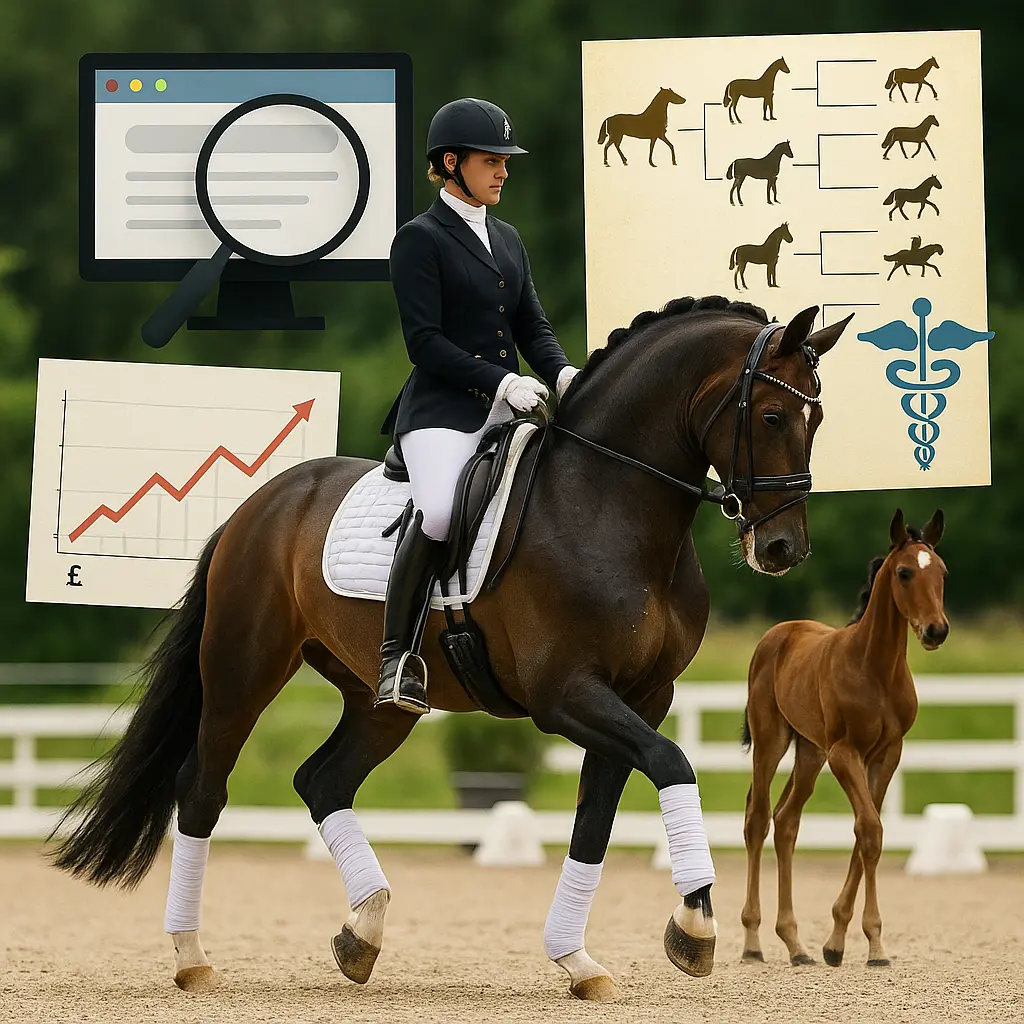
You want a young dressage horse you can enjoy, not endure. The smartest way to stack the odds in your favour is to read the pedigree for temperament and soundness first, then verify those promises with calm, consistent handling and a thorough vetting.
Key takeaway: Choose proven damlines for brain and durability, pick stallions with documented rideability, avoid close inbreeding and extreme “hot” lines for amateur riders, and always confirm on the day with a proper trial and 5‑stage vetting.
What matters most in a dressage pedigree?
The single most reliable predictor of a sane, sound prospect is a damline that consistently produces rideable, durable horses, backed by a stallion with proven rideability and trainability. Fashionable names matter far less than a family that repeatedly turns out straightforward athletes.
In practice, that means prioritising pedigrees where the mother, granddam, and close relatives have competed, stayed sound in work, and produced multiple offspring with similar type and brain. For an amateur rider, the “engine” from the sire is useful, but the damline is where you’ll often find the temperament, durability, and day‑to‑day manageability that make a horse enjoyable to own.
Look for evidence you can verify: competition records in recognised classes, consistent comments about rideability, and independent evaluations. In the UK, the British Breeding Futurity programme assesses young horses (foals to 5‑year‑olds) for athletic potential by discipline, including dressage, and provides scoring that can help you compare prospects. Horses scoring 8.0+ are highlighted as elite candidates for further selection, which can be a helpful early indicator when combined with your own assessment.
Bloodlines to prioritise for amateur-friendly dressage horses
Prioritise pedigrees that repeatedly produce good temperaments, correct conformation, and sound performance over several generations. Consistency beats occasional brilliance when you want a stress‑free partner.
Favour lines and families that reliably deliver:
- Rideability: Stallion testing or progeny reports that emphasise “willing,” “trainable,” and “easy to collect” carry real weight for amateurs.
- Proven damlines: Multiple siblings or maternal relatives in work at the level you aspire to, ideally with competition records you can look up.
- Correct fundamentals: Strong toplines, well-set necks, a hindleg that steps under, and clean limbs are the raw materials for sound work.
- Moderate, elastic movement: Swing through the back and rhythm are more rideable than extreme, flicky gaits that can be hard to sit and hard to keep sound.
- Independent validation: British Breeding Futurity results, BD Young Horse classes, or transparent producer records you can verify.
When comparing two pedigrees, choose the one that shows the same desirable traits repeated by different relatives. A single star in an otherwise empty page can be luck; a family of good, useable horses is a pattern you can bank on.
Bloodlines and patterns to treat with caution
Treat ultra-hot, ultra-modern lines with caution if you’re not riding at a professional level, and avoid close inbreeding and families with repeated soundness or temperament red flags. The goal is a horse you can develop steadily, not one that requires managing around inherited quirks.
Proceed carefully if you see:
- Close inbreeding or heavy linebreeding without evidence of soundness in the family; you want hybrid vigour, not fragility.
- Repeated reports of “sharp,” “sensitive,” or “overreactive” in close relatives when you need a confidence‑giver.
- Extreme front‑end flash without matching hindleg use; this can be hard to ride correctly and may strain soft tissues over time.
- Offspring notes mentioning wind issues, recurring lameness, poor feet, or conformational weaknesses (very long pasterns, back at the knee, very weak loins) across several relatives.
- Pedigrees that look impressive on paper but lack any record of relatives actually staying in work; results beat rhetoric every time.
None of these are automatic deal‑breakers on their own, but together they form a risk profile. You want a pedigree that reduces risk, not one that builds it in.

How to read a pedigree like a pro
Read from the damline up: the mare family tells you about brain, durability and type, while the sire and grandsires add scope, mechanics, and expression. Your aim is to see the same strengths appear from multiple directions.
Work through this quick framework:
- Start with the dam: Has she competed, stayed sound, and/or produced multiple useful youngsters? Ask for details, videos, and contactable references.
- Check the granddam and great‑granddam: Are there repeated performers in the direct female line? A strong tail‑female record is gold dust for amateurs.
- Evaluate the sire: Look for rideability comments from testing or progeny, a record of producing amateur‑friendly stock, and offspring competing at your target levels.
- Identify reinforcing names: When the same influential ancestor appears from multiple directions and the horse in front of you matches that type, it suggests the qualities are genuinely stamped, not accidental.
- Balance modern and old: A blend of modern mechanics with older, proven soundness lines often produces a rideable, lasting athlete.
- Verify with results: British Breeding Futurity scores, BD results for siblings, and producer references should back up what the paper promises.
Pro tip: Don’t overvalue a famous sire if the damline is blank. For an owner‑rider, an honest family with solid engines beats a single superstar at the top of the page.
Temperament first: test the brain, not just the brand
Temperament trumps bloodlines every time; ride and handle the horse in multiple situations to confirm the brain you want. A pedigree can predict tendencies, but only time in the saddle proves the day‑to‑day reality.
On your trial days:
- Watch the horse come in from the field and be tacked up. You want relaxed, polite, and curious, not anxious or shut down.
- Ride after minimal lungeing. A horse that needs to be tired out to behave isn’t ready for an amateur rider.
- Test the basics: straightness, rhythm, a soft contact, and “go” and “whoa” off light aids. A good brain shows in the simple things.
- Hack in company and, if safe and permitted, briefly alone. The reaction to new sights and sounds tells you more than 10 minutes in an arena.
- Come back a second time, ideally on a different day and in different weather. Consistency is the hallmark of a trainable temperament.
Arrive prepared so you can focus on feel. Bring your own correctly fitted riding helmet, supportive riding boots, and grippy, comfortable breeches. If you plan to hack on roads during a trial, pack suitable hi‑vis rider gear to keep everyone safe.
Vetting and heritable risks: protect your future soundness
Book a full 5‑stage vetting with your own vet, add targeted radiographs as advised, and discuss any heritable risks before you pay a deposit. The purchase exam is your opportunity to reduce long‑term risk.
Work with an equine vet familiar with sport horses and British Dressage demands. A typical 5‑stage vetting assesses heart, lungs, eyes, conformation, movement in hand and under saddle, and recovery after exercise, with flexion tests and, where indicated, endoscopy or imaging. Discuss what you plan to do with the horse and let your vet tailor any additional views to that goal.
Heritable points to consider with warmbloods and sport horses include predisposition to osteochondrosis/OC, hoof quality, and wind. If you intend to breed, ask for the horse’s status for conditions relevant to breeding stock (for example, carrier screening in breeding mares and stallions). Your vet can advise on which tests are meaningful for your situation and which findings are incidental for a riding career.
Quick tip: Ask for any existing X‑rays or previous vet reports up front. Transparency at this stage is a strong positive signal from a seller.
Where to shop in the UK for reliable prospects
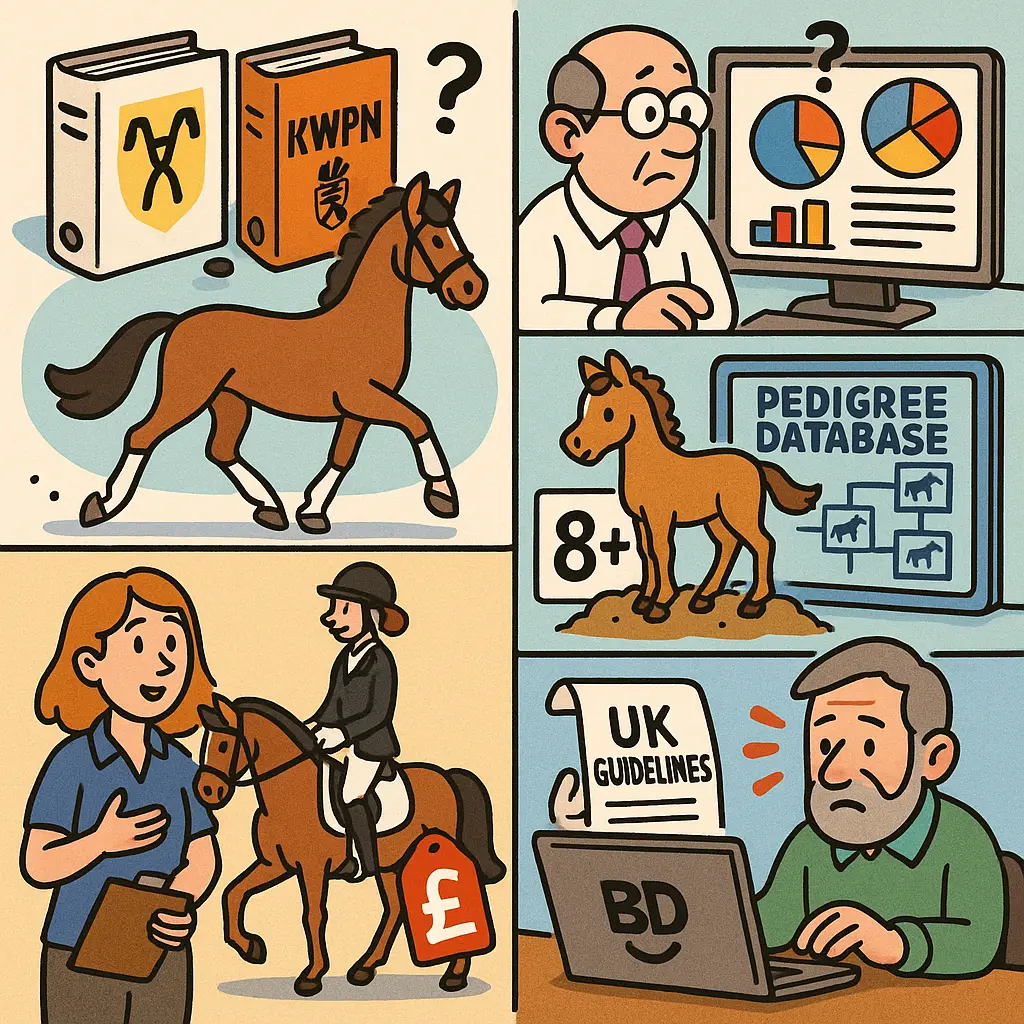
Start with British Breeding Futurity graduates, BD Young Horse classes, and reputable stud farms and producers who publish results and welcome repeat viewings. You want sellers who value a long‑term match over a quick sale.
Productive routes for UK buyers include:
- British Breeding Futurity results: Foals to 5‑year‑olds are assessed for athletic potential by discipline. Scores from 8.0+ are highlighted and can help shortlist youngsters whose conformation, movement and veterinary assessments align with dressage.
- British Dressage young horse classes: Watching age‑appropriate classes is a fast way to see what rides well in public, how amateur‑friendly types look and move, and which producers turn out consistent, relaxed horses.
- Reputable breeders and producers: Look for clear websites, detailed videos, parent and sibling records, and willingness to provide references and trial opportunities.
- Word of mouth via your coach and yard network: Good amateurs tend to buy from the same handful of trusted sources—ask around.
When you enquire, ask for the passport, full pedigree, any Futurity scorecards, vet history, turnout routine, shoeing cycle, and video of the horse in different contexts (arena, hack, loading). Sellers who have nothing to hide will usually have everything to hand.
Budget and set-up: plan the first 90 days
Budget beyond the purchase price for professional input, careful management, and essential kit, and commit to calm, consistent routines for the first three months. A good start makes the most of good breeding.
Allow for coaching, saddle fitting, routine dentistry and farriery, and initial physiotherapy as needed. Set the horse up with turnout, a simple feed that supports steady work, and a progressive training plan that builds rhythm, balance and basic responses before you worry about expression.
A few smart additions smooth the transition:
- Support legs as training ramps up with suitable horse boots and bandages that fit well and don’t overheat.
- Make daily grooming a quiet, confidence‑building routine with quality tools from our grooming collection.
- If your new horse is moving yards, factor in digestive and management changes; many owners find a targeted regime from our supplements range helpful during the settling‑in period.
- UK weather changes fast; have appropriately weighted turnout rugs ready so your youngster can live out comfortably without chills or overheating.
At Just Horse Riders, we see the calmest, quickest progress when owners keep the first 90 days boring: turnout, basic schooling, low‑pressure hacking, consistent routines, and regular praise.
Bringing bloodlines into focus is valuable, but the right horse is the one whose family history aligns with your goals—and whose brain confirms it under saddle. Shortlist pedigrees with proven damlines and rideability, confirm temperament with thoughtful trials, and protect your investment with a robust vetting. Do that, and you’ll give yourself the best chance of a happy partnership that lasts.
FAQs
Are warmbloods the only sensible option for dressage in the UK?
No. While warmbloods dominate at higher levels, many amateurs enjoy successful, sane partnerships with natives, traditional types, and thoroughbred or cob crosses. Evaluate the individual for temperament, conformation and movement appropriate to your goals, not just the label.
Should I avoid a horse that’s a carrier for a genetic condition?
For a riding horse, carrier status for a condition that does not affect daily health is usually a breeding consideration rather than a riding risk. If you plan to breed, discuss relevant tests with your vet and ensure you do not mate two carriers. Your vet can advise what’s meaningful for your specific horse.
At what age should I buy a young dressage prospect?
Buy at the age that matches your experience and support network. Backed 3‑ to 5‑year‑olds let you assess temperament under saddle; foals and yearlings can be economical but require experienced handling and patience. Whatever the age, prioritise damline, handling history, and a sensible brain.
How many times should I try a horse before buying?
At least twice, ideally in different conditions and including a short hack if safe. See the horse handled, tacked, and ridden by someone else first, then ride yourself without excessive lungeing. Consistency across viewings is key.
Is a 5‑stage vetting necessary for a young horse?
Yes, a full 5‑stage vetting is the standard for minimising risk, even in youngsters. It evaluates the horse at rest and after exercise and can be paired with targeted radiographs as your vet recommends for your intended level of work.
What first‑year costs should I plan for after purchase?
Plan for livery, coaching, saddle fitting, farriery, dentistry, routine veterinary care, and appropriate equipment and rugs. Budget for a calm, progressive training programme and professional help where needed—good management is what turns good breeding into a great partner.