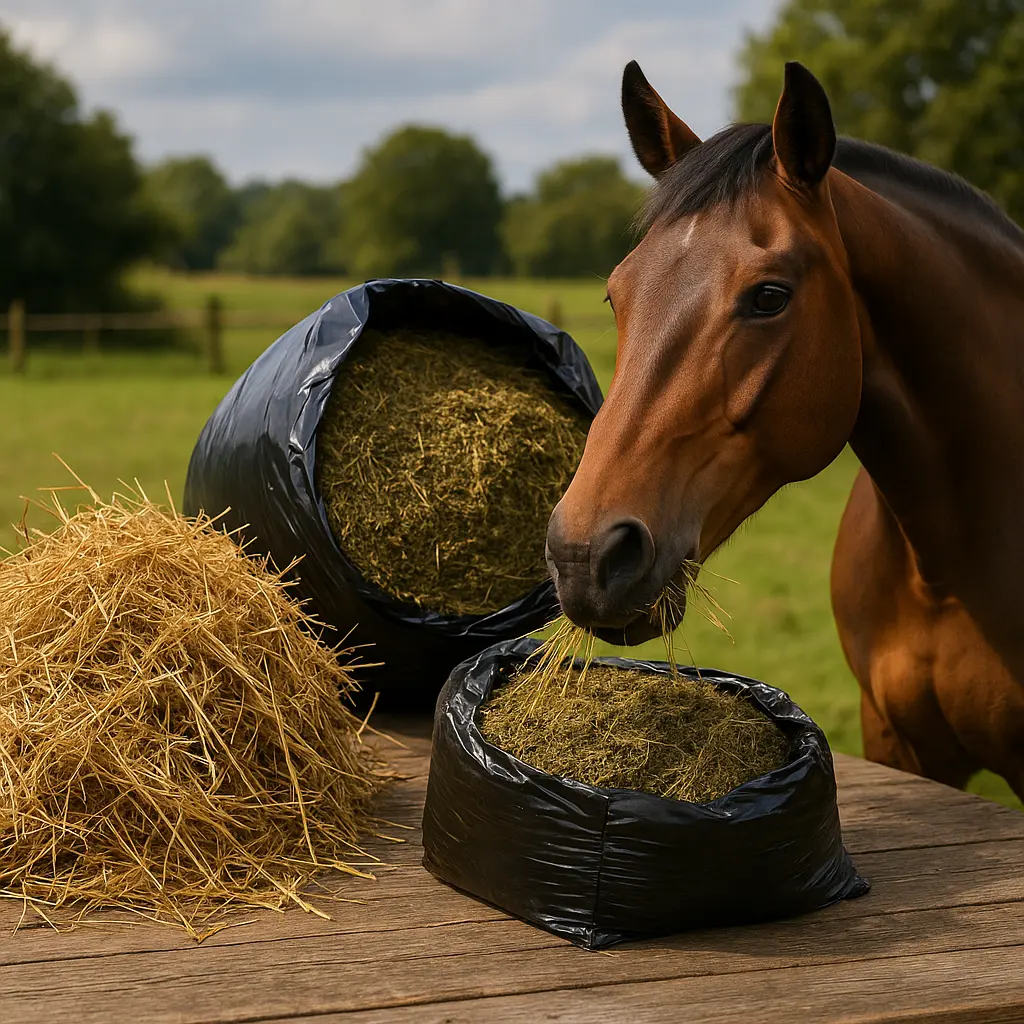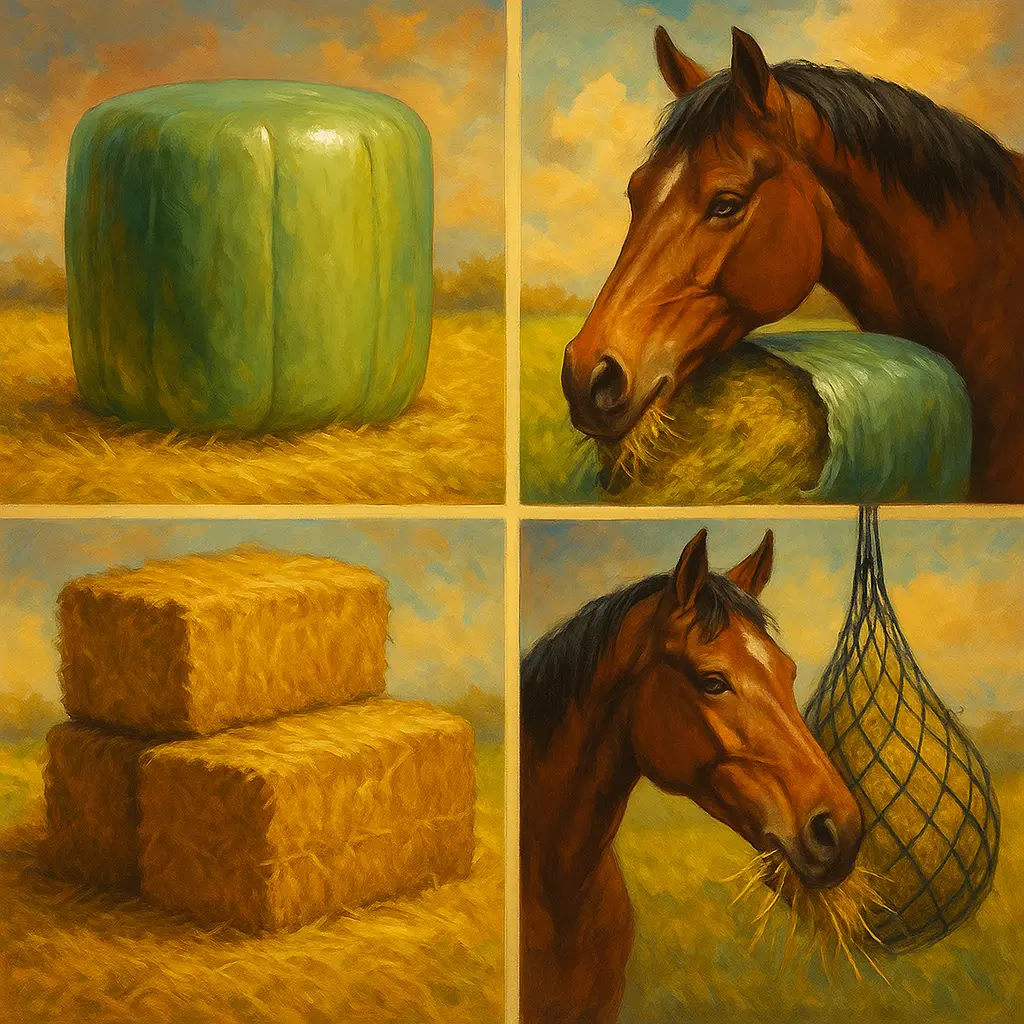
Choosing between hay and haylage affects your horse’s lungs, waistline and your yard routine. With UK weather and storage to consider, the right choice is about more than preference — it’s about health, practicality and consistency.
Key takeaway: For most UK horses needing dust-free forage, quality haylage is the safer daily choice — but you must feed about 1.5 times more by weight than hay and use opened bales within a week.
Hay vs haylage: the core difference
Hay is typically 85–90% dry matter (DM), while haylage sits around 50–70% DM, so you need roughly 1.5 times more haylage by weight to deliver the same fibre intake. Haylage’s higher moisture also traps dust and spores, making it lower risk for respiratory issues than hay.
Both are grass forages, but they’re made differently. Hay is field-dried until most moisture is gone, then baled and stored indoors. Haylage is cut earlier, wilted for a shorter period (around three days in the UK), then baled and sealed to ferment slightly. That moisture is the big functional difference: more water, less dust, and a “pickier” shelf-life once you open the wrap.
“Dry haylage” or wrapped hay sits between the two, with more moisture than hay but not enough for proper fermentation. It can be handy for outdoor storage, but it won’t reduce dust as effectively as true haylage and generally retains higher sugars.
“The biggest benefit of haylage over hay for many owners is that haylage is dust free. The moisture in haylage can absorb any potentially harmful spores that horses can inhale, and they stick to the grass – meaning they’re eaten instead of breathed in.” — Baillie Haylage
How much should you feed?
A 500 kg horse needs about 10 kg of dry matter daily: that’s roughly 11.7 kg of 85% DM hay or 14.2 kg of 70% DM haylage. As a rule of thumb, feed about 1.5 times more haylage by weight than hay when DM differs.
Dry matter (DM) is the fibre and nutrients left after you remove the water. Because haylage carries more water, you must feed a heavier amount to hit the same DM target. For most leisure horses, aiming for 2% of bodyweight in DM per day (so ~10 kg DM for a 500 kg horse) works well.
- Example with hay (85% DM): 10 kg ÷ 0.85 = 11.7 kg fresh weight per day
- Example with haylage (70% DM): 10 kg ÷ 0.70 = 14.2 kg fresh weight per day
For precision, get your forage analysed for DM, energy and protein. That’s especially important if your horse is in hard work, elderly, overweight, or laminitic. Higher energy haylage can tip good-doers over their calorie needs; in these cases, consider drier, later-cut haylage, restrict portions, or use steamed hay alongside a low-calorie balancer as advised by your vet or nutritionist.
Pro tip: Weigh what you feed. Pop a small luggage scale on your haynet ring and note down what a “full net” actually weighs in your yard, for both hay and haylage.
Is haylage better for respiratory health?
Yes — haylage’s moisture helps absorb dust and mould spores, making it effectively dust-free and safer for horses with allergies or compromised airways than hay. If you still need extra hygiene, steam either forage to reduce respirable particles further.
Respiratory comfort is the biggest everyday win with haylage. Fewer airborne particles mean fewer triggers for coughs, nasal discharge and performance-limiting inflammation. This benefit is particularly relevant in busy UK yards where indoor storage and mucking out can add to dust loads.
“Haylage features a dust-free composition, reducing the risk of respiratory issues compared to traditional hay. Its moisture content helps absorb dust and mould spores, making it a safer choice for horses with allergies or compromised respiratory systems.” — Millbry Hill
“If your horse requires dust-free forage but needs the extra nutrients and energy that would be lost through soaking, haylage is an ideal solution. Once opened, it needs to be used quickly – depending on conditions, this can be anywhere from 2–7 days.” — Horse & Rider UK
At Just Horse Riders, we often recommend pairing haylage with targeted support if your horse is particularly sensitive. Explore respiratory supplements for clear airways and trusted brands like NAF respiratory support to complement good forage choices. After riding or mucking out, a thorough brush-down helps too — stock up on yard-favourite tools in our grooming collection.
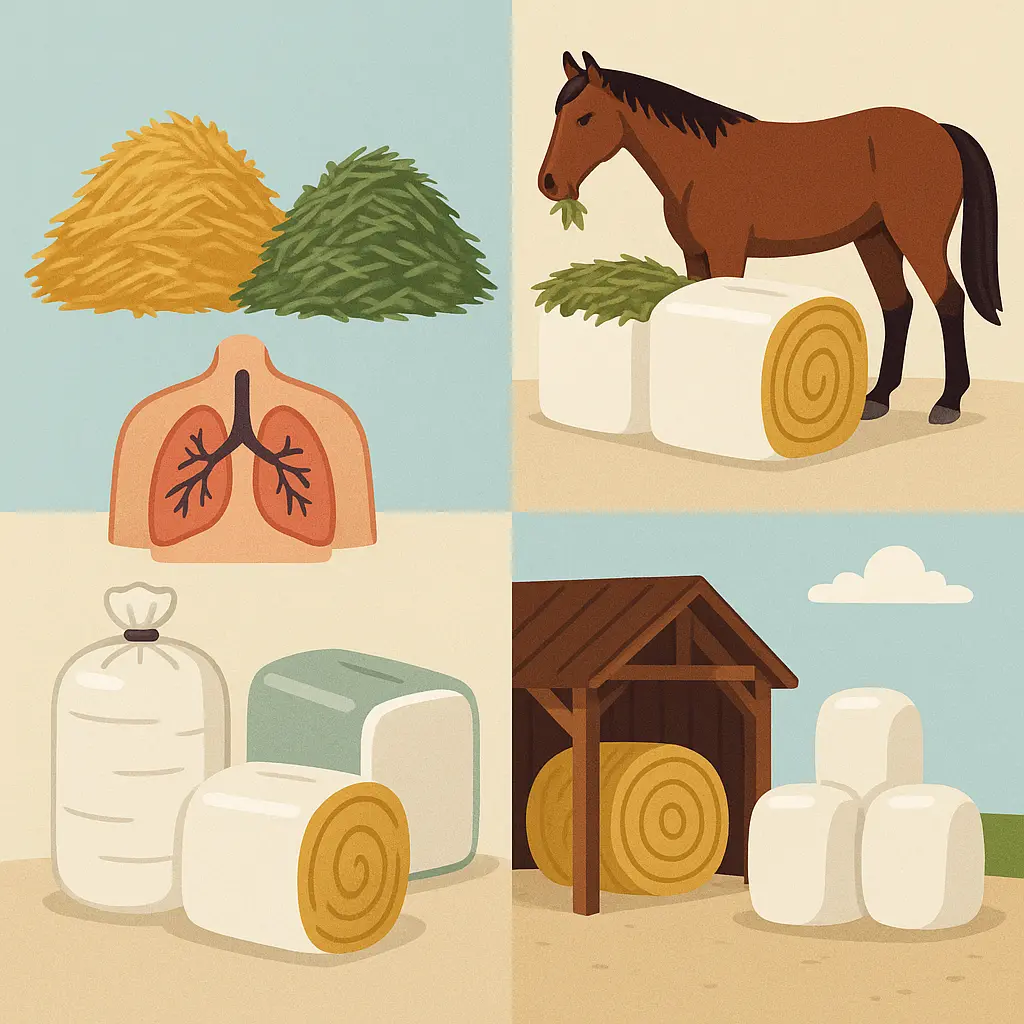
How to switch safely from hay to haylage
Transition over about 7 days, gradually increasing haylage while reducing hay to avoid digestive upset or colic. Any abrupt forage change can disturb hindgut microbes, so slow and steady is essential.
Follow a simple plan:
- Days 1–2: 75% hay, 25% haylage
- Days 3–4: 50% hay, 50% haylage
- Days 5–6: 25% hay, 75% haylage
- Day 7: 100% haylage (adjust final intake to hit your DM target)
Maintain routine feeding times, introduce from the same bale for consistency, and monitor droppings and appetite. If your horse is sharp on richer forage, choose a drier, later-cut haylage and balance overall calories accordingly. For horses prone to ulcers or stress, multiple small haylage nets can keep fibre trickling through the gut and behaviour on an even keel.
Quick tip: Single-horse owners should opt for smaller haylage bales to minimise waste once opened — especially in warmer months when shelf-life shortens.
Storage and shelf-life: how long does haylage last?
Unopened, wrapped haylage stores well outside; once opened, use within 2–7 days in summer, or up to 3 weeks in winter for drier types (around 80% DM). Exposure to air invites mould, so plan bale size to match your yard’s usage rate.
Store unopened bales on well-drained ground, protect the wrap from punctures and keep birds/vermin away. Once opened, reseal tightly and use quickly — particularly in warm, humid weather. Drier “high DM” haylages last better through UK winters, but always inspect before each feed. Good haylage smells fresh and sweet; musty, metallic or acrid notes mean it’s past its best.
Hay, by contrast, needs dry, well-ventilated indoor storage on pallets to prevent ground moisture wicking and mould formation. Barn drying is less common in the UK, so field-dried hay can be more variable; check bales closely on delivery and throughout the winter.
If your horse is stabled on hay or haylage through colder nights, ensure they stay comfortable with the right layering — browse dependable stable rugs for winter stabling. For practical feeding, brands like Shires offer robust haylage nets and yard tools to keep things tidy and slow feeding sensibly.
UK weather: when and why haylage shines
In the UK, haylage suits unpredictable summers because it needs only about three days to wilt and is typically harvested from early June to September. That shorter drying window means more reliable forage production when consecutive dry days are scarce.
UK rain patterns can turn haymaking into a gamble. Haylage’s faster process reduces the risk of showers washing away nutrients or encouraging dust and mould. It’s also friendlier on storage: wrapped bales can sit outdoors, which suits livery yards short on barn space. If your horse lives out while you’re feeding in the field, a reliable rug helps weather the drizzle — our range of winter turnout rugs keeps horses drier and more comfortable during stop-and-feed routines. And if you’re checking fields or moving bales in dull autumn light, stay seen with rider-safe hi-vis gear.
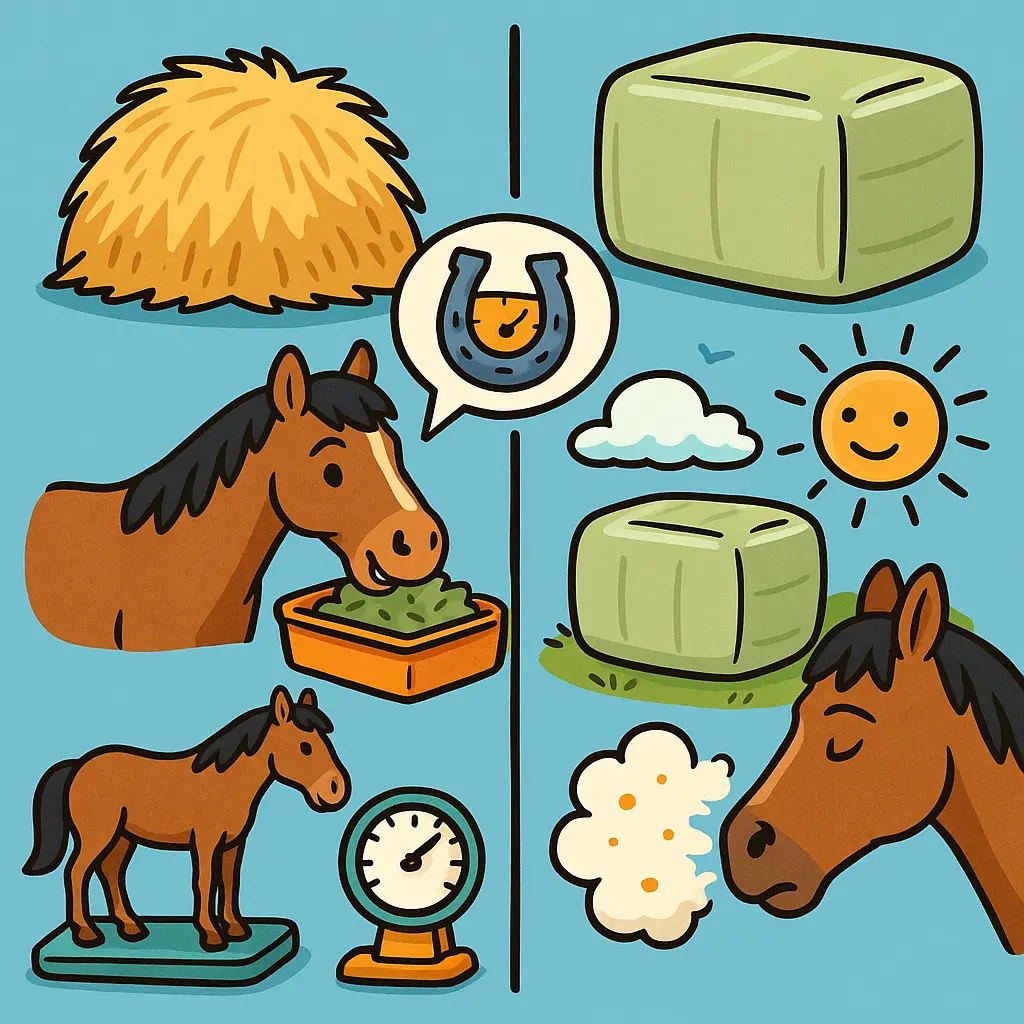
Haylage quality checklist: what to look for
Good haylage is slightly moist, sweet-smelling, leafy and golden with pliable stalks; reject bales that are faded yellow/brown, weedy, or smell musty, metallic or acrid. Always inspect before feeding.
Use this quick checklist:
- Colour: Golden to fresh green, not dull or brown
- Smell: Clean and sweet; never sour, acrid or “metallic”
- Texture: Slightly moist, leafy, pliable stems (not brittle)
- Contents: Minimal weeds; consistent, even chop
- Wrap: Intact with no punctures; use bales from the same batch for consistency
Open bales carefully to avoid tearing the wrap if you’ll be resealing. If you’re aiming for a longer post-opening window in winter, look for drier haylage (70–80% DM), and monitor it daily. For horses that still react to any dust (e.g. when swapping back to hay part-time), steam the forage and keep noses clean with a quick flick over from your grooming kit.
Pro tip: Forage analysis pays you back in confident feeding. Knowing DM, sugars and protein lets you fine-tune portions, especially for good-doers or performance horses.
FAQs
Is “dry haylage” just wrapped hay?
Yes. Wrapped hay (sometimes marketed as “dry haylage”) has slightly higher moisture than standard hay but not enough to ferment like true haylage. It won’t reduce dust as effectively and generally retains higher sugars, but it’s convenient for outdoor storage.
Is haylage safe for horses with breathing problems?
Yes. Haylage’s moisture traps dust and mould spores, so it’s typically safer for horses with allergies or compromised airways than hay. For extra hygiene, steam the forage, keep stables well-ventilated and consider targeted respiratory support via supplements from trusted brands like NAF.
How much more haylage do I need to feed vs hay?
About 1.5 times more by weight to supply the same fibre. For example, a 500 kg horse needs around 10 kg DM daily, which is roughly 11.7 kg of 85% DM hay or 14.2 kg of 70% DM haylage. Weigh your nets and, if possible, analyse your forage DM for accuracy.
How long does opened haylage last?
Use opened haylage within 2–7 days in summer. In winter, drier types at around 80% DM can last up to three weeks if kept sealed and cool. Always check smell and appearance before every feed.
Can I store haylage outside in the UK?
Yes. Wrapped bales are designed for outdoor storage on well-drained ground; protect the wrap from punctures and vermin. Hay, by contrast, needs dry, raised, and well-ventilated indoor storage.
Should I pick haylage or wrapped hay?
Choose haylage if you want dust-free forage and can use an open bale quickly. Pick wrapped hay if you need outdoor storage but don’t require fermentation benefits. For overweight or laminitic horses, speak to your vet or nutritionist and consider lower-energy options or steamed hay.
At Just Horse Riders, we’re here to help you match forage, management and kit to your horse and yard. If you’re adjusting routines for winter, explore practical layers like stable rugs, field-ready turnout rugs, and yard essentials from Shires — and breathe easier with smart respiratory support from NAF and our wider supplements range.