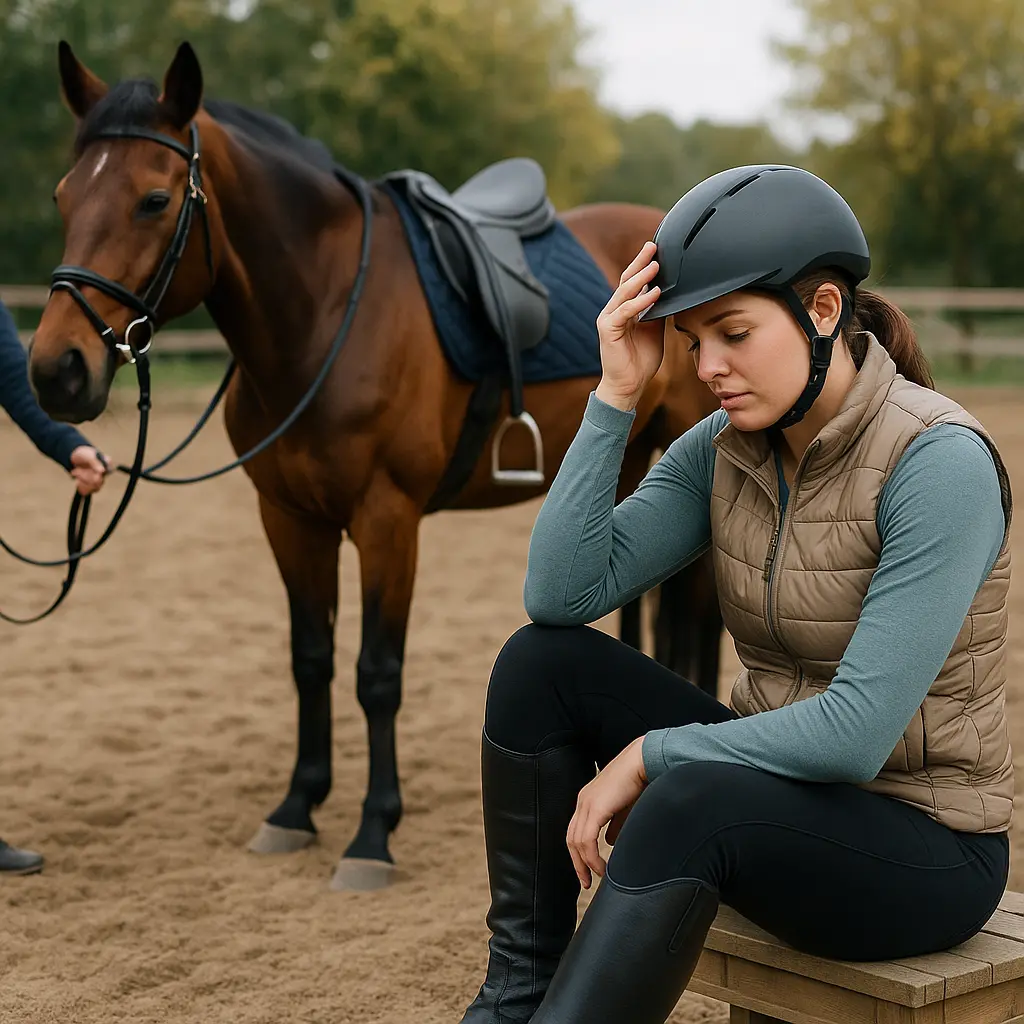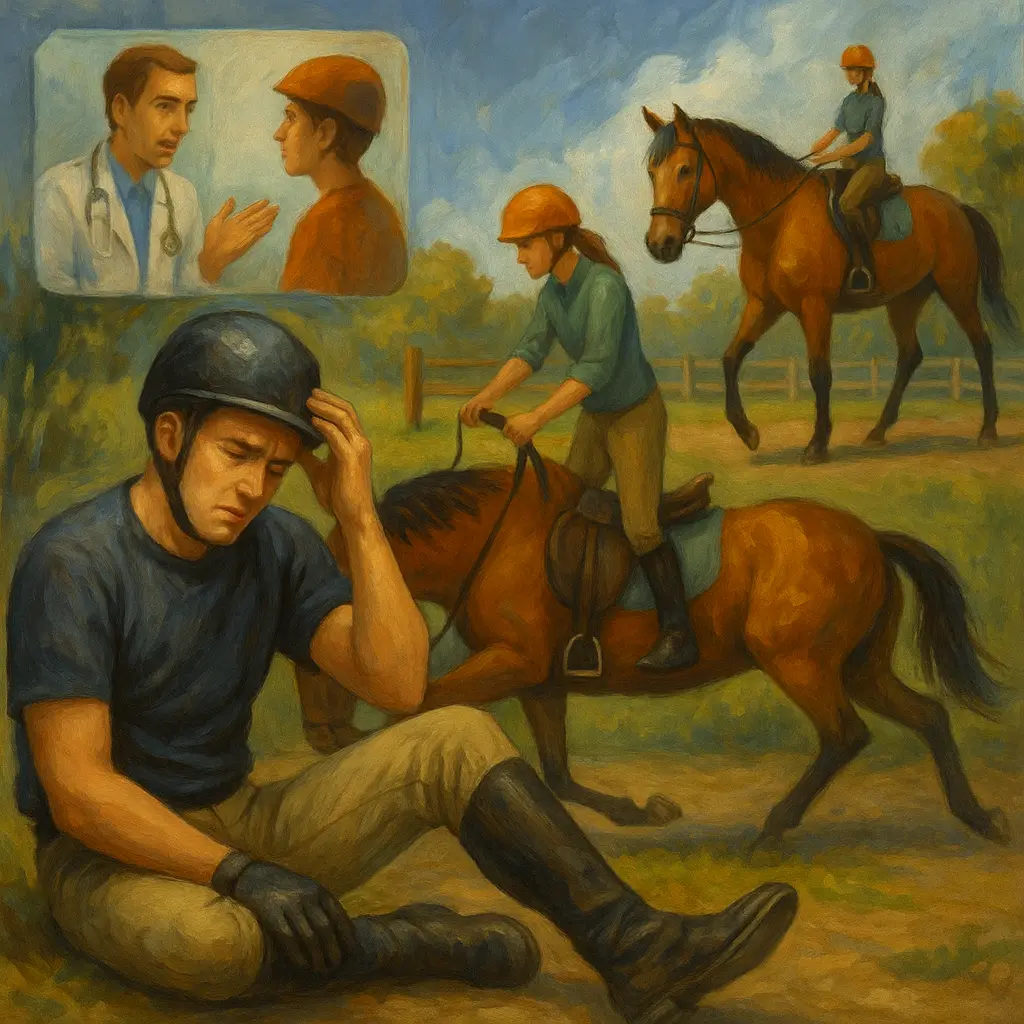
You don’t bounce when you fall off a horse — and even a “mild” knock to the head can have serious consequences if you get back on too soon. Here’s exactly how to recognise a concussion, what to do next, and the safest way to return to the saddle in UK conditions.
Key takeaway: If you suspect concussion, stand down from riding immediately and follow a structured, medically supervised return-to-riding plan — with full practice not before day 21.
When to stand down after a fall
Stand the rider down from riding immediately after any suspected concussion and follow the four Rs: Recognise, Remove, Recover, Return. According to British Equestrian guidance, no one should remount after a suspected concussion.
Concussion isn’t always dramatic. Clear signs include lying motionless, a delay in getting up, disorientation, confusion, slow movements or balance difficulties after a blow to the head. If you see any of these, remove the rider from the scene, keep them still, and seek medical advice. Even if you feel “OK”, do not carry on riding or driving — symptoms like drowsiness, insomnia, poor concentration, or sensitivity to light/sound can appear hours later and still require medical evaluation. Review the full guidance from British Equestrian and this practical rider checklist from the University of Kentucky’s Saddle Up Safely programme.
Quick tip: After any fall with a potential head impact, treat your helmet as compromised and replace it. You’ll find certified options in our riding helmets collection.
The 21-day return-to-riding timeline
Do not return to full practice before day 21 post-injury, and only progress through stages if you remain symptom-free. British Equestrian requires complete rest for the first 48 hours and a gradual, medically guided progression thereafter.
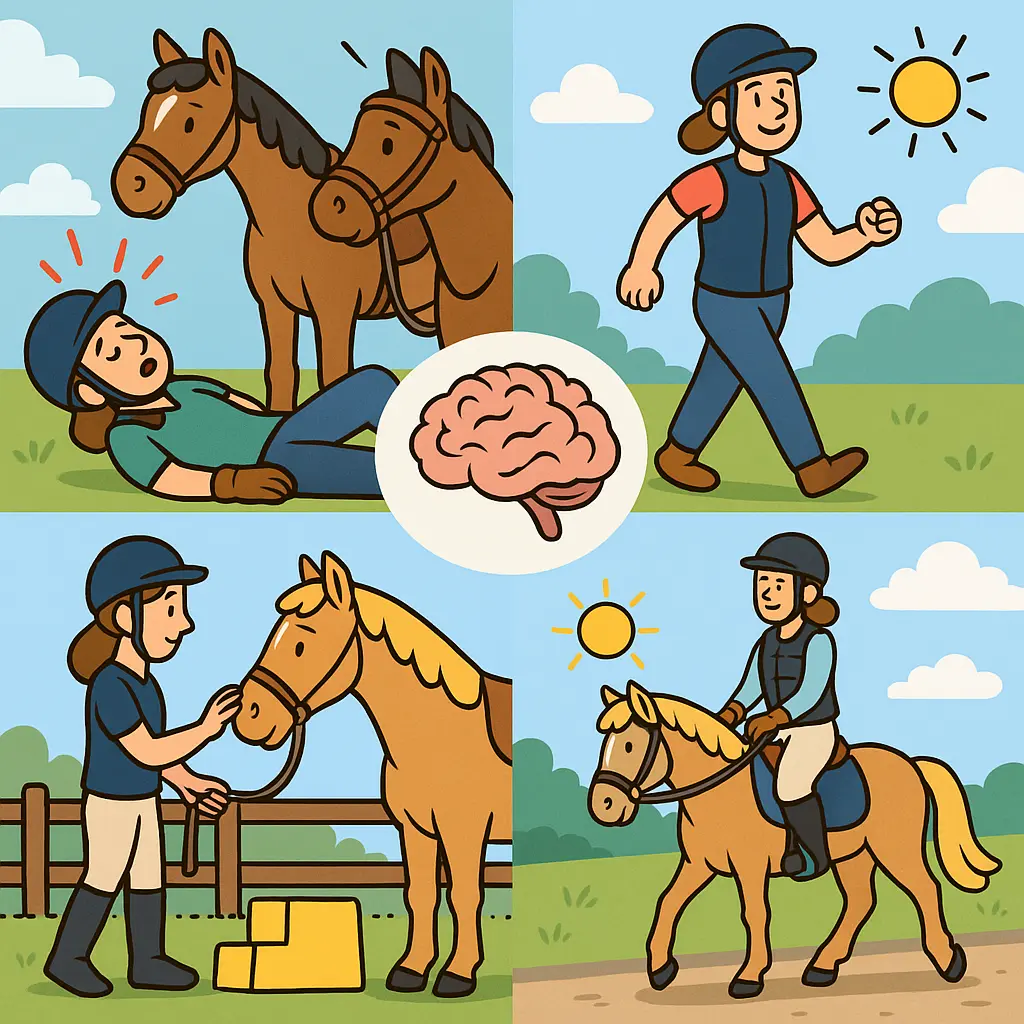
Here’s the standard graduated return to riding after concussion (GRTP) used across British Equestrian disciplines:
- Stage 1 (0–48 hours): Complete physical and cognitive rest. No screens, yard work, or strenuous activity. Prioritise sleep and hydration.
- Stage 2: Light aerobic activity that doesn’t risk head impact — think short walks and gentle yard tasks like light grooming. Stop immediately if symptoms recur.
- Stage 3: Equine-specific exercises without risk — groundwork, leading, in-hand transitions, pole work on the ground. No riding yet.
- Stage 4: Controlled riding re-introduction — mounting practice using a block, then short, supervised walk-only sessions. Increase duration gradually if symptom-free.
- Stage 5 (not before day 21): Resume full practice on a suitable horse in calm weather, with no unsupervised riding.
“Resume full schedule of riding on a suitable horse in calm weather conditions (no young or spooky horses). No unsupervised riding.” — British Equestrian concussion guidelines (Version 1.0, updated 16 February 2023)
Pro tip: Keep a daily log of symptoms, activity, and sleep. If anything returns — even a mild headache — step back one stage and seek medical advice before progressing again.
Enhanced vs standard concussion pathways
Only riders with access to a doctor trained in sport concussion, baseline SCAT testing, and serial assessments should follow the enhanced pathway; everyone else must use the standard return-to-riding plan. Under-16s should never be on the enhanced pathway.
Enhanced concussion management offers closer medical oversight, but it requires specific criteria: a doctor with sport concussion training, baseline SCAT testing, and a structured GRTP under supervision. If any of those are missing, you must follow the standard pathway set out by British Equestrian. This ensures consistency and safety at all levels, from Pony Club to affiliated seniors.
“If any element of the above criteria [enhanced pathway] is absent, the person should follow a standard return to riding pathway. It is never appropriate for someone under the age of 16 to follow this enhanced pathway.” — British Equestrian medical advisory panel
For complete criteria and stage detail, refer to the official British Equestrian concussion guidance.
Rebuilding confidence step by step
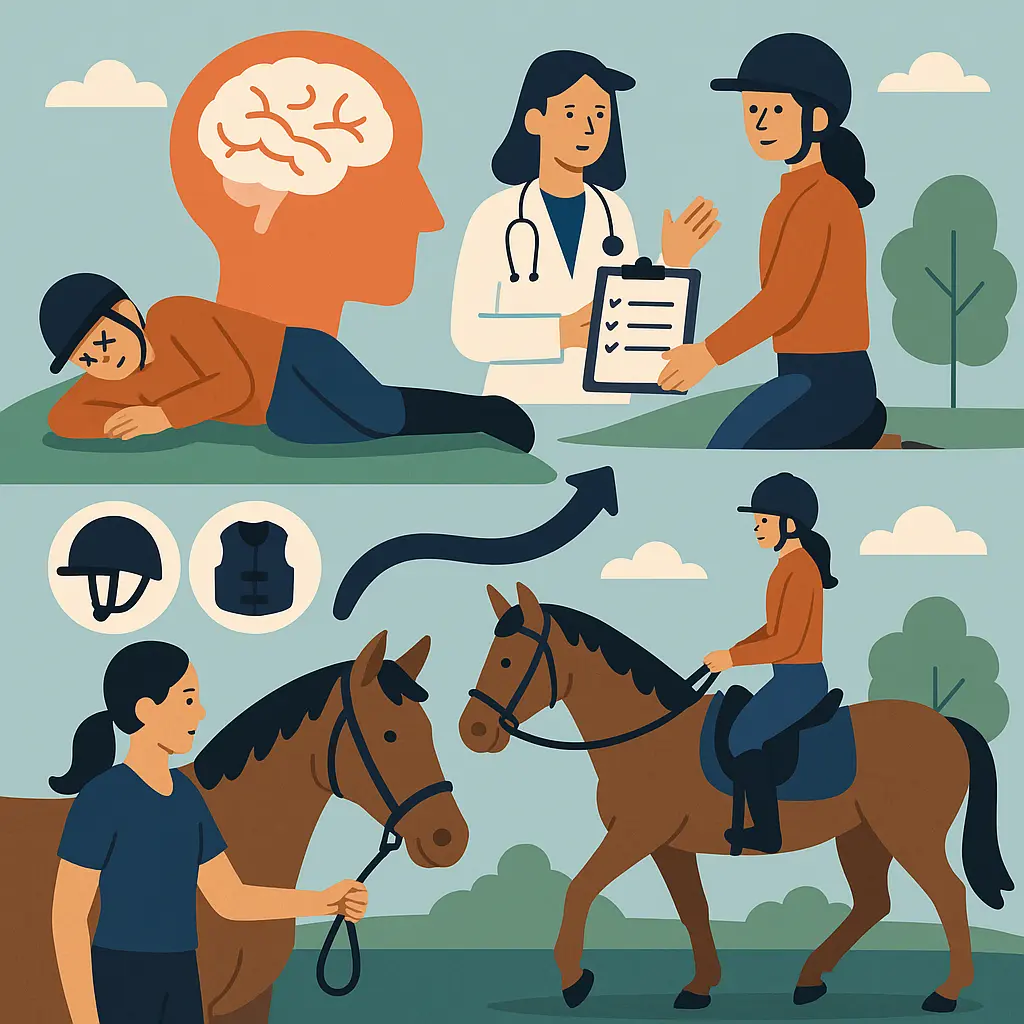
Start from the ground with low-risk, controlled tasks and only remount when your body and mind feel ready. Use mounting blocks and led walk sessions before taking back full control.
Confidence often lags behind physical recovery, and forcing it rarely works. Begin with simple bonding and groundwork: grooming, hand-grazing, leading in familiar spaces, and in-hand transitions or pole work to re-set communication with your horse. Then move to non-threatening mounting practice.
“Begin with groundwork exercises... Using mounting blocks and practising getting on and off horses without actually riding... start with short walk sessions with someone leading the horse.” — Everyday Equestrian
When you’re ready to ride, do a 10-minute walk-only session on the lunge or with a leader so you can focus on position and breath without worrying about steering or speed. Build from there, adding short spells of independent walk, then a few minutes of trot on another day if you remain symptom-free and calm.
At Just Horse Riders, we recommend pairing these sessions with a simple ritual — calm grooming to lower your heart rate, a check of your tack, and a clear plan for the ride. Explore our grooming essentials and consider quality kits from trusted brands like LeMieux to make pre-ride routines feel positive and consistent.
Quick tip: Anxiety narrows your breathing and balance. Before you mount, practise three deep box-breath cycles (inhale 4, hold 4, exhale 4, hold 4) to settle your nervous system.
Managing pain and physical rehab
Expect pain and stiffness to worsen around days 5–10 due to normal inflammation, with most soft tissue injuries recovering in about 3 weeks. If your recovery stalls, self-refer to local NHS physiotherapy services.
Post-fall pain often has a delayed “spike” as tissues repair. York Hospital NHS notes pain from horse-related injuries can intensify around days 5–10 and that uncomplicated soft tissue issues typically settle by three weeks. During this time, keep moving little and often, maintain good posture, and avoid long periods of sitting. Ice-heat cycles, gentle range-of-motion exercises, and short walks support recovery. If pain is worsening after two weeks, or you’re not improving by three, contact your GP or self-refer to your local NHS physio. For confirmed fractures, follow your virtual fracture clinic’s guidance.
For more serious injuries, a multidisciplinary approach (physiotherapy and occupational therapy) restores mobility, strength, and daily function before you return to the yard. Be honest with your physio about riding goals so they can tailor core, hip, and shoulder stability work to the demands of mounting and riding.
Pro tip: Prepare your body before your first ride back. Five minutes of dynamic warm-up (hip circles, gentle lunges holding the pommel, shoulder rolls) improves stability and reduces the likelihood of compensations that can irritate healing tissues.
Kit that supports a safe return
Wear a certified helmet every ride, pair it with a body protector for added impact protection, and choose supportive footwear with good grip. Use hi-vis when hacking and fit limb protection to reduce slip or strike injuries.
While no kit prevents concussion entirely, it reduces risk and consequences. Prioritise:
- Head protection: Replace any helmet involved in an impact and ensure the next one is correctly fitted and certified. See our curated riding helmets.
- Footwear: A secure heel and grippy sole reduce slip-through risks. Explore supportive options in our horse riding boots.
- Visibility: UK light levels drop fast in autumn and winter; wear hi-vis even on bright days. Browse our rider hi-vis for vests and accessories.
- Limb protection: On wet or uneven ground, brushing boots or overreach boots can help prevent strikes and slips. See horse boots and bandages.
If your horse is sharper in the wind or rain, plan sessions for calmer windows and use appropriate turnout and warm-up to minimise spookiness. A comfortable, dry horse is safer and more rideable; seasonally suitable layers from our turnout rugs help keep backs warm and muscles ready to work.
UK weather and yard practicals
Return to riding only in calm weather and on a suitable, sensible horse, avoiding young or spooky types in windy or wet conditions. Schedule early in the day when yards are quiet and surfaces are best.
British Equestrian’s Stage 5 guidance is explicit: pick calm days and reliable horses. In the UK, that often means avoiding gusty autumn fronts or sleety showers that rattle roofs and blow jump wings. Choose enclosed arenas with good footing, shut the gates, and keep dogs and loose horses away. If you must hack, start with a fully supervised, short route in daylight wearing hi-vis, and postpone if wind speeds are high or visibility drops.
Other practicals that help:
- Book a trusted coach to oversee your first few sessions back.
- Ride during the quietest yard hour to minimise startles and distractions.
- Warm your horse’s back with hand-walking and a few minutes on the lunge before you get on, especially in colder months.
- Use a steady, known schoolmaster; avoid green or nervous rides until you’re fully confident.
When to seek professional help
Seek urgent medical evaluation for any loss of consciousness (even brief), worsening headache, repeated vomiting, seizure, increasing confusion, or new neurological symptoms. For delayed symptoms such as balance problems or cognitive changes, stand down and contact your GP.
After any suspected concussion, share British Equestrian’s return-to-riding guidance with your clinician to align expectations on timing and activity. A medically supervised, symptom-led progression protects your brain health and long-term riding future. For musculoskeletal injuries, reach out to an equestrian-savvy physiotherapist and, for significant trauma, an occupational therapist to tailor rehab to core, hip, and shoulder demands in the saddle.
At Just Horse Riders, we recommend building a simple safety checklist for the whole yard: who holds first aid, where the ICE contacts are, where the head injury guidance is posted, and the plan to get a rider home safely if they’re stood down.
FAQs
What are the immediate signs of concussion after a horse fall?
Lying motionless, delayed getting up, disorientation, confusion, slow movements, or balance problems are red flags. Stand the rider down immediately and follow the four Rs: Recognise, Remove, Recover, Return. Review the full list in the British Equestrian guidance.
Should I remount right after a fall if I feel fine?
No. Do not remount. Remain still for evaluation and monitor for delayed symptoms such as drowsiness, insomnia, difficulty concentrating, or sensitivity to light/sound. If any appear, seek medical assessment as advised by Saddle Up Safely.
How long before I can return to full riding after concussion?
Not before day 21, and only if you’ve progressed symptom-free through the earlier stages. Stage 1 requires 48 hours of complete rest; Stage 5 (full practice) is the earliest day 21 on a suitable horse in calm weather with supervision.
Is the enhanced concussion pathway right for my child?
No. It is never appropriate for under-16s. Unless you have access to a doctor trained in sport concussion, baseline SCAT testing, and serial assessments, follow the standard pathway regardless of age.
How do I rebuild riding confidence after a serious fall?
Start with groundwork and bonding, then practise mounting using a block without riding, followed by short, led walk-only sessions. Add independence gradually while using breathing and visualisation to manage anxiety.
When should I see a physiotherapist after a riding injury?
If pain is worsening after two weeks or recovery isn’t improving by around three weeks, self-refer to your local NHS physiotherapy service. Expect pain to peak days 5–10 as part of normal healing for soft tissue injuries, as noted by York Hospital NHS.
What kit helps me return to the saddle more safely?
Wear a certified helmet every ride, consider a body protector, choose supportive riding boots, add hi-vis for hacks, and protect your horse’s legs with appropriate boots and bandages. On wet or windy UK days, wait for calmer conditions and ride a sensible, known horse.