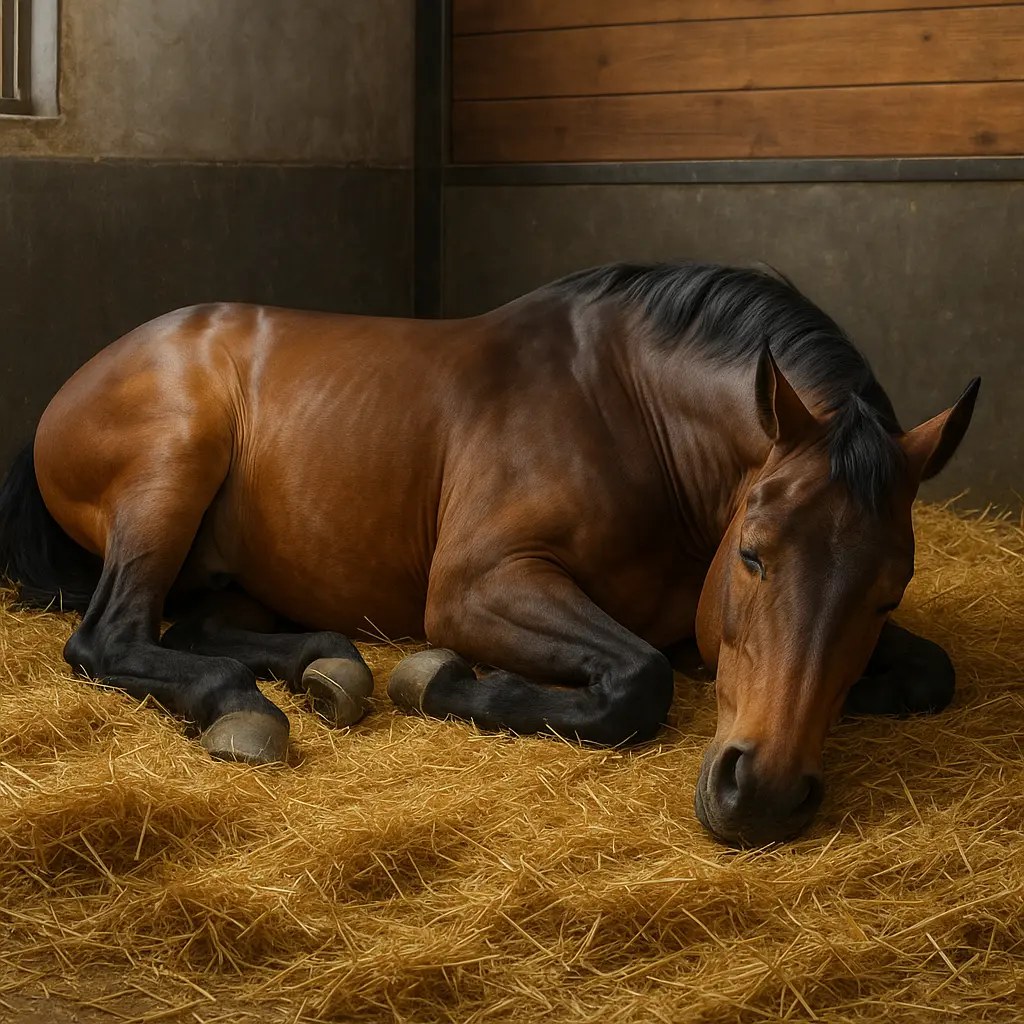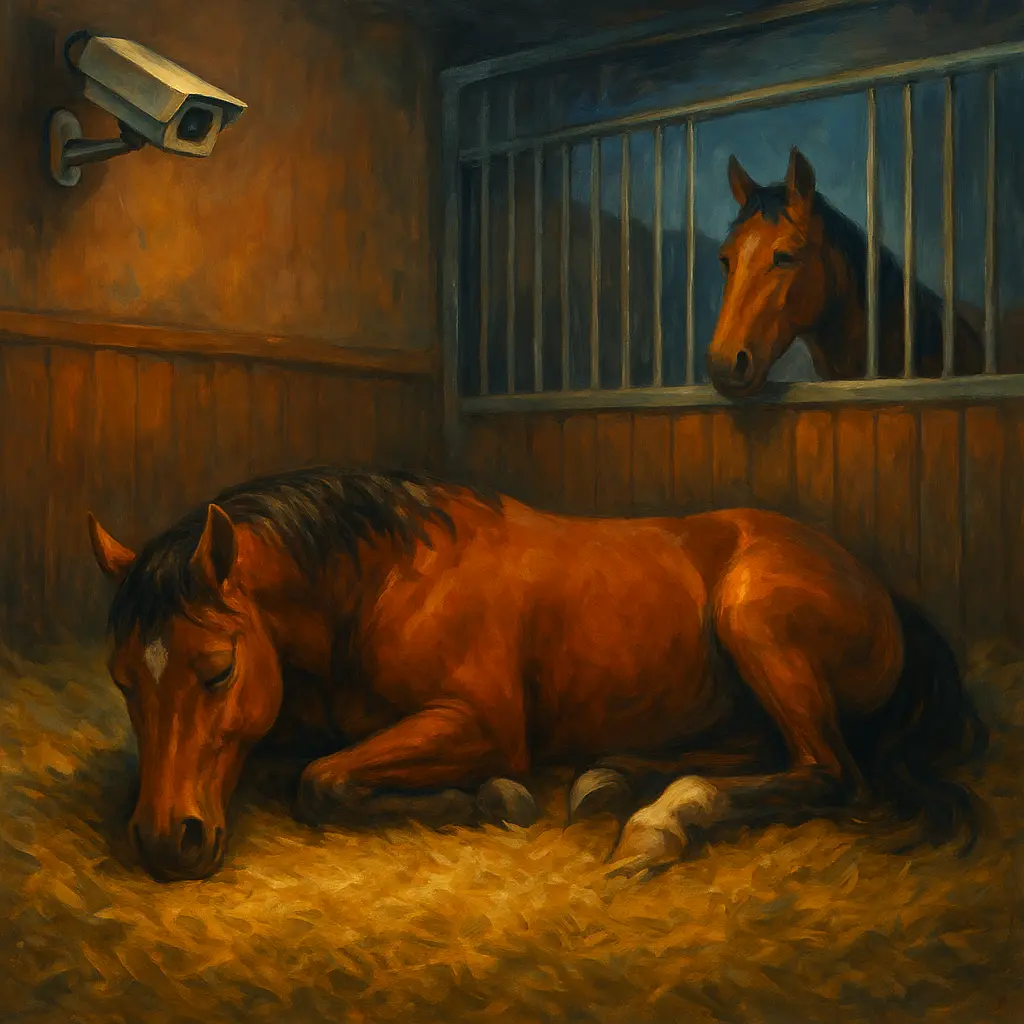
Most horses will work, eat and behave perfectly “normally” while running a sleep deficit — until they can’t. In UK yards where overnight stabling is common for months on end, getting sleep right is a quiet but critical part of welfare and performance.
Key takeaway: Most stabled UK horses need around 3.5 hours total sleep per night, including roughly 30 minutes of REM lying down; you can improve this consistently with 15 cm deep bedding, adequate space (12 m²+), social contact, calm routines, and temperature-appropriate rugging.
How much sleep do horses need?
In stables, horses typically achieve around 3.5 hours of total sleep per night, with about 30 minutes of REM sleep and most of the remainder as slow-wave sleep. This pattern was described in a 2019 monitoring study summarised here: Equine Behaviourist.
Horses distribute sleep across short bouts, day and night, but the core “consolidated” block usually happens overnight in the stable. The same research notes roughly 15% of a horse’s total sleep is REM (around half an hour), while about 65% is slow-wave (non-REM). Crucially, horses need to be recumbent (lying down) to achieve REM; when lying is limited, REM is reduced and the horse compensates with micro-sleeps or unstable drowsing while standing — neither is a safe or sustainable substitute.
Think of a good night’s sleep as just as important as balanced forage and sound hoof care. It is a daily welfare need, and it is within your control.
Why does recumbency matter so much?
Horses only achieve REM sleep safely when lying down; when they don’t lie down enough, they can become sleep-deprived and even collapse. In a study of 36 horses, between 4 and 199 collapse events were recorded across 24 hours in severely sleep-deprived individuals, with 86% occurring during or just before REM attempts while standing (source).
Common red flags for sleep debt include new knee or fetlock scuffs, a “nodding” head while drowsing, frequent startling awake, reluctance to lie down, and grumpiness or hypersensitivity when handled. The lead researcher on the collapse work issued a clear warning:
"Horse owners need to be aware that the sleeping behaviour of horses is an important thing to consider. It is important to recognize the symptoms as soon as possible but prevention is essential."
If your horse has suddenly stopped lying down, rule out pain first — back issues, hock or stifle discomfort, ulcers, poorly fitting tack, or post-dentistry soreness all reduce willingness to recumb. Consult your vet (ideally a BEVA-member practice) or an ACPAT-qualified physio. Once pain is addressed, your management can reliably improve sleep quality.
What bedding depth and type helps horses sleep?
Provide at least 15 cm (6 inches) of clean, dry bedding; deeper beds increase both non-REM and REM sleep compared with 5 cm beds. Hartpury University researchers reported that horses on 15 cm bedding spent significantly more time in both sleep phases than on 5 cm, a finding summarised by The Horse (source).
Depth is the non-negotiable. Type also matters for comfort and dryness across UK seasons. In Hartpury observations, horses on straw spent 29% of their nocturnal time recumbent compared with 12% on shavings (difference not statistically significant, p>0.05), but this aligns with a broader picture: thicker, softer, drier beds encourage lying down (source).
In a wet British winter, deep, absorbent shavings are practical for keeping the lying area dry in unheated stables, while straw can be excellent for warmth and cushioning if you can manage wet patches daily. Expect to invest £5–£15 per bale depending on type and brand; aim to start with enough to achieve 15 cm depth across the entire bed, then top up weekly to maintain it as the season progresses.
"We are starting to see more how we can impact the amount of sleep a horse achieves from bedding practices. This could mean that we could have a happier horse, and that would, of course, increase equine welfare and potentially performance." — Amber Matthews, MSc, Hartpury University (source)
How to implement today:
- Measure depth with a ruler at several points; aim for 15 cm minimum, including under the ribs and flank (not just in the centre).
- Switch gradually from thin to deep beds over 2–3 days to avoid sudden changes; bank sides to prevent casting and to “recycle” clean material.
- Remove wet daily; keep the lying area dry right through to the floor. In high-rainfall spells, add an extra bale midweek.
- In summer, maintain depth but reduce dust; good hygiene reduces coughing and encourages calm rest.
Pro tip: Do the “kneel test” on clean breeches — if your knees don’t get damp or feel the base mat, your horse likely won’t either.
What stable design and space promote better sleep?
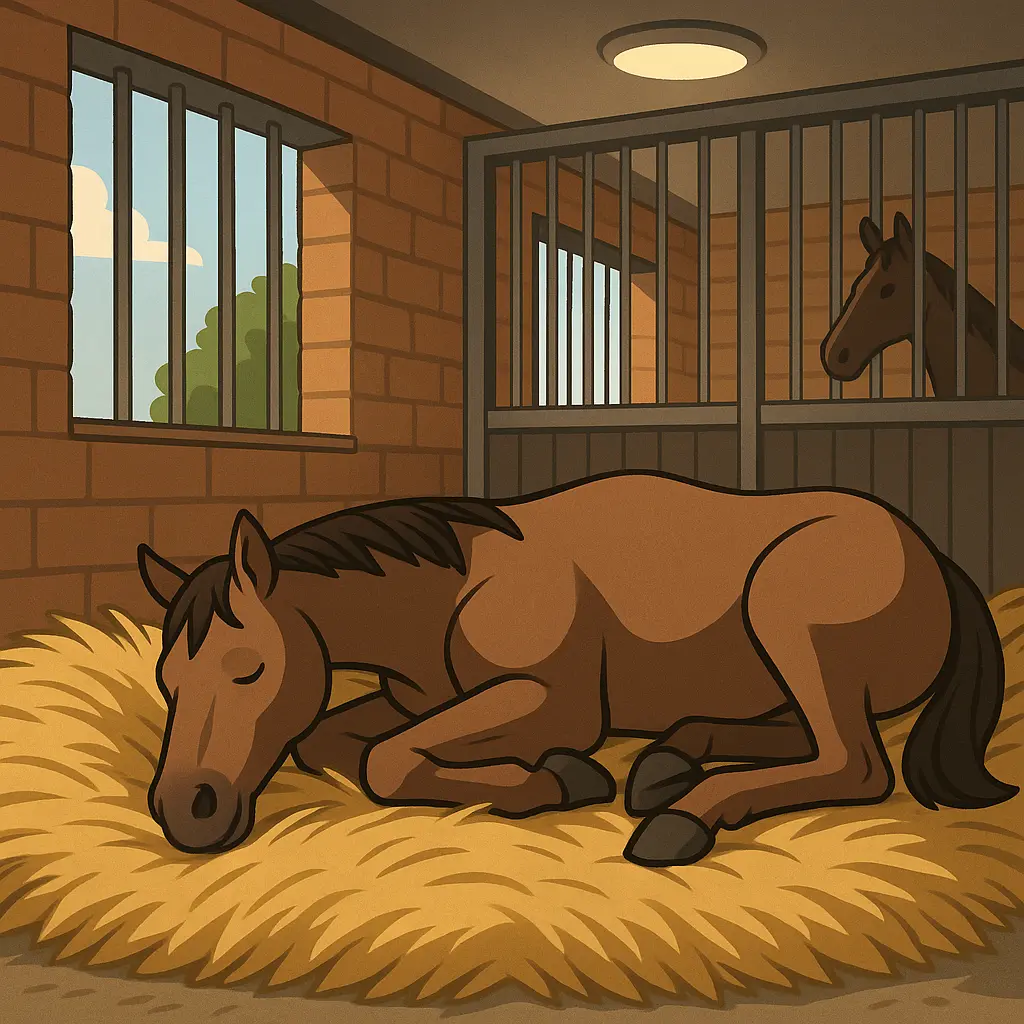
Give an average horse at least 12 m² of stable space and use barred partitions to allow social contact; both increase recumbency and reduce disturbed standing sleep. A third of collapsing horses in one study lacked sufficient space per German guidelines (12 m²), and Hartpury work found solid-walled stables reduced standing sleep and recumbency compared with barred designs (source; source).
Space allows a horse to step down and get up without fear of hitting walls or feeders. Social visibility reduces vigilance; horses are herd animals, and seeing or hearing companions lowers the perceived threat level, freeing them to lie down. On busy UK livery yards, simple design tweaks pay off fast:
- Swap solid brick sides for secure barred grilles or top-halves where yard policy allows.
- Keep hay, water and salt licks away from the central lying patch so the horse can stretch out.
- Ensure doors open smoothly and are free from rattles that disrupt drowsing horses.
- For larger horses or those with arthritis, extra space over 12 m² makes rising easier and safer.
Quick tip: If you can’t alter walls, fit a safe “talk window” or grill to give sightlines and airflow without compromising safety.
How should I manage lighting, routines, temperature and noise at night?
Keep nights dark and quiet with minimal disturbances; studies show blue-enriched day/red night LED systems perform similarly to standard fluorescent lighting for sleep outcomes, so focus on consistency. A 2023 collaboration found no significant differences in total sleep, recumbency or blink rates between lighting types (source).
This means your priority is a predictable, low-stress night-time routine:
- Set a firm lights-out time; use dim red night lights only where essential for safety.
- Avoid late-night rug swaps, injections or noisy mucking-out that wake the whole barn.
- Feed the last forage before lights-out, then leave the barn calm; reserve checks for genuine need.
- If overnight checks are necessary (e.g., competition horses), use a head torch on red mode and move quietly.
Temperature comfort underpins recumbency. Rug for comfort, not fashion: overheating is strongly associated with reduced lying. Match rug weight to the horse’s clip, condition and the stable’s microclimate; in typical UK winters (often 0–10°C), unheated stables can feel colder with damp air movement, so adjust gradually and check under the rug at the shoulder and girth line — your hand should feel warm, not hot or sweaty. Our range of breathable stable rugs and weatherproof turnout rugs from brands like WeatherBeeta and Shires gives you options to fine-tune warmth without trapping moisture.
Noise matters too. Reduce startling sounds by securing doors and using rubber matting under bolt plates. Yard-friendly sound masking — gentle classical music or soft “pink noise” — can help cover intermittent bangs or wind gusts without keeping horses alert.
At Just Horse Riders, we recommend you review night routines at each season change; what worked in October won’t necessarily work in February, especially on exposed yards.
How should I monitor my horse’s sleep in a UK yard?
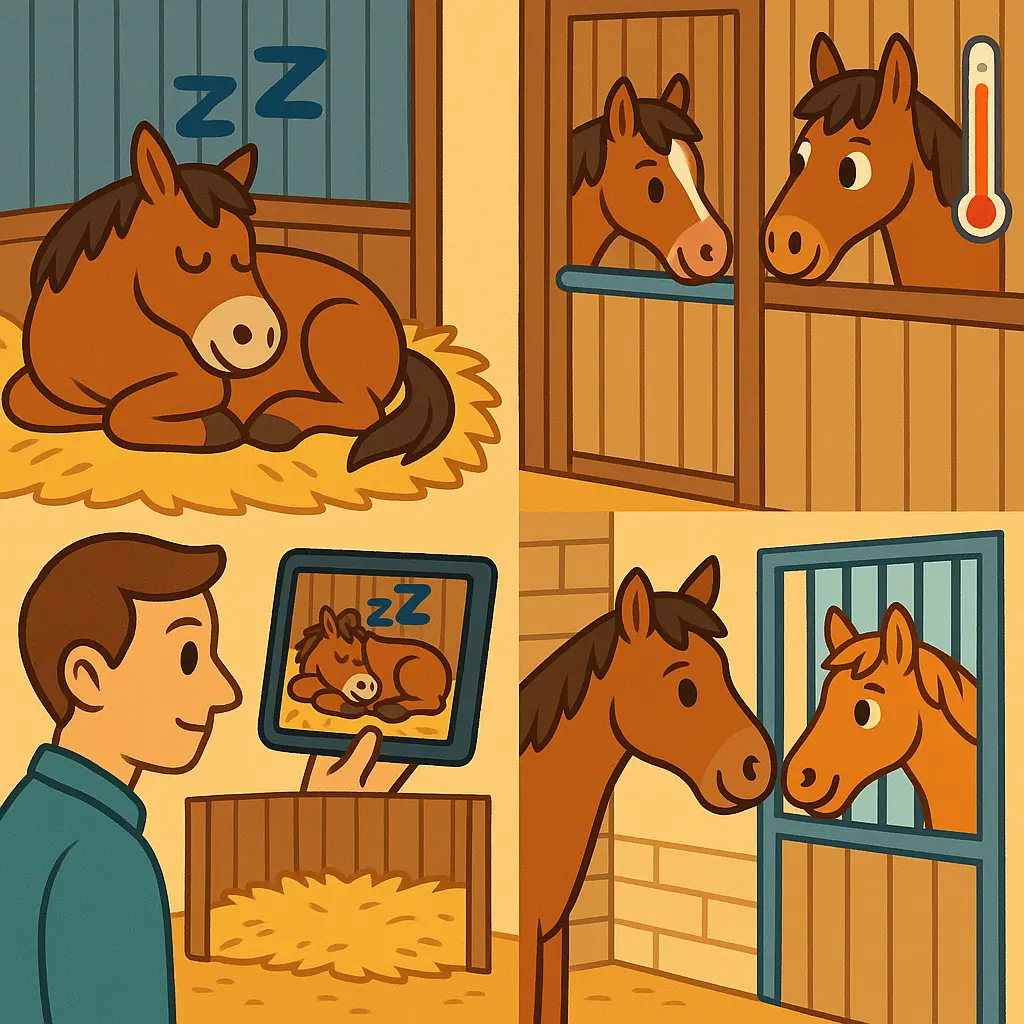
Check for recumbency at least occasionally, and if you suspect a problem, record 72 hours with an infrared camera to confirm patterns. Despite 94% of owners recognising the importance of lying down, only 18.07% report monitoring rest behaviour in practice (Nottingham Trent University PhD thesis, 2024).
Simple, effective monitoring steps:
- Look for fresh “body prints” in the bed, shavings on the shoulder/flank, and clean damp patches from respiration — all signs of lying.
- Log observations for three nights: time lights-out, last forage, any checks, and morning bed condition.
- Use an IR trail camera (£50–£200) to avoid disturbing the horse; review clips for frequency, duration and comfort of lying bouts.
- If no recumbency is seen over 48–72 hours, escalate: assess bedding depth, space, social contact, and pain with your vet or qualified professional.
Quick tip: Horses often take a few nights to acclimatise to new stabling; Hartpury data on riding school horses showed recumbency increasing after four nights as routines settled (source). Give changes time to work, then reassess.
Sleep-friendly stable checklist (UK-ready)
To help your horse reach that 30 minutes of REM within about 3.5 hours of total nightly sleep, put these actions in place:
- Depth done right: Maintain a consistent 15 cm bedding depth across the entire bed, not just the centre.
- Dryness first: In wet spells, add midweek top-ups and remove wet patches daily to keep the lying patch dry.
- Space to sprawl: Verify at least 12 m² for an average horse; bigger horses or those with arthritis may need more.
- Social sightlines: Fit barred partitions or grills to allow calm contact; avoid full solid sides where safe and permitted.
- Quiet nights: Set a lights-out time; keep checks minimal and use red light only when necessary.
- Smart rugging: Adjust to the horse and the stable, not just the forecast; check under-rug warmth by hand. Explore breathable options from LeMieux, WeatherBeeta and Shires.
- Consistent forage: Provide enough hay to last the night without frantic searching or cribbing that interrupts drowsing.
- Pain audit: Re-check saddle fit, foot balance and back comfort; involve your vet if lying is still absent.
- Monitor and adapt: Use a 72-hour IR check if needed; track recumbency frequency and duration.
- Budget savers: Keep an eye on our Secret Tack Room clearance for seasonal bargains to upgrade rugs or stable kit.
- Supportive extras: If you’re considering calmers or nutritional support, see our range of supplements and discuss choices with your vet for individual needs.
Pro tip: Build a 10-minute “lights-out routine” — a final quiet groom of the withers and poll, a last sip check, rugs checked by hand, lights dimmed, and you exit calmly. A consistent cue helps many horses settle. Our grooming essentials make that last check smooth and soothing.
For a nice association with bedtime, a small, low-sugar reward when you close up can cue relaxation; browse our thoughtful treats if that fits your horse’s diet.
FAQs
How much should my horse lie down at night in a UK stable?
Aim for regular recumbency that allows around 30 minutes of REM sleep within roughly 3.5 hours of total nightly sleep. If your horse isn’t lying down some nights, investigate quickly — persistent absence of recumbency risks sleep deprivation and even collapse (source).
Does bedding type affect sleep in wet UK winters?
Yes — but depth and dryness are the priorities. Hartpury observations found horses on straw spent 29% of nocturnal time recumbent versus 12% on shavings (not statistically significant), while separate work showed 15 cm deep beds significantly increase both REM and non-REM sleep compared with 5 cm (source; source). In damp, unheated UK stables, deep, absorbent shavings or well-managed straw both work when kept dry.
What causes horses to collapse in stables?
Severe sleep deprivation is a major cause. In one monitored group, individual horses recorded between 4 and 199 collapses in 24 hours, 86% occurring during or just before attempted REM while standing (source). Triggers include pain, inadequate bedding depth, insufficient space, and disrupted routines — address these urgently and consult your vet.
Is LED lighting better for stabled horses at night?
For sleep outcomes, blue-enriched day/red night LED systems performed similarly to standard fluorescent lighting in a 2023 study (no significant differences in total sleep, recumbency or blink rates). Prioritise consistent light–dark cycles and calm nights over chasing a specific bulb type (source).
Do UK horse owners monitor sleep enough?
No. Only 18.07% of owners in a UK survey reported monitoring their horse’s rest behaviour, despite 94.38% recognising the importance of recumbency (source). Add recumbency checks to your routine and use a 72-hour IR camera review if you suspect a problem.
How does stable design impact rest?
Barred partitions that allow social contact improve recumbency and standing sleep compared with solid walls (p<0.05; source). Adequate floor area (12 m²+ for an average horse) also reduces reluctance to lie down; cramped spaces were overrepresented among collapsing horses (source).
How do I know my stable is big enough?
As a rule of thumb aligned with European/UK welfare guidance, provide at least 12 m² for an average horse (more for bigger breeds). The proof is in behaviour: if your horse rarely lies down or struggles to rise without touching walls or fixtures, increase space or reconfigure the layout.
Sleep is the quiet foundation of soundness, behaviour and performance. With a deeper bed, better sightlines, calmer nights and climate-smart rugging, you can transform your horse’s rest — and their day-to-day happiness. If you’re upgrading kit to support those changes, explore breathable stable rugs, weather-smart turnout rugs and trusted brands like WeatherBeeta and Shires to get the details right.