

Protecting Your Equine Companion: Understanding Horse Insurance and Pre-Existing Conditions
When investing in insurance for your horse, understanding pre-existing conditions and reviewing coverage options critically is essential. Horse insurance, much like any other insurance, often excludes these conditions. This comprehensive guide will help you navigate the intricacies of horse insurance, ensuring both your horse's health and your financial investment are safeguarded.
What Are Pre-Existing Conditions in Horse Insurance?
Pre-existing conditions refer to any illness, injury, or symptom that appears before the insurance policy starts or during its waiting period. These can significantly impact the extent of coverage you receive.
Examples of Pre-Existing Conditions
- Chronic lameness
- Respiratory problems such as recurrent airway obstruction
- Digestive issues like colic
- Skin conditions or allergies
Even symptoms without a formal diagnosis, if recorded, can be deemed pre-existing and affect your coverage [1].
How Pre-Existing Conditions Affect Coverage
Insurance is intended to cover unexpected events. Thus, pre-existing conditions, which are known issues, are typically excluded by most horse insurance policies. For instance:
- Conditions such as chronic arthritis or melanomas are normally excluded.
- New injuries or illnesses post-policy commencement are usually covered.
- Some policies may cover curable pre-existing conditions if they have been symptom-free for a specific period [3].

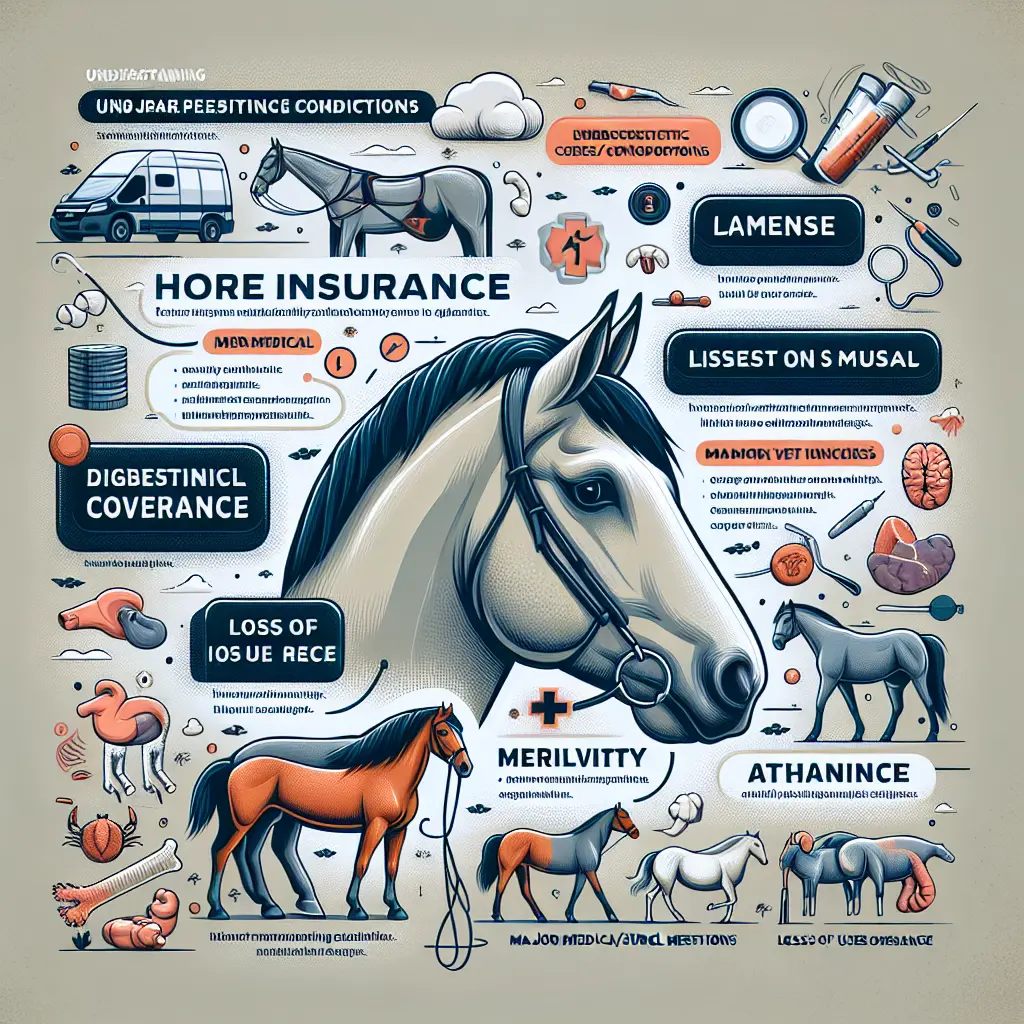
Horse Insurance Coverage Options
Choosing the right coverage for your horse involves considering several key types of insurance:
| Coverage Type | Description | Notes |
|---|---|---|
| Major Medical/Surgical | Covers injuries, illnesses, surgeries, and treatments like colic or lameness. Often excludes pre-existing issues. | Deductibles and co-insurance terms apply [4]. |
| Mortality Insurance | Provides compensation if your horse dies due to accident, illness, or injury. | No vet certificate needed if insured value is under a certain threshold [6]. |
| Loss of Use | Covers if the horse is permanently unable to perform its insured use due to injury or illness. | Can be difficult to prove; extensive evaluations needed [5]. |
| Alternative Insurance | Coverage like Pet Assure includes pre-existing conditions at low cost but only for in-house services. | Useful for supplementary or niche needs |
Preparing for Insurance
To adequately prepare for horse insurance, consider the following:
- Vet Checkup and Records: Most insurances require recent veterinary exams and medical records to accurately identify pre-existing conditions [2].
- Full Disclosure: Providing a complete health history is crucial to avoid claim denials or policy cancellations due to undisclosed conditions [4].
- Age and Value Considerations: Horses older than 16 or valued above certain thresholds might need additional documentation [6].
- Compare Plans: Evaluating multiple policies helps find the best fit across premiums, limits, exclusions, and deductibles [8].
Important Facts and Figures
- Veterinary costs for colic treatment can reach several thousand dollars, emphasizing the importance of insurance for emergency situations [4].
- Policy extensions usually apply for 90 days beyond expiration for conditions arising during the active period [6].
- Older horses and those with extensive health histories might face higher premiums or exclusions [8].
- Pre-existing condition exclusions safeguard insurers from predictable claims but can leave owners financially exposed if conditions flare up [1].

Additional Resources for Horse Riding Equipment and Supplements
For top-tier horse riding equipment and supplements, explore the offerings at Just Horse Riders. Our collections include:
- Jodhpur Collection
- Horse Riding Boot Collection
- Horse Riding Gloves Collection
- Horse Riding Socks Collection
- Horse Treats And Gifts
- Everyday Horse Vitamins & Supplements
- Stable Rugs
- Turnout Rugs
- Horse Fly Protection

Conclusion
By thoroughly understanding your horse's health, particularly any existing or prior conditions, and selecting appropriate insurance coverage options, you ensure both their welfare and your financial security. Consider consulting resources like Stable Cover's guide on pre-existing conditions and equine insurance FAQs for more personalized insights.
By protecting your equine companion with the right insurance and gear, you can enjoy every ride with peace of mind, knowing you're both safe and covered for the unexpected.