Thinking about building a riding arena in the UK? Getting the budget right from day one is half the battle — especially with our wet, variable weather and mixed ground conditions.
Key takeaway: a typical 40 x 20m outdoor arena in the UK costs around £30,000, while a basic 20 x 40m indoor starts at roughly £150,000 — and groundworks and drainage often decide where you land within (or beyond) those figures.
What does a UK riding arena really cost in 2024?
Around £30,000 is a realistic figure for a 40 x 20m outdoor arena in the UK, while a basic 20 x 40m indoor rarely comes in under £150,000. Outdoor costs are influenced by site prep, drainage, base layers and fencing; indoor projects add structure, cladding and services on top.
For outdoors, Cotterill Civils cites around £30,000 for the popular 40 x 20m size, with increases for bigger footprints like 60 x 120 ft or 80 x 200 ft. Indoors, experienced UK owners discussing 2024 builds on the Horse & Hound forum are clear: a basic 20 x 40m is unlikely to be cheaper than £150,000 once you include the structure, groundwork, drainage, and a usable riding surface (Horse & Hound).
“The honest answer is that arena costs vary significantly — and for good reason... what sits beneath and around the surface, not just the surface itself.” — Carpet Gallop
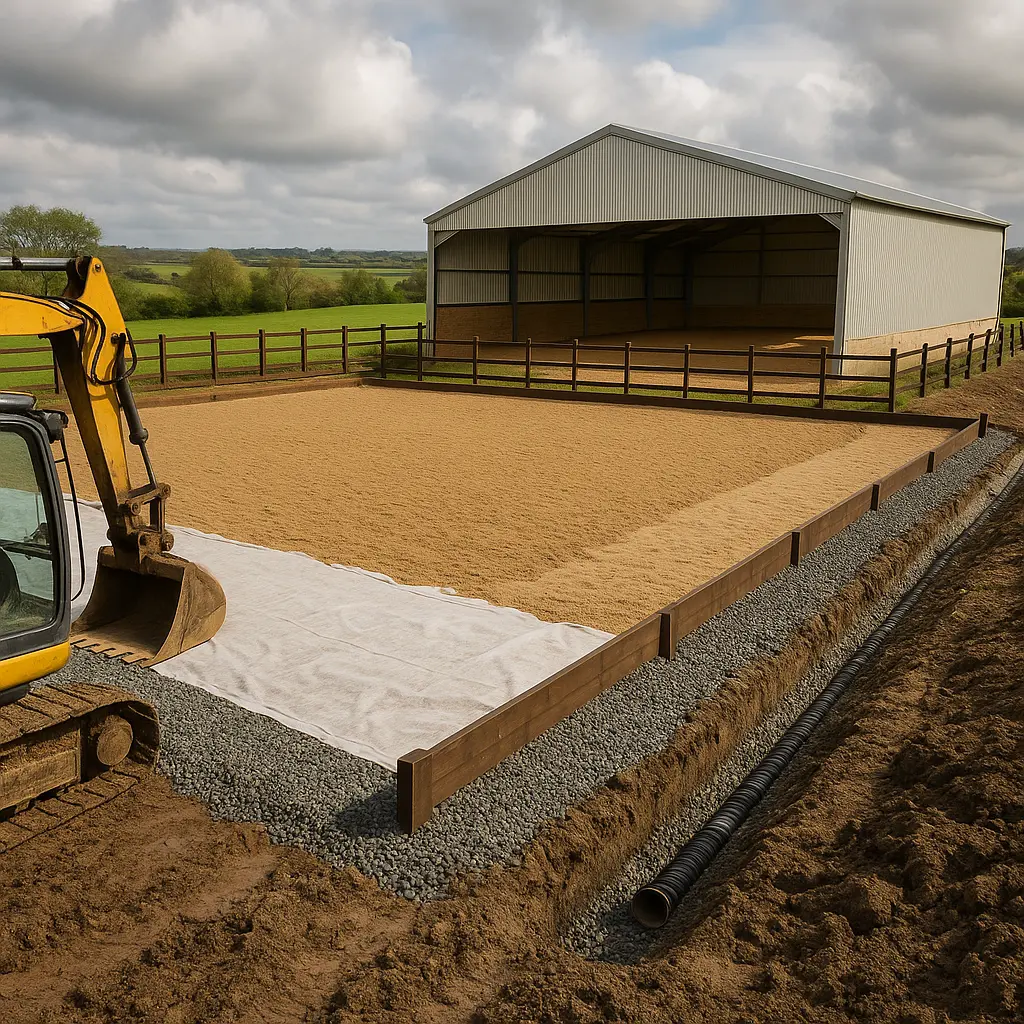
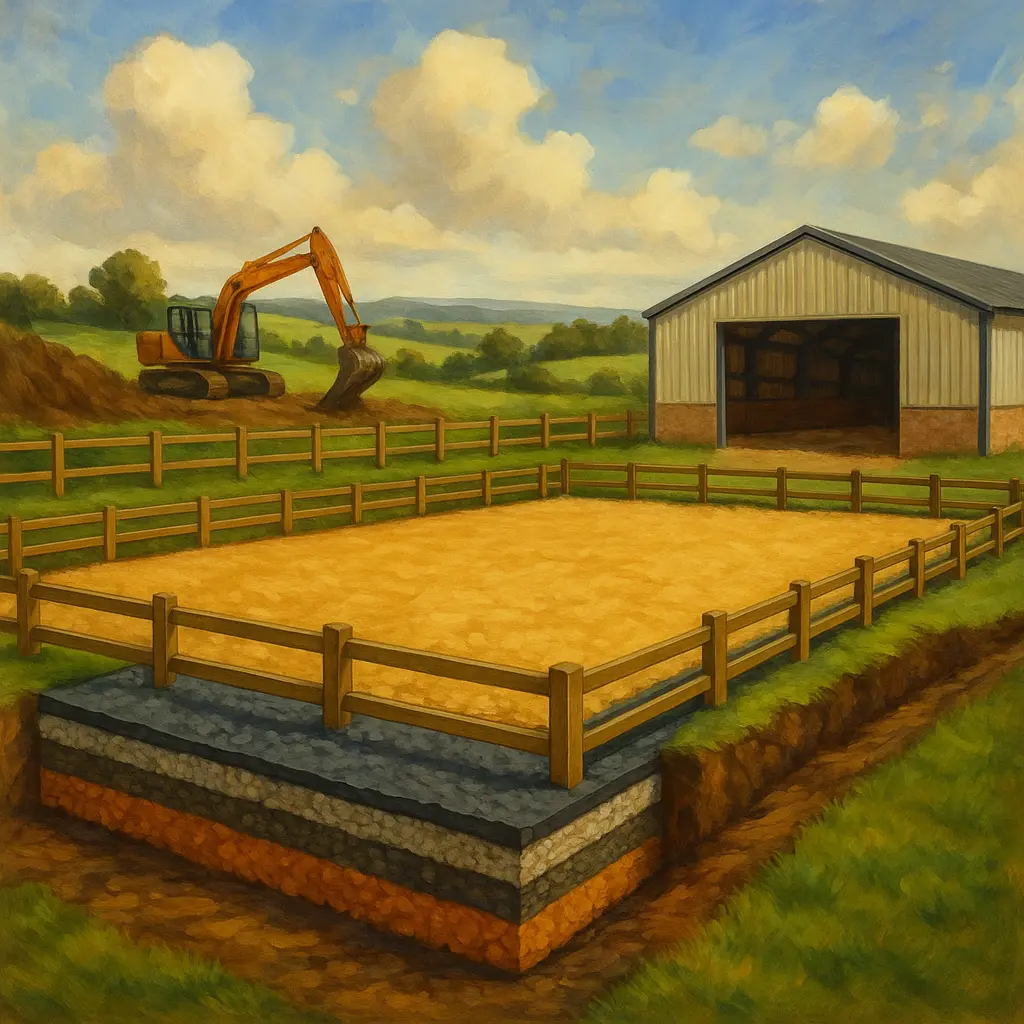
Those “beneath and around” elements include excavation, levelling, drainage runs, membranes, aggregates, the footing installation and perimeter containment — all of which can swing the final bill. The wetter the site, the more you should ringfence for drainage and a robust build-up.
Outdoor vs indoor: which suits your yard and budget?
Most UK yards choose a 40 x 20m outdoor for value and versatility; indoor arenas offer year-round riding but typically cost five times more for the same footprint.
Outdoors gives you the most riding for your money, particularly if you have a reasonably level, free-draining site. The popular 40 x 20m format supports flatwork, lunging and polework, and is manageable for private owners and small livery yards alike. If you’re schooling through winter weather or running a busier training operation, an indoor becomes compelling — but budget for the enclosure, planning permissions and services as well as the riding surface.
Remember, rain is the dominant UK design driver: outdoor builds live or die on drainage, and indoor builds still need excellent sub-surface drainage to stay dry and safe. The British Horse Society (BHS) planning guidance consistently emphasises siting, access and environmental management — all points to discuss early with your local authority and your contractor.
Quick tip: if winter turnout is limited while works progress, line up appropriate rugs in advance. Our customers favour reliable, waterproof winter turnout rugs and cosy stable rugs to keep horses comfortable through delays and weather hold-ups.
Groundworks and drainage: the hidden budget drivers
In the UK, site preparation, levelling and drainage often determine the final arena cost more than the surface choice itself. Uneven or water-prone sites can add substantial excavation and drainage spend.
Start with a clear drainage plan. Experienced UK builders stress that grading, excavation and drainage infrastructure are the foundation of a reliable arena — especially on clay or where run-off crosses the site (Allied Buildings). Specialist surfacing teams like Carpet Gallop highlight the importance of membranes, base layers and drains in our wet climate, with robust drainage layers of 1–3 inches used to prevent water pooling and to protect your footing.
On heavier UK soils, a geotextile membrane helps keep the aggregates and footing stable; budget around £0.10–£0.25 per sq ft for quality fabrics and installation, and ensure laps and edges are correctly detailed to stop fines migrating (Performance Footing).
Pro tip: if your site needs significant cut-and-fill, put drainage and levelling at the top of your spend. A slightly simpler surface on a dry, well-constructed base will ride better — and last longer — than a premium surface laid over a wet, moving sub-base.
Surfaces and base layers: what to spend and where to save
Spend first on the base build-up, membranes and drainage, then choose a footing that suits your discipline and budget; installation of footing typically runs £0.75–£1.50 per sq ft in UK conditions.
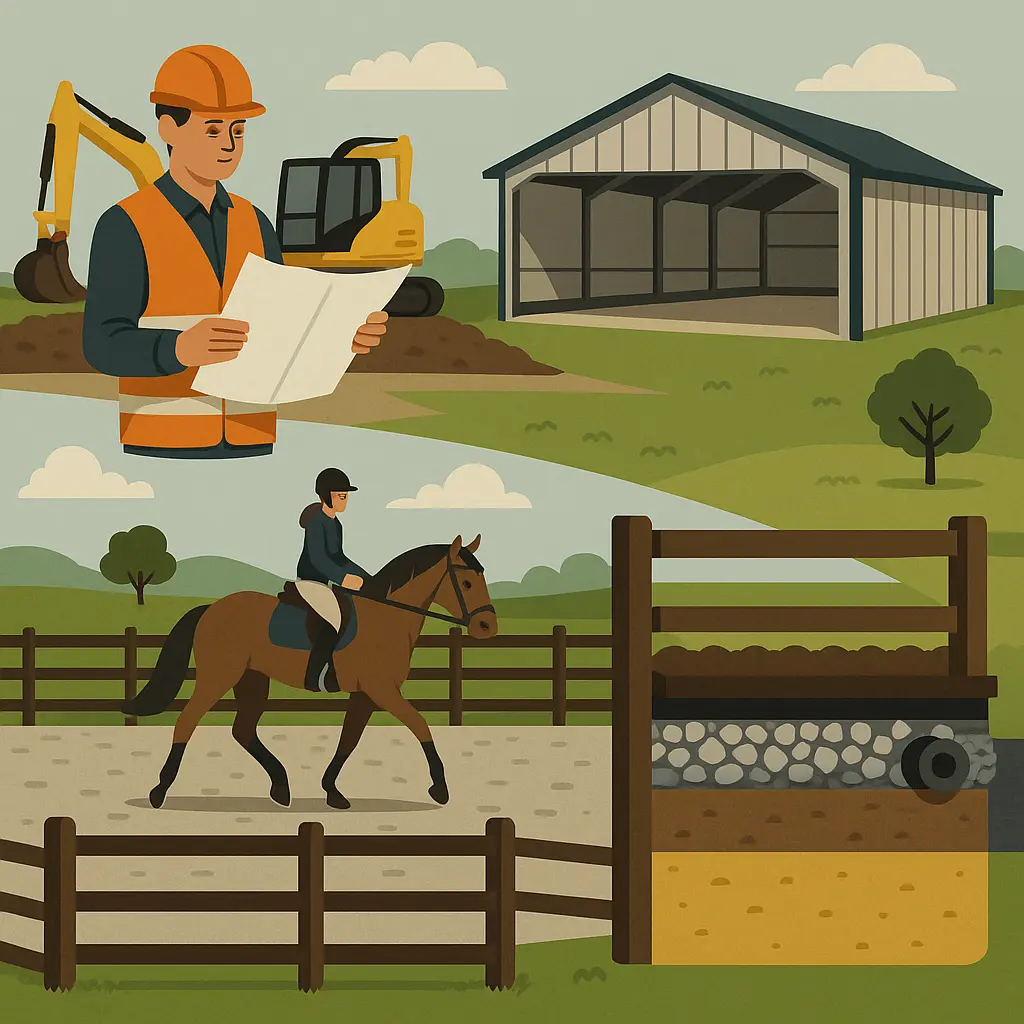
Your riding experience comes from the whole system: compacted sub-base, membrane(s), free-draining stone layers and a consistent surface. Entry-level sand can work for leisure schooling if correctly specified and maintained; enhanced footings with stabilising fibres or rubber additives offer improved stability and weather resilience for higher use. Installation pricing for footing commonly falls in the £0.75–£1.50 per sq ft bracket, depending on material and depth (Performance Footing).
Don’t skip perimeter containment. Kickboards, sleepers or railroad ties stop your footing migrating into the track and drains; budget roughly £0.40–£1.50 per sq ft depending on specification and finish (Performance Footing). This small percentage of your budget protects the much larger investment in aggregates and footing.
Quick tip: keep a maintenance routine. Regular grading and de-compacting extends surface life, keeps it consistent underfoot and reduces dust. Pair this with a post-ride tidy-up — a quick brush-off with quality grooming tools helps you and your horse leave less tracked-in aggregate at the gate.
Planning permission and UK regulations: get it right first time
Obtain local planning permission before you build, especially for indoor arenas, as requirements vary by location and can delay or add cost if not secured upfront.
Indoor arenas, by their enclosed nature and height, almost always require planning, and outdoor arenas frequently do too depending on siting, lighting, access and change of use. As Allied Buildings notes, UK planning and building codes directly affect indoor costs and timelines. Engage early with your local authority, prepare drainage and landscaping plans, and consider neighbour sightlines and traffic. Industry bodies like the British Horse Society provide useful checklists and good-practice guidance to streamline your application.
Pro tip: factor permit fees and professional drawings into your budget line items. A well-prepared application can prevent costly redesigns mid-project.
Structure choices for indoor arenas: why steel saves money
Steel frame indoor arenas are generally the most cost-effective structures in the UK, offering durability and lower lifetime costs than wood or fabric.
In our wet, windy climate, steel-framed buildings minimise maintenance and speed up erection, which helps hold down both capital and lifecycle costs (Allied Buildings). Timber frames provide a traditional look but typically come with higher material and upkeep costs. Fabric structures can be quicker to install but may not deliver the same resilience or longevity in exposed UK locations.
Size also drives price. Popular footprints range from 60 x 120 ft to 80 x 200 ft, with larger spans increasing steel tonnage, foundations, cladding, lighting runs and overall complexity (Cotterill Civils). Build in good ventilation, safe sightlines, and suitable lighting for short winter days. At Just Horse Riders, we recommend planning generous entry/exit zones with hard-wearing matting and clear kickboards to protect both horses and structure.
Budgeting checklist: line items and realistic ranges
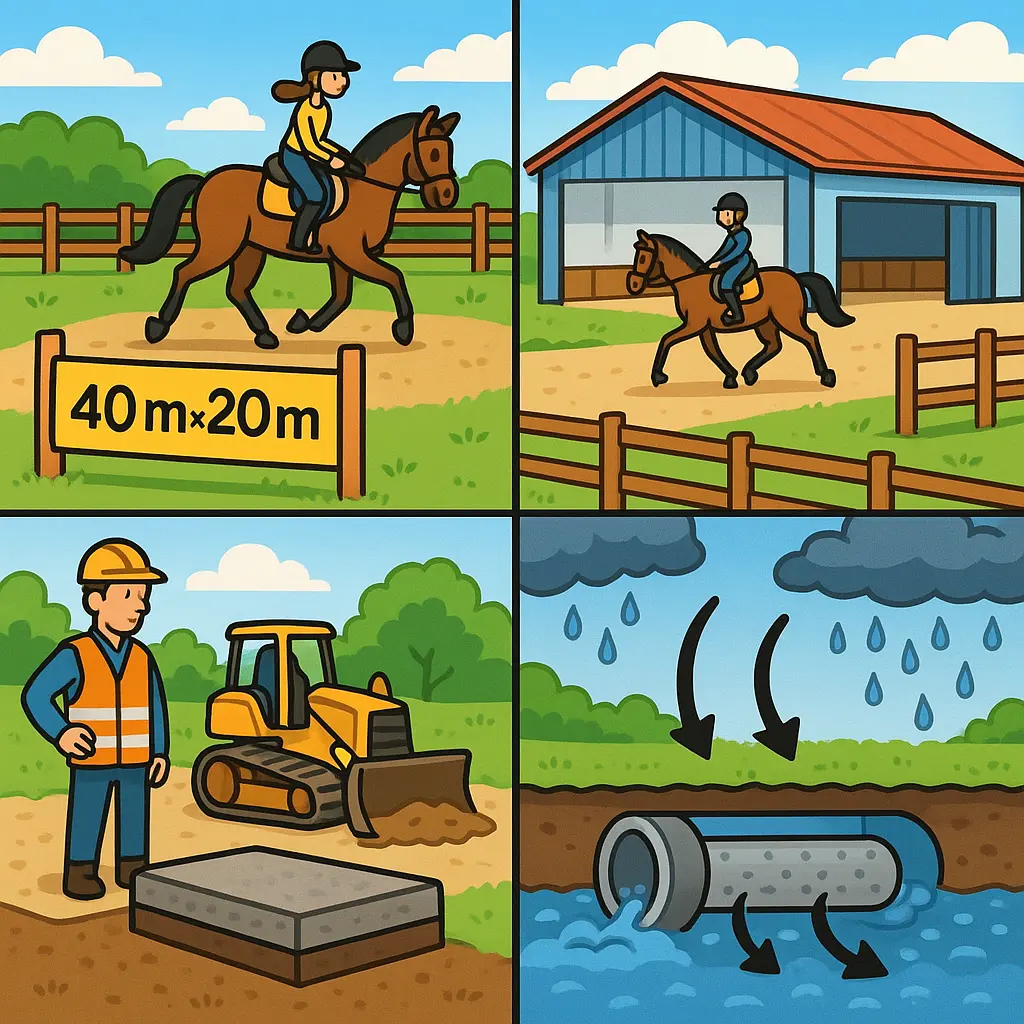
For a 40 x 20m outdoor, expect around £30,000 as a starting point; for a basic 20 x 40m indoor, plan from £150,000 and scale with size and specification.
Use this checklist to build your numbers and avoid surprises:
- Site survey and design: topographical survey, levels, drainage layout, drawings for planning.
- Planning and permits: application fees, professional plans, potential ecology/heritage reports.
- Groundworks: stripping, cut-and-fill, haulage, formation of levels; steep or wet sites cost more (Allied Buildings).
- Drainage infrastructure: perimeter drains, cross-drains, outfalls, chambers; robust layers of 1–3 inches under the base are common in the UK (Carpet Gallop).
- Membranes and geotextiles: £0.10–£0.25 per sq ft depending on product and installation detail (Performance Footing).
- Base aggregates: free-draining stone, compacted to specification; don’t skimp on thickness.
- Footing materials and installation: typically £0.75–£1.50 per sq ft; choose sand or enhanced footings based on use (Performance Footing).
- Perimeter containment: kickboards/sleepers to prevent migration, typically £0.40–£1.50 per sq ft (Performance Footing).
- Fencing and gates: safe, horse-friendly boundaries with clear sightlines.
- For indoor builds: steel frame, cladding, gutters, doors, ventilation, lighting and power (Allied Buildings).
- Access and yard: tracks, hardstanding, lorry turning, tie-up points.
- Maintenance equipment: regular levelling or dragging to keep footing even.
Quick tip: create a 10–15% contingency. As one experienced owner neatly put it on the Horse & Hound forum, “you don’t get much change from £150k” for a basic indoor — and unexpected ground conditions are the usual culprit (Horse & Hound).
Kit to budget alongside your build: rugs, boots and yard essentials
Alongside your arena budget, plan for surface care and horse comfort during and after construction. A small spend here protects your big investment.
For winter works and limited turnout, keep your horse dry and comfortable with dependable turnout rugs and snug stable rugs. For schooling on new surfaces, protective horse boots and bandages reduce knocks while the footing beds in. Riders tackling dark evenings on yard tracks often opt for high-visibility kit to stay seen around vehicles.
Looking for hard-wearing brands? Our community consistently rates WeatherBeeta rugs and accessories for waterproof reliability and LeMieux pads and boots for everyday schooling. And for post-ride clean-ups that keep grit out of the tack room, our grooming collection has everything from dandy brushes to hoof picks.
At Just Horse Riders, we recommend planning storage and welfare areas into your arena design — from rug hooks at the gate to a safe boot-changing spot — so your new space works brilliantly in real life, not just on paper.
FAQs
What is a realistic budget for a basic UK indoor riding arena in 2024?
Plan from £150,000 for a 20 x 40m steel-frame indoor with a functional surface and compliant groundwork — owners report this as a minimum in 2024 (Horse & Hound).
Why do arena costs vary so much from yard to yard?
Ground conditions and drainage needs drive most of the difference, followed by base construction and surface choice — not just the surface alone (Carpet Gallop).
How does UK weather affect my arena plan?
Frequent rainfall demands robust drainage, careful levelling and well-detailed membranes to prevent waterlogging and ensure all-season rideability (Allied Buildings).
What size arena is standard for a UK livery yard?
40 x 20m outdoors is the most popular and typically costs around £30,000 when well built; scaling up increases material and complexity costs (Cotterill Civils).
Are steel structures worth it for indoor arenas?
Yes. Steel frames are generally the lowest-investment, most durable option in UK conditions compared with wood or fabric (Allied Buildings).
Do I need planning permission for an arena?
Usually yes, and almost always for an indoor. Requirements vary by location and design, so secure local permission upfront to avoid delays and redesign costs (Allied Buildings).
What small purchases help protect a new arena investment?
Regular maintenance and welfare kit make a big difference: consider protective boots and bandages, reliable turnout rugs for wet days, and practical grooming tools to keep grit and mud out of the riding surface.
Building an arena is a major project — but with the right groundwork, drainage and planning, it’s an investment that pays you back every ride. If you’re kitting out horses and riders for the build and beyond, explore our curated essentials and talk to our team for product advice that fits your yard and your goals.