

Understanding Aggressive Behavior in Horses: Training Challenges or Underlying Health Issues?
Horses, often seen as majestic and gentle creatures, can sometimes exhibit aggressive behavior. Understanding these behaviors is crucial for horse owners, trainers, and enthusiasts. This article delves into the causes, offers insights into management strategies, and helps differentiate between training challenges and health problems, enhancing welfare and safety for both the horse and humans involved.
Causes of Aggression in Horses
Aggression in horses can originate from various sources, and identifying the root cause is essential. Here are some common causes:
Dominance and Social Hierarchy
In their natural habitat, horses establish dominance hierarchies within herds. This behavior can manifest as threats, biting, or kicking, primarily to assert rank or control over resources like food, water, or breeding partners. Such behavior may become problematic in domestic settings.[1]

Fear and Anxiety
Horses may display aggression due to fear of perceived threats or unfamiliar environments. Past traumatic experiences can also trigger defensive aggressive responses, especially if horses feel cornered or threatened.[2]
Pain and Illness
Sometimes overlooked, pain from injury, illness, or other medical conditions can cause horses to become irritable and aggressive, particularly when touched or handled around the affected area. Recognizing these issues is critical during training and handling sessions.[1][4]
Hormonal Influences
Horses may show increased aggression due to hormonal imbalances or disorders. Stallions and mares are more prone to such behavioral changes during certain reproductive phases, usually linked to hormonal fluctuations.[2]
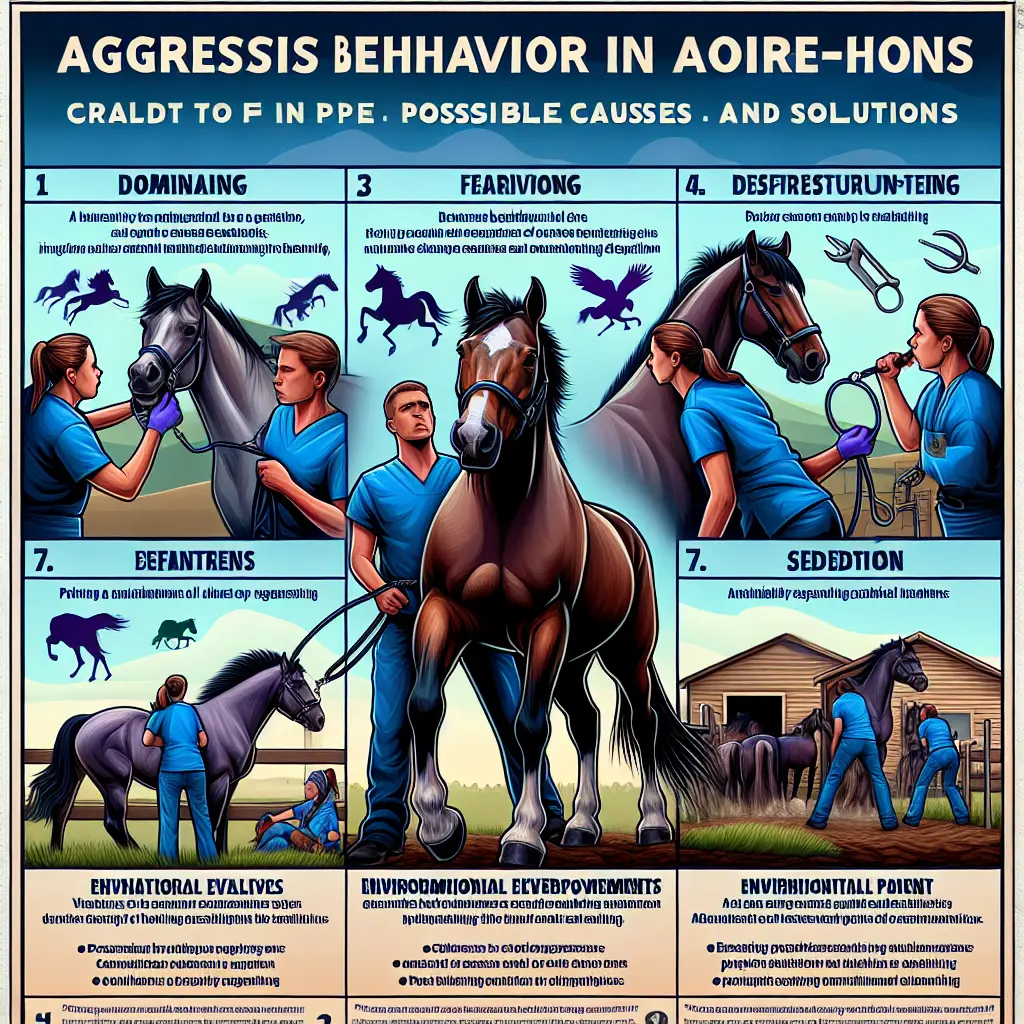
Management and Environmental Factors
Poor management practices, like crowding, insufficient nutrition, or abrupt changes in social groups, can induce stress and aggression. Ensuring a balanced and stable environment is key to minimizing these tendencies.[1][2]
Training and Handling Challenges
Training scenarios can also be triggers. For instance, a study involving 2,734 ridden horses showed that 46% displayed aggression when being girth-fastened, and 53% when cues like leg or whip were applied. These findings stress the importance of sensitive and informed handling.[3]

Key Data and Observations
Despite common beliefs, aggression is not heavily linked to breed or sex; it depends more on the horse's individual temperament and the situation. For example, about 40.8% of observers noted aggression in horses under sedation with xylazine, highlighting that medical treatments can provoke aggressive behavior in some cases.[5]
Managing and Mitigating Aggression
Management strategies should integrate both health assessments and behavioral insights:
Veterinary Assessment
Conducting a thorough health evaluation can help determine if pain, illness, or hormonal imbalances are contributing to aggression. Early diagnosis of these issues can significantly impact behavioral outcomes.

Behavioral Evaluation
Evaluating the horse’s environment, training methods, and social interactions is crucial in identifying any stressors or misunderstandings that could be causing aggressive responses. Using positive reinforcement and clear communication helps reduce fear and confusion.
Tailored Training Approaches
Adopting tailored training methods, such as gradual desensitization and positive reinforcement, can help mitigate aggression. It’s crucial to ensure that horses have clear instructions to prevent confusion-driven aggression during training.
Environmental Improvements
Providing adequate space, resources, and stable social groups can minimize aggression caused by territoriality and competition. Stable and stress-free environments are critical in achieving behavioral harmony.
Why This Matters
Aggressive behavior poses risks to handlers, riders, and other horses. Mismanagement or neglect of underlying issues can exacerbate problems, leading to injury or compromised welfare. Thus, a holistic approach, incorporating both medical diagnostics and behavior modification, is recommended to improve outcomes and ensure safety.[2][4]
By approaching aggression with comprehensive strategies that include medical evaluations and tailored training, horse owners and professionals can significantly reduce aggressive behavior, ultimately enhancing the well-being of the horse-human relationship.
Discover high-quality equestrian supplements and a wide range of horse riding equipment at Just Horse Riders, your trusted partner in equestrian health and safety.